Author: admin

  • D-Partner unchained with Blockchain in the 5G era

    D-Partner unchained with Blockchain in the 5G era

    If you have to identify the most important element of the telecom ecosystem in the 5G era that can fuel multi-fold growth for operators, what it is going to be? If you ask for my answer, it’s D-Partner (The Partner).  Let me explain how the partner will play an important role in setting up a successful 5G ecosystem.  I will cover two aspects here:

    1. Why and how partnerships can only fuel success in 5G?

    2. Blockchain – How it brings digital trust in data exchanged between partners?

    The Potential that 5G holds

    5G ecosystem will give rise to a big parallel ecosystem of partnerships. A successful rollout of 5G will need collaboration between many partners who will fulfill different gaps in the ecosystem and eventually deliver the 5G promises. As the ecosystem develops, Telcos are expected to focus beyond just connectivity towards collaboration across the telecom value chain and different sectors, leading to the creation of new and innovative business models.

    This is the right time to unchain and unleash the power of partnership and empower the partners to build a strong ecosystem to realize the true potential of 5G.

    Different partners that telco need to collaborate can be broadly classified into below categories:

    1. Suppliers (Infrastructure, Software Vendors, Innovative service providers, etc.)
    2. Aggregators
    3. XVNO*
    4. Sales & Resellers
    5. Enterprise Partners (Enterprises in Healthcare, Smart Cities, Banking, Manufacturing, etc.)

    *XVNO=MVNO, IVNO(IoT-VNO), etc. Anyone can take a Network Slice and run innovative services on it. IoT has a big future on 5G platform and hence IoT-VNO.

    All these partners will build a strong ecosystem to deliver the best result to end consumers, be it in B2C or B2B space. Delivering value will no longer be a play of the centralized entity, instead, this will be a decentralized ecosystem in which delivering value and the trust will be dependent on multiple entities/partners i.e. the trust itself will be decentralized. The below diagram clearly highlights how much decentralization is important going forward.

    Creation of a Trusted Decentralized Ecosystem to Deliver Value

    All these partners will be connected with different economic models to do billing and settlements. In the 5G ecosystem, SLA & QoS based economic models will be the key factor for all the billing and settlements. SLA & QoS is the key factor for 5G to be reliable, which will add a new parameter to the equation of billing and settlement which is currently transactional in nature. The 5G value chain will be dependent on many of these partners playing different roles at different points and all or related ones, are interconnected with cascading SLA’s & QoS.

    Having cascading SLA’s and with its dependency on multiple partners, who will deliver and ones who will consume the same, the need for a transparent & trustworthy environment becomes the key, which can:

    1. Update the SLA’s and delivered QoS to all relevant and impacted touchpoints in ecosystem
    2. Rating the services of each partner based on delivered SLA’s and QoS as agreed in the contract
    3. Compare and alert SLA breach based on the contracts with each partner in ecosystem
    4. Help in addressing disputes in near real-time, hence avoiding conflicts during payments and settlements

    Each of the above points translates to:

    1. Near real-time updates in a connected the ecosystem
    2. Near real-time contract monitoring
    3. Triggered events based on contractual models
    4. And above all, creation of a trustworthy the ecosystem

    Blockchain = Collaboration + Cryptography + Smart Contracts = Decentralized & Trusted Ecosystem
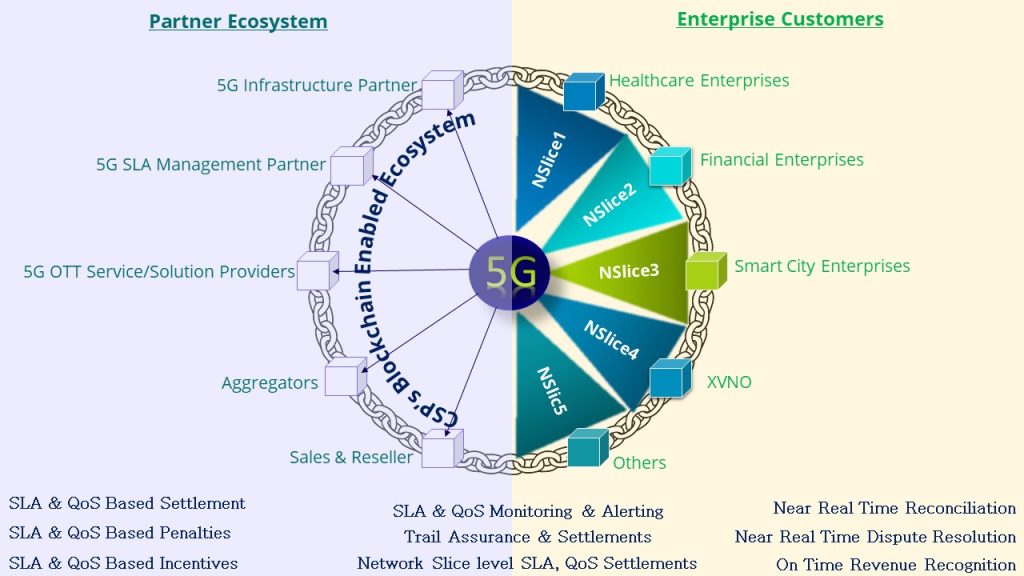
     

    The above diagram depicts how a decentralized setup will look, with multiple partners working towards building a reliable & connected ecosystem delivering the required SLA/QoS.

    For now, I leave you with this thought process and will get back to you on how we can wrap this overall decentralized environment with an E2E Partner Lifecycle Management system and its importance.

    The Decentralized Way Of Digital Partnerships

    Download Point of View

  • What is Digital Trust?

    What is Digital Trust?

    Digital Trust is a concept that enables users to carry out business transactions in a safe, secure, ethical and reliable manner.

    In a digital world, everything is ultra-fast and instantaneous. Agility, and speed are perhaps the two key benefits of living in an all-digital world and are probably the most desirable qualities of a digital interaction. However, the digital nature of today’s businesses has brought about significant changes in business models, technology enablers and customer expectations. Amidst all these rapid changes, if there is one thing that has remained constant, it is the need for trust. However, the concept of trust was different in a physical world, and it is more fluid and continues to evolve in a digital world.

    Trust underpins the success of every business, traditional or new age. Each transaction and interaction on a personal, societal and business level requires the establishment of trust. With the advent of digital disruption, the lines between digital and physical worlds begin to blur, and the contextual definition of trust also evolves accordingly. Unlike in the physical world, trust in the digital world must be established spontaneously between entities that often are unrelated to each other, and this trust must be constantly examined and re-established during the course of the interaction.

    Conventional models of trust are not flexible enough to meet the demanding requirements of digital interactions due to the high number of different relationships — often sporadic and short-lived — between different people, businesses, things, AI programs, machine learning algorithms and other entities.  Digital Trust is an evolution of traditional models of trust to cover a larger set of requirements of digital businesses by arriving at levels of measurable confidence to make risk-based decisions.

    For enterprises, Digital Trust needs to be an all-encompassing concept, being multi-directional, and multi-dimensional. This means for a business to establish great levels of Digital Trust, it needs to demonstrate trust between consumers, shareholders, partners, vendors and governing bodies. More importantly, this trust needs to be multi-directional, meaning it is as important for enterprises to be able to trust their consumers as it is for consumers to trust the enterprise.

    Currently, Digital Trust covers six key areas, namely, privacy, security, identity, predictability, risk mitigation and data integrity.

    Privacy: The ability to carry out a transaction while not dipping into personal information that is not necessary for the transaction.

    Security: The ability to carry out a transaction in a manner that protects the infrastructure and data of the transacting parties from malicious threats.

    Identity: The ability to protect the true identity of the stakeholders of a transaction unless it is exposed with the full consent of the entity.

    Predictability: The ability to be able to extract meaningful insights and make scientific forecasts, to foresee business risks and support planning.

    Risk Mitigation: The ability to identify, evaluate, and prioritize risks followed by coordinated and economical application of resources to minimize, monitor, and control the probability or impact of unfortunate events or to maximize the realization of opportunities.

    Data Integrity: The maintenance of, and the assurance of the accuracy and consistency of data over its entire lifecycle.

    Given the market dynamics where trust is at an all time low, businesses can truly unlock their potential by focusing on the above mentioned tenets of Digital Trust.

    To know More Why Trust Matters In The Digital World?

    Contact us

  • How Enterprise Blockchain will Change the Telecom Intercarrier Settlement Process

    How Enterprise Blockchain will Change the Telecom Intercarrier Settlement Process

    Enterprise Blockchain solution for telecom seems to be a promising development for the telecom industry as it strives to solve the challenges faced by Telcos in their settlement process. It is based on Distributed Ledger Technology (DLT) which has attracted lot of attention in the recent time to offer a  Way to record transactional data that should become a single source of truth to establish digital trust in the partnerships.

    Why Telcos are looking at blockchain as a possible solution for partner settlement? Telecom network operators across the world gets into interconnect agreement which enable a seamless communication among their customers. These agreements are executed between domestic and international operators for mobile, fixed and internet services. Telecom operators collect and store detailed activity information as events. Interconnect partners share these CDRs for the purpose of verification and settlements. This process is cumbersome, inefficient, lengthy, costly, and error-prone. Missing CDRs and discrepancies in CDRs are very common problems.

    As the interconnect revenue continues to decline it has become essential to address the blocked revenue due to disputes and to optimize the overall cost involved in resolving these discrepancies. The enterprise blockchain present a possibility that can make the settlement process error free and help the Telcos a faster and efficient access to the blocked revenue. Subex is actively working with multiple enterprise blockchain technologies to address the need.

    Subex is chairing the Linux Foundation’s Hyperledger Special Interest Group (SIG) Intercarrier Settlement subgroup to develop DLT based solution for partner settlement process. The purpose of the Special Interest Group (SIG) is to help Telcos understand the key issues in partner settlement and offer possible solutions for the same. Subex has been a key contributor in creating the solution brief. The group has been successful in defining a solution based on Hyperledger Fabric developing a working PoC which is available for demonstration for those who are interested.

    The proposed solution broadly addresses how a DLT-based solution can:

    • Converts the reactive dispute management process to more proactive process
    • Create a single source of truth, which allows network operators to access and verify billing and cross-charging data in real-time.
    • Reduce overall costs by replacing tedious processes, reducing dependency on intermediaries such as clearinghouses with simple, near real-time and error-free reconciliation and settlement process.
    • Help in evidence collection and fraud mitigation.

    DLT has shown great potential in solving issues related to fraud, errors and creating a secure data source. Given the possibilities mentioned in the solution document, the likelihood of extending it as a full-fledged solution is very high which means faster dispute resolution, reduction in overall cost and an efficient partnership that will help Telcos embrace the new technologies and innovate their services as per the need of the market.

    Link to access solution brief: Here

    Link to the Hyperledger Blog: Here

  • Collaboration – The key to combat IRSF fraud

    Collaboration – The key to combat IRSF fraud

    Fraud continues to be a major problem for telecom operators, costing them billions of dollars annually. While telecom operators are continuously innovating to create new avenues of revenue streams to fight declining revenue margins from Voice and SMS services, technological advances are empowering fraudsters to evolve their fraudulent practices to tamper into the network. Telcos need to have access to the right threat intelligence information to combat fraud.

    International Revenue Share Fraud (IRSF) is one of the frauds which telcos have been trying to overcome for decades but still struggle to solve. Fraudsters usually exploit the vulnerabilities of the Communication Service Providers (CSPs) assets and attack by either calling to unallocated number ranges, landing calls onto international premium rated services, or illegitimately routing calls to short stopped mobiles. Subscription fraud, PBX hacking, Arbitrage Margin, SIM Cloning, Device theft, and abuse of promotional services are often the commonly used methods for executing fraudulent practices. IRSF attacks from the roaming network, call conferencing, call forwarding, calling cards, negative margin abuse for products and services are also some of the more popular methods for a fraudster in launching attacks. CSPs need to look to overcome the IRSF fraud menace to avoid revenue losses, network clogging, poor customer, and partner experience and negative impact on the brand image.

    While the Fraud Management (FM) system needs to be in place to overcome IRSF, one of the ways to tackle IRSF fraud is to have access to global number threat intelligence information. CSPs can configure their FM system to utilize this threat intelligence to detect and prevent fraud. To empower Subex ROC™ Fraud Management customers with threat intelligence information, Subex has recently partnered with RAG Wangiri blockchain consortium to provide its customers access to real-time threat intelligence to combat Wangiri fraud.

    As a next step, Subex is now partnering with Biaas, a leading expert in global number plan management for Pricing, Assurance, and Fraud Management within the telecommunication industry for IRSF threat intelligence. Through this partnership, Subex aims to provide its customers access to a powerful global number intelligence database that uses real-time information to battle International Revenue Sharing Fraud (IRSF). CSPs will have access to the following by subscribing to this database:

    • IRSF Test Number Database : Intelligence numbers gathered from IPRN websites and other sources. This will enable the CSP to identify if calls on their networks are being made to any IRSF Test Numbers as calls to IRSF Test Numbers are often an indicator that a fraud is about to happen.
    • Unallocated Destinations Database : Number ranges that are not allocated in any National Numbering Plan and should therefore see no legitimate traffic – any calls made to these destinations can confidently be flagged as fraudulent. This data even includes Unused Destinations, which appear allocated and valid but are not used by any operators currently. CSP will able to identify calls to expensive unallocated or Unused/Unassigned International destinations. CSP can use this data in many ways to pro-actively prevent or reduce such IRSF and other international voice frauds.
    • Allocated Destinations Database : Number ranges that are currently allocated to various operators. CSP will have access to tailored lists of International Higher Cost destinations (e.g. depending on geography or call types/tariffs) which can be utilized to assign higher priority to those potential frauds which would cause losses.
    • Digit String Length Database : Intelligence on the length of the numbers that are gathered from traffic analysis which can allow detection of fake calls made by fraudsters to destinations of invalid lengths.

    CSP will also have access to international fraud helpdesk run by expert Biaas professionals to facilitate fast and accurate issue resolution and decision making. By having access to this critical intelligence from Biaas, telecom fraud management teams will be able to effectively configure multiple types of defenses in the form of rules and real-time actions to keep fraudsters at bay. Combining this effective number intelligence with rich fraud detection capabilities provided by ROC Fraud management, CSPs will now have greater control in fighting IRSF fraud thereby directly protecting their revenue losses.

    To know more about how you will benefit from this partnership

    Download the flyer now!

  • ¿Vender dispositivos es una bendición o una pesadilla para las empresas de telecomunicaciones?

    ¿Vender dispositivos es una bendición o una pesadilla para las empresas de telecomunicaciones?

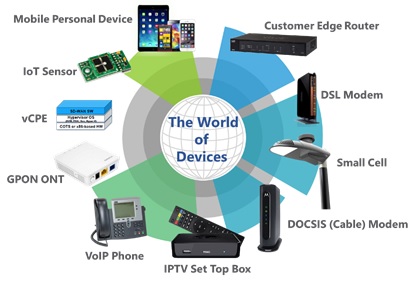
    El teléfono inteligente parpadea cuando se menciona el dispositivo. Sin embargo, los dispositivos son un gran ecosistema más allá de los teléfonos inteligentes: una gama de equipos como dongles, enrutadores, equipos de las instalaciones del cliente (CPE) y teléfonos IP, por nombrar algunos. Los dispositivos son una gran herramienta para que las empresas de telecomunicaciones atrapen y satisfagan a sus clientes. Por ejemplo, las ofertas agrupadas con contratos que abarcan meses proporcionan ingresos predecibles para las empresas de telecomunicaciones.

    La próxima ola de oportunidades.

    Con IoT y 5G haciendo avances, las empresas de telecomunicaciones se están preparando para los dispositivos de próxima generación para redes domésticas y de oficina. Una oportunidad lucrativa para las empresas de telecomunicaciones, ya que los dispositivos son críticos para la penetración de IoT / 5G. Se introducirán dispositivos más nuevos, como celdas pequeñas para aumentar la capacidad de la red y mejorar la cobertura interior. No es de extrañar que las empresas de telecomunicaciones estén invirtiendo en dispositivos.

    ¿Las empresas de telecomunicaciones se están beneficiando de los dispositivos?

    Los dispositivos son una oportunidad atractiva ya que mejoran la adherencia del cliente y el ARPU. Los dispositivos son buenas herramientas de promoción para atraer nuevos clientes y ganar tracción incluso en economías emergentes. Muchos clientes extienden su relación con las empresas de telecomunicaciones más allá del período de contrato.

    Sin embargo, la adquisición, venta y administración de dispositivos está plagada de riesgos. El fraude, las fugas y la deuda inmanejable están obstaculizando los ingresos y las ganancias.

    Una encuesta en los estados de la empresa de telecomunicaciones:

    “A nivel mundial, se pierden al menos 2 USD por dispositivo” Millones de USD están siendo dados de baja impactando P&L

    ¿Cuáles son los riesgos?

    La Telco en promedio gasta el 20% de su OPEX en la adquisición y el mantenimiento de dispositivos. Toda la cadena de suministro que cubre la logística directa e inversa es propensa a riesgos. La cadena de suministro no solo involucra a las partes interesadas dentro de la empresa de telecomunicaciones (marketing, ventas, operaciones, logística, finanzas), sino a muchas partes externas: fabricante, proveedor, socio financiero, distribuidor, socio de envío, red de almacenamiento, agentes minoristas, socio de reparación / renovación, y el cliente final.

    El apilamiento de tecnología es compleja con al menos 10 aplicaciones y plataformas diferentes involucradas. Las fugas de stock en los pedidos ordenados frente a los recibidos, las brechas de inventario, el envejecimiento de los dispositivos en el inventario, las brechas en los puntos de venta son algunos de los riesgos tecnológicos a destacar.

    Gestione los riesgos

    ¿Cómo podrían las compañías de telecomunicaciones controlar los riesgos y las fugas, y aprovechar al máximo la oportunidad?

    Regístrese para nuestro próximo seminario web sobre Evolución en la mitigación de riesgo de dispositivo.

    Pulse aquí para registrarse

  • How the Power of 5G will Redefine Partner Management

    How the Power of 5G will Redefine Partner Management

    For an industry struggling and grappling with the speed at which new technology innovations are gaining relevance, 5G promises to be a serious game changer and the claim is completely merited. But nevertheless, telecom operators and their partners are very optimistic with the promised power that 5G will bring but are wary of the super-organizational efforts it will take to have real bottom line impact. 5G will change the equation for the industry much like the advent of cellular phones and services did when they shook the world with its possibilities.

    One Promise, Myriad Applications

    With adjacent technologies like Multi Access Edge Computing and Network functions virtualization to AR/VR that will thrive, the emergence of 5G promises to increase the number of connected smart devices.

    The use cases are many, and some are life changing. Video delivery and adverts are two areas that will significantly gain from enhanced speed, making the experiences highly personalized. The Quality of Service and SLA for each of these use case will depend on the criticality, and the acceptable thresholds will be adjusted based on the services. Quality of Experience (QoE/QoX) models will evolve for newer applications.


    With the ability to service numerous connected devices, the levels of quick and agile responsiveness are going to shake up the current equation. 5G will provide low latency needed for AR/VR enabling high speed data transfer. The impact of all these of course is a significant improvement in quality and experience!

    The impact of 5G thus, affects telecom operators of course, but also sees a lot of across industry use cases. The discoveries of new use cases will lead to the rise of modern partnerships in areas such as IoT, AR/VR, smart homes, virtualized networks, distributed cloud amongst others. So, hospitals as enterprise partners for remote surgeries, augmented reality shopping experience for brands, collaboration apps that are reinventing mainstream games – these are just some of the possibilities that will impact enterprise business as well as retail.

    However, as we move ahead, there are two aspects that need to be clear:

    • The basics of what this promised change is in terms of technology, capability and regulations
    • What operators need to do to fully optimize the powerhouse performance that is expected from 5G

    Yes, they could both be moving targets and rapidly adapting is the need of the hour.

    A Careful Hope

    The reason why caution must be exercised though it is easy to get carried away in the excitement is that the basic systemic problems remain unchanged. Tightening regulatory norms and increased compliance requirements, the global debate on privacy and data breaches, intense competition translating to depreciating profit – all these are very much alive.

    5G must be embraced by operators but there needs to be a method of adoption. There is greater scope for perimeter security and 5G will mean increased efficacies, but all of this will only come to fruition if these exercises are balanced with understanding the now-more-than-ever-importance of data analytics, AI and machine/deep learning and understanding how all of these components will be needed to offer improved service. What this means is that network operators finally have a chance to take somewhat of a centre-stage in ascertaining more control over two critical aspects

    1) Re-building their customer experience so there is a shift in perception and hopefully loyalties and

    2) Finally finding a way to ensure monetization is addressed

    Changing the Paradigm with 5G

    The journey towards 5G implementation is going to be a long and arduous one. While 4G is not something that operators can ignore entirely and shouldn’t, there must be a re-look into the operators’ own business models and relationships with key stakeholders. They need to see where deeper relationships can be forged to understand the customer’s somewhat limited yet exaggerated expectations of 5G.

    For the 5G promised change to make a significant difference, industry require alertness towards the variegated forms that disruption and transformation are going to take. The definite actions to make this happen will simply make all the difference between success and failure for the world’s telecom operators.

    To know more about Subex Partner Management solution.

    Click here

  • ¿Por qué los operadores de telecomunicaciones necesitan una gestión de contratos basada en ia?

    ¿Por qué los operadores de telecomunicaciones necesitan una gestión de contratos basada en ia?

    Existe un adagio bien conocido de que las empresas funcionan con la confianza de las personas. Sin embargo, en el mundo práctico real, los acuerdos contractuales siguen siendo el último elemento de confianza. Los documentos del contrato brindan la garantía necesaria a las empresas de que ciertas obligaciones son legalmente vinculantes y, por lo tanto, los negocios pueden realizarse con total confianza. En ese sentido, mirando el contexto más amplio, los documentos contractuales son la fuerza impulsora que permite a las empresas funcionar sin problemas y de manera eficiente.

    Valor añadido

    En el caso de las empresas medianas a grandes, es casi imposible rastrear todos los contratos activos manualmente. Atrás quedaron los días en que los administradores de contratos indexaron manualmente todos los contratos dentro de los archivadores, actualizaron las hojas de Excel y rastrearon las copias en papel en correos electrónicos aleatorios. Imagínese como un administrador de contratos respondiendo a todo tipo de consultas provenientes de diferentes partes interesadas (como cláusulas legales, daños por responsabilidad, sanciones por incumplimiento, cronogramas de pagos, notificaciones de renovaciones, calidad del servicio, aclaraciones de reembolso, cláusulas de penalización, matrices de escalada, etc.) por miles de contratos. Teniendo en cuenta que los gerentes de contrato son los custodios de todas las solicitudes de contrato, imagínese ser responsable de este tipo de consultas día tras día. ¡Qué agotador podría llegar a ser!

    Hoy, el tiempo y las habilidades de los gerentes de contratos son más valiosos para agregar valor al negocio, en lugar de apresurarse para algunas de estas rutinas administrativas. Si bien la digitalización parece ser la respuesta más obvia, es más fácil decirlo que hacerlo. Incluso si uno puede digitalizar y llevar todos los datos del contrato a una base de datos de búsqueda, la complejidad de la contratación no termina ahí. De hecho, todo comienza cuando se crea el contrato.

    Redacción de contratos

    La redacción de un contrato es a menudo una actividad tediosa y compleja que involucra a múltiples partes interesadas. Pocas organizaciones han encontrado una forma de crear plantillas para ciertos tipos de contratos como un paso para reducir las complejidades involucradas. Sin embargo, cuando una organización típica de mediana a gran escala maneja una gran variedad de contratos, el proceso de redacción se convierte en una red larga y compleja de tareas interrelacionadas. A menudo, no hay flujos de trabajo uniformes cuando se trata de redactar un contrato, colaborar, capturar metadatos y otros detalles esenciales que lo acompañan.

    Tómese un momento para reflexionar sobre un nuevo mundo, donde usted, como administrador de contratos, puede iniciar un proceso de redacción de contratos con unos pocos clics. En este mundo, puede elegir una plantilla de contrato basada en el tipo de contrato, adaptarla e invitar a otras partes interesadas a colaborar en línea. Imagine que, de principio a fin, lo guiará, paso a paso, un sistema que realiza un seguimiento de todos los elementos necesarios, mientras el documento del contrato está en construcción. El sistema en cuestión tiene todas las características integradas necesarias, como líneas rojas, seguimiento de cambios, hilos de comentarios, referencias a otros documentos, comparación de notas, etc. Además, el sistema puede revisar contratos o cláusulas similares redactadas en el pasado, y tiene una capacidad de búsqueda todopoderosa que extrae información del repositorio. ¡Qué liberador podría ser! Como administrador de contratos, podrá contribuir a tareas de mayor valor una vez que se le “quite la mano” del tedioso proceso de redacción actual.

    Operadores de telecomunicaciones y contratación de IA

    En grandes organizaciones complejas, como los operadores de telecomunicaciones, el volumen y la variedad de contratos que se manejan a diario suelen ser altos. Los operadores deben gestionar acuerdos contractuales y establecer contactos con diversas partes, como proveedores, clientes, propietarios de tierras, arrendadores de propiedades, agencias, etc. No todos los tipos de contratos pueden ser modificados de acuerdo con el gusto del operador. Al mismo tiempo, los gerentes de contrato deben manejar cientos de variantes que abarcan diferentes regiones de operaciones. ¡La vida no es para nada simple!

    En tales casos, es importante equipar a los administradores de contratos con herramientas de automatización que puedan manejar nuevos contratos o documentos de renovación de manera más efectiva. La idea es automatizar la ingesta de contratos, indexar ciertas cláusulas importantes, generar alertas contra las líneas del contrato que se están desviando, contextualizar cada tipo de contrato y finalmente insertar los datos en un gran almacén de datos.

    Con los avances en potencia informática y almacenamiento rentable, las aplicaciones basadas en IA se están convirtiendo en una realidad en muchos dominios, y el dominio de contrato no es una excepción. Los modelos IA / ML especialmente diseñados pueden extraer datos específicos de los documentos del contrato con niveles razonables de precisión. Con el tiempo, a medida que los modelos IA / ML entrenan en nuevas variantes de contrato, los niveles de precisión mejoran considerablemente. En términos de ahorro de costos de Opex, la contratación de AI puede liberar una buena cantidad de mano de obra que se puede aplicar a otras actividades centradas en el valor en el negocio. Además, al reducir las entradas manuales y automatizar todo el proceso, la contratación de AI puede mejorar la precisión de los datos del contrato y, por lo tanto, mitigar los riesgos. Mediante la capacidad adicional de integrarse con otros sistemas, se pueden evitar posibles responsabilidades y pérdidas. Además, los gerentes de contrato pueden tener una visibilidad clara del desempeño del proveedor, lo cual es tremendamente útil durante las renegociaciones.

    Muchos operadores de telecomunicaciones ahora buscan incorporar varios niveles de automatización al aprovechar tecnologías como IA / ML y avanzar en su viaje de transformación digital. IA Contracting es uno de esos pasos importantes hacia el futuro digital.

    Para saber más acerca de cómo nuestra solución ROC Network Asset Management puede ayudar a su organización.

    DESCARGUE NUESTRO FLYER AQUÍ

  • Key metrics in transforming Partners into Digital Members through Trigger & Hook Disruptive strategy

    Key metrics in transforming Partners into Digital Members through Trigger & Hook Disruptive strategy

    Digital transformation is pushing boundaries and blurring the lines between your consumer and partner operating business models.. Scenarios that were more applicable to an individual consumer is now relevant to partners as well. Digital disruptionhas forced Telcos to throw away their old monolithic business approach, wherein they were least affected by their partners and incorporate a inclusive digital strategy. The focus has shifted more on retaining partners and converting them into long term valuable members.

    The question to ask is, Are you creating enough value for your partners to maintain a long-term relationship?

    This is where the “Trigger and  Hook” strategy  can play a crucial role ; Let’s first understand “Trigger and Hook”  witha non-telco analogy. For example, I bought a TV because of the screen size and high resolution, but eventually, I stuck to the brand for the sound quality and color reproduction. So, screen size and high resolution was the “ Triggers,” but I got “hooked” to the brand because of “sound and color production quality.” Thus I became a loyal and essential member of the brand’s value chain.

    Let’s look at some of the scenarios of value creation using this strategy.

    • Dynamic Pricing Model: It  fuels Telcos short term and long-term revenue growth from the same partner. The pricing model needs to adapt to the business models of various partners in your ecosystem.. Therefore, a dynamic pricing model, be it fixed, or usage (tier or non-tier) or subscription-based, is a must for a telco in today’s space The subscription will act as a trigger but the dynamic pricing can be the hook point for the partner.
    • Convergence: The “one size fits all” approach does not work in today’s scenario as the rapid digital disruption demands a convergent appraoch. This leads having a system in place that not only allow existing traditional partners to work together but offer a seamless experience for new age digital partners such as OTT, IOT, content providers, content aggregators, infrastructure partners and be a part of the larger value driven telecom ecosystem.
    • Intuitive Partner Portal (on-boarding): Traditionally, partners would come on board without any clear visibility on the revenue that is coming in. But services resulting in a constrained and thin line of revenue, it has become important for the partners to capture each stream of income and have deeper visibility. So, it has become imperative to provide a platform where a partner, be it any partner, can self-on-board on to the platform seamlessly and have clear process and business visibility. So, providing a partner portal becomes the triggering point but offering an in-depth insight on incoming revenue, quick dispute resolution would serve as a hooking point for the partners . A  partner portal with smart personalization, fast onboarding and deeper insights on revenue streams will help partners to gain greater visibility and clarity on their businesses.
    • Recognizing your high-value partners: In the convergence model, a Telco needs to implement a recognition method to identify Super Partners. There can be a credit scoring system that rewards partners who have become a valuable members of the value chain by offering constact support and feedback to deliver higher customer satisfaction and fueld the revenue growth for the telco.

    In the digital economy, partners can make or break your business; therefore, it is very important for any Telco to have the same consumer-type mindset, by focusing on the above areas for your partner as well.. The ‘Triger and Hook’ strategy can be an effective way to create long lasting partnerships that can deliver value to all the stakeholders in the ecosystem.

    To know how a partner management solution, when combined with blockchain can address some of the key challenges of partnerships.

    Download the Point of View

  • What is Telecom Interconnect Billing System?

    What is Telecom Interconnect Billing System?

    Interconnect is a process for telecom operators to handle calls for other operators thus allowing people who are using different networks to communicate with each other in both domestic and international scenario. Point of Interconnection is used to connect the physical interface between two different telecom operators to connect their customers. If operator A and operator B are not interconnect partners, their customers would not be able to call each other. So, to allow ease of communication, operators get into interconnect agreements with each other thus allowing good business opportunity for them.

    What is Interconnect Billing System

    It is a centralized automated solution that supports multi-party agreements with multiple service providers to use the network and facilitate the traffic routing between multiple networks like circuit-switched networks (e.g. PSTN), or computer networks (e.g. Internet). The traffic flow is regulated through the policies defined by the rules integrated in the system according to the interconnect agreement between the operators. The interconnect billing solution is capable of near real time processing to allow business optimization and help in achieving increased operational efficiency and network profitability. As the business in most of the cases is bidirectional, billing systems perform 2 key tasks-

    • Managing Deals or Bilateral Bulk Agreements
    • Partner Settlements –the incoming and outgoing invoices are taken through a net-off process where the net payable or receivables are identified

    Need for Interconnect Billing System

    • 360 ° Process Efficiencies

    Achieve accurate rating, invoicing, reconciliation and settlements with efficiency to manage interconnect, roaming and content settlements.

    • Near Real-Time Insights

    Enable fast business decision making with the help or near real time reporting to prevent losses.

    • Business Control and Transparency

    Allow better control over carrier related activities with proper monitoring system and achieve transparency with timely and insightful decision making.

    Key Features in an Interconnect Billing System

    • Billing and settlements: Manage interconnect, digital and content services
    • Roaming management: Enables settlements between partners for roaming services
    • Partner portal: Provides partner interface for business and self-service operations without unveiling the application
    • Number billing and routing: Manages interconnect billing and routing for origin-based routing (OBR) by tracking buy and sell destinations, dial code movements for terminating destinations and origin groups
    • Prepay management: Guides business relationships with new partners and mitigates business risk
    • Reconciliation: Verifies payables and receivables between partners
    • Dispute management: Minimizes disputes between partners related to payments and services
    • Multi-tenant environment: Supports mobile virtual network operator (MVNO), multi-BU environment
    • Buying, selling, routing: Optimizes transactions related to international calls

    Here is a case study to know how Subex helped a tier 1 APAC telecom operator reduced their billing cycle by almost 75% and achieved business efficiency and profitability.

    Download now!

  • What is Wangiri Fraud and how does it impact telecom operators?

    What is Wangiri Fraud and how does it impact telecom operators?

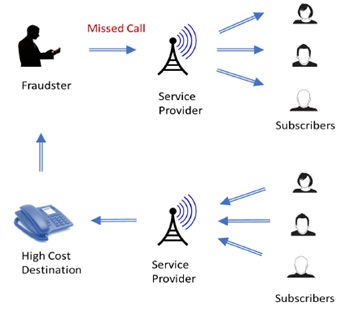
    Wangiri fraud, a callback scam dates has its origin to the Japanese word which means “one ring and cut”. Telecom operators are facing this for over a decade now and this is only growing exponentially year on year around the globe. In Wangiri, a fraudster gives a missed call to several victim’s phone numbers of different countries from an international or unusual number. To the user, the CLI (caller number ID) is modified in such a way that it looks like a genuine call and when the victim calls back, it turns out to be a premium rate service (PRS) number owned by fraudster for which the victim is charged heavily for the calls. The fraudster intends to keep the victim on hold to increase the billed amount. The premium rate service provider pays the fraudster a certain share of the call revenue for each minute of call received by the premium rate number.

    As per the CFCA 2019 fraud loss survey report, Wangiri is one of the top 5 fraud methods used by fraudsters to carry out fraudulent activities. It is also estimated that telcos are losing close to USD 1.82 billion globally to this fraud.

    FIGURE 1.1: Wangiri Fraud

    Impact of Wangiri fraud on telecom operators

    Telcos incur both direct and in-direct loss due to Wangiri Fraud. Wangiri impacts the customers adversely resulting in customer churn due to high customer dissatisfaction from bill shocks and bad customer experience. It also has a negative impact on the operator brand image as subscribers would complain about the high call rates charged to them without them being aware of it. There is also an impact on the cost due to the increase in customer management.

    Why Wangiri cannot be eliminated?

    The two main reasons due to which Wangiri cannot be eliminated but can be managed are:

    • There is no regulation defined on the carrier business causing the fraudster to take advantage of the vulnerabilities of the carrier network.
    • The lack of visibility on the end carrier who is terminating the call is another reason why Wangiri can’t be eliminated.

    The end carrier who terminates a fraudulent missed call is not aware of the fraudster details and the country from which call has originated is a high-risk destination or not. Better awareness at the carrier level can significantly decrease many Wangiri cases.

    As is clear from the statistics, Wangiri is eating a good chunk of the overall telecom revenues globally and needs to be addressed by the operator. Here is an interesting blog which talks about 8 simple strategies for telcos to combat Wangiri fraud. We conclude that Wangiri fraud cannot be eliminated, but its adverse impact of direct and indirect losses to the operator can be minimized to a large extent by having a robust fraud management system that can monitor the calls at source and tear down the calls in real-time.

    A tier-1 Middle East based telecom operator leveraged Subex’s Fraud Management’s signaling intelligence to detect and prevent Wangiri frauds.

    Read the case study now!