Author: admin

  • Gestión de acuerdos de socios en la era digital

    Gestión de acuerdos de socios en la era digital

    La digitalización ha abierto una gran cantidad de oportunidades para que los proveedores de servicios de comunicación (CSP) en todo el mundo transformen sus ofertas de servicios tradicionales, pasando de la telefonía a las empresas basadas en contenido y alcanzando el estado de proveedores de servicios digitales (DSP). Hay un cambio de paradigma en el ecosistema de telecomunicaciones con la entrada de disruptores tecnológicos (como los jugadores OTT) que resulta en una cartera de servicios con modelos de precios competitivos. El agotamiento de los ingresos de voz y el aumento de los servicios de datos ha cambiado la dinámica de las asociaciones comerciales.

    El proveedor tradicional de servicios de telecomunicaciones ya no está aislado en el mercado y tiene múltiples colaboraciones para audio, video, contenido, análisis, nube, etc. Además, debido a la reducción de los márgenes, los operadores esperan tener contratos / acuerdos con sus proveedores y socios, lo que creará una situación de ganancia para ambas partes involucradas. Según una encuesta reciente realizada por TM Forum, los DSP tienen una oportunidad de ingresos de alrededor de $ 142 mil millones de servicios digitales. Ya sea que AT&T adquiera Time Warner por $ 85.4 mil millones o que Reliance Jio se integre con Saavn para crear la aplicación JioSaavn, las empresas de telecomunicaciones buscan implementar contenido exclusivo para sus clientes finales. Teniendo en cuenta que hay mucho que ganar, un DSP sin una oferta de contenido fuerte en el escenario actual es casi inimaginable.

    Un DSP a menudo tiene cientos de contratos de proveedores de contenido (en su mayoría con agregadores) para administrar, y hay una gran diversidad de socios que van desde un desarrollador de garaje hasta Google.

    Construyendo factores de éxito:

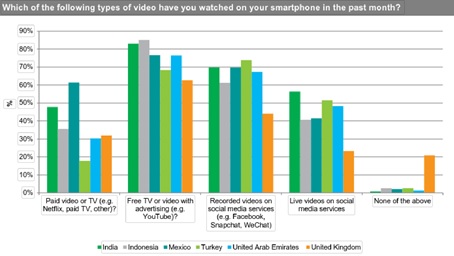
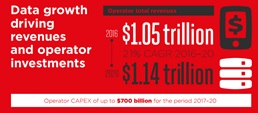
    El fenomenal aumento en el consumo de datos por parte de los suscriptores y el contenido gratuito está impulsando la mayoría de los negocios principales de las empresas de telecomunicaciones en la actualidad. Además de esto, pocas empresas de telecomunicaciones se están asociando con jugadores OTT para proporcionar contenido exclusivo y servicios especializados en forma de paquetes premium. Las suscripciones OTT dirigidas por operadores se han convertido en el nuevo modelo de negocio que genera ingresos y segmentos de clientes.

    Building Success Factors
    Fuente : IHS Markit

    Impulsar nuevos modelos de negocio: el creciente nivel de complejidad

    Inicialmente, se intercambiaron hojas de tarifas entre socios para facturar el uso de los servicios. Más tarde celebraron acuerdos bilaterales para liquidar los ingresos entre ellos. Ahora, las empresas de telecomunicaciones se están moviendo a contratos digitales al asociarse con proveedores de contenido y otros jugadores OTT. Estos contratos digitales implican calificaciones de nivel o bandas / junto con exclusiones / descuentos. Los compromisos y la calificación basados ​​en parámetros específicos han aumentado el nivel de complejidad con respecto a la calificación y el cobro a sus socios.

    Pasemos por 3 tipos de acuerdos que se ejecutan entre socios en estos días:

    Existen varios escenarios de acuerdo (acuerdos) entre el operador y el socio de contenido basados ​​en diferentes modelos de negocio. Además, los modelos de ingresos compartidos han evolucionado desde un esquema de porcentaje fijo a en un enfoque basado en niveles o bandas a traves de los distintos escenarios de productos.

    1. Un acuerdo basado en nuevas suscripciones

    Número de nuevas suscripciones   Participación en ingresos

    0 – 500                                            P %

    501 – 2000                                     Q %

    2001 y más                                     Q % y % adicional T % por número de suscriptores >2000

    Según el acuerdo del socio, si las nuevas suscripciones son negativas para un mes en particular, no se realizará ningún pago al socio para ese mes.

    2. Un acuerdo basado en promociones

    Los ingresos compartidos entre las partes serán mensuales. El período de promoción puede ser de unos pocos meses o puede ser continuo. Si el usuario se suscribe al contenido de

    Meses                  Participación en los ingresos

    1 mes                           P %

    2 Meses                       Q %

    3 meses y más             R %

    3. Un acuerdo basado en la penetración en el mercado.

    En este escenario, el operador puede compartir los ingresos en función de la penetración de los suscriptores en un área. La complejidad involucrada aquí es que el nivel de penetración de cada mercado es diferente del otro. Además de esto, hay ciertas áreas donde el radio se define con respecto a un punto de referencia. A los suscriptores dentro del radio se les cobrará una prima y, en consecuencia, la participación en los ingresos.

    En el escenario competitivo del mercado actual, las asociaciones se han convertido en una necesidad para los operadores de telecomunicaciones y avanzan mediante la firma de contratos innovadores y complejos. Los ejemplos mencionados anteriormente de contratos / acuerdos digitales son algunos de los modelos que hemos tratado recientemente. En el futuro, veremos muchos de estos modelos con mayor complejidad y definiciones de contratos digitales innovadores.

    Si está interesado en saber más sobre la gestión de contratos mayoristas complejos

    ¡DESCARGUE AHORA EL SEMINARIO WEB GRABADO!

    Have you negotiated or signed any complex contract recently? Let us know in the comments section below. Looking for partner who can help you handle complex contact? Talk to us.
  • How Industry Trends are Impacting Telecom Partnerships

    How Industry Trends are Impacting Telecom Partnerships

    Trends that are creating a shift

    With democratizing access to technology, more and more people are embracing it and telecom is one of the industries which is most affected by this shift. More and more people will have mobile by 2020 and the amazing thing is the revenue of this user acquisition will be driven by data consumption as compared to voice/SMS or other traditional services which were the base of telecom offering till recent time.

    Operators are sensing the shift happening in the user choices and trying to figure out ways to stay in the competition. Mobile broadband connection to increase from 55% of the total in 2016 to 73% by 2020. The number of smartphone users will reach 5.7 billion by 2020 which means more and more people will be using data as a telco service and be a part of the digital ecosystem. Mobile data is expected to grow at a CAGR of 47% till 2020.

    If we see the driving factors behind this shift, OTT, content and other digital service providers have played a major role. See the below graph on how the composition of services has changed over time.

    It’s not only the addition of new partners to the digital ecosystem, but the traditional wholesale is also evolving. Here are the new trends which we can see happening in wholesale.

    Implications on Telcos due to digitalization

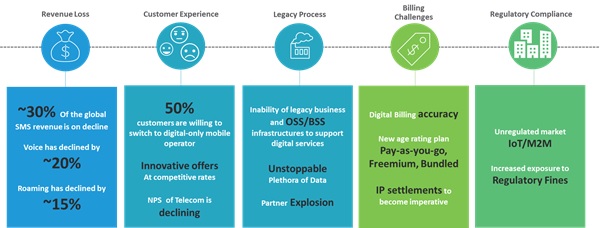
    Telcos no more work in silos as they are disrupted by the new age service providers hence looking for new partners to offer competitive and exciting services to its consumers. The below chart shows the changes happening in the telecom industry. This is forcing telcos to search for innovative and unique economic models.


    New Possibilities for Telcos

    These trends have opened a lot of possibilities to explore additional business avenues and try new economic models. The telco revenue mix is also changing with the partner mix as we can see in the graph and it is impacting the way telcos operate and manage partnerships in a traditional format. Hence the partner lifecycle management is also becoming imperative for telcos to embrace the digital revolution. For example, there will be 25 billion connected things by 2025 with enterprise verticals as the main drivers. Blockchain in telco has so far been limited to roaming but experimentation could take this further, especially if eSIM came to smartphones.

    Smartphone connection will increase to 79% of the total mobile connection bringing in new customers. Over a fifth of the world’s markets will have launched 5G by 2020, spending a combined $244 billion on networks in the process which will bring new capabilities for telcos.

    How Telcos can Embrace Digitalization Successfully

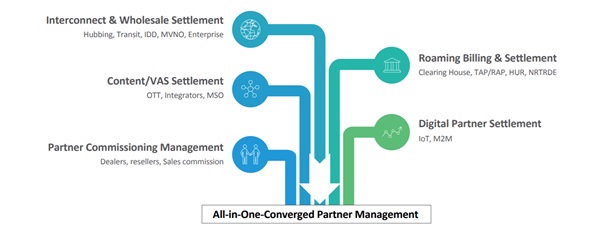
    The need of the hour is a unified solution which can cater to all the requirement of the ecosystem. The system should be able to provide visibility for everyone in the ecosystem to establish trust among the partners. Right from efficiently managing the partner onboarding, to partner settlements and dispute management, the system should be able to make the whole journey seamless for both traditional and digital service partners. The below image shows some of the capabilities of the system.

    This unified solution will allow telcos to transition through the changing paradigm and add agility and scalability to the business to embrace any new technology and consumer behavioral shift.

    To learn how telcos can leverage partnerships to gain competitive advantage

    Watch the Webinar now!

  • The future of Revenue Assurance – ‘Expert opinion’

    The future of Revenue Assurance – ‘Expert opinion’

    [vc_row][vc_column][vc_column_text]One of the most evolving functions in the telco BSS side of things is Revenue Assurance. Over the years, it has molded itself into many forms catering to changing business needs, new offerings and market dynamics. However, now seems to be a time that is different from anything we have seen earlier, as the influence of ‘Digital’ on telcos is immense. The possibilities for telcos in the digital world are infinite, and so are the risks – providing immense scope for the evolution of traditional functions like Revenue Assurance. So, we went about asking some of the highly regarded RA experts in the industry what they think is the future of the Revenue Assurance function is, and here is what they said (listed in alphabetical order)

    “The Telecom industry has cut across economic barriers and has created a media that surpasses limitations placed on the economy of a nation by its physical infrastructure. The Telecom revolution has hit all countries across the globe from first world to third world. As markets mature and subscribers grow in numbers, new operators set up operations to tap the markets, existing operators face pressures to maintain their customer base, ARPU and ultimately their margins.
    The advent of competition has brought about a need to maintain the top lines of the companies, which can be achieved by effective strategy and efficient operations which has very well visible digital Impact. One of the key components for maintaining revenues and profitability is through operational efficiency by continuous deployment of is Revenue Assurance controls across Revenue streams.”

    [/vc_column_text][vc_single_image image=”19907″ img_size=”80×80″ alignment=”center” style=”vc_box_outline_circle_2″ css=”.vc_custom_1569831513336{margin-bottom: 10px !important;}”][vc_column_text css=”.vc_custom_1594959803732{margin-top: 0px !important;padding-top: 0px !important;}”]

    linkedin Amit Agrawal, Du – EITC

    [/vc_column_text][vc_separator][vc_row_inner][vc_column_inner][vc_column_text css=”.vc_custom_1569832014954{margin-bottom: 10px !important;}”]

    “RA solutions continue to address different threats as new services are deployed, however IoT usage patterns means need automated customization for each deployment is needed, requiring and understanding of each application.
    Real-time monitoring shifts RA solutions into operational systems providing fraud management capabilities, helping to mitigate risks and build trust for customers.
    CSPs tempted to reduce investments should consider it like continuing vaccinations even when a disease is eradicated”

    [/vc_column_text][vc_single_image image=”20005″ img_size=”80×80″ alignment=”center” style=”vc_box_outline_circle_2″ css=”.vc_custom_1569832029819{margin-bottom: 10px !important;}”][vc_column_text css=”.vc_custom_1594959822284{margin-top: 0px !important;padding-top: 0px !important;}”]

    linkedin Justin van der Lande, Analysys Mason

    [/vc_column_text][vc_separator][/vc_column_inner][/vc_row_inner][vc_row_inner][vc_column_inner][vc_column_text css=”.vc_custom_1569831634897{margin-bottom: 10px !important;}”]

    “I believe as Revenue Assurance is gradually evolving towards Business Assurance and telecom industry is transforming towards the digital arena, the role of business assurance will increasingly focus on adding value in business decision making owing to its enhanced analytical capabilities & commercial ingenuity using artificial intelligence, robotics and next-generation business assurance solutions. This will shift the emphasis from revenue saving to value maximization, operational efficiency and reduction in residual losses through proactive controls & processes.”

    [/vc_column_text][vc_single_image image=”19909″ img_size=”80×80″ alignment=”center” style=”vc_box_outline_circle_2″ css=”.vc_custom_1569831653249{margin-bottom: 10px !important;}”][vc_column_text css=”.vc_custom_1594959840748{margin-top: 0px !important;padding-top: 0px !important;}”]

    linkedin Mustafa Ali, Batelco

    [/vc_column_text][vc_separator][/vc_column_inner][/vc_row_inner][vc_row_inner][vc_column_inner][vc_column_text css=”.vc_custom_1569831676789{margin-bottom: 10px !important;}”]

    “Automation, Digitalization, Process Optimization, everything evolves with customer needs and business risks. In essence, RA should be an agile process with no manual activity: you always need to have the right indicators, suitable and comprehensive, scalable and quickly. In my opinion, a large part of RA should be integrated and taken into account at the time of the construction of the equipment managing offers and revenue streams.
    Solution providers and manufacturers should combine their know-how to integrate upstream and perfect this dimension of control.”

    [/vc_column_text][vc_single_image image=”19913″ img_size=”80×80″ alignment=”center” style=”vc_box_outline_circle_2″ css=”.vc_custom_1569831689905{margin-bottom: 10px !important;}”][vc_column_text css=”.vc_custom_1569848446251{margin-top: 0px !important;padding-top: 0px !important;}”]

    Ndeye Coumba, Sonatel

    [/vc_column_text][vc_separator][/vc_column_inner][/vc_row_inner][vc_row_inner][vc_column_inner][vc_column_text css=”.vc_custom_1569907892544{margin-bottom: 10px !important;}”]

    “Business transformation is taking place faster and the sources of income generation change in the same way. Traditional revenues are being replaced by new digital businesses, which are supported by processes with technologies that require evolving with more efficient control models, capable of processing a lot of information in real time.
    Revenue from new digital businesses and carrier billing has been rising in the order of 25% per year and from the revenue assurance area we have the challenge of transforming ourselves to detect unknown errors that are not evident today. The idea is to take advantage of big data always safeguarding the relevance of information security and privacy, to strengthen and give intelligence to our controls, anticipating risks and avoiding potential leaks, not only with the view of income, but in an integral way that allows us to ensure the business margin in an increasingly competitive market.”

    [/vc_column_text][vc_single_image image=”19915″ img_size=”80×80″ alignment=”center” style=”vc_box_outline_circle_2″ css=”.vc_custom_1569831733075{margin-bottom: 10px !important;}”][vc_column_text css=”.vc_custom_1594959855998{margin-top: 0px !important;padding-top: 0px !important;}”]

    linkedin Nelson Sepúlveda B., Telefónica / Movistar Chile

    [/vc_column_text][vc_separator][/vc_column_inner][/vc_row_inner][vc_row_inner][vc_column_inner][vc_column_text css=”.vc_custom_1569831753812{margin-bottom: 10px !important;}”]

    “In the era of 5G, CSPs are looking at their revenue assurance functions to monetise zeta-bytes of structured & unstructured data to detect patterns, outliers, and learning behaviours. The proliferation of products and the emergence of and API based economy have pushed RA/FM professionals have to find new ways to keep pace with the industry. AI/ML algorithms will assist RA/FM experts to relieve some of the workload and will allow them to take data driven decisions. Data scientists will play a role in creating, adapting and executing models that will detect new issues, reduce the number of false positives, increase the coverage, and improve accuracy. In the future years, Revenue Assurance will play an even more crucial role to protect the bottom line and create enough opportunities to enhance the top line.”

    [/vc_column_text][vc_single_image image=”19918″ img_size=”80×80″ alignment=”center” style=”vc_box_outline_circle_2″ css=”.vc_custom_1569831771452{margin-bottom: 10px !important;}”][vc_column_text css=”.vc_custom_1594959873037{margin-top: 0px !important;padding-top: 0px !important;}”]

    linkedin Nikhil Sehgal, Colt

    [/vc_column_text][vc_separator][/vc_column_inner][/vc_row_inner][vc_row_inner][vc_column_inner][vc_column_text css=”.vc_custom_1569831795147{margin-bottom: 10px !important;}”]

    “Digital innovations clearly place consequential challenges on Telcos who must reinvest in and reinvent themselves for incremental revenues in a competitive arena. Therefore, the future of revenue assurance rests in focus beyond controlling leakages within acceptable limits, to focusing value enhancements from statistically discernible causes of performance departures for tracking and improving stated objectives. With the best end-to-end visibility of the revenue value chain, under-funding assurance places a liability on the future.”

    [/vc_column_text][vc_single_image image=”20002″ img_size=”80×80″ alignment=”center” style=”vc_box_outline_circle_2″ css=”.vc_custom_1569831815140{margin-bottom: 10px !important;}”][vc_column_text css=”.vc_custom_1594959953482{margin-top: 0px !important;padding-top: 0px !important;}”]

    linkedin Ope Faniran, 9Mobile

    [/vc_column_text][vc_separator][/vc_column_inner][/vc_row_inner][vc_row_inner][vc_column_inner][vc_column_text css=”.vc_custom_1569831845950{margin-bottom: 10px !important;}”]

    “Considering the evolution of business dynamics, the scale at which Revenue Assurance is maturing is incredible with more focus on cost optimization, capex management, and knife-edge driven preventive measures thereby climbing up the ladder to be owner of Business Assurance. Growth demands RA to become BA with getting rid of ROI instead to play pivotal role in mitigating risks and minimizing leakages to bring in more value to the company.”

    [/vc_column_text][vc_single_image image=”19922″ img_size=”80×80″ alignment=”center” style=”vc_box_outline_circle_2″ css=”.vc_custom_1569831862976{margin-bottom: 10px !important;}”][vc_column_text css=”.vc_custom_1594959973399{margin-top: 0px !important;padding-top: 0px !important;}”]

    linkedin Sai Devata, Viva Kuwait

    [/vc_column_text][vc_separator][/vc_column_inner][/vc_row_inner][vc_row_inner][vc_column_inner][vc_column_text css=”.vc_custom_1569831883772{margin-bottom: 10px !important;}”]

    “As the industry goes digital the challenges for revenue assurance will change but basics will remain. As Revenue Assurance professionals, we need to understand the new risk landscape: cybersecurity and eco-system weaknesses will bring new risks. Digital solutions will also provide new opportunities to assure revenues and transactions. We need to embrace digital and ensure business processes are born digital with Revenue Assurance embedded in them leveraging on new technology as we do so.”

    [/vc_column_text][vc_single_image image=”19913″ img_size=”80×80″ alignment=”center” style=”vc_box_outline_circle_2″ css=”.vc_custom_1569831892768{margin-bottom: 10px !important;}”][vc_column_text css=”.vc_custom_1594959986633{margin-top: 0px !important;padding-top: 0px !important;}”]

    linkedin Sarah Hakeem, Millicom

    [/vc_column_text][vc_separator][/vc_column_inner][/vc_row_inner][vc_row_inner][vc_column_inner][vc_column_text css=”.vc_custom_1569831919834{margin-bottom: 10px !important;}”]

    “The Customer being the nucleus of the business, the future of Revenue Assurance is definitely to assure a superior customer journey and experience. Besides business growth, QoS, profitability, and enhancing the culture of risk management, as telcos continue to evolve into Digital Service Providers, RA will further step up to play a decisive role in assuring security of its services, data privacy, regulatory compliance and data governance.”

    [/vc_column_text][vc_single_image image=”19924″ img_size=”80×80″ alignment=”center” style=”vc_box_outline_circle_2″ css=”.vc_custom_1569831957249{margin-bottom: 10px !important;}”][vc_column_text css=”.vc_custom_1594960003774{margin-top: 0px !important;padding-top: 0px !important;}”]

    linkedin Straus Dias, Ooredoo Qatar

    [/vc_column_text][vc_separator][/vc_column_inner][/vc_row_inner][vc_row_inner][vc_column_inner][vc_column_text css=”.vc_custom_1569831979684{margin-bottom: 10px !important;}”]

    “With the ever-evolving and increasingly complex business models governing telecommunications, driven by competition to provide subscribers with an expanding array of devices (from phones and accessories to branding merchandise) and services (from voice and data to media and entertainment), legacy views of Revenue Assurance will have decreasing financial value. Revenue Assurance organizations will be forced to consider costs for performing margin assurance, while also understanding business opportunities and risks in a broader Business Assurance role.”

    [/vc_column_text][vc_single_image image=”20003″ img_size=”80×80″ alignment=”center” style=”vc_box_outline_circle_2″ css=”.vc_custom_1569831997154{margin-bottom: 10px !important;}”][vc_column_text css=”.vc_custom_1594960016925{margin-top: 0px !important;padding-top: 0px !important;}”]

    linkedin Taruna Rajan, T-Mobile

    [/vc_column_text][vc_separator][vc_column_text]

    So, those were the views of some of the top RA practitioners in the industry. What are your thoughts on the subject? Let us know in the comments section.

    If you want your thoughts to be featured in the next ‘Experts opinion’ article, write to us here.

    [/vc_column_text][/vc_column_inner][/vc_row_inner][/vc_column][/vc_row]

  • Choosing the Right Converged Partner Management Solution

    Choosing the Right Converged Partner Management Solution

    What is a Converged Partner Management Solution?

    Converged partner management is a unified solution which caters to the entire gamut of partner needs of a telecom operator. The platform addresses the needs of both traditional and digital partners by spreading across different domains and helps to handle the complex relationships between the suppliers and vendors of the telecom operator.

    Why you need a Converged Partner Management Solution

    Over the last decade, digitalization has transformed the communication service provider (CSP) landscape. It has created a need to achieve market differentiation in response to the evolving customer profiles and prevail over emerging challenges from disruptive services. Telco revenues from legacy voice and SMS are on the decline and there is high CAPEX associated with network innovation. Telcos can turn this around by evolving as Digital Service Providers (DSPs). But the biggest challenge in this transformation is to bring both traditional and new digital partners together to create an integrated industry specific solution. But the success rate of these partnerships and integrations is very low as it comes with multiple challenges. Inefficient partner onboarding process, tariff management for multiple plans, billing and invoice reconciliation while taking OPEX into consideration. Based on a research 70% of partnerships fail due to trust and clarity of business relationships. There is a need of sustainable partnerships which can create value for everyone in the ecosystem.

    In this scenario, a converged partner management approach proves beneficial from both business and service perspectives. From the business perspective, a converged platform will help to visualize the partners’ business. It will consolidate partners into a single contractual binding and bundle the offerings, settlements, and payments across the entire domains. A converged partner management solution packs features that give CSPs freedom to experiment with NGN service offerings such as content management without having to worry about the scalability of its billing function. The solution enables telecom operators to have all their business partnerships in one single place and makes it easier to access information and make efficient business decisions. This is especially important as different partners insist different models in measuring the business impact and ROI.

    How to Choose the Right Converged Partner Management Solution

    Selecting a partner management solution to manage your partnerships efficiently is not an easy decision. The solution should complement the operations of the service provider and offers features and functionalities that remove operational errors and smoothen the partner management process.

    Below are the key features you should look for in a Converged Partner Management Solution

    Partner Self Onboarding: The partner onboarding platform can support self-boarding, manual onboarding and in some cases, a mix of both. The self-boarding platform will play a significant role in the digital era, giving the DSP the ability to perform most of the onboarding activities by automating the process like partner scoring on configurable KPIs and other partner details.

    Partner Scoring- Pre-Onboarding & Post Onboarding: Partner scoring can assist an operator to take pre and post onboarding decisions based on business KPIs, and this can be combined with standard agreed contracts to make the complete process automated.

    Defining the Partner Business: Defining the businesses of both traditional and digital partners is a complex process especially in the context of service offerings, revenue sharing and service agility. The business for traditional partners such as interconnect revolved around exchange of voice, SMS and usage of other services so the contract includes bilateral deals for settling the traffic and event rates. On the other hand, contract with digital partners like OTT players, content providers, VAS companies, MSOs, integrators, app developers, IoT and M2M service providers involves complex revenue sharing model as the settlement may be based on usage of resources, impressions/ clicks on the website, readings from metered equipment, among others. A converged partner management solution will help telcos to implement revenue sharing models that can be fixed, shared or a hybrid depending on the nature of the partner business.

    End-to-End Billing and Settlement: Helps the business to define rules and apply them to the events acquired to generate the final revenue figure to both the DSP and the partner. The system achieves this through accurate rating and charging, real-time updates, and on-time bill and statement generation.

    ETL (extract, transform, load) to Track and Process Events: The ETL tool is required to process different types of events from various sources and transform them to respective entities by extracting the relevant information. Considering the dynamic and open nature of the DSP ecosystem, the ETL tool should be flexible enough to handle the frequent onboarding of new partners and build mediation capability supporting ingestion and normalization of data from multiple partners in different formats.

    Partner Communication and Self-Care: A converged platform should enable a consolidated communication portal to manage all the operational aspects of the business including contractual updates, bills, settlements, credit debit notes, trouble ticketing, and dispute management. The portal should also be integrated to the backend systems to orchestrate each operational aspect towards the respective system for action and resolution. Finally, it should feature open APIs that enable quick integration with third-party systems.

    Visibility of Partner Business: Real-time visibility ensures transparency across the businesses. Through real-time analytics of reports, alerts and notifications, the converged platform can enhance the visibility and reporting across different channels.

    all-in-one-PS

    Are You Ready?

    New age partnerships require transparency and trust between the partners to create a robust ecosystem. A Converged Telecom Partner Management solution will help telcos to manage these new age partnerships efficiently and enable them to drive new business models. This will also reduce the time to market for new offers and packages and allow telcos and partners to acquire new customers and add new revenue streams.

    Are you ready for a converged partner management solution to succeed in the new age digital ecosystem?

    Download the Webinar recording!

  • Leveraging partnerships to succeed in the digital ecosystem

    Leveraging partnerships to succeed in the digital ecosystem

    The Fourth Industrial Revolution has dynamically altered the global communications landscape, creating both challenges and opportunities for communication service providers (CSPs). Consumers have become increasingly demanding with respect to consistent experiences across multiple devices, and CSPs are gradually transforming into providers of advanced digital services such as bundled broadband, mobile apps, and interactive customer-centric content. This transformation into a digital service provider (DSP) is not easy and CSPs are fraught with multiple process and software challenges during this shift.

    Moving from Interconnect Partnerships to Strategic Partner Management

    In an intensely competitive market, CSPs face immense pressure from over the top (OTT) content providers such as Google and Facebook who have direct consumer outreach. Provision of more customized, automation enabled services through large partner ecosystems is the norm. The increasing complexity of emerging markets coupled with initiatives such as smart cities will open big digit growth opportunities capable of being handled only by huge curated partner collaborations.

    Earlier, telecom operators entered into interconnect partnerships with other telecom operators mostly to leverage mutual networks for voice and messaging services. However, the proliferation of smartphones and high-speed internet services has led to a burgeoning increase in the number of partners providing a diverse range of services, leading to a shift from conventional interconnect systems to complex partner management relationships.

    The Partner Management Market Is on an Upward Swing

    And rightly so, considering there are about 23 vendors offering a certain level of partner management functionality globally. According to analysts, the partner relationship management market (including software and services) is estimated to stand at US$ 850 Million today and is projected to increase to about US$ 1.65 Billion by 2023[1]. The entire ecosystem is expected to undergo certain strategic functional shifts, industry and geography notwithstanding. The coming years will witness new buyer personas across diverse channel types – and channel sales and marketing professionals will realize the importance of third-party influencers in reaching new buyers. The thrust will be on providers of partner management solutions to function as trusted partners – helping widen a brand’s outreach and influence the success journey in unimaginable ways.

    The need for Converged Partner Management

    The telecommunications wholesale market is growing rapidly with fierce competition and dwindling profit margins. Given the enormity of transactions and immense complexities surrounding a multi-party ecosystem, it is necessary to adopt effective partner management solution to ensure better service quality levels.

    [1] https://go.forrester.com/blogs/partner-relationship-management-prm-comes-of-age/

    To learn how telcos can leverage partnerships to gain competitive advantage

    Watch the webinar now!

  • ¿Por qué la inteligencia artificial impulsó la Gestión de fraude?

    ¿Por qué la inteligencia artificial impulsó la Gestión de fraude?

    La Inteligencia Artificial (IA) no es nueva y ha existido durante décadas. Sin embargo, con el advenimiento del big data y la informática distribuida que está disponible hoy en día, es posible darse cuenta del verdadero potencial de la IA. Desde lo que comenzó como una historia interesante en películas de ciencia ficción hasta programas como Alpha-Go que ha estado venciendo a los humanos, la IA ha ido evolucionando. La Inteligencia Artificial también se ha ramificado en múltiples subcategorías, como aprendizaje automático o machine learning, aprendizaje profundo, aprendizaje de refuerzo, etc.
    FM-1

    FM-2
    Una estrategia eficaz de gestión de fraudes (FM) incluye 3 pilares importantes: detectar, investigar y proteger. Creemos que la Inteligencia Artificial puede influir positivamente en los 3 pilares de la gestión del fraude, desde reducir los falsos positivos hasta ayudar a extraer el análisis de causa de raíz y crear una mejor experiencia del cliente en protección.

    En esta publicación, me gustaría ver el pilar inicial de la estrategia de Gestión de Fraudes: “Detección” y ver la influencia de IA en este paso tan importante. Un enfoque tradicional para la detección de fraudes ha sido a través de motores de reglas que podrían ser:

    • Condiciones en caso contrario
    • Umbrales
    • Expresiones
    • Evaluación de patrones de datos
    Estas son ampliamente conocidas como soluciones deterministas donde un evento desencadena una acción. Los mayores pros y contras de este enfoque es que se necesita la intervención humana para alimentar la lógica.

    Por ejemplo: para una detección basada en el umbral, los humanos tienen que alimentar el motor de reglas para que el recuento de registros por encima de cierto umbral sea sospechoso.

    Los siguientes diagramas muestran cómo se ve esto

    rule-engine

    Después de mirar el diagrama anterior, surge una pregunta importante, si este valor de umbral es una línea recta o puede doblarse según el comportamiento de los datos. Ahora hay formas para que el motor de reglas se comporte como se menciona en el diagrama,

    variable-threshold

    por ejemplo, en lugar de tener una sola regla, tengamos varias reglas

    • Por categoría de cliente
    • Por destino
    • Por edad de los clientes

    Y multiplique eso con otras dimensiones en los datos que son

    • Número de teléfono
    • Número de la persona que llama
    • Número llamado
    • Código de país

    Y multiplique eso con otro conjunto de medidas por dimensiones

    • Cuenta
    • Duración
    • valor

    Y arroje mil millones de volúmenes adicionales a los conjuntos de datos

    Rápidamente los equipos de FM terminan con algo como esto
    AI Blog1
    Pero lo que querían o soñaban era esto
    AI Blog2

    Ahora no digo que los equipos de FM no estén lo suficientemente capacitados para volar, pero un equipo de fraude en un proveedor moderno de Servicios Digitales debería estar más enfocado en otros factores importantes.

    machine-learning
    Entonces, veamos cómo una clase muy evolucionada de Inteligencia Artificial conocida como Aprendizaje Automático (Machine Learning) observa esta declaración del problema. En lugar de que los humanos alimenten la información del dominio o los umbrales, los algoritmos de aprendizaje automático extraen datos de comportamientos fraudulentos históricos y crean modelos. Estos modelos se utilizan para evaluar conjuntos de datos de producción reales para evaluar si ciertas actividades son fraudulentas o no. Una ventaja es que estos modelos son muy buenos para ver los conjuntos de datos desde múltiples dimensiones y medidas al mismo tiempo y para determinar si el evento es fraude o no.

    Este enfoque ayuda a lograr múltiples KPIs de equipos de gestión de fraude allí al aumentar la eficiencia.

    • Mayor precisión – debido a que la inteligencia artificial puede aprender y adaptarse a los escenarios de negocios más rápido, la inteligencia artificial puede aumentar significativamente la relación positiva verdadera
    • Reducción del tiempo de detección – qué tan rápido se puede detectar un evento de fraude
    • Autoaprendizaje – cómo, durante un período, los escenarios empresariales cambiantes y la estacionalidad en los datos se pueden adoptar para la detección de fraude
    • Inteligencia contra el fraude– cómo se pueden aprender y clasificar los comportamientos del cliente o de cualquier otra entidad para una mejor detección del fraude
    • Proactividad – capacidad de extraer patrones desconocidos que no se vieron en los datos anteriormente
    FM-4

    La aplicación de Inteligencia Artificial tiene sus propios desafíos importantes y requiere un nuevo marco de pensamiento, sin embargo, al observar el Tsunami de Datos que ha afectado a los equipos de gestión de fraudes, parece que un enfoque profesional de IA solo ayudaría a los equipos de Gestión de Fraude a escalar aún más.

  • Inteligencia Artificial y Machine Learning: La clave para combatir el Fraude de Identidad

    Inteligencia Artificial y Machine Learning: La clave para combatir el Fraude de Identidad

    En un mundo cada vez más conectado digitalmente, el fraude de identidad es un problema creciente. Según la encuesta anual de fraude de la Asociación de Control de Fraude de Comunicaciones (CFCA), el fraude de identidad ocupó el primer lugar como el método de fraude número uno presente en todo el mundo y en empresas individuales. También aparece como el primero entre los diez métodos de fraude más importantes, el fraude de identidad en las telecomunicaciones durante el proceso de suscripción (fraude de suscripción) resultó en costos de $ 2.03 mil millones.

    El robo de identidad, donde el uso de identidades fabricadas en el punto de venta permite el uso fraudulento de servicios de telecomunicaciones y / o perpetúa actividades fraudulentas posteriores, puede tener serias implicancias en la era actual. Con 4G altamente interconectado y el despliegue de redes 5G que permitirán no sólo servicios de valor agregado sino también servicios financieros como pagos móviles y banca se abre el acceso como nunca antes. El robo de identidad puede funcionar como un punto de entrada para innumerables tipos de fraude o incluso terrorismo. Con acceso a autorizaciones secundarias (verificación del código PIN), el fraude de suscripción se puede utilizar para cualquier tipo de actividades ilegales.

    Esto ha facilitado la necesidad urgente de una respuesta proactiva y dinámica para fomentar la seguridad de la identidad digital.

    Protección contra el fraude de identidad

    La respuesta para combatir el fraude radica es detectar anomalías de datos en tiempo real. Por ejemplo, para abordar el fraude en las telecomunicaciones, el Instituto de Investigación Tecnológica (TRI) ha declarado que los servicios de verificación de identidad en el punto de venta en tiempo real son una ayuda invaluable para evitar que los estafadores exploten el robo de identidad. Históricamente, las reglas siempre han estado en el sistema, pero en un mundo cada vez más conectado, la cobertura efectiva contra el fraude sólo es posible con una combinación de reglas y tecnologías aplicadas de Inteligencia Artificial (IA) y Machine Learning (ML).

    Con las tecnologías Inteligencia Artificial (IA) y Machine Learning (ML), las empresas pueden detectar anomalías de datos en tiempo real y tomar decisiones basadas en la información a medida que sucede, lo que les permite anticipar y tomar medidas proactivas. Por ejemplo, las técnicas de IA / ML pueden usar la tecnología de reconocimiento facial para identificar un alto riesgo al hacer comprobaciones en listas negras. Machine Learning puede aumentar los sistemas tradicionales basados ​​en reglas para desarrollar y entrenar algoritmos para determinar las características del tráfico e identificar anomalías que podrían terminar siendo fraudes.

    Además, las inmensas cantidades de datos no seguros que fluyen desde los dispositivos conectados a las redes del operador solo se pueden proteger con IA y ML. Las tecnologías de inteligencia artificial están equipadas con la capacidad de ampliar los esfuerzos y permitir la detección de fraudes a una escala masiva mediante el manejo de la gestión de millones de puntos de datos de clientes o redes.

    Si está interesado en aprender cómo las técnicas de IA / ML pueden ayudarlo a combatir el fraude de identidad

    Regístrese para el seminario web ahora!

  • Not just another “G”, how 5G is Already Disrupting the Communications Industry

    Not just another “G”, how 5G is Already Disrupting the Communications Industry

    In the early days of any transformative technology, there’s often an interesting mix of hype, anticipation and confusion.  At risk of exposing my long tenure in telecom, I’ll ask if anyone else recalls ISDN?  In a 1994 article in the Los Angeles Times, the author presciently said that ISDN “is the first thing that’s going to come along that begins to give people a taste of what the future will be like.”  For those of us on the inside (I was at MCI at the time), ISDN stood for “I Still Don’t Know”!

    Fast forward to 2019 and what’s different is not only the technical advances themselves, but the pace of disruptive change.  And yes, there is still confusion.  If you have an AT&T phone in the US, and have noticed a 5G E symbol, you know what I’m talking about.  But hey, this is not a post about confusion (that would be too easy for me).  I’d like to focus on 5G disruptions, but not the disruptions that you have likely heard about.

    The “disruptions” that come to mind for many industry observers when it comes to 5G are faster speeds, significantly lower latencies, a dense communications matrix for IOT, mmBand spectrum, etc.  Sure, there will be many headline benefits from 5G.  What I find more intriguing about 5G is its role as a catalyst for change reaching far beyond the radio network.  Let’s briefly explore some of these.

    Interested in knowing more about Capacity Management for future networks?

    Download the webinar recording

    The whole world is starting to look like a data center – Historically, operator networks are full of dedicated telecom equipment rack-mounted in central offices, wire centers, and customer points-of-presence.  This contrasts with Web scale companies like Amazon, FB and Google who operate their networks from vast data centers full of commoditized hardware.  There will come a time soon when the two worlds merge, and 5G is helping to accelerate this.  A couple of key influences are 5G edge clouds and the emerging popularity of cloud-native applications.  These are prompting operators to rethink their networks and where they locate compute, storage and network equipment to enable the super low latencies of 5G.  Under the auspices of ONF, there is an project called CORD (Central Office Re-architected as a Data center) and the sub-project M-CORD which are loci for 5G virtualization and cloud-based initiatives like vRAN and vEPC.

    “Where ever you are on your 5G journey, Subex is an essential partner to help you plan, operate, secure and optimize your network.  Our solutions will grow with you and guide you into the more open and automated future network.”

    Open everything – Speaking of open source, 5G and open source software are tightly intertwined.  I recently attended the Linux Foundation Open Networking Summit and many of the sessions were devoted to community projects focused on establishing 5G infrastructure and enabling 5G use cases.  At the recent Big 5 Event in Denver, the first day was devoted to an open source track.  5G is the engine behind many early implementations of SDN and NFV.  “Open” doesn’t just mean software—so called “white boxes” start as bare metal hardware with operator or community-sourced software & firmware that turn them into routers or CPE or even ROADMs!  Why this trend?  Operators are looking to community-driven innovation to accelerate delivery of advanced use cases, lower costs and avoid vendor lock-in.

    Start with use cases – Well, that’s a novel concept!  With 3G and 4G, there were clear expectations that simply enabling faster and more reliable mobile data would lead to various applications which leveraged that data.  The industry has taken a different approach to 5G.  At the Denver Big 5G Event, Ibrahim Gedeon, TELUS CTO, described 5G as “the first ‘G’ to be driven by use cases”.  These include AR/VR for factories, industrial automation, massive IOT sensing, connected cars and telemedicine.  5G is creating a rich mobile communications fabric with various speed and latency requirements that align with the specific needs of each use case.  Network slicing is another buzz-worthy aspect of 5G that allows operators to allocate portions of their networks to specific customers and use cases.

    Break it apart, then put it back together – In industry parlance, this is called disaggregation and convergence.  Step 1: Take key network functions like PCRF, HSS and MME and peel them from the monolithic platforms on which they are currently hosted.  Step 2: Apply NFV to virtualize the functions into VNFs and make them portable. Step 3: Host the VNFs within converged platforms like COMAC, which is an ONF project that combines mobile, access and core networks under one umbrella.  This is part of a broader industry trend to package many telco functions and infrastructure components into massive all-in-one platforms.  Another good example, of course, is ONAP.  For many of these initiatives, the race to enable 5G is a driving force.

    I’ve only scratched the surface of network and software trends that are precipitating extraordinary change in the communications industry.  The world is becoming more complex, not less.  Each promising new innovation usually has unforeseen issues that can increase costs and pose operational challenges.  Early NFV implementations offer such a cautionary tale.  Where ever you are on your 5G journey, Subex is an essential partner to help you plan, operate, secure and optimize your network.  Our solutions will grow with you and guide you into the more open and automated future network.

    As for ISDN, I guess we do know now.  It really did help usher in the modern data-driven era.

    To understand more on capacity management for future networks!

    Download the webinar recording

  • How Artificial Intelligence and Machine Learning is the key to combat Identity Fraud

    How Artificial Intelligence and Machine Learning is the key to combat Identity Fraud

    In an increasingly digitally connected world, identity fraud is a growing problem. According to the Communications Fraud Control Association’s (CFCA) annual fraud survey, identity fraud took the top spot as the number one fraud method present globally and at individual companies. Also featuring as the first among the top ten fraud methods, identity fraud in telecommunication during the subscription process (subscription fraud) resulted in costs of $2.03 billion.1

    Identity theft, where the use of fabricated identities at point of sale, enables the fraudulent use of telecom services and/or perpetuates subsequent fraudulent activities, can result in serious implications in the present age. With highly interconnected 4G and soon to be launched 5G networks enabling not just value-added services but also financial services like mobile payments and banking, it opens up access like never before.  Identity theft can work as an entry point for myriad types of fraud or even terrorism. With access to secondary authorizations (PIN code verification), subscription fraud can be used for any number of illegal activities.

    This has facilitated an urgent need for a proactive and dynamic response to fostering digital identity security.

    Securing against Identity Fraud

    The answer to fighting fraud lies in detecting data anomalies in real time. For example, to tackle telecom fraud, the Technology Research Institute (TRI) has stated that, real-time point-of-sale identity verification services are an invaluable aid to stopping fraudsters from exploiting identity theft.2 Historically, rules have always been in the system. But in the increasingly connected world, effective fraud coverage is only possible with a combination of rules and applied Artificial Intelligence (AI) and Machine Learning (ML) technologies.

    With AI and ML technologies, companies are able to detect data anomalies in real-time and make decisions based on information as it happens, empowering them to anticipate and take proactive action. For instance, AI/ML techniques can use facial recognition technology to identify high risk by making checks against blacklists. ML can augment traditional rule-based systems to develop and train algorithms to determine the characteristics of traffic and identify anomalies that could end up being fraud.

    Furthermore, the immense amounts of unsecured data flowing in from connected devices onto operator networks can be secured only with AI and ML. AI technologies are equipped with the capacity to scale up efforts and enable fraud detection at a massive scale by handling the management of millions of customer or network data points.

    As networks continue to expand and new fraud schemes continue to evolve, a combination of rules and applied AI/ML models will serve as the most effective way in combating identity fraud.

    If you are interested to learn how AI /ML techniques can help you combat Identity Fraud

    DOWNLOAD WEBINAR RECORDING NOW!

    1 . https://v2.itweb.co.za/whitepaper/Amdocs_LINKED_2017_CFCA_Global_Fraud_Loss_Survey.pdf

    2 . https://technology-research.com/products/fraudmgt/telecom_fraud_management_executive_summary.pdf?_sm_au_=iTHSrnwsn4HFwT3q

  • Las 5 razones principales por las que los operadores de telecomunicaciones deberían explorar contratos de socios innovadores – Subex Limited

    Las 5 razones principales por las que los operadores de telecomunicaciones deberían explorar contratos de socios innovadores – Subex Limited

    La industria de las telecomunicaciones ha evolucionado a lo largo de los años en la economía digital a través de innovaciones tecnológicas. El cambio entre la generación de redes está progresando rápidamente, y eso tiene un impacto en los casos de uso de negocios y los sistemas BSS / OSS que son parte de este ecosistema. Si bien hoy hay un gran revuelo sobre 5G, el lanzamiento de 4G todavía está en progreso en ciertas regiones. 5G ha abierto una serie de nuevas oportunidades de negocios con realidad aumentada, autos autónomos, transformación de la atención médica y más. Con este ritmo y agilidad sin precedentes en el negocio, las asociaciones desempeñan un papel muy importante para los proveedores de servicios de comunicación (CSP), y necesitan estar bien equipados para gestionar la complejidad de contratos mayoristas y así lograr el éxito.

    Estos son los 5 impulsores para que los CSP firmen contratos con innovadores modelos de precios económicos:

    • 1. Ecosistema cambiante de la industria de las telecomunicaciones.

    La industria de las telecomunicaciones está experimentando un cambio radical en el escenario actual con múltiples socios en el ecosistema digital. Un CSP ya no está aislado en el mercado, sino que es una parte integral de un ecosistema vital. Están colaborando con diferentes proveedores y socios para proporcionar productos diferenciadores y con contenido innovador para servicios digitales de la nueva era, como la transmisión de audio y video a pedido. Todo esto coloca a los CSP en el meollo de toda la acción. Con una infraestructura robusta y la capacidad de procesar datos en grandes volúmenes, esta es una posición única que se puede aprovechar en este escenario cambiante.

    • 2. Nueva Liga de Clientes y Socios

    La dinámica cambiante en la industria ha dado lugar a una nueva liga de clientes que son agresivos y precisos. Es necesario que haya transparencia en todos los aspectos del negocio. Los plazos de los contratos son cada vez más cortos y exigentes, mientras que los modelos de negocio de los CSP no se han adaptado para satisfacer estas demandas.

    Las asociaciones son muy variadas, ya que la demanda de contenido mejor e innovador sigue creciendo, y esto podría variar desde un canal, una empresa de juegos hasta un creador de contenido individual. Las alianzas estratégicas son clave, y la transparencia también es esencial aquí. Con socios no tradicionales para estos nuevos tipos de contenido, el modelo de negocio debe ser adaptable y receptivo.

    • 3. Abrazando la digitalización

    Atrás quedaron aquellos días en que los CSP se centran simplemente en intercambiar hojas de tarifas entre socios para facturar el uso de los servicios. El precio se ha vuelto cada vez más competitivo. Los márgenes se están reduciendo más rápido de lo que puede crecer la nueva CAGR empresarial. Darse cuenta de las devoluciones lleva más tiempo de lo habitual. Entonces, ¿cómo está reaccionando el mercado? Bueno, la reacción ha sido explorar contratos no convencionales impulsados por volúmenes de datos. La complejidad de la calificación, ha aumentado en los contratos digitales con calificaciones de nivel slab/exclusiones / descuentos y compromisos.

    • 4. El contenido es el rey

    Bill Gates no se equivocó a fines de los años 90 cuando escribió un artículo prediciendo cómo se ganaría dinero real al compartir contenido en línea. La última década ha visto una incursión masiva por parte de los CSP en el espacio de contenido con el pretexto de la diversificación. Hace unos años, NBC Universal (adquirido por Comcast) y Time Warner Cable (adquirido por AT&T) se consideraron más como un cambio para el mercado del video que para las telecomunicaciones. Pero con la nueva tecnología digital para distribuir contenido, y no solo los canales de medios tradicionales, los CSP han ganado importancia allí. Los CSP se están asociando con los jugadores OTT para proporcionar contenido exclusivo y servicios de audiencia especializados en forma de paquetes premium. Las suscripciones OTT dirigidas por operadores se han convertido en el nuevo modelo de negocio que impulsa los ingresos a través de segmentos de clientes específicos.

    • 5. El ascenso del Edge Computing

    Dado que se espera que miles de millones de dispositivos IoT se usen en todo el mundo en los próximos años, la informática Edge jugará un papel fundamental para aprovechar la conectividad de datos de alta velocidad. Las asociaciones se volverán vitales con una mayor colaboración de proveedores en las áreas de dispositivos de borde como sensores, almacenamiento, computación y alimentación, etc. Los CSP se convertirán en la columna vertebral de esta red al proporcionar la conectividad requerida a todos los socios involucrados en el ecosistema.

    Si está interesado en saber más sobre la gestión de contratos mayoristas complejos

    Regístrese para el seminario web

    Debolina Ray

    Debolina is a seasoned professional who specializes in Telecom Partner Settlement, Route Optimization, Interconnect Billing and Order Management/Provisioning. She has over 10 years of experience in the Telecom industry and has a vast exposure to customers from all regions. Debolina currently works as a Technical Product Manager where she manages the product management for the Cost Analytics Portfolio of Subex. She is an active contributor on various forums like Actuate, QlikTech, and is also a voracious reader and an active blogger.