Author: admin

  • AI Trends in Telecom 2025: Solving Critical Industry Challenges

    AI Trends in Telecom 2025: Solving Critical Industry Challenges

    Telecom is no longer about just connecting people; it’s about empowering businesses and societies with intelligent solutions that anticipate needs, solve problems, and create value. By 2027, global telecom data traffic is projected to surpass 300 exabytes per month, which is about 50mn HD movies on Netflix, a staggering figure that underscores the urgency for operators to turn this deluge into actionable insights. With customer expectations evolving faster than ever, 76% of consumers now expect personalized experiences from their service providers, but less than 37% of telecom operators can generate actionable insights from their analytics.

    The answer lies in Artificial Intelligence (AI), but not in the way you’ve heard before. This is not about automation for cost-cutting or predictive models that work behind the scenes. This is about a seismic shift—a redefinition of how telecom operators function and innovate, moving beyond operational efficiency to a future where intelligence is embedded into every decision, interaction, and system.

    Navigating Telecom’s Core Challenges

    Personalization has become the cornerstone of customer loyalty in the telecom industry. Research shows that 80% of customers are willing to share data for a more personalized experience, expecting services to align with their unique preferences and needs. This demand marks a seismic shift in how customers perceive value, moving beyond speed and reliability to expect tailored interactions across every touchpoint.

    However, many telecom operators struggle to meet these expectations. Legacy systems and traditional segmentation models are ill-equipped to handle the dynamic needs of modern consumers. This gap leads to increased churn, as dissatisfied customers move to competitors that offer a more personalized approach. Beyond this, the inability to tailor offers and services results in missed upselling and cross-selling opportunities, directly impacting Average Revenue Per User (ARPU) and profitability.

    For operators, this isn’t just a matter of keeping up—it’s about redefining the customer relationship. Personalization is no longer a differentiator; it’s a basic expectation. To address this challenge, advanced AI and machine learning solutions are becoming essential. By leveraging real-time customer data, operators can anticipate individual needs, craft targeted offers, and foster deeper engagement. This proactive approach not only reduces churn but also transforms fleeting customer interactions into long-term partnerships that drive sustained growth.

    Use Cases of AI in Telecom

    Enhancing Customer Experience – The Market of One!

    In today’s telecom landscape, Customer Experience (CX) is the defining battleground for competitive differentiation. A customer segment of the future is no more going to be a group of customers, but just one customer! Research by Watermark Consulting shows that CX leaders outperform the S&P 500 by 54%, while CX laggards trail by as much as 240%. Despite significant investments in marketing network coverage, speed, and pricing, no leading Communication Service Provider (CSP) has achieved “beloved” status as measured by Net Promoter Score (NPS).

    This gap presents a unique opportunity for operators to carve out a leadership position by focusing on transformative CX strategies. Customers are clear about what they want: 82% of customers expect brands to understand their needs and preferences, while 71% express frustration when their experience feels impersonal. Historically, aligning with these expectations has posed significant challenges for telecom operators. However, with AI and ML technologies, cost-effective personalization and self-service capabilities are now within reach, making transformative CX achievable at scale.

    • Real-Time Personalization: AI enables operators to analyze customer preferences and behaviors dynamically, delivering tailored recommendations such as data plans, add-ons, and promotions. Personalized interactions foster loyalty, increase engagement, and elevate the brand experience.
      Real-Time Personalisation
    • Predictive Churn Analytics: With customer churn averaging 08-13% annually, predicting and addressing churn is critical. AI-driven models identify early warning signs of churn, such as reduced usage or billing complaints, allowing CSPs to implement targeted retention campaigns.
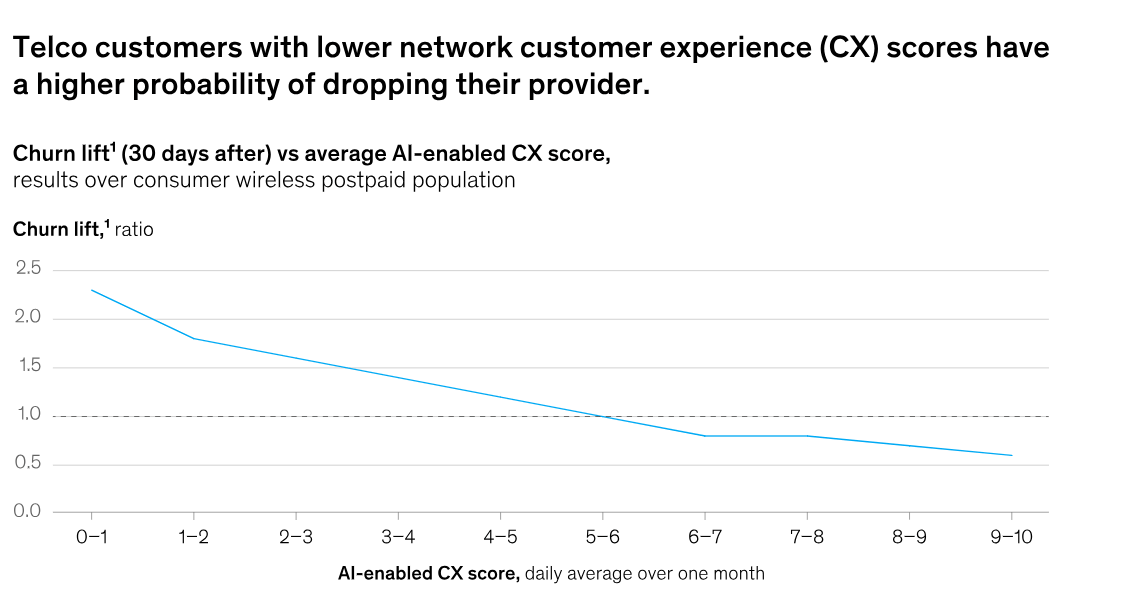
      Source: Google Cloud

    The churn lift ratio indicates the likelihood of customer churn relative to the average, while the AI-enabled CX score measures the quality of customer interactions as determined by AI insights. The trend shows that as the AI-enabled CX score improves (from 1 to 10), the churn lift ratio significantly decreases. This demonstrates that higher CX scores, driven by AI interventions, correlate with reduced customer churn, emphasizing the importance of AI in enhancing customer satisfaction and loyalty.

    • AI-Powered Customer Support: Self-service capabilities, such as virtual assistants and conversational AI, allow customers to resolve routine queries efficiently. From billing inquiries to troubleshooting connectivity, AI-driven systems reduce wait times, provide accurate resolutions, and free human agents to handle complex cases. This creates a seamless support experience, empowering customers while optimizing operational costs.

      Source: Google Cloud

    The chart shows the cumulative volume of customer interactions (vertical axis) against the percentage of use cases (horizontal axis). High-volume issues such as “amount due” and “make payment” dominate the first quartile (25%), while less frequent concerns like “device lost/stolen” and “add line” appear in later quartiles. This prioritization helps organizations focus on high-impact use cases for automation and process improvements, driving efficiency and better customer experience.

    According to McKinsey, AI could create between $80 billion and $174 billion in value for global CSPs, with 90% of this value driven by CX-related improvements. AI-powered personalization, predictive analytics, and self-service tools are no longer futuristic concepts—they are the present-day solutions shaping the future of telecom. By embracing these capabilities, operators can redefine customer relationships and position themselves as CX leaders in a competitive market.

    Driving Revenue Growth with AI

    Traditional telecom revenue streams are nearing saturation, making it critical for operators to explore new avenues for growth. AI has emerged as a game-changing technology, offering a total economic impact of $450–680 billion globally. Of this, $250–400 billion comes from established AI applications such as predictive analytics, advanced machine learning, and process automation, which have already proven their ability to optimize operations and increase profitability.

    Generative AI, however, is driving the next wave of innovation, contributing an additional $60–100 billion—about 15–40% of new economic value. This includes pioneering applications like hyper-personalized customer engagement, conversational AI, and intelligent content generation. Beyond these direct applications, generative AI could boost workforce productivity across telecom use cases, unlocking another $140–180 billion in value by streamlining workflows and enabling high-impact decision-making.

    • Harnessing Topic Mining to Unlock Insights

    The telecom industry generates enormous volumes of unstructured data from call centers, surveys, app stores and social media, yet 85% of this data goes unused (Gartner). Topic mining, powered by AI, transforms this untapped resource into actionable insights by identifying recurring themes, sentiment trends, and customer pain points.

    For example, sentiment analysis can highlight dissatisfaction with billing processes or rising interest in paperless billing. Companies leveraging topic mining report up to 25% improvement in Net Promoter Score (NPS) and a 15-20% reduction in churn. Additionally, this approach allows telecom operators to detect emerging customer needs, enabling them to innovate faster and refine services to meet expectations.

    By addressing key insights from topic mining, operators can enhance customer satisfaction, reduce call center volumes by up to 30%, and drive new revenue streams. As AI adoption grows, topic mining will become a cornerstone of customer experience strategies, helping telecom operators stay competitive and proactive in a dynamic market.
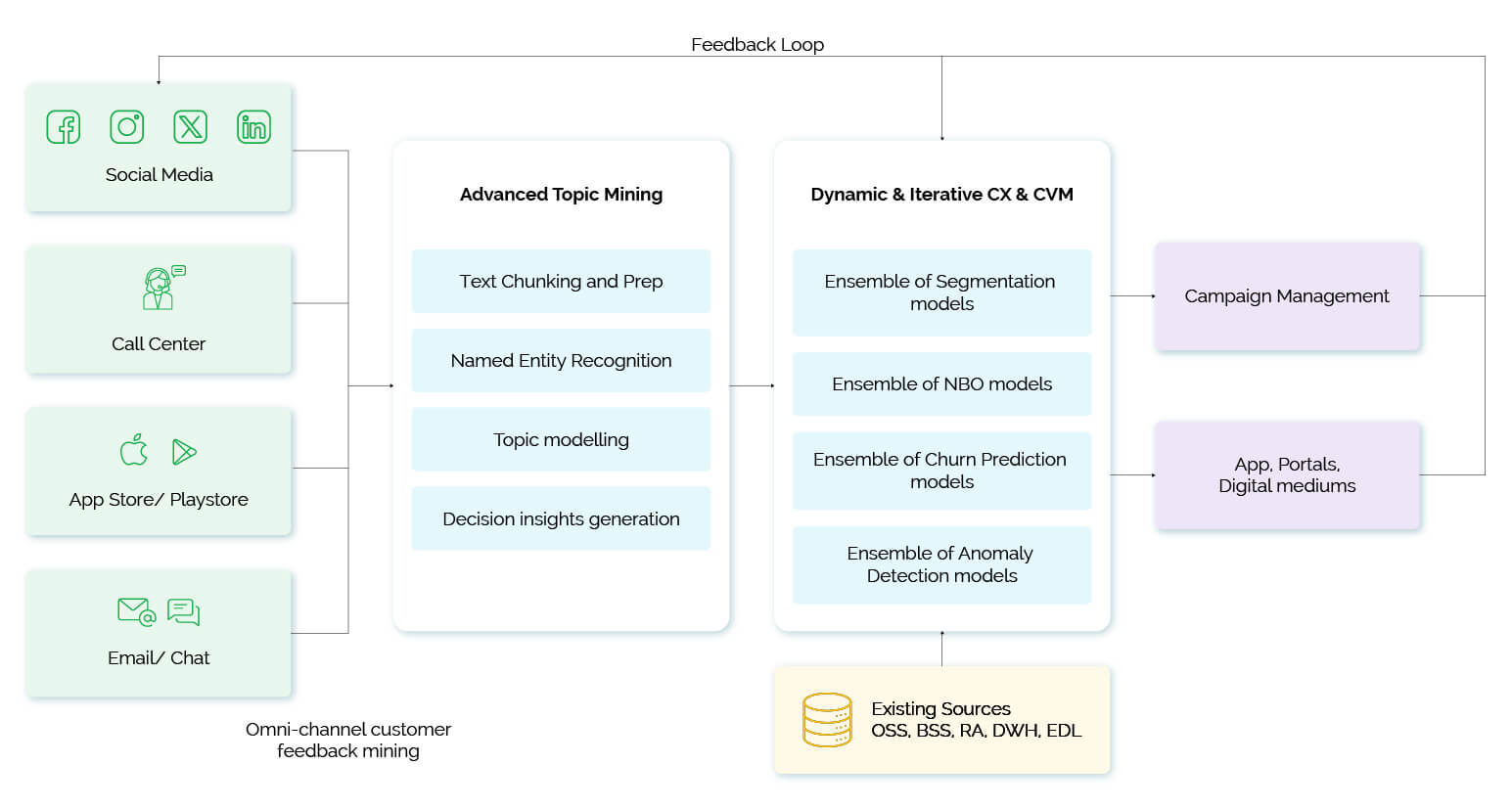
    Ai Flow

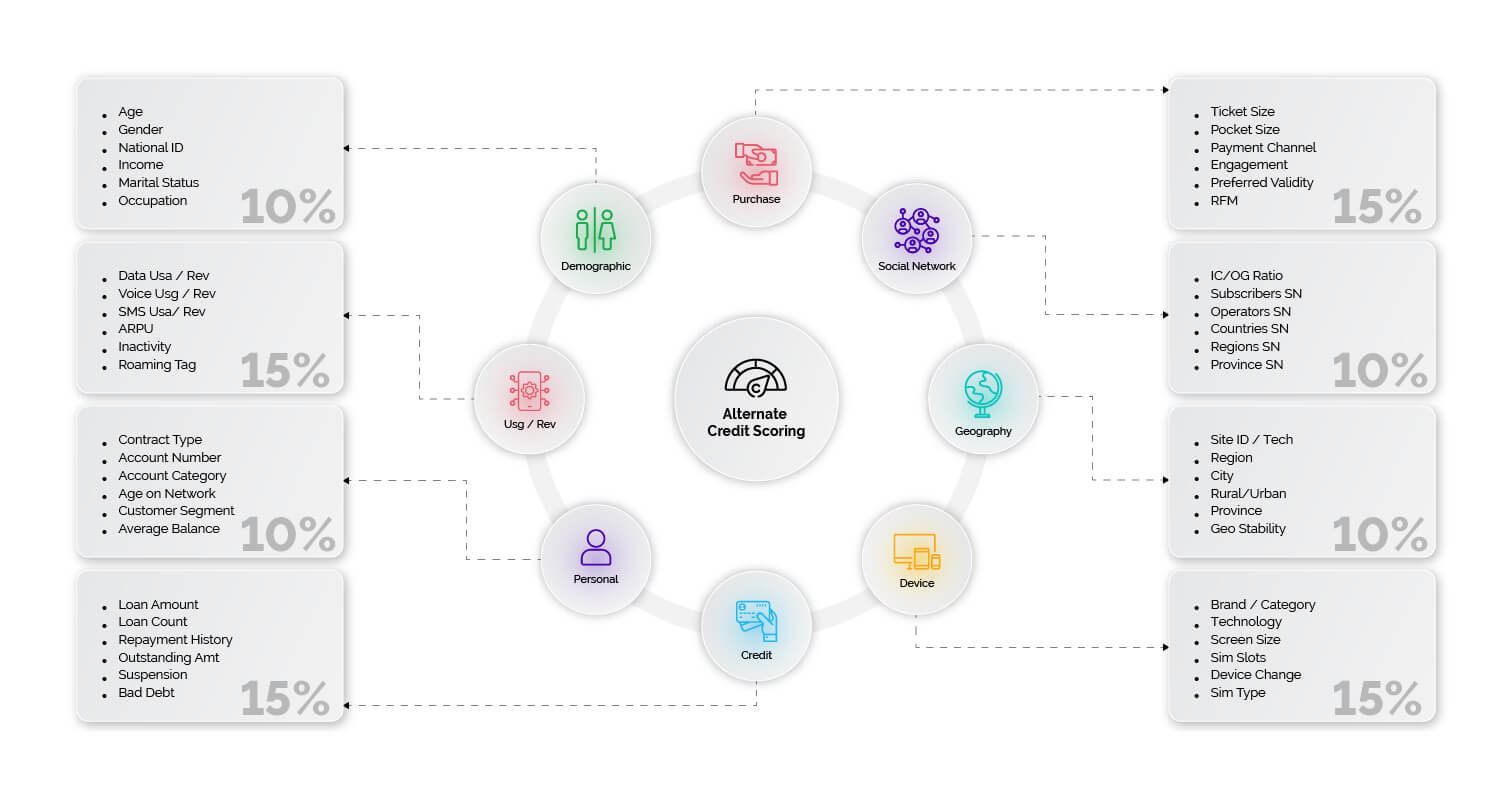
    • Expanding Market Reach with Alternate Credit Scoring

    Traditional credit scoring excludes billions of underbanked individuals, particularly in emerging markets. AI offers a solution by analyzing alternative data such as mobile usage patterns, payment histories, and service subscriptions to assess creditworthiness. This capability allows operators to tap into underserved markets, expanding their customer base and driving new revenue streams.
    • Product Portfolio Rationalization for Profitability

    Telecom operators often struggle with bloated product portfolios that confuse customers and inflate costs. AI evaluates customer preferences, sales performance, and market demand to streamline offerings. By eliminating redundant or underperforming products, operators can reduce marketing and operational expenses while focusing on high-margin offerings.

    • Increasing Customer Lifetime Value with Predictive Analytics

    AI helps identify high-value customers and optimize their journey by delivering personalized offers, loyalty programs, and targeted cross-sell opportunities.

    This ensures that operators maximize revenue potential over the entire lifecycle of each customer, turning one-time buyers into long-term advocates.

    Transformative Advantages of AI for Telecom Operators

    • Enhanced Personalization: AI enables tailored customer experiences, boosting engagement and loyalty.
    • Proactive Issue Resolution: Predictive analytics identify and resolve issues before they affect customers.
    • Revenue Growth: AI unlocks new markets through alternate credit scoring and data monetization.
    • Cost Reduction: Automation and optimization lower operational costs by up to 30%.
    • Improved Decision-Making: AI provides actionable insights from data, enabling faster and smarter decisions.
    • Scalable Operations: AI-driven tools streamline processes, ensuring seamless scalability as demand grows.
    Conclusion

    Telecom operators are rapidly embracing AI to address critical challenges, enhance services, and drive innovation. AI is no longer a futuristic concept—it is a tangible, transformative force reshaping how operators engage with customers, optimize networks, and unlock new revenue streams. Recent trends show significant investments in AI-driven solutions, reflecting a growing recognition of its potential to deliver measurable business outcomes.

    AI adoption is already driving cost reductions, improving customer satisfaction, and enabling operators to scale efficiently. From predictive analytics and generative AI for customer engagement to intelligent network management, telecom operators are leveraging AI to reimagine traditional processes and stay ahead in a competitive landscape.

    This blog demonstrates the opportunities AI offers to transform the telecom sector. Now is the time for operators to act decisively, embracing AI to position themselves as leaders in the next wave of industry evolution. By integrating AI-driven solutions, operators can not only meet the demands of today’s dynamic market but also shape the future of telecommunications

    Embark on Your AI-Powered Journey with Subex!

    Schedule a meeting with our AI experts!

  • Maximizing Telecom Asset Value with Business Assurance for CSPs

    Maximizing Telecom Asset Value with Business Assurance for CSPs

    Introduction

    In today’s rapidly evolving telecommunications landscape, managing a vast array of valuable assets has become increasingly challenging for telecom operators. With the proliferation of new technologies such as 5G and the Internet of Things (IoT), operators face organizational processing gaps that can lead to significant operational losses. These challenges range from equipment loss and theft to inefficient controls and a lack of centralized asset tracking.

    Overcoming Key Asset Management Challenges

    Asset assurance, one of the four fundamental asset management strategies, is crucial for addressing these challenges effectively. Here are five key obstacles in enterprise asset management and how asset assurance can help overcome them:

    1. Understanding Total Costs: Asset assurance enables clear insight into cost structures across the asset lifecycle, from procurement to disposition. This clarity allows for more cost-effective decisions and enhanced financial planning.
    2. Managing Increasing Complexity: As network assets become more complex with the advent of new technologies, asset assurance provides a structured framework to manage these assets efficiently throughout their lifecycle.
    3. Bridging Process Gaps: Often, gaps in standardized asset management processes can expose operators to operational inefficiencies and risks. Asset assurance emphasizes robust controls and end-to-end asset tracking to enhance efficiencies and minimize losses.
    4. Preventing Asset Loss: Asset loss, theft, and displacement pose significant financial and operational challenges. Through comprehensive asset tracking systems, asset assurance helps maintain asset integrity and reduce these risks.
    5. Ensuring Adequate Controls: Efficient controls are vital for effective asset management. Asset assurance ensures that assets are adequately tracked, movements monitored, and compliance with industry regulations maintained.

    Expanding the Framework of Asset Assurance

    Asset assurance extends beyond simple management; it encompasses inventory management, cost optimization, marketing strategies, and customer satisfaction:

    • Inventory Management: Effective management is achieved through optimal storage, distribution, and return processes, enhancing overall asset utilization.
    • Cost Optimization: Real-time data analytics allow operators to identify cost-saving opportunities, negotiate better terms, and make informed asset management decisions.
    • Marketing Strategies: Asset assurance aids in developing effective device pricing strategies, bundled service offerings, and customer upgrade programs, enhancing ROI and customer satisfaction.
    • Customer Satisfaction and Loyalty: Efficient pricing and seamless upgrade options improve customer relationships, fostering long-term loyalty.

    Asset Assurance as a Business Enabler

    Defined by TM Forum’s GB1004C Business Assurance Transformation, asset assurance is vital for improving cost optimization, profitability, and regulatory compliance. It safeguards asset value and enables telecom providers to thrive in a competitive market.

    A Guide to Implementing Asset Assurance

    To harness the full benefits of asset assurance, telecom operators should start with a consultative approach to understand their specific goals and existing processes. This journey involves identifying necessary business assurance controls, developing data adaptors, leveraging customer insights, and creating visualization dashboards to monitor equipment discrepancies and potential fraud areas.

    Subex, in collaboration with TM Forum and leading telecoms and vendors, has developed the TM Forum Asset Assurance Guidebook. This guide offers extensive insights and best practices for enhancing asset management practices. For TMF Forum community members, downloading this guidebook can significantly bolster your asset management strategies and operational excellence.

    Unlocking the Full Potential of Asset Assurance with Expert Insights

    Understanding the nuances and complexities of asset assurance can greatly enhance your ability to manage assets effectively. To help demystify this critical component of telecom operations, we invite you to watch a detailed video where our expert, Mr. Harish, discusses his pivotal role in developing the TM Forum Asset Assurance Guidebook. In this video, Mr. Harish shares valuable insights gained from collaborating with TM Forum and leading industry stakeholders.

    This guidebook is an essential resource for telecom operators looking to navigate the challenges associated with managing a diverse array of assets, from physical hardware like mobile handsets and infrastructure to intangible assets such as software licenses and spectrum rights. It provides a comprehensive framework and actionable strategies that help telecom companies not only overcome these challenges but also achieve significant operational efficiencies and cost savings.

    Watch Mr. Harish Explain the Impact of Asset Assurance: Click here to Watch the Video

    To delve deeper and discover how asset assurance can be tailored to fit your organization’s needs, enhancing your operational efficiency and customer satisfaction, we encourage you to Click here for more information. Equip your team with the knowledge and tools necessary to thrive in the dynamic telecommunications industry by leveraging the power of asset assurance today.

    Asset & Inventory Assurance: A device strategy for a sustainable revenue model

    Book a demo now!

  • Implementing AI Agents in Fraud Management: Best Practices

    Implementing AI Agents in Fraud Management: Best Practices

    Unlock Faster RoI from AI Agents

    AI agents have arrived, bringing with them a flurry of innovations and applications. The area of fraud management is emerging as a pivotal area where Generative AI and AI agents can bring in cutting-edge fraud detection and prevention techniques that will put telcos ahead of fraudsters.

    Another blog considers the characteristics and applications of such AI agents for fraud management. This blog delves into some of the best practices that telcos can follow to ensure their investments in GenAI and AI agents deliver tangible outcomes and faster RoI.

    Best practice 1: Track the scalability and performance requirements of AI agents.

    Telcos deal with vast amounts of transaction and network data that need to be scoured for suspicious activity, which makes scalability of AI agents a key requirement. This includes high computing power to enable real-time processing, Strong fault tolerance to avoid significant losses from system downtime, and dynamic resource allocation to scale up and down – both vertically in terms of more power, as well as horizontally, in terms of more machines. Instead of using large, and costly, AI models, it may be worthwhile to invest in small language models that can be tuned for specific applications. Another useful practice is to ensure AI agents can learn incrementally through updated data, transfer learning, etc., thereby mitigating the need for retraining the AI agent. Finally, they should be able versatile to integrate with, process, and handle different data formats and structures.

    Best practice 2: Build the right integration strategy with legacy systems.

    The IT landscape of telcos typically comprises legacy systems, making integration with AI agents a challenge. To address this, telcos can use a phased AI integration strategy that begins with non-critical systems, allowing them to assesss the performance and scalability of AI without disruption. Since AI agents require access to large volumes of data, telcos can leverage a hybrid data management strategy that migrates critical data out of legacy systems to cloud or modern databases, thereby making it available for consumption by AI agents. There are also many other ways to bridge the gap between slow, archaic legacy operations and nimble, real-time AI agents. Legacy system wrappers for capturing input/output signals, middleware for real-time processing, data virtualization for integrated data views, and APIs to exchange data in any format are a few examples. Deploying AI agents as containers can also assist in integration with older systems. Finally, continuously monitoring AI agent performance will ensure that integration remains consistent and issues are addressed, as they arise.

    Best practice 3: Establish a framework for AI agents to comply with regulations.

    In 2023, there were 25 AI-related regulations in the US, up from just one in 2016, and the total number of AI-related regulations has grown by 56.3% (1). As the regulatory landscape for AI becomes more stringent, telcos must be aware of key ethical and data privacy concerns. Fraud management requires access to large volumes of data, raising concerns over data privacy, ethical interpretations, consent, and compliance. For instance, effective detection often involves profiling customers and transactions based on personal characteristics. Telcos must follow the right policies to avoid discrimination and unfair treatment to ensure compliance and customer trust. Handling personal data too must be done in accordance with consent, control, sector-specific configurations, and data privacy laws like GDPR. Built in compliance checks, audit trails, and risk management will be critical to navigate the emerging landscape of AI regulation in fraud management.

    Best practice 4: Continuously track agent performance using KPIs.

    As with any transformation program, it is critical to measure outcomes to ensure that AI agents are meeting their performance criteria. There are some specific KPIs that can be used to evaluate performance across fraud tasks as well as general health. Some fraud-specific KPIs include such as false negative rates, detection lead time, innovative fraud detection rate, and cost of fraud detection per transaction. In terms of overall AI agent health and performance, the key metrics are AI decision override rate, AI scalability, and model drift KPIs. Apart from these, it is also important to measure customer impact score and integration health score to ensure that business goals of customer satisfaction and seamless business operations are being met.

    KPI Metric description
    False negative rate over time Tracks the ability of AI agents to adapt and learn about fraud tactics, indicating successful model tuning
    AI decision override rate Tracks how often human analysts override decisions made by AI agents. Provides insight into AI agent accuracy and helps refine the decision-making processes of AI agents
    Cost of fraud detection per transaction Measures the operational costs of using AI for fraud detection so telcos can evaluate investments and savings gained to determine the cost-effectiveness of AI agents
    Customer impact score Evaluates how AI fraud detection improves the customer experience by reducing friction and false positives
    AI scalability index Measures the ability of AI agents to scale operations to handle surging data volumes or transaction rates without compromising performance
    Innovative fraud detection rate Tracks the number of new fraud cases that were not identified by traditional FMS
    Integration health score Assesses the effectiveness of AI agents’ integration with other security and monitoring systems
    Model drift KPIs Monitors whether AI agents are underperforming due to changes in underlying data patterns, indicating the need for retraining or recalibration
    Detection lead time Measures the latency between the initial occurrence of fraud and its detection by the AI agent to determine AI agent effectiveness at minimizing losses

    Conclusion

    To ensure faster and consistent ROI from their AI investments, it is important for telcos to be cognizant of best practices when implementing AI technologies. In the case of AI agents, it is crucial to focus on methods that track scalability, performance, integration, and regulatory compliance. Currently, all of these remain challenging areas for telcos. To navigate this with precision, telcos must consider modern data management techniques that unlock data for AI agents to consume, strong integration techniques, and the right mix of KPIs that continuously track AI agent performance, model effectiveness, and losses averted. Such an approach can cement the business case for AI agents and create resilient fraud management systems that detect fraud and secure trust in today’s digital age.

    Reference

    1. Nestor Maslej, Loredana Fattorini, Raymond Perrault, Vanessa Parli, Anka Reuel, Erik Brynjolfsson, John Etchemendy, Katrina Ligett, Terah Lyons, James Manyika, Juan Carlos Niebles, Yoav Shoham, Russell Wald, and Jack Clark, “The AI Index 2024 Annual Report,” AI Index Steering Committee, Institute for Human-Centered AI, Stanford University, Stanford, CA, April 2024.

    Discover the essentials of using AI agents to combat fraud effectively!

    See our Demo in Action!

  • Leveraging AI Agents for Fraud Management: Understanding the Basics

    Leveraging AI Agents for Fraud Management: Understanding the Basics

    In an era where technology evolves at breakneck speed, the sophistication of fraud schemes is advancing just as quickly. Traditional fraud prevention measures, while still valuable, are finding it difficult to address the nuanced and multifaceted nature of modern fraud. Enter Generative AI and AI agents – cutting-edge technologies that offer a robust defence against contemporary fraud challenges.

    Challenges of Fraud Management

    The impact of fraud in the telecom landscape is extensive and complex. Recent years have seen an explosion in the number of telecom fraud incidents and corresponding revenue losses, surging to over US $38 billion in 2023. This amounts to nearly 2.5% of telco revenue! Apart from the financial repercussions, each fraud incident – whether successful or not – causes extreme customer dissatisfaction as they are targets of spam email, account takeover attempts, etc.

    Such incidents are only getting more pervasive and more sinister.

    Fraud schemes are now increasingly daring, rising in sophistication, stealth, and lethality at a rate that far outpaces the detection speed of traditional fraud management solutions. Further, fraud is becoming organized, as methods such as fraud-as-a-service grow popular. Thus, the gap between fraud methods and the fraud knowledge of market solutions is widening, leading to numerous incidents falling through the radar.

    The fundamental lacuna lies with conventional fraud management systems. These are usually slow, resource-intensive, do not adapt easily to flexible and novel fraud schemes, and often generate a high number of false positives, leading to further bleed of time, effort, and resources that could have been better spent counteracting actual fraud.

    What this spells for telcos is a game of constantly playing catch-up without being able to effectively stay ahead of fraud.

    Enter AI Agents

    An AI agent is autonomous software that can perceive its environment and make rational decisions on how to respond. AI agents leverage AI to sense their environment, learn, and make decisions – like humans do. They do this using a variety of AI methods such as natural language processing, machine learning, computer vision, image recognition, etc. Typically, AI agents are given a stated business goal and can self-organize their tasks to ensure they meet the goal within the stipulated timeframe, adhering to defined quality standards, and performing all tasks allocated.

    Mounting a Stronger Defence Against Fraud with AI Agents

    AI agents are software programs or systems that use artificial intelligence techniques to perceive their environment, make decisions, and take actions to achieve specific goals. They play a crucial role in modern fraud prevention.

    These agents can operate continuously, monitoring transactions in real-time, and adapting to new threats as they arise. By leveraging machine learning algorithms, AI agents can identify patterns and anomalies that might elude human analysts. AI agents have a set of characteristics that make them stand apart. They can perceive and sense their surroundings using sensors and other data sources, quickly processing information to make the right decision in real-time. They also have the ability to react to situations and, especially, changing circumstances and modify their behavior to respond effectively.

    All of this calls for a certain degree of autonomy, which AI agents possess. Their actions and operations are largely independent, and do not always need human intervention. Apart from responding to the environment in a reactive manner, they can also anticipate the future and use goal-setting and planning to take corrective action. All of these characteristics make AI agents very adaptable. ML algorithms allow them to learn continuously and improve their performance, making them a valuable tool in novel fraud scenarios.

    Teamwork is another important characteristic. AI agents can interact with other AI agents as well as human staff and do a variety of high-level tasks such as communicate intention, negotiate terms, and collaborate for the best outcome. Considering such high-level operations, the question of transparency and ethics becomes paramount. Thus, AI agents are designed with mechanisms that allow transparency into how they make decisions.

    Application of AI Agents in Telecom Fraud Management

    AI agents automate all fraud detection and prevention activities, operating quickly, autonomously, and with greater prowess than conventional fraud management systems and even humans. Here are some ways they help identify and tear down fraud:

    • By scaling to process large amounts of transaction data across many platforms, a feat that is impossible for humans. For instance, they can look at social network graphs and transactional links across complex and high-volume transactions to unearth relationships and identify organized fraud rings and activities.
    • By working in real-time to give instant analytics, recommendations, and action, a vital requirement to cut down fraud run time. For instance, AI agents can help greatly minimize damage by flagging suspicious transactions to human operators and blocking them instantly.
    • By learning adaptively, enabling them to predict fraud incidents and even identify suspicious activity well before traditional alerts could kick in. AI agents can see patterns in anomalous as well as historical data and identify subtle cues that indicate fraud. This is especially useful in cases where fraudsters deploy new tactics.
    • By being flexible and customizable to different operating environments, allowing telcos to widen their fraud coverage across old as well as new threats on existing and next-gen platforms. They can even simulate fraudulent scenarios, thereby reinforcing a telco’s defences.
    • By being easily integrated with other response mechanisms, enabling a team effort to tear down fraud and minimize the potential damage. AI agents can augment the role of fraud teams by freeing them to concentrate on the finer aspects of fraud investigations, thereby increasing efficiency and effectiveness.

    An AI Agent for Every Need

    AI agents, built on large language models (LLMs), are available in various types. Each type possesses specific functionalities and applications. A recent report finds that the LLMs released in 2023 outperform all earlier versions in agentic settings (1). Here are some types of AI agents that are helpful for fraud management teams (2):

    • Reactive agents that operate using predefined rules.
    • Model-based reflex agents that use an ML model to make decisions.
    • Goal-based agents that work towards specific goals.
    • Utility-based agents that consider the usefulness of an outcome and aim to maximize this.
    • Learning agents that adapt and learn to improve performance over time.
    • Collaborative agents that are designed for teamwork and cooperation.
    • Autonomous agents that can run without human intervention.
    • Interactive agents that use NLP and other AI methods to communicate with humans.
    • Embodied agents that have a physical presence.
    • Cognitive agents that possess reasoning and problem-solving skills.

    Conclusion

    Traditional fraud management systems are finding it difficult to keep pace with the increasing complexity and sophistication of modern fraud tactics. AI agents, based on LLMs, are cutting-edge technologies that improve fraud detection and prevention in the digital age. Available in various types and governed by unique characteristics such as autonomy, proactivity, adaptive learning, transparency, and integration, AI agents assist fraud teams by scaling to process large amounts of data, seeing patterns and anomalies, working autonomously to tear down fraud, and detecting suspicious activity based on nuanced cues. Apart from saving telcos from significant fraud losses, AI agents also release fraud analysts to focus on value-adding tasks, making them a powerful tool for telcos to defend their networks from modern fraud.

    Reference

    1. Nestor Maslej, Loredana Fattorini, Raymond Perrault, Vanessa Parli, Anka Reuel, Erik Brynjolfsson, John Etchemendy, Katrina Ligett, Terah Lyons, James Manyika, Juan Carlos Niebles, Yoav Shoham, Russell Wald, and Jack Clark, “The AI Index 2024 Annual Report,” AI Index Steering Committee, Institute for Human-Centered AI, Stanford University, Stanford, CA, April 2024.
    2. Leveraging AI Agents for Fraud Management: A Comprehensive Approach

    Discover the essentials of using AI agents to combat fraud effectively!

    See our Demo in Action!

  • Maximizing Telecom Profits: The Strategic Advantages of Cost optimization and Margin Assurance

    Maximizing Telecom Profits: The Strategic Advantages of Cost optimization and Margin Assurance

    Abstract

    Telecommunications service providers worldwide are grappling with shrinking revenue margins amid fierce competition. For both wireless and wireline operators, cost management has become essential. Achieving significant cost reductions necessitates profound changes in the business and operating models, along with a shift in mindset to embrace innovative, “outside-the-box” thinking. In regions such as Europe and the U.S., the telecom industry risks transitioning into a low-profit sector, with global profit margins potentially declining from 12.5% to as low as 5% within the next five years.

    The situation in the Indian telecommunications industry over the past decade has been particularly challenging. The entry of new competitors into the market has severely impacted incumbent operators. These new entrants often trigger price wars by offering substantially cheaper data plans, with voice and SMS services included at no additional cost disrupting the traditional revenue streams of existing operators who relied heavily on voice services. This dynamic has substantially benefited prepaid and postpaid subscribers, who now enjoy unprecedented low prices and attractive offers.

    Existing operators have struggled to manage their capital and operational expenditures while being forced to lower tariffs to remain competitive. The challenge intensified with the advent of 4G services, as many incumbents were still limited to offering 2G and 3G services despite having invested heavily in their respective spectrum licenses. To compete, these operators needed to upgrade their networks to support 4G, a move that was both costly and complex, particularly as they continued to service debts incurred from earlier 2G and 3G investments, with banks growing increasingly concerned about loan recoveries.

    Amid these challenges, one critical internal strategy that can help maximize revenue is cost optimization across all organizational functions and departments. This approach not only addresses immediate financial pressures but also positions telecom operators to better navigate future market disruptions.

    Cost Optimization and Its Importance: Unlocking Efficiency and Profitability

    Cost Optimization and Margin assurance is a field that draws on many streams to balance costs and spends. It includes handling a complex mix of service offerings, defining a holistic view for cost allocation, enabling real-time visibility, margin automation, etc.

    The strategy of cost optimization remains vital and can be implemented in various areas within telecommunications. Here are several detailed opportunities for reducing expenses:

    1. Network Cost Optimization: This involves replacing outdated and expensive legacy technologies with newer, less costly alternatives. By adopting more efficient and modern technologies, operators can decrease maintenance and operational costs, thus optimizing the overall network expenditure.
    2. Outgoing Call Routing: Implementing Least Cost Based Quality Routing (LCBQR) for international outgoing traffic is another effective cost-saving measure. LCBQR algorithms select the least expensive route for each call without compromising on quality, significantly reducing the costs associated with international traffic.
    3. Disconnect Unused Telecommunications Circuits: Often, telecommunications circuits that are no longer in use still incur costs, especially in jurisdictions where fixed costs are levied on circuits provided by public limited companies or government-operated telecom entities. Actively identifying and disconnecting these unused circuits can eliminate unnecessary expenses.
    4. Adjust Bandwidth and Trunks to Match Traffic Consumption: Operators often scale up their network infrastructure to accommodate expected increases in traffic during special events like festivals or the New Year. However, after these peak times, it’s essential to reassess and realign the network capacity. This involves reducing the bandwidth and the number of trunks to better match the normal traffic levels, thus avoiding the costs of maintaining unutilized resources.
    5. Carrier & Vendor Contract Optimization: The terms of carrier and vendor contracts can have a significant impact on costs. It’s crucial for operators to regularly review and renegotiate these agreements to ensure they reflect the best possible terms. Factors to consider include pricing, rates, discounts, and credits. If it has been over a year since the last contract review, if the company’s usage of vendor services has increased significantly, or if minimum revenue commitments with carriers have been met, it might be time to renegotiate these contracts to secure better terms and potentially significant cost reductions.

    By focusing on these areas, telecom operators can effectively reduce their operational costs, which is essential for maintaining profitability in the highly competitive telecommunications market.

    Benefits of Cost optimization and Margin Assurance

    • It improves profitability computation

    CSPs can derive and report profitability accurately. They will also maintain operational margins (cost + basic margin) as per industry best-practices.

    • It leads to better decision-making

    CSPs can devise more effective strategies for cross-selling to clearly defined profitable customer groups. They can also target prospective customers having similar characteristics as their profitable ones, thereby achieving higher customer satisfaction scores.

    • Effective Margin evaluation against competitive pricing

    CSPs will be better positioned with the market intelligence to compete effectively against challengers by understanding their subscriber behavior and evaluating margin trends leading to better competitiveness, customer loyalty and retention, and even special margin products.

    • It elevates productivity across the organization

    Transparent customer identification and margin analysis helps departments channelize efforts to deal appropriately with different customer groups (profitable, prospective, low margins, etc.).

    Conclusion

    Cost optimization and margin assurance involve a comprehensive approach to managing the complex mix of service offerings by defining clear metrics for cost allocation, real-time assurance, and margin automation. This structured approach allows for precise profit computation, flexible cost allocation, and streamlined cost modeling. Such methods enable operators to expand their scope of work significantly, accommodating a broader range of cost line items. By implementing these strategies, operators can enhance their financial performance, making it easier to adapt to market demands and improve profitability.

    Maximizing telecom profits through strategic cost optimization and margin assurance!

    Request a demo now!

  • How AI Is Redefining the Role of Business Assurance Practitioners

    How AI Is Redefining the Role of Business Assurance Practitioners

    Trends

    The telecommunications landscape is witnessing an unprecedented transformation, propelled by the rapid integration of Artificial Intelligence (AI) into Business Assurance (BA). This integration marks a seismic shift, redefining the operational and strategic roles of Business Assurance (BA) practitioners. As AI reshapes the BA domain, several key trends emerge as catalysts for change:

    • AI-Driven Analytics: The application of AI in data analytics enhances the ability of BA practitioners to proactively identify and mitigate potential revenue leakages, moving from a reactive to a predictive assurance model.
    • Automated Operations: AI’s capability to automate complex, time-consuming tasks revolutionizes the efficiency of BA operations, allowing practitioners to focus on strategic analysis and decision-making.
    • Enhanced Decision Support: With AI, BA practitioners gain access to deeper insights into customer behavior, market trends, and revenue dynamics, positioning them as strategic advisors within their organizations.

    These trends underscore the evolving role of BA practitioners also while transitioning from Revenue Assurance (RA) to Business Assurance, who are now required to navigate the complexities of AI integration to drive value in the 5G era.

    Introduction

    In the era of digital transformation, AI integration into BA practices is redefining the scope and impact of BA functions. Traditionally focused on safeguarding revenue streams and ensuring billing accuracy, BA practitioners are now embracing AI to unlock new levels of operational efficiency, strategic insight, and customer engagement. This blog delves into the transformative impact of AI on the roles of BA practitioners, exploring the opportunities and challenges that lie ahead.

    The Transformative Power of AI in Business Assurance

    AI technologies, including machine learning and predictive analytics, are at the forefront of this transformation. These innovations offer BA practitioners tools to:

    • Predict and Prevent Revenue Leakages: AI algorithms can sift through vast amounts of data to identify patterns and anomalies indicative of potential revenue loss, enabling proactive measures to safeguard revenues.
    • Drive Strategic Business Decisions: Enhanced by AI-driven insights, BA practitioners contribute to business planning and decision-making, influencing strategies that capitalize on emerging opportunities and mitigate risks.
    • Optimize Operational Efficiency: The automation of routine tasks, facilitated by AI, allows BA practitioners to dedicate more time to strategic initiatives, elevating their role within the organization.

    Challenges in Embracing AI in Business Assurance

    Despite the promising potential of AI, integrating these technologies into BA practices presents several challenges:

    • Bridging Skill Gaps: The effective use of AI requires a new set of technical, analytical, and strategic skills. BA practitioners must pursue continuous learning to adapt to these evolving requirements.
    • Ensuring Data Integrity: The success of AI applications hinges on the quality and integration of data. Achieving this integration across diverse systems poses a significant challenge.
    • Addressing Privacy and Ethical Concerns: With AI’s capability to process vast quantities of data, ensuring the privacy and ethical use of information becomes a critical responsibility for BA practitioners.

    Opportunities for Business Assurance Practitioners

    The AI revolution in BA opens a wealth of opportunities for BA practitioners:

    • Becoming Strategic Advisors: Equipped with AI-driven insights, BA practitioners can transition from operational roles to strategic advisors, influencing key business decisions.
    • Driving Innovation: By leveraging AI, BA practitioners can identify new revenue opportunities and innovative business models, fostering growth and customer satisfaction.
    • Managing Risk: AI’s predictive capabilities empower BA practitioners to identify and manage potential threats to revenue integrity effectively.

    The Future of Business Assurance with AI Integration

    As AI technologies continue to evolve, so too will the role of BA practitioners. Future advancements promise even more sophisticated predictive models and automated decision-making processes, requiring BA practitioners to continuously adapt to remain at the forefront of BA practices. Key considerations for the future include:

    • Embracing Continuous Learning: To stay relevant, BA practitioners must keep abreast of AI advancements and related technologies.
    • Fostering Collaboration: Success in an AI-driven BA landscape relies on cross-functional collaboration, ensuring that insights and strategies are integrated across the organization.
    • Navigating Ethical AI Use: As AI capabilities expand, BA practitioners will play a crucial role in advocating for the ethical use of AI, ensuring that technological advancements benefit both the organization and its customers.

    Conclusion

    The integration of AI into Business Assurance is not just transforming operations; it’s redefining the roles of Business Assurance practitioners. In this new era, BA practitioners are not only guardians of revenue integrity but also strategic advisors and innovation drivers. As the telecommunications industry marches forward, embracing AI and its challenges will be key to harnessing the full potential of Business Assurance. This journey, marked by continuous learning and adaptation, promises to elevate the strategic significance of BA practitioners in shaping the future of their organizations in the digital age.

    Business Assurance Global Benchmarking Survey: Technology Readiness for Assurance and Compliance Index

    Download now!

  • Elevating Telecom Operator Success: Mastering Segmented Promotion Assurance in Telecom

    Elevating Telecom Operator Success: Mastering Segmented Promotion Assurance in Telecom

    Background: Understanding Promotion and Segmented Promotions

    Promotion plays a pivotal role for telecom operators for a multitude of reasons, spanning from intense competition to the necessity of market expansion. The telecom sector is characterized by its high competitiveness, with numerous operators striving not only to capture market share but also to distinguish themselves and attract customers through various promotional activities such as advertising, discounts, and special offers. These activities are fundamental in acquiring new customers and retaining existing ones, with incentives like discounted rates or freebies encouraging customer loyalty or switchover. Ensuring brand visibility and memorability is another crucial aspect, with operators leveraging advertising campaigns, sponsorships, and social media engagement to build brand awareness and recognition.

    The frequent introduction of new services, like faster internet speeds or bundled packages, underscores the importance of promotion in generating excitement and informing consumers about the benefits of these new offerings. As operators venture into new regions or target new segments, effective promotion becomes key to penetrating these markets successfully, using tailored marketing messages to cater to varying customer needs and preferences. Ultimately, the goal of these promotional efforts is to drive revenue by increasing the sales and usage of services, with effective strategies potentially leading to higher average revenue per user (ARPU) and improved financial performance. Despite significant investments in promotion, telecom operators face challenges in achieving the desired customer base and market share, leading them to delve deeper into understanding customer behavior and needs. This has prompted a shift towards adopting segmented promotions, a strategy we will explore in depth in this blog, highlighting its significance in the telecom industry.

    What is Segmented Promotions?

    Telecom companies are increasingly turning to segmented promotions as a strategic tool to enhance marketing effectiveness and customer satisfaction. This targeted approach serves multiple purposes, each designed to strengthen the company’s market position and cultivate a stronger connection with its audience. Here’s why segmented promotion is essential for telecom companies:

    Targeted Marketing: Telecom companies categorize their customers into distinct segments, allowing them to design promotions that precisely meet the diverse needs and interests of different groups. This targeted approach improves response and conversion rates by aligning promotions with each segment’s specific preferences.

    Customer Retention and Loyalty: By offering personalized incentives based on usage patterns, tenure, and loyalty, telecom companies effectively reduce churn rates and increase customer lifetime value. Rewards for loyalty help maintain customer retention and deepen their commitment.

    New Customer Acquisition: Segmented promotions aimed at specific market segments or demographics align with strategic growth goals, helping to attract new customers and expand market reach.

    Revenue Generation: Encouraging customers to upgrade services, purchase new devices, or renew contracts through targeted promotions drives incremental revenue, enhancing the company’s value proposition.

    Competitive Differentiation: Unique, tailored promotions help telecom companies stand out in a competitive market. Commitment to meeting specific customer needs provides a significant competitive advantage.

    Data-driven Decision Making: Insights from segmented promotions reveal customer behaviors and market trends, guiding product development, pricing strategies, and marketing efforts. Utilizing data ensures resources are allocated efficiently and promotional strategies are optimized.

    Strengthened Brand Loyalty: Central to segmented promotions is improving customer experiences with personalized offers, which not only achieves immediate engagement and revenue goals but also fosters long-term brand loyalty by consistently meeting or surpassing customer expectations.

    Segmented promotions are a key element of marketing strategies for telecom companies, allowing them to engage dynamically with their customer base, drive growth, and address the challenges of the contemporary telecom landscape. Through personalized marketing initiatives, telecom companies position themselves as leaders in customer satisfaction, competitive innovation, and strategic growth.

    Understanding Segmented Promotion Assurance in Telecom

    Segmented Promotion Assurance is a strategy used by telecom operators to customize their promotional activities to meet the specific needs of different customer segments. This process starts with detailed segmentation, where customers are grouped based on various criteria like usage patterns, demographics, and location. Tailored promotions are then developed for each segment, utilizing channels such as SMS, email, and app notifications to ensure broad reach and engagement.

    A key aspect of this strategy involves closely monitoring the performance of these promotions through metrics like uptake, redemption rates, revenue impact, and customer satisfaction. This helps in evaluating the effectiveness of the promotions. Moreover, maintaining compliance with regulatory standards and internal policies is crucial. This ensures that the promotions are not only appealing to the target segments but also comply with legal and ethical standards, fostering trust and ensuring promotional activities contribute positively to the company’s reputation and bottom line.

    What Should the Ideal Solution Look Like?

    A comprehensive solution designed for the assurance of Segmented Promotions should encompass critical activities in data analytics, reconciliations, monitoring, and reporting. This approach enhances marketing effectiveness and boosts customer satisfaction through:

    Reconciliations:

    • Segmentation Analysis: Analyzing customer data used for promotions against specific guidelines or rules to accurately validate the targeted customer base.
    • Revenue Validation: Conducting a thorough comparison between system-generated and calculated revenue to identify discrepancies, ensuring accurate revenue assurance and effective fraud management (RAFM).
    • Invoice Validation: Performing monthly checks on invoices against calculated revenue and, if applicable, validating revenue share agreements to ensure financial accuracy and compliance.

    Tracking and Monitoring:

    • Implementing sophisticated mechanisms to track segmented promotions’ performance in real time is crucial. Monitoring key metrics like uptake rate, redemption rate, revenue impact, and customer satisfaction help assess the effectiveness of various promotional segments.

    Analysis and Optimization:

    • Utilizing performance data from segmented promotions to identify trends, patterns, and areas for improvement is key. These insights should inform the optimization of future campaigns to make them more targeted and effective.

    Reporting and Stakeholder Communication:

    • Generating detailed reports and insights on segmented promotions performance is vital for transparent communication with stakeholders, including management, marketing teams, and regulatory bodies. This foster informed decision-making and strategic planning.

    Compliance Verification:

    • Ensuring that segmented promotions comply with regulatory requirements and internal policies is essential. This includes adhering to data privacy regulations, fair competition laws, and advertising standards.
    • Conducting legal reviews and obtaining approvals for promotional offers to mitigate potential risks.

    By incorporating these elements, telecom companies can enhance customer engagement, improve satisfaction, and achieve competitive differentiation, all while ensuring financial compliance and maximizing revenue from their segmented marketing strategies.

    How Can Subex Assist?

    Subex’s HyperSense suite introduces a revolutionary approach for communications service providers and enterprise clients by leveraging Artificial Intelligence (AI) across the entire data value chain—from collection to generating actionable insights. This advanced technology enables businesses to make quick, informed decisions, giving them a competitive edge.

    In particular, Subex Business Assurance expands its expertise to include Segmented Promotion Assurance, tackling essential functions like data analytics, reconciliations, monitoring, and reporting. This broad approach aims to boost marketing effectiveness and increase customer satisfaction. Through Subex’s solutions, telecom companies gain the tools to enhance customer engagement, improve satisfaction, and stand out in a crowded marketplace while ensuring compliance with financial regulations and maximizing revenue from segmented marketing strategies.

    For a personalized exploration of how Segmented Promotion Assurance by Subex can address your organization’s unique challenges and to delve deeper with our experts, we encourage you to book a short, insightful session with us.

    Elevate your telecom promotions with segmented promotion assurance today!

    Schedule a Demo

  • Generative AI in the Telecom Industry | The Ultimate Guide

    Generative AI in the Telecom Industry | The Ultimate Guide

    The telecommunications industry, a sector known for its dynamic evolution and technological advancements, is on the cusp of a transformative breakthrough with the integration of Generative AI (Gen AI). This emerging technology heralds a paradigm shift in the operational, customer interaction, and service delivery methodologies of telecom companies. In this blog, we delve into the essence of Gen AI and unravel its potential applications within the telecom sector.

    Understanding Generative AI

    Generative AI, a sophisticated subset of artificial intelligence, harnesses the power of deep learning (DL) algorithms to fabricate digital content, such as images, videos, and audio, that mimics the quality and complexity of human-generated output. This groundbreaking approach empowers machines to assimilate patterns from extensive datasets and generate original content, bypassing the need for predefined templates or human intervention.

    The Mechanics of Generative AI

    At the heart of Gen AI lies its ability to utilize neural networks, which are intricate webs of interconnected nodes. These networks undergo rigorous training to discern and internalize patterns within massive pools of data. During the training phase, the neural networks modify the weights of each node to align the generated output with the targeted outcome. When fully trained, these networks are capable of producing novel content, beginning with a random input (seed value) and progressively refining the output to enhance its realism and coherence.

    Transforming Telecom with Generative AI

    The integration of Gen AI, in synergy with Machine Learning (ML), is poised to revolutionize the realm of mobile telecommunications, particularly in the areas of network orchestration and management. This technological synergy is set to overhaul traditional approaches to telecom operations by injecting automation into complex decision-making processes, enabling predictive responses to real-time network scenarios, and significantly enhancing overall network efficiency.

    One of the most compelling aspects of Gen AI in telecom is its capacity to optimize resource distribution within the network. This capability not only ensures the streamlined operation of telecom services but also opens avenues for innovation in service delivery. Telecom operators equipped with Gen AI tools can now foresee network demands, preemptively allocate resources, and ensure optimal network performance, thus elevating the user experience to unprecedented levels.

    Moreover, Gen AI’s potential in telecom extends beyond operational efficiency. It encompasses a broad spectrum of applications, including customer service enhancements through AI-driven interactions, personalized service offerings, and advanced security protocols that safeguard network integrity against emerging cyber threats.

    As we venture deeper into this Gen AI-driven era in telecom, we witness a convergence of technological finesse and strategic foresight, paving the way for telecom operators to not only adapt to the ever-changing technological landscape but also to redefine the boundaries of what is possible in telecommunications.

    Exploring Different Sectors Leveraging Gen AI Services

    The implementation of Gen AI in the telecom industry is not just confined to network operations. Its applications extend across various sectors, reshaping everything from customer interactions to infrastructural developments:

    1. Advanced Analytics for Customer Insights: Gen AI delves deep into customer data to uncover insights that drive personalized experiences. It goes beyond traditional analytics by predicting customer behavior and trends, leading to more targeted service offerings and improved customer engagement.
    2. Automated Content Creation for Marketing and Communication: In the realm of marketing, Gen AI is revolutionizing content creation. By generating innovative and engaging content automatically, it enables telecom companies to maintain a fresh and appealing presence in their marketing and communication efforts.
    3. Streamlining Operations with AI-Driven Automation: Gen AI significantly enhances operational efficiency by automating routine tasks, thus freeing up human resources for more strategic initiatives. This is particularly beneficial in managing vast telecom networks where efficiency and accuracy are paramount.

    Uses of Generative AI in Telecom

    Building on the transformative applications of Gen AI in telecom, let’s delve deeper into each area:

    1. Automated Anomaly Detection : Generative AI plays a pivotal role in detecting billing anomalies within financial datasets. Utilizing sophisticated algorithms, it scrutinizes billing records, identifies irregularities, and promptly flags potential billing errors, discrepancies, or fraudulent activities. By automating this process, businesses can proactively mitigate financial risks and ensure the accuracy and integrity of their billing systems.
    2. Predictive Billing Analysis and Resolution : AI-driven predictive analysis based on historical billing data assists in forecasting future billing trends. This empowers businesses to anticipate market changes, optimize resources, and strategize proactive financial measures. Moreover, AI algorithms facilitate automated resolution workflows by recommending and initiating appropriate courses of action to rectify billing anomalies swiftly and efficiently. This streamlined approach minimizes manual interventions, enhancing operational efficiency and ensuring accurate billing processes.
    3. Automated Code Completion: Generative AI serves as an invaluable co-pilot for software developers, significantly enhancing productivity through automated code completion. By analyzing code structures and contextual patterns, AI-generated suggestions expedite coding processes, reducing errors and enhancing the overall development experience. This technology not only expedites programming tasks but also aids in learning and understanding coding conventions, fostering efficient collaboration between developers and AI systems.
    4. Writing Assistance and Collaboration: In content creation, AI acts as a collaborative co-pilot by providing real-time writing assistance. It offers grammar checks, refines language nuances, and generates insightful ideas for various forms of written content. This collaborative AI helps authors, bloggers, journalists, and creative writers by suggesting alternative phrasings, offering vocabulary enhancements, and proposing structural improvements. It acts as an indispensable aid in refining the quality of written work and expediting the content creation process.
    5. Enhanced Network Optimization: Gen AI’s capability to analyze complex network data in real-time facilitates the identification and resolution of issues such as signal interference and congestion before they affect service quality. This proactive approach ensures optimal network performance and user satisfaction.
    6. Proactive Predictive Maintenance: By predicting when and where equipment failures might occur, Gen AI enables telecom operators to move from a reactive to a proactive maintenance model. This shift not only minimizes downtime but also extends the life of equipment, thus optimizing capital expenditure.
    7. Revolutionizing Customer Service with Virtual Agents: Gen AI-powered virtual agents and chatbots can handle a wide range of customer queries, from simple FAQs to more complex troubleshooting, providing a seamless and efficient customer service experience.
    8. Data-Driven Personalized Marketing: Utilizing customer data, Gen AI crafts personalized marketing campaigns that resonate with individual customers, significantly enhancing engagement and conversion rates.
    9. Strategic Network Planning: By predicting future demand and usage patterns, Gen AI aids in the strategic planning of network expansions and upgrades, ensuring that resources are allocated where they are most needed.
    10. Resource Allocation for Network Efficiency: Gen AI’s ability to anticipate where and when network resources will be in demand enables a more dynamic and efficient allocation, thus improving overall network performance.
    11. Bolstering Network Security: In an era of increasing cyber threats, Gen AI enhances network security by identifying and responding to potential vulnerabilities and attacks promptly.
    12. Guaranteeing Quality of Service: Gen AI plays a crucial role in maintaining and improving the quality of service by predicting and preventing potential issues that could lead to network degradation.
    13. Building Intelligent Infrastructure: The development of self-optimizing networks powered by Gen AI marks a significant advancement in infrastructure management, leading to networks that are not only more efficient but also more adaptable to changing conditions.
    14. Virtual Assistants and Smart Billing for Enhanced Customer Experience: Gen AI’s role in creating sophisticated virtual assistants and intelligent billing systems personalizes the customer experience, making interactions more convenient and billing more accurate.
    15. Leveraging Network Analytics for Business Growth: Gen AI assists telecom companies in extracting valuable insights from network data, which can be used for strategic decision-making and identifying new business opportunities.

    Challenges in Implementing Generative AI in Telecom

    Implementing Gen AI in the telecom industry involves overcoming several challenges:

    1. Ensuring Data Quality and Availability: High-quality data is the cornerstone of effective Gen AI models. Telecom companies must ensure the accuracy, completeness, and availability of data for training and deploying Gen AI systems.
    2. Seamless Integration with Existing Systems: Integrating Gen AI technologies with current telecom infrastructure and systems can be a complex process, requiring careful planning and execution.
    3. Developing Technical Expertise: Building and maintaining Gen AI solutions requires specialized skills. Telecom companies may need to invest in training existing staff or recruiting new talent with the requisite expertise.
    4. Navigating Regulatory Compliance: The telecom sector is subject to stringent regulations, especially concerning data privacy and security. Gen AI implementations must adhere to these regulatory requirements to avoid legal and reputational risks.
    5. Managing Cost Implications: The initial investment for implementing Gen AI can be significant. Smaller operators, in particular, may find the costs challenging, necessitating a clear understanding of the return on investment.
    6. Addressing Ethical Considerations: Ethical concerns such as privacy, bias, and accountability are crucial. Telecom companies must ensure their Gen AI applications uphold ethical standards and foster trust among stakeholders.
    7. Unintended Bias Amplification: Generative AI models might inadvertently amplify existing biases present in the training data, leading to the generation of biased or prejudiced content. Hallucinations could further exacerbate this issue by creating entirely synthetic content that reflects or exaggerates these biases.
    8. Unpredictable Output: Hallucinations can cause AI models to generate unpredictable and unrealistic outputs, leading to inaccurate or nonsensical information. This challenges the reliability and trustworthiness of the AI-generated content, especially in critical applications such as medical diagnosis or autonomous systems.
    9. Ethical Implications: Generating hallucinations that portray sensitive, offensive, or harmful content raises ethical concerns. This content might infringe upon societal norms, propagate misinformation, or potentially cause harm by disseminating false information or triggering negative emotions.
    10. Lack of Control: AI developers may struggle to control or mitigate hallucinations in their models. This lack of control can hinder the ability to ensure the AI generates content that aligns with desired outcomes, making it challenging to regulate or moderate AI-generated content effectively.
    11. Legal and Regulatory Issues: The emergence of hallucinations in Generative AI could lead to legal and regulatory challenges. If AI-generated content infringes on copyrights, produces malicious content, or violates privacy rights, it could result in legal liabilities for the developers or users of the AI models.
    12. User Perception and Trust: Hallucinations might lead users to distrust AI-generated content, affecting its adoption and acceptance in various domains. Users may become skeptical or hesitant to rely on AI-generated information due to concerns about its accuracy and reliability.
    13. Resource Intensiveness: Addressing hallucinations often requires additional computational resources and complex algorithms to detect and mitigate their occurrence. This increased resource demand could limit the scalability and efficiency of Generative AI systems.
    14. Continual Monitoring and Maintenance: Constant monitoring and updates are necessary to detect and mitigate hallucinations as AI models evolve and encounter new data. This ongoing effort requires significant time, expertise, and resources.

    Conclusion: The Transformative Era of Generative AI in Telecom

    As we witness the unfolding era of technological advancements in the telecom sector, Generative AI emerges as a pivotal force, poised to redefine the industry’s landscape. Its profound impact extends across network optimization, customer service, fraud detection, and personalized marketing, heralding a new age of efficiency and customer-centric innovation. The future of telecom, driven by the dynamic capabilities of Gen AI, is not just about enhanced operational effectiveness; it’s about crafting an ecosystem that is both responsive and intuitive. Telecom companies, by harnessing the power of Gen AI, are not only elevating their services but are also laying the foundation for a future where communication is seamless, secure, and supremely tailored to individual needs and preferences.

    In this rapidly evolving landscape, Gen AI stands as a beacon of transformation, guiding telecom companies through the complexities of modern demands and opportunities. As the industry continues to embrace digital acceleration, Gen AI will play an increasingly critical role, not just in adapting to changes but in shaping the very nature of telecommunication services. This journey into the Gen AI-driven future promises a realm where innovation is continuous, customer engagement is deepened, and the potential for growth is boundless. For the telecom sector, the integration of Generative AI is more than a technological upgrade; it’s a strategic leap into a future rich with possibilities and advancements.

    Additional Resources

    1. AI in Telecom Industry Benefits and Use Cases
      The integration of Artificial Intelligence (AI) in telecom revolutionizes operations, boosting efficiency and customer engagement. AI processes vast data, yielding insights improving service delivery, predictive maintenance, chatbot-driven customer support, and network optimization.
    2.  AIOps Solution for Telecom Industry
      AIOps automates network operations, combining big data analytics and machine learning. It aids 5G and IoT management, enabling real-time anomaly detection, predictive maintenance, and optimal resource allocation for enhanced efficiency and customer satisfaction.
    3.  Robotic Process Automation in Telecom Industry
      Robotic Process Automation (RPA) drives efficiency by automating tasks like billing and customer service. It ensures data accuracy, compliance adherence, and accelerates customer response times.
    4.  Empower your Business with Generative AI Services
      Generative AI creates tailored content for advertising, customer support, and product design, boosting creativity and customer experience.
    5.  Generative AI Assessment and Roadmap
      A structured assessment and roadmap for integrating Generative AI ensure successful implementation, addressing infrastructure, data readiness, and compliance measures.

    Ready to revolutionize your telecom services with generative AI?

    See our Demo in Action!

  • Top AI use cases in Telecom

    Top AI use cases in Telecom

    Transforming Customer Analysis and Marketing

    In the ever-evolving realm of telecommunications, the integration of Artificial Intelligence (AI) has brought about a seismic shift in how companies analyze customer data and strategize marketing initiatives. Let’s explore the various AI-driven applications reshaping customer analysis and marketing strategies within the telecom sector:

    Customer Smart Segmentation

    Telecom providers are leveraging AI-powered algorithms for customer segmentation, going beyond traditional demographic divisions. This advanced segmentation allows for more nuanced categorization based on behaviors, preferences, and usage patterns. By understanding customers at a granular level, telecom AI companies tailor their offerings and services to match diverse customer needs more effectively.

    Sentiment Analysis (Social Media)

    The pulse of public opinion lies within social media platforms, and AI-driven sentiment analysis is enabling telecom AI companies to decipher this sentiment effectively. By analyzing social media feeds, telecom providers gain valuable insights into customer perceptions, concerns, and trends. This understanding helps in promptly addressing issues, improving brand perception, and refining marketing strategies.

    Churn Prediction

    AI algorithms analyze vast datasets to predict customer churn, identifying patterns and behaviors indicative of potential attrition. By forecasting which customers are at risk of leaving, telecom companies can implement targeted retention strategies. This proactive approach aids in reducing churn rates and retaining valuable customers.

    Customer Lifetime Value (CLTV)

    Estimating the Customer Lifetime Value (CLTV) is crucial for telecom AI companies to prioritize and personalize customer interactions. AI helps in calculating CLTV by considering various factors such as past behavior, usage patterns, and spending habits. This insight enables companies to focus resources on high-value customers, optimize offerings, and maximize long-term profitability.

    Port Out Prediction

    AI algorithms predict instances where customers might switch to other service providers. This proactive analysis allows telecom AI companies to intervene with tailored offerings or incentives, aiming to retain customers before they decide to switch.

    Campaign Intelligence & Analytics

    Utilizing AI for campaign analytics empowers telecom providers to optimize marketing strategies. By analyzing data from past campaigns, AI identifies successful patterns and fine-tunes future campaigns for maximum impact. This data-driven approach ensures more targeted and efficient marketing endeavors.

    Recommendation Engine, Next Best Offer (NBO)

    AI-powered recommendation engines analyze customer behavior and preferences to suggest personalized services or products. This capability enhances customer engagement, upselling opportunities, and overall satisfaction by offering tailored recommendations.

    Offer Propensity

    AI algorithms predict the likelihood of customer acceptance for various service offerings. This insight allows telecom AI companies to optimize their offerings, tailoring them to individual customer preferences and increasing the chances of acceptance.

    Ticket Prediction and Classification

    AI-driven systems efficiently manage customer service requests by predicting and categorizing tickets. This streamlines issue resolution, ensuring timely and accurate customer support.

    Primary Application in B2C Product Portfolio Rationalization

    AI empowers telecom providers to optimize their product portfolios by leveraging data-driven insights. Through AI algorithms, telecom companies analyze market demands, consumer preferences, and performance metrics. This data-driven approach aids in making informed decisions about the products offered to consumers, ensuring offerings are tailored to meet customer needs and preferences.

    CX Co-Pilot: Billing Anomalies

    AI-driven CX (Customer Experience) Co-Pilot solutions are instrumental in identifying billing anomalies. These anomalies might range from discrepancies in billing statements to irregularities in invoicing. By utilizing AI algorithms, telecom companies can swiftly detect and rectify billing discrepancies, ensuring accuracy and transparency in customer billing experiences.

    CX Co-Pilot: Promo Queries

    Another area where AI plays a pivotal role in telecom operations is in handling promotional queries. AI-driven CX Co-Pilot solutions efficiently address customer inquiries regarding ongoing promotions or offers. By swiftly and accurately responding to these queries, telecom providers ensure that customers receive comprehensive and timely information about available promotions.

    Forecasting – Value, Customer Count, Volume, Revenue

    AI-powered forecasting tools are invaluable assets in the telecom sector. These tools leverage complex algorithms to predict and forecast crucial metrics such as the value, customer count, volume, and revenue. Telecom companies rely on these forecasts to make informed decisions, plan resources, and strategize for future growth and market trends.

    Churn Prediction for Wallet Users

    AI-based churn prediction models tailored for wallet users have become instrumental for telecom providers. These models analyze user behavior within wallets and predict potential churn instances. By proactively identifying customers at risk of leaving, telecom AI companies can devise targeted retention strategies, ultimately fostering customer loyalty and reducing churn rates.

    Assurance and Fraud Detection:

    AI-driven systems are at the forefront of detecting and preventing fraudulent activities within telecommunications networks. These systems utilize sophisticated algorithms to continuously monitor vast datasets for anomalies, irregularities, and suspicious patterns, ensuring the integrity of telecom operations.

    SIMBOX Fraud Detection:

    AI algorithms are adept at identifying SIMBOX fraud, a prevalent form of telecom fraud involving the illegal rerouting of international calls. By analyzing call data and usage patterns, AI swiftly detects and mitigates instances of SIMBOX fraud, safeguarding telecom operators from revenue losses.

    First Bill Churn Fraud Identification:

    AI plays a pivotal role in identifying instances of first bill churn fraud. This type of fraud occurs when customers terminate services soon after receiving their initial bill to evade payment. AI models analyze billing patterns and customer behavior, flagging potential cases of first bill churn fraud for investigation.

    Subscription and MoMo Fraud Prevention:

    AI-powered systems excel in detecting subscription fraud and mobile money (MoMo) fraud. These systems employ advanced analytics to monitor user activities, identifying suspicious behavior and thwarting unauthorized or fraudulent transactions, thereby ensuring a secure telecom environment.

    Contract Compliance and Risk Minimization:

    AI aids in ensuring contract compliance and mitigating risks associated with contractual violations. By scrutinizing contractual terms and usage data, AI systems verify adherence and promptly highlight discrepancies or potential breaches.

    Co-Pilot Solutions for Handset and Commission Fraud:

    AI-driven Co-Pilot solutions assist in detecting various forms of handset-related fraud and commission fraud instances. These solutions analyze usage patterns and transactional data to identify anomalies, ensuring transparency and fairness in commission-based transactions.

    Conclusion: AI’s Evolutionary Impact in Telecommunications

    AI’s integration has revolutionized telecommunications, empowering companies across multifaceted domains. From customer-centric tools like Smart Segmentation, Sentiment Analysis, and Churn Prediction, to robust fraud detection mechanisms combating SIMBOX, subscription, and financial fraud, AI fortifies security and enhances customer experiences.

    The breadth of AI expertise, from Gen AI innovations to common solutions, signifies continual industry evolution. AI remains pivotal in shaping operational efficiencies and strategic direction, propelling telecom into an era of unparalleled connectivity and security. As AI’s transformative influence expands, the telecom industry embraces innovation, driving a future characterized by seamless connectivity, enhanced services, and customer-centricity. AI isn’t merely a technological enabler; it’s the cornerstone shaping our interconnected world’s evolution within telecommunications.

    Discover the Future of Telecom with AI!

    Download Our Comprehensive Guide on AI Use Cases in Telecom Today!

  • How AI is Redefining Customer Segmentation in Telecom

    How AI is Redefining Customer Segmentation in Telecom

    In the grand tapestry of telecommunications, a sector pivotal to our global dialogue, there emerges a renaissance of sorts, powered by the cerebral might of Artificial Intelligence (AI). Particularly in customer segmentation, this evolution has been nothing short of revolutionary. Traditional segmentation, once reliant on demographic data, is yielding to a more nuanced AI-driven palette. This paradigm shift is not merely a technological leap but a strategic metamorphosis, fundamentally recasting the telecom narrative in terms of customer understanding, engagement, and service.

    The Grand Transition: From Traditional to AI-Driven Segmentation

    The Shift from Traditional to AI-Powered Segmentation

    In the old days, big telecom companies used to steer their way through understanding customers solely based on simple demographics like age, gender, income, and location. It was like sailing with a basic map – helpful, but it only scratched the surface. They’d cast a wide net hoping to catch a few specific types of customers, but their approach lacked that personal touch.

    But here comes AI, the game-changer! Telecom companies are now stepping into a more advanced era. They’re not just looking at who their customers are; they’re diving deep into how they behave, what matters to them, and their entire journey using telecom services. This new approach paints a vivid picture of their customer base, way more detailed than before.

    The Inner Workings of AI-Powered Segmentation in Telecom: Making Harmony from Data

    When it comes to understanding how customers behave, AI is like a conductor, bringing together a symphony of customer data. It includes everything from how they browse to what services they use and how they interact with the company. By studying these patterns, AI divides customers into groups based on their unique habits, paving the way for personalized marketing and service.

    Finding Value: AI’s Search for the Ultimate Prize

    AI takes understanding customer value to the next level. It’s not just about the money they bring in; it’s about predicting their potential worth over time. This method doesn’t just identify high-value customers today but also pinpoints those who might become high-value in the future, helping telecom companies focus their efforts on keeping them around.

    Tracking the Customer Journey: Following the Storyline

    In the world of tracking customer experiences, AI plays the role of storyteller. It follows each customer’s journey with telecom services, from the first sign-up to becoming long-term users. AI identifies and customizes services and messages for every stage of this journey, making it more meaningful for customers.

    Understanding Customer Movement: Predicting the Shuffle

    One of the strong suits of AI-driven segmentation is its ability to predict how customers move around. It can foresee when customers might change their usage or even leave entirely. This kind of insight is crucial for strategies aimed at keeping customers or making their journey better.

    So, in essence, AI is revolutionizing how telecom companies understand and serve their customers. It’s like switching from a basic map to a GPS with real-time traffic updates—a whole new level of precision and understanding.

    The Four Pillars of AI-driven Segmentation in Telecom

    1. Customer Value Segmentation: Precision in Profitability
      In the world of telecom, AI has revolutionized customer value segmentation. Through advanced decile analysis, AI enables telecom companies to classify customers into segments based on their financial value. This method extends beyond the traditional assessment of current value, integrating predictive analytics to forecast a customer’s lifetime value. This strategic approach allows for more refined marketing tactics and enhances profitability by targeting high-value customers with tailored services and offers.
    2.  Customer Behavior Segmentation: Insight-Driven Marketing
      AI is instrumental in dissecting vast repositories of customer behavioral data. By analyzing patterns such as service usage, purchasing habits, and online interactions, AI assists telecom companies in accurately predicting customer needs and preferences. This insight-driven approach leads to more effective marketing campaigns and service offerings, each tailored to match the unique behaviors and preferences of different customer segments.
    3. Customer Lifecycle Segmentation: Targeted Engagement Strategies
      AI-driven segmentation empowers telecom companies to effectively monitor and engage with customers at different stages of their lifecycle with the service provider. From new users to long-term customers, AI helps in identifying the specific needs and opportunities at each lifecycle stage. This enables the development of targeted engagement strategies, such as specialized offers for new subscribers or loyalty rewards for long-standing customers, enhancing customer retention and satisfaction.
    4. Customer Migration Segmentation: Anticipating and Managing Churn
      A critical but often overlooked aspect of segmentation is understanding and managing customer migration patterns. AI plays a key role in identifying customers who are at risk of decreasing in value or churning. By predicting these changes, telecom companies can proactively implement retention strategies and personalized engagement plans to prevent churn and maintain a stable customer base.

    Advanced Segmentation: A Strategic Imperative in the Telecom Industry

    Advanced segmentation, as emphasized by industry experts, is more than just beneficial for telecom businesses; it’s a fundamental requirement for ensuring customer satisfaction. In the highly competitive and rapidly evolving telecom sector, delivering relevant and customized communications to customers is essential. Advanced segmentation enables telecom companies to dissect their customer base into more nuanced groups based on a variety of factors including usage patterns, billing history, and service preferences. This precision allows for targeted marketing and service offerings that resonate more closely with individual customer needs and expectations, thereby enhancing their overall experience and perception of the telecom provider.

    The Role of Personalization: A Key to Customer Loyalty and Market Expansion

    Segmentation is the foundation, but the true value is unlocked through personalization strategies. Personalization in telecom is about tailoring the customer experience to individual preferences, habits, and needs. This approach is increasingly essential in an industry where customer retention and acquisition are paramount. Personalization can range from customized service plans and tailored marketing messages to individualized customer support. It’s about creating a feeling of being uniquely understood and valued by the service provider, which in turn fosters loyalty and can lead to increased customer lifetime value. In an age where customers are bombarded with generic marketing messages, personalization in telecom acts as a differentiator, enhancing customer engagement and satisfaction.

    Navigating the Challenges and Embracing Future Directions in Telecom

    The journey towards effective AI-driven segmentation and personalization in telecom, however, comes with its set of challenges. Paramount among these are concerns related to data privacy and security. In an era where data breaches are increasingly common, telecom companies must ensure that customer data is handled with the highest standards of security and compliance with regulations. This responsibility extends to the ethical use of customer data in segmentation and personalization efforts.

    Another significant challenge is the need for continuous technological advancement. Telecom companies must invest in the latest AI and machine learning technologies to stay ahead in the game of advanced segmentation and personalization. This requires not only financial investment but also a strategic vision to integrate these technologies seamlessly into existing systems.

    Moreover, the rapidly changing customer preferences in the telecom industry require companies to be agile and responsive. The market is dynamic, with new trends and customer expectations emerging constantly. Telecom companies must have a deep understanding of these changes and the flexibility to adapt their segmentation and personalization strategies accordingly.

    Conclusion

    In conclusion, AI is fundamentally revolutionizing the landscape of customer segmentation within the telecommunications sector. By facilitating more precise, dynamic, and predictive segmentation methodologies, AI is enabling telecom operators to refine their customer retention strategies and optimize their targeted marketing efforts. These technological advancements are not merely enhancing operational efficiencies; they are crucial in delivering a more personalized and satisfying customer experience.

    As we navigate through an era marked by rapid technological evolution and increasingly sophisticated consumer expectations, the integration of AI-driven segmentation and personalization strategies becomes imperative for telecom companies. This approach is essential not only for maintaining a competitive edge but also for aligning with the shifting paradigms of customer engagement and satisfaction.

    Embracing these AI-driven methodologies is more than a strategic choice—it is a requisite adaptation to the evolving demands of the telecom industry. Companies that adeptly incorporate these advanced technologies into their customer relationship management frameworks are poised to lead in customer satisfaction, market share growth, and sustainable business success.

    The future of telecommunications is unequivocally intertwined with the continued advancement and application of AI. As the industry continues to evolve, those who harness the power of AI for customer segmentation and personalization will undoubtedly be at the forefront of innovation and customer-centricity.

    Discover the Future of Telecom Customer Segmentation with AI!

    See our Demo in Action!