Author: admin

  • What are the 5 keys that telecom operators should explore innovative partner contracts

    What are the 5 keys that telecom operators should explore innovative partner contracts

    The telecommunications industry has been evolving over the years in this digital economy through technological innovations. The shift between the generation of networks is progressing swiftly, and that sees an impact in business use cases and the BSS/OSS systems that are part of this ecosystem. While there is a huge buzz about 5G today, the 4G rollout is still in progress in certain regions. 5G has opened a host of new business opportunities with augmented reality, self-driven cars, transforming healthcare and more. With this unprecedented pace and agility in the business, partnerships play a very significant role for Communication Service Providers (CSPs), and they need to be well equipped to manage complex wholesale contracts to succeed.

    Here are the 5 drivers for CSPs to sign contracts with innovative economic pricing models:

    • 1. Changing Ecosystem of the Telecommunications Industry

    The telecommunications industry is experiencing a radical shift in the current scenario with multiple partners in the digital ecosystem. A CSP is no longer isolated in the market, but an integral part of a vital ecosystem. They are collaborating with different vendors and partners to provide differential products, innovative content for new age digital services like on-demand audio and video streaming. All of this puts the CSPs at the crux of all the action. With robust infrastructure and ability to process data in huge volumes, this is a unique position that can be leveraged in this changing scenario.

    • 2. New League of Customers and Partners

    The changing dynamics in the industry has given rise to a new league of customers who are aggressive and precision-driven. There needs to be transparency in every aspect of the business. Contract timelines are getting shorter and demanding, while CSPs’ business models have not adapted to meet these demands.

    Partnerships are very varied, as the demand for better and more innovative content keeps growing, and this could range from a channel, a gaming company to an individual content creator. Strategic partnerships are key, and transparency is essential here as well. With non-traditional partners for these newer types on content, the business model needs to be adaptive and responsive.

    • 3. Embracing Digitalization

    Gone are those days when CSPs focus on merely exchanging rate cards among partners to bill the usage of services. Pricing has become increasingly competitive. Margins are shrinking faster than new business CAGR can grow. Realizing returns is taking a longer time than usual. So, how is the market reacting? Well, the reaction has been to explore unconventional contracts that are driven by data volumes. The complexity of rating has increased in digital contracts with tier/ slab ratings, exclusions/discounts, and commitments.

    • 4. Content is the King

    Bill Gates wasn’t wrong in the late 90s when he wrote a paper predicting how real money will be made by sharing content online. Last decade has seen massive foray by CSPs into the content space under the pretext of diversification. Few years back, NBC Universal (acquired by Comcast) and Time Warner Cable (acquired by AT&T) were seen more as a change for the video market than for telecommunication. But with new digital technology to distribute content, and not just traditional media channels, CSPs have gained prominence there. CSPs are partnering with the OTT players to provide exclusive content and niche audience services in the form of premium bundles. Operator-led OTT subscriptions have become the new business model driving the revenues through targeted customer segments.

    • 5. Rise of Edge Computing

    With billions of IoT devices expected to be in use globally in the coming years, Edge computing will play a critical role in taking the advantage of high-speed data connectivity. Partnerships will become vital with increased collaboration of vendors in the areas of edge devices like sensors, storage, compute & power, etc. CSPs will become the backbone of this network by providing the required connectivity to all partners involved in the ecosystem.

    The last 5 years have been crucial for CSPs in transforming into digital service providers, and this has opened a whole lot of new business opportunities and challenges. Digital transformation had been the buzz word in the industry for almost a decade. In hindsight, it is just an enabler and real transition happens only when organizations embrace & evolve with it.

    If you are interested in knowing more about managing complex wholesale contracts

    DOWNLOAD THE WEBINAR RECORDING NOW!

    Debolina Ray

    Debolina is a seasoned professional who specializes in Telecom Partner Settlement, Route Optimization, Interconnect Billing and Order Management/Provisioning. She has over 10 years of experience in the Telecom industry and has a vast exposure to customers from all regions. Debolina currently works as a Technical Product Manager where she manages the product management for the Cost Analytics Portfolio of Subex. She is an active contributor on various forums like Actuate, QlikTech, and is also a voracious reader and an active blogger.

  • Managing Complex Partner Agreements in the Digital Era

    Managing Complex Partner Agreements in the Digital Era

    Digitalization has opened a plethora of opportunities for Communication Service Providers (CSP) across the globe to transform their traditional service offerings, moving from telephony into content-driven businesses and reaching the status of Digital Service Providers (DSP). There is a paradigm shift in the telecommunications ecosystem with the entry of technological disruptors (like OTT players) resulting in a portfolio of services with competitive pricing models. The depletion of voice revenues and the rise of data services has changed the dynamics of business partnerships.

    The traditional telecom service provider is no longer isolated in the market and has multiple collaborations for audio, video, content, analytics, cloud, etc. Furthermore, due to shrinking margins, operators are looking forward to having contracts/agreements with their vendors and partners, which will create a win-win situation for the parties involved. According to a recent survey by TM Forum, DSPs have a revenue opportunity of around $142 billion from digital services. Whether it is AT&T acquiring Time Warner for $85.4 billion or Reliance Jio integrating with Saavn to create JioSaavn app, telcos are looking to roll out exclusive content to their end customers. Considering that there is much to gain, a DSP without a strong content offering in today’s scenario is almost unimaginable.

    A DSP often has hundreds of content provider contracts (mostly with aggregators) to manage, and there is a huge diversity of partners ranging from a garage developer to the likes of Google.

    Building success factors:

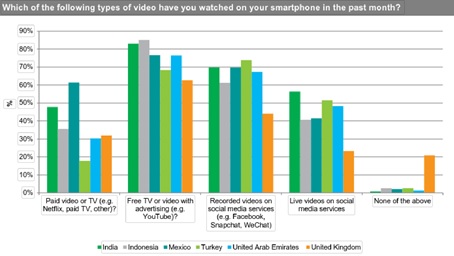
    The phenomenal surge in data consumption by subscribers and free content is driving the majority of telcos’ core businesses today. In addition to this, few telcos are partnering with OTT players to provide exclusive content and niche services in the form of premium bundles. Operator-led OTT subscriptions have become the new business model driving revenues and customer segments.
    Building Success Factors
    Source: IHS Markit

    Driving new business models – The increasing level of complexity

    Initially, rate cards were exchanged between partners for billing the usage of services. Later they entered into bilateral agreements to settle the revenues between them. Now, telcos are moving to digital contracts by partnering with content providers and other OTT players. These digital contracts involve tier/slab ratings, along with exclusions/discounts. Commitments and rating based on specific parameters have increased the level of complexity with respect to rating and charging their partners.

    Let us go through 3 types of agreements that are executed between partners these days:

    There are several agreement scenarios (deals) between the operator and content partner based on different business models. Furthermore, revenue sharing models have been evolving from fixed % based to a tier/slab-based approach across product scenarios.

    1. An agreement based on new subscriptions

    No of New Subscriptions    Revenue Share

    0 – 500                                           P %

    501 – 2000                                     Q %

    2001 and above                              Q % and additional T % for no of subs >2000

    As per the partner agreement, if new subscriptions are negative for a particular month, no pay-out will be made to the partner for that month.

    2. An agreement based on promotions

    Revenue sharing between the parties will be on a monthly basis. The promotion period can be for a few months or it can be ongoing. If the user subscribes to the content for

    Months                  Revenue Share

    1 month                         P %

    2 months                       Q %

    3 months and above      R %

    3. An agreement based on market penetration

    In this scenario, the operator is liable to share the revenue based on the penetration of subscribers in an area. The complexity involved here is that the penetration level of each market is different from the other. In addition to this, there are certain areas where the radius is defined with respect to a landmark. Subscribers within the radius will be charged a premium and accordingly the revenue share.

    In today’s competitive market scenario, partnerships have become the need of the hour for telecom operators and they are moving ahead by signing innovative and complex contracts. The above mentioned examples of digital contracts/agreements are a few models that we have recently dealt with. In the future, we will see many such models with increased complexity and innovative digital contract definitions.

    If you are interested in knowing more about managing complex wholesale contracts

    DOWNLOAD THE WEBINAR RECORDING NOW!

    Have you negotiated or signed any complex contract recently? Let us know in the comments section below. Looking for partner who can help you handle complex contact? Talk to us.
  • ¿Estás listo para descifrar el laberinto de Facturación Digital?

    ¿Estás listo para descifrar el laberinto de Facturación Digital?

    ¿Alguna vez has adivinado quién será tu próximo socio digital, OTT o de venta al por mayor? Al ver el ritmo en que las asociaciones están creciendo a lo largo y ancho de la industria, parece que no obtendrá una respuesta fácil a esta pregunta. En esta carrera, contar con socios es una necesidad de la hora, y eso también en las categorías de entretenimiento, seguridad, juegos y más; no habrá mucho tiempo para analizar los antecedentes del socio o trabajar en la lógica empresarial. Pero estará seguro de que su viaje digital va por buen camino, con nuevas oportunidades de negocios e ingresos … ¡Hurra!

    Ahora, las cosas se ponen patas arriba cuando se da cuenta después de unos días de que hay una dificultad con la administración de la cuenta del socio o contenido defectuoso entregado a los suscriptores, disputas derivadas de los acuerdos, o descubre que hay un problema grave en la forma en que se están ejecutando los términos comerciales. ¿Por qué sucede esto?

    Bueno, el problema podría deberse a la falta de preparación y previsión; tampoco se debe culpar a nadie, el panorama empresarial en rápida evolución arroja una bola curva. Con miles de compañías digitales formando un complejo laberinto de asociaciones, los desafíos son ciertos. Estos desafíos podrían surgir de todos los sectores, no solo de sus socios, sino también de sus clientes o fuentes externas.

    Veamos algunos de los típicos desafíos que puede enfrentar en sus compromisos con nuevos tipos de socios:

    • Hay un proveedor de contenido y un socio que se ocupa de una variedad de tipos de contenido, incluyendo video OTT y aplicaciones móviles, pero le resulta difícil integrar todo tipo de servicios en una plataforma.
    • El contenido ofrecido por su socio está incompleto o corrupto, y los cargos deben revertirse a un cliente. ¿Cómo resolverá el acuerdo en este contexto?
    • Un cliente se involucra en actividades fraudulentas; Por ejemplo, después de descargar el contenido, él / ella no realiza el pago argumentando que el contenido es de baja calidad.
    • La Acuerdo de socios se vuelve difícil a medida que su socio se involucra en prácticas poco éticas, como usar una plataforma fraudulenta para rastrear el número de descargas o las impresiones.
    • Un fraude de phishing afecta a sus clientes, lo que le obliga a compensar masivamente.
    • Una violación reglamentaria inadvertida por su parte conduce a complicaciones legales graves, lo que lleva a pérdidas financieras y daños a la reputación.

    Y la lista continúa…

    ¿Dónde está el problema? ¿Quién será responsable? ¿Cómo superar estos desafíos?

    El problema de fondo con la mayoría de las empresas de telecomunicaciones que buscan oportunidades digitales es a veces la falta de preparación tanto en términos de tecnología, infraestructura y conciencia. Con los constantes cambios en el panorama digital, la presión regulatoria y el aumento de CAPEX, anticipar todo lo que podría salir mal es una espiral descendente. Una actualización de su sistema de soporte comercial y de operaciones (BSS / OSS) podría ser una solución, pero ¿hasta qué punto y en qué medida debería llegar la actualización? La mayoría de las empresas de telecomunicaciones ya han iniciado la transformación BSS / OSS, pero aún no han alcanzado el nivel de madurez digital que se supone que deben. ¿Por qué?

    Bueno, los escenarios discutidos anteriormente indican que la infraestructura tecnológica que está construyendo para proteger su negocio digital debería ser capaz de abordar no solo los desafíos actuales sino también los eventos futuros que probablemente surjan. En otras palabras, debe ser capaz de predecir los escenarios futuros hasta cierto punto y abordar los problemas antes de que afecten al sistema, y que además sea compatible con el futuro para que pueda adaptarse rápidamente.

    En términos generales, una estrategia integral de OSS / BSS que aborda diferentes aspectos como la Gestión de ingresos, la facturación y la Gestión de socios y la experiencia del cliente de manera proactiva es la necesidad de la hora.

    Estén atentos para comprender cómo Subex puede ayudarlo a desarrollar una estrategia de facturación digital que lo ayude a alcanzar el estado de un proveedor de servicios digitales (DSP) de nivel 4 exitoso. Si desea saber cómo las soluciones de Subex pueden ayudarlo a construir un ecosistema digital que aumente sus flujos de ingresos y mejore el valor para el cliente, contáctenos.

  • Are You Ready to Unravel the Digital Billing Maze?

    Are You Ready to Unravel the Digital Billing Maze?

    Ever guessed who will be your next partner in wholesale, digital or OTT? Seeing the pace at which partnerships are burgeoning across the length and breadth of the industry, it seems you won’t get an easy answer to this question. In this rat race, growing partners is the need of the hour, and that too across categories of entertainment, security, gaming and more; there won’t be much time to analyze the partner’s background or work on the business logic. But you are confident that your digital journey is on track, with newer business and revenue opportunities.… Hurray!

    Now, things turn upside down when you realize after a few days that there’s a difficulty with managing the partner account, faulty content delivered to subscribers, disputes arising from agreements, or you find out that there’s a serious problem in the way business terms are being executed. Why do these happen?

    Well, the issue could be arising from a lack of preparation and foresight; no one is to be blamed either, the rapidly evolving business landscape throws a curve ball. With several thousands of digital companies forming a complex maze of partnerships, challenges are certain. These challenges could arise from all quarters, not from your partners alone, but your customers or external sources as well.

    Let’s look at some of the typical challenges you may confront in your engagements with new types of partners:

    • There is a content provider and a partner who deals with a variety of content types including OTT video and mobile apps, but you find it difficult to integrate all types of services on one platform.
    • The content offered by your partner is incomplete or corrupt, and the charges need to be reversed to a customer. How will you settle the deal in this context?
    • A customer engages in fraudulent activities; for example, after downloading the content, he/she defaults the payment arguing that the content is of poor quality.
    • Partner settlement becomes difficult as your partner engages in unethical practices like using a fraudulent platform for tracking the number of downloads or the impressions.
    • A phishing fraud affects your customers, forcing you to compensate massively.
    • An inadvertent regulatory violation from your end leads to a serious legal complications, leading to financial loss and damage to reputation.

    And the list goes on…

    Where does the problem lie? Who is to be held responsible? How to overcome these challenges?

    The underlying problem with most Telcos pursuing digital opportunities is sometimes the lack of preparation both in terms of technology, infrastructure and awareness. With constant changes to the digital landscape, regulatory pressure and escalating CAPEX, anticipating everything that could go wrong is a downward spiral. An upgrade to your Business and Operations Support System (BSS/OSS) could be a solution, but how far and to what extent the upgrade should go? Most Telcos have already initiated the BSS/OSS transformation, but has not yet achieved the level of digital maturity which they are supposed to. Why so?

    Well, the scenarios discussed above indicate that the technology infrastructure you are building to protect your digital business should be capable of addressing not only the current challenges but also the future events that are likely arise. In other words, it should be capable of predicting the future scenarios to an extent and address the problematic ones before they impact the system. And be future compatible so that it can adapt quickly.

    Broadly speaking, an encompassing OSS/BSS strategy that addresses different aspects like revenue management, billing & partner management and customer experience in a proactive manner is the need of the hour.

    Stay tuned to understand how Subex can help you build a digital billing strategy that helps you rise to the status of a successful Level 4 digital service provider (DSP).  If you want to know how Subex’s solutions can help you build a digital ecosystem that boosts your revenue streams and enhances customer value, contact us.

  • Boost your Campaign ROI through Promotion Assurance

    Boost your Campaign ROI through Promotion Assurance

    “Why do you love your service provider?”

    At the end of the day, this is the billion-dollar question which drives the entire telecom industry. When one ponders the answers, quite a few would emerge – flawless connectivity which helps my business flourish, a well-priced model which keeps families closer than ever, providing a backbone that keeps a country productive, etc. But in most surveys (and in my personal experience), it is the attempt at focused engagement that keeps most of us linked to the same Telco. Giving me freebies on my birthday, suggesting I change my plan to one which suits my business travel (even though the rental might be lesser) or even the act of proactively passing me some benefit during a network downtime adds that human element which tends to create brand loyalty.

    From the above, it is clear that successful promotional campaigns can do wonders in terms of customer retention as well as acquisition. With the plethora of analytics tools powering the marketing departments across most Telcos, differentiated, qualified, and value-driven campaigns are a reality. Of course, some have gone farther than others in this regard. But the question which I will explore in this blog is whether this practice creates risks and brings in more issues than it solves.

    Now, I look at Promotions and Campaigns from a more general perspective. It’s like eating at Dominos. While Dominos makes some decent pizzas and has a large customer base, it faces the same issue as all other eateries – consumer fatigue. This is not just caused by the limited choices (assuming a market where you could only eat Dominos pizzas), but also the sheer banality of the process. In this environment, if one offers a package deal (drink + pizza + lava cake) at 50% of its list price pursuant to a customer also purchasing a premium feast pizza, the break from the monotony of the pizza ordering process itself drives a sense of “anticipatory need.” Now, this is the easiest level. Going beyond, if Dominos were to use analytics to understand and anticipate my ordering behaviour and suggests a ready cart with one click check-out, I would be delighted. Too much to ask? Well, the reality is, this is what subscribers expect from their service providers today.

    The Inside-Out of Promotions

    With promotions emerging as a major business strategy in today’s competitive telecom environment, targeted campaigns can help Telcos increase revenue, margin, customer retention, customer satisfaction, and overall brand stickiness. However, the differentiation comes with its own challenges, and so does the ROI. The returns from the campaign greatly depend on how the Telco addresses each one of the challenges. Globally Telcos have allocated a significant portion (around 8%) of their budget for promotions and advertisements, but the results, in terms of campaign ROI, are not as expected. The ineffectiveness of campaigns could occur due to several reasons including lack of planning, improper budget allocation, incorrect metric measurement, wrong promotion qualifiers, incorrect target list, and many more.

    Let’s examine some of the challenges associated with driving successful campaigns and see how Telcos can mitigate them to gain maximum return from their campaign investments. I will broadly classify them as:

    1. Data Access and Integrity – Each stage in the promotion launch process is critically dependent on the accuracy of the facts from the previous stage. It is of paramount importance to ensure that the raw datasets are accurate, complete, and integral. Unfortunately, most marketing teams do not have access to a comprehensive data integrity engine.
    2. Promotion Complexity – Promotions can widely vary in nature (i.e. the device, vouchers, services, etc.), and most operators do not have a ready-to-use promotion risk matrix or checklist. This leaves assurance teams at a disadvantage to deal with the volume and velocity of new promotions.
    3. Time to Market – Competitor pressure in most regions leads to a very short release/launch time for new promotions. In the absence of automation, this means pre-launch testing is usually sample based, and the test results are contaminated by confirmation bias.
    4. Lack of Automation – Many of the checks required to ensure high ROI on promotions require a high level of automation as manual interventions usually introduce errors.
    5. Regulatory Hurdles: Regulators may apply a cap on certain promotional offers announced by Telcos. For example, In India, there is a 90-day cap on such offers, so the Telcos find it difficult to optimize the market spend and achieve the target within the short span of time.

    So, why invest in a Promotion Assurance program?

    Having the right product does not always guarantee revenue. Telcos may be losing out to competition due to lack of visibility into how efficiently promotions are rolled out. Promotion assurance programs, which build around modern analytics and intelligent automation techniques, emerge as a winning solution in this context because it helps the Telcos define the campaign KPIs and measure ROI from each on a near real-time basis, so they can take corrective measures appropriately.

    Challenges inherent in the current approaches and the evolving marketing conditions pose higher risks to campaign ROIs, and more importantly, might impact the customer experience. It is the need of the hour for Telcos to implement a promotion assurance strategy that focuses on the business, system, process and customer aspects of the campaign.

  • Why Artificial Intelligence Powered Fraud Management

    Why Artificial Intelligence Powered Fraud Management

    Artificial Intelligence (AI) is not new and it has been around for decades. However, with the advent of big data and distributed computing that is available today, it is possible to realize the true potential of AI. From what started as an interesting story line in SCI-FI movies to programs like Alpha-Go which has been beating humans, AI has been evolving. AI also has branched out into multiple sub categories such as Machine Learning, Deep Learning, Re-enforcement learning etc.

    An effective Fraud Management (FM) strategy includes 3 important pillars: Detect, Investigate & Protect. We believe AI can positively influence all the 3 pillars of fraud management, from reducing false positives to helping in mining root cause analysis to creating enhanced customer experience in protection.

    In this post I would like to look at the starting pillar of the Fraud Management strategy – “Detection” and look at AI’s influence in this very important step. A traditional approach to Fraud detection has been through Rule Engines which could be:

    • If-Else Conditions
    • Thresholds
    • Expressions
    • Evaluating Data Patterns

    These are widely known as deterministic solutions where an event triggers an action. The biggest pros and cons with this approach is that human intervention is needed to feed the logic.

    For eg: for a threshold based detection humans have to feed the rule engine that count of records above a certain threshold is suspicious.

    Following diagrams shows how this looks like

    rule-engine

    After looking at the diagram above an important question arises, should this threshold value be a straight line or can it bend based on how data behaves. Now there are ways for rule engine to behave like mentioned in the diagram,

    variable-threshold

    for eg, instead of having a single rule lets have multiple rules

    • Per Customer Category
    • Per Destination
    • Per Age of Customers

    And multiply that with other dimensions in data which are

    • Phone Number
    • Caller Number
    • Called Number
    • Country Code

    And multiple that with other set of measures per dimensions

    • Count
    • Duration
    • Value

    And throw an additional billion volumes at the datasets

    Quickly FM teams ends up with something like this
    AI Blog1

    But what they wanted or dreamt was this

    AI Blog2

    Now I am not saying FM teams are not skilled enough to fly, but a fraud team in a modern Digital Service provider should be more focused on other important factors.

    machine-learning
    So, let’s look at how a very evolved class of Artificial Intelligence known as Machine Learning looks at this problem statement. Rather than humans feeding domain information or thresholds, Machine Learning Algorithms mine data from historic fraudulent behaviors and create models. These models are then used to evaluate real production datasets to score whether they certain activity is fraud or not. An advantage is that these models are very good at looking the datasets from multiple dimensions and measures at the same time and concluding whether event is fraud or not.

    This approach thereby helps in achieving multiple KPI’s of fraud management teams there by increasing efficiency.

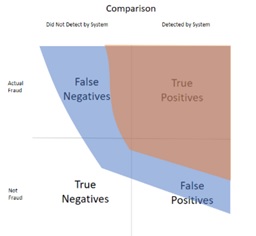
    • Higher Accuracy – Because AI can learn and adapt to Business scenarios faster, AI can significantly increase True Positive ratio
    • Reduced time to detect – How fast a fraud event can be detected
    • Self-Learning – How over a period changing business scenarios and seasonality in data can be adopted to Fraud detection
    • Fraud Intelligence– How customer or any other entity behaviors can be learnt and categorized for better fraud detection
    • Proactiveness – Ability to mine for unknown patterns not seen in the data earlier
    FM-4
    Application of Artificial Intelligence has its own significant challenges and requires a new frame of thought, however looking at the Data Tsunami that has hit the fraud management teams, it looks an AI pro approach would only help Fraud Management teams to scale further.

    To learn more about how AI/ML would transform the Fraud Management Systems, Join us on our two-part series of “AI Master Class for Fraud Management” to familiarize yourself with AI/ML through a live demo.

    Register Now

  • Converged Partner Management: Will It Address Telco’s Concerns?

    Converged Partner Management: Will It Address Telco’s Concerns?

    Over the past decade, we have seen how the growth of IP-enabled networks has impacted Telco’s business models. The competition from Over-the-Top (OTT) players brought drastic decline in their traditional voice and message revenues. The discussions on improving Average Revenue per User (ARPU) for Telcos thus chiefly revolved around enabling new service models around Digital, but without compromising the overall budget. The transition of Telcos from traditional Communications Service Providers (CSPs) to Digital Service Providers (DSPs) thus became indispensable but at the same time challenging. One of the top challenges faced by DSPs during this transformation is to manage the diverse ecosystem of partners linked to their business.

    Why Converged Partner Management is Important?

    Considering the complex business environment a DSP operates in, partner management becomes crucial not only to simplify operations but also to optimize revenue streams. Legacy partner management systems have limitations especially due to their lack of flexibility and automation capabilities. By implementing a converged partner management strategy, Telcos can maximize profitability and minimize partner disputes. By integrating the service with ERP and other connected processes, they can also reduce the operational costs considerably.

    Before going deep into the converged partner management solution, let’s explore the scenario in a DSP partner management landscape. The complexity in partner management starts right from “defining the partner business.” Here we have the traditional partners like wholesale and roaming providers whose contracts may revolve around setting bilateral deals for defining traffic and event details for voice, data, and SMS services. On the other hand, there are digital partners like OTT players, VAS/content providers, and IoT players whose contracts may revolve around other metrics such as clicks/impressions, downloads, meter readings, etc.

    The wide variety in partner businesses also brings associated challenges in partner settlement, another major worry for DSPs. Each business entity requires different sets of rules, which need to be applied to the events to generate the final revenue reports. This is not easy considering the exhaustive DSP ecosystem comprising the traditional  interconnect, wholesale, and roaming providers  as well as the new digital partners for services like OTT, content, VAS, IoT, and M2M. Then, there is another set of entities like MSOs, integrators, dealers and resellers who require different types of contracts and settlement rules.

    The dynamic and evolving DSP ecosystem also makes partner onboarding a tricky affair. There needs to be a system that can track frequent partners and in multiple formats, and build mediation capability across them in a seamless manner. Attaining real-time visibility across each platform is important for accurate rating and charging, without which the DSP ecosystem will not work smoothly.

    The concerns over partner management prompted us to think about a converged partner management solution that could deliver an all-in-one package for DSPs. The innovation aimed at delivering real-time visibility into DSP’s end-to-end wholesale business and revenue sources. Our interaction with stakeholders in the telecom landscape helped us sort out the pain points quickly. With the insights gained from the industry, we have now come up with a new ROC Partner Management solution that addresses all aspects of partner management including partner onboarding, partner self-care, end-to-end revenue visibility, and communication under one umbrella.

    As mentioned in the beginning, converged partner management strategy helps Telcos gain end-to-end visibility and drive cost optimization across its service channels. The scalable partner management architecture makes partner onboarding hassle-free. It also enhances the DSP’s service capabilities as it allows them to identify, test, and analyze different contracts before they are implemented.

    To understand more about Subex ROC Partner Management offering, please download the whitepaper.

  • Telecom World Asia 2018: Here we come!

    Telecom World Asia 2018: Here we come!

    Digitalisation. This is the wave which has hit everyone across geographies and in our quest to help the telecom world embracing it and making it real, we are reaching the ‘Land of smiles’- Thailand.  The 2018 edition of Telecom World Asia is taking place in Bangkok on the 19th and 20th of March and I am excited to be a part of Subex delegation. This year, the conference is revolving around four key themes of digitalisation- wholesale, networks, the digital customer, and Telco 4.0. Let me tell you how and why these themes are close to our heart.

    Our product ROC Partner Management is a unified platform which caters to the entire gamut of partner needs of a telecom operator for providing both traditional and digital services and it aligns with the first theme of the conference- “wholesale”. We have two products under the ‘Network’ theme- ROC Network Asset Management and ROC Capacity Management. ROC Network Asset Management is an Asset Lifecycle Management solution which provides standardized processes for managing and optimizing network assets. ROC Capacity Management solution help CSPs to strategize and plan their network expansion & capacity augment investments to improve Customer Experience, increase RoI, optimize Capex, reduce Churn and increase Net Promoter Scores. Hence both these products are aimed at providing capex optimization and customer experience. Our advanced analytics solution ROC insights provide actionable insights about products, risk, revenue and customers and hence aligns well with the themes of digital customer and Telco 4.0.

    The conference is going to cover interesting strategic topics such as the future of wholesale operators, the road to 5G, SDN/NFV etc. which are the favorite coffee table discussions at Subex. Overall, Telecom World Asia 2018 looks a very good opportunity for us to share knowledge, network with industry peers and learn how Telco are addressing the digital transformation. Don’t forget to visit us at booth #20 at the conference. Wai Bangkok!

  • Why Telcos could never overcome Simbox Fraud since a decade Now

    Why Telcos could never overcome Simbox Fraud since a decade Now

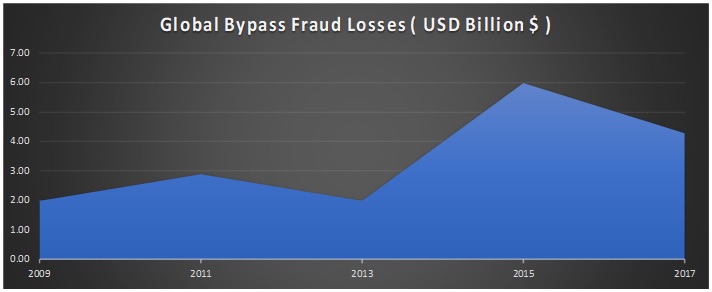
    Simbox, Bypass Fraud/ Or Interconnect bypass Fraud has been one of the fastest growing Fraud Types In recent few years.  As per 2017 Global Fraud Loss Survey by CFCA, Global Fraud Loss Estimate stands at $29.2 Billion (USD) annually which is 1.27% of global telecom revenues.

    global bypass

    Source CFCA Survey Results

    Simbox Fraud / Bypass Fraud has been a significant fraud issue for more than a decade now. CFCA survey results across 2009 till 2017 clearly shows an increase of more than 100%  in Bypass fraud since 2013. In this blog, we shall discuss about factors that has contributed to this continuous increase in Bypass Fraud and reasons, operators have not been able to effectively mitigate Bypass Fraud.

    Factors for continuous Increase in Bypass / Simbox Fraud:

    • Reduced barrier for entry

    Buying and operating SIMBoxs has never been easier with online stores, e-commerce websites,courses, forums and instant support availability.  This has led to an increased spread of VOIP based startups and subsequent increase in bypass fraud. VOIP based calling apps have also made customer acquisition easy by making them  easily available on  AppStore for Android & IOS users. For instance, a recent news from India covered the similar trend wherein those who wanted to make international calls from Gulf countries has to download an app called ‘dial to India’ Once this app is downloaded, they get a password for monthly subscriptions. The person sitting abroad will just dial the number in India, the call will bypass the VSNL gate and will directly route through the SIM box and will get connected from there. Read More

    Few more such examples as below:

    “Illegal phone exchanges thriving on SIM boxes”

    VOIP exchanges used by ISI busted in Andhra Pradesh, India

    • Competitive Landscape

    Reduced margins on international traffic has resulted in wholesale traffic being mixed with internal traffic. Wholesale providers have also been increasingly offering non-CLI based options which could potentially end up in Grey routes. This fierce competition had led to increase in bypass traffic particularly in countries with higher landing costs.

    Reasons Operators have not been able to effectively mitigate Bypass Fraud:

    • Advancement in Sim-server Technology

    Simbox have evolved from being a simple single box setup to a complex modular architecture. This architecture allows fraudsters to maintain all the simcards in a single place and using Antenna modules and multiplexers, fraudsters are able to distribute their operations in the market. In fact, Latest Simservers also comes with inbuilt anti-fraud detection solutions allowing fraudsters to  distribute his operations in multiple locations. This makes fraud detection very complex as fraud management teams have to device multiple strategies to beat fraudsters at their game.

    • Regulatory Changes

    Regulatory changes in certain markets have fueled increase in traffic for Bypass. Recent changes of regulations in European Union has also resulted in traffic with E.U been heavily being differentiated in price from traffic outside E.U thereby causing significant increase in Bypass traffic.

    • Raising Concerns in Simcard Sales

    Increased pressure to maintain sales and activation of new connections have resulted in dealers colluding with Bypass fraudsters. Bypass operations requires lot of sims to be activated in bulk and lack of effective subscriber acquisition controls have led to fraudsters taking advantage of it.

    Fraud Management teams further have an uphill task in the Bypass fraud space as new technologies such as virtual sim’s would only increase the impacts on bypass of international traffic. It is hence important that they adopt a comprehensive fraud detection methodology to fight simbox frauds.

  • Strategies for Telcos to drive the digital economy Part 2

    Strategies for Telcos to drive the digital economy Part 2

    The internet waits for no one! It is changing the way businesses run and in today’s era, digital economy is not a distant dream but a reality.

    As promised in my last blog, I will elaborate on the key strategies that I disclosed in my previous blog which will help CSPs in their digital transformation journey to become Digital Service providers and thus drive the economy.

    Core Rediscovery – As said earlier, being digital does not always mean discovering new revenue streams of the digital world. It also means doing the basics brilliantly. Ensuring innovation can be brought with in the traditional services. It also means identification of a new way(s) of doing business to pull in more revenue, a classical example in interconnect business is Origin based billing & routing. Other ways of innovation are Direct CSP billing – MVNOs to cater to niche markets to indirectly gain customer base and revenues. SaaS models like billing-as-a-service to support smaller partners. DVBT2 – Digital Video Broadcasting, SMS based Cab booking, Toll free based calling Apps, Secure SMS/Missed Call – Mobile Banking etc. Rating and discounting models to define rating plans that can also assist in bringing in more revenue generation opportunities for existing and new traditional partners. These can be revenue share models or the new age models like pay as you go.

    Discover New – There is absolutely no denial that digital world is surely opening new revenue streams for CSPs. The mantra to grab a share of this pie is to act fast. CSPs need to establish a fail fast strategy so that they can identify core area of strength early in the digitalization journey. Fail fast strategy shall enable them in continuing only with those new streams that make sense to the eco system in which they do their business. No doubt, IoT & M2M are the most fascinating areas in digital world. Other areas where CSPs can generate revenue are APIs, Analytics as a service, supporting new age MVNOs like Uber and Micheline (Tier-as-a-service), smart homes solutions provided by Qivicon founded by Deutsche Telekom. Digitalization is fueled by the capabilities of operators, and hence the outreach of the operators is now domain agonistic.

    Collaboration Platform –With digitalization, difference between a partner and the end subscriber relationship is becoming blur. Partners also need attention and care like your end subscribers. CSPs will fascinatingly find innovative partners in garage companies, startups, small organization etc. Hence it is terribly essential that CSPs have a collaboration platform that addresses partner empowerment issues.

    There are two ways in which operators can bring in novelty. One is by revolutionizing their own, which we see in the case of the telecom giants acquiring platform that enables the disruptive capabilities inhouse.  The Another way is to look for vendors who can provide them a converged platform to leverage the entire gamut of the partner ecosystem. The end goal is to stay ahead of the competition by providing traditional and digital services to end customers.

    Customer Experience – Telecom market used to be oligopoly in nature, wherein the major players of telecom industries use to commodify the subscribers to mint money out of them.  Whereas now, in a perfectly competitive transition, we need to shift the paradigm to make customer and CSP relationship more human centric. This will help a CSP in designing the offerings to ensure consumer retention and to win new customers. The new age subscriber is demanding in nature and prefers an operator who is agile, innovative and cost effective.

    Below is the survey shared by Capgemini, which shows low net promotor scores of mobile operators.


    mobile-operators


    This survey also talks about that 58% of customers are willing to switch to Digital only service provider and high value customers are more willing to change. Unless operators reform their customer satisfaction approach, the NPS will stay low and operators will keep losing revenue and customer base to digital players.

    Operational Efficiency – Digitalization will lead to increase in number of partner relationships. Soon a CSP, during its transformation journey, will experience partner explosion. Digital services will result in plethora of data getting generated. To keep things under check, a CSP must bring in efficiency by making its operations also digital. Operations can be digitalized by automation, reducing redundancy of systems and data, seeking help from domain and system experts (consultation and managed services), empowering partners with self-care capabilities. CSPs design their partner handling capabilities both in terms of processes and solutions considering mostly trusted partners, hence the partnerships are also limited and the systems are also multi step and user dependent. In case of digitalization, CSPs need to associate with multiple entities who can bring in renovation, hence will see surge in partnerships. To handle partner explosion, processes of on-boarding and partner care should be particularly efficient. Partners are the new age customers, they are aware that they bring innovation and new revenue stream for a CSP, hence they should be treated with lot of care. Having an efficient eco-system for partner will surely bring in satisfaction and shall maintain a healthy partnership.

    Expense Optimization – Expenses are inversely proportional to profit. An aspiring digital operator must form a strategy around cost reduction. Based on a research house, software industry is gradually moving towards convergent approach from siloed ecosystem. This helps in reducing overhead of investing in multiple systems. Leveraging solutions that are based on open source technologies is another way of optimizing hefty recurring costs. If a telco can bring in operational efficiency, expense optimization will happen automatically.

    This transformation will be a challenging journey for both CSP and its partners, but this will surely help an operator to rediscover itself and shall bring in more agility to accept and act on whatever comes down the path. Though there are many other factors and strategies that can be adopted along with the mentioned ones, these 6 strategies are our take on the transformation journey. However, it is very important for an operator to clearly identify the purpose of its modification, but it is completely okay to move step by step instead of adopting all 6 strategies at once. To start with the transformation, CSPs should reexamine the existing offerings, existing expense optimization plan, make the current operations efficient and ensure customer satisfaction in the existing services offered. Once there is a clarity in becoming digital in current line of business, identification of new streams will automatically fall in place.

    We are discussing these strategies in detail at our booth (Booth # 5F10, Hall 5) in MWC 2018. Meet us in the booth to know more about how we can help in your transformation journey to drive the digital economy.