Author: admin

  • Revolutionizing Partner Settlements: Say Goodbye to Manual Reconciliation

    Revolutionizing Partner Settlements: Say Goodbye to Manual Reconciliation

    In this Digital Transformation era, every business strives to get the best out of its services by leveraging all capabilities available. This cannot become a reality without innovations within telecommunication products and services.

    To meet the increasing, dynamic, digital, and innovative needs of customers, Telcos need to expand their portfolio beyond their traditional capabilities. Digitalization is forcing Telcos to forge partnerships with the digital natives to innovate their offering. This also means Telcos need a much quicker GTM strategy for their services than ever before. Partnership is the key to success here as Telcos can leverage on their partner’s strength. The partnerships are not new to Telcos; in fact, a partnership is like a conjoined strategy for most telco products and services.

    Managing a Profitable Partnership

    Telcos should have Partnering Strategy to bundle services, go to market quicker, realize the benefits and continue to innovate. While everyone is focusing on making the partnership work and be successful, fuel to this model is nothing but revenue and cost management. While it is not in the true intention of any partner to charge/pay for more/less than what it has to be, it’s necessary to validate, communicate and resolve any errors with the settlement. Timely identification of discrepancies and resolving them without delays is crucial for a healthy and profitable partnership. Discrepancy resolution is naturally a slow process and if not addressed at the right time and right pace, may end up in backlogs of unsettled invoices leading to unhealthy partnership.

    Usually, Analysts read the invoices, verify values and confirm correctness. However, when dealing with 100s or 1000s of invoices, there are high possibilities of errors. Telcos should leverage technology to address this problem of Carrier Invoice Imports & Reconciliation. You will be surprised to see that there are still jobs posted in the market for analysts to check rates, cost elements, verify invoices, and do reconciliations manually. Such tasks are error-prone and hectic, which will eventually reflect in the quality of the outcome.

    Challenges with Partner Invoices

    Partners send invoices in different formats, types, and frequencies to Telcos. Such invoices can be in PDF, JPG, scanned images, or spreadsheet format.

    Telcos should invest in a robust solution capable of handling all variants of invoices, parse, process them and hand it over for reconciliation. Investing in a solution that is based on prebuilt can help to some extent. This will work if the invoices you want to process fits in one of their prebuilt. If not, then the new invoice layout needs to be designed, developed, or trained.

    Even within pre-builts, it’s not very easy to find the model which fits the need. Partners can keep changing their invoice formats as part of their continual improvements. Field positions can shift or change from what it is trained from. One can build rules to wrangle them. But the real solution to this problem should be from the Deep Learning techniques of AI/ML.

    Deep Learning: The need of the hour

    Solutions built based on deep learning-based convolutional object detection methods can extract data from scanned images (OCR), interpret any types of invoice formats, layouts, and support different language invoices translation. Deep BERT-based question-answering model will enable parsing attribute values from the invoices with a higher success rate. This, combined with NLP, improves the accuracy of invoice data classification. Also, look for solutions that can scale out as per need; hence parallelism can be achieved to improve performance.

    Subex AI Labs comes in handy to address OCR challenges with invoices. Four key features of the Subex Invoice processing module are:

    • Deep learning-based OCR model for data extraction from scanned pdfs.
    • Advanced BERT-based NLP model for accurately classifying invoice data, summarising invoice data to get better representation.
    • Distributed deployment to support processing multiple invoices simultaneously within a few minutes.
    • Automatic convolutional method for invoice layout identification and verification for known customers.

    Our invoice extraction module can automatically identify invoice layouts and extract all relevant information using the above-mentioned experts-built techniques. We drive efficiencies into your businesses via process automation to gain operational insight to support critical decision-making activities and enable you to achieve a competitive advantage. Subex Partner Settlement solution also allows you to introduce innovative services, bundled offerings, and products and handle billing for traditional and digital services, thereby opening new business streams for complex variable pricing models.

    Continue to the next part

    Interested in knowing more!

    Let’s talk now

  • 5 Mantras of Accounting Assurance for Telecom Operators to optimise profit growth

    5 Mantras of Accounting Assurance for Telecom Operators to optimise profit growth

    Numerous organisations use accounting assurance services to verify the validity of their financial data. Businesses typically also use assurance services for risk assessment, information systems reliability, e-commerce, healthcare and business performance. In telecom, accountants often use this autonomous professional program to examine financial documents and improve the quality of the data contained in those records.

    What is assurance in accounting?

    Assurance services concentrate on overlooking the procedures, operations and management of a company to ensure it is operating with the necessary precision. Assurance operates on past data from enterprise reports to analyze and improve the quality of information which in turn helped individuals make informed decisions. The most standard assurance benefit is the assessment of financial reports for accounting departments. Assurance services are not only used for analyzing financial systems but also systems in other departments of business like internal controls or IT systems.

    Most telcos need to use accounting assurance because the law demands them to, while other domains use these services for voluntary, regulatory or compliance grounds. The use of assurance services in telcos is necessary to navigate complexities, risks and opportunities by proactively managing and monitoring risks associated with financial decision-making that affect partner networks or third-party relationships. Businesses find that assurance services help achieve greater financial performance, create sustainable revenue growth and provide competitive techniques for differentiation.

    Why is Accounting assurance needed?

    Accounting Assurance is important to mitigate the cause of revenue leakage such as inaccurate treatment of revenue streams, incorrect revenue accounting, reporting errors etc. If accounting assurance services are not applied it leads to multiple challenges like:

    • Lack of knowledge of accounting procedures received from controlling departments resulting in delays in accounting the revenue
    • Inaccurate design of business logic and general logistic systems across systems like Charging / Billing / Data Warehouse causing errors in data records
    • The lack of management resulted in poor visibility of the revenue numbers reported
    • Inconsistent updates or faulty maintenance of existing statements resulting in mistakes in revenue accounting across revenue streams
    • Inaccurate booking of Invoices and the inefficient process by operators for desperate voucher sales
    • Ineffective tracking of the voucher and SIM sales caused by the absence of a voucher control system

    Inaccurate mapping of invoices to general logistics for revenue analysis

    What are the components of Accounting Assurance?

    Here are 5 elements that build up accounting assurance services:

    • Three-team relationship: This contains the liable party who organizes the data, the practitioner who acquires the information and the application users who make informed decisions based on the assurance’s output.
    • Subject matter: There must be a clear subject of issue for assurance services. Generally, this is the balance sheet, income statement or statement of cash flow.
    • Benchmark criteria: In the case of mandated criteria, such as the International Financial Reporting Standards, the assurance specialists review the subject concern.
    • Criteria evidence: The assurance professional conducts this by forming performance reports of the subject matter with accurate and high-quality data.
    • Assurance report: This is the reported result of the assurance service that explains and finalizes the subject concern.

    What are the processes involved in Telecom Accounting Assurance?

    Telecom operators are often trying to expand significantly to bring in optimised profits since it is a very competitive business domain. With reference to this, accounting assurance has evolved from its function as a business regulator to a business achiever.

    Revenue accounting is a vital area of CSP business. Here, operators encounter tough challenges when it comes to estimating revenue across earned and unearned values, compliance, and recording of financial data. Telcos also find it hard to monitor leakages within order to cash bookings, voucher generation (electronic and physical), starter kits and bundled offers, pre-provisioning invoicing of channels etc., leading to mistakes, delayed processes, inaccuracies in customer data records or overstatement/understatement of revenue gathered.

    When recorded, prepaid and post-paid service validations provide crucial insights into possible areas of revenue leakages within a corporation’s accounting activities.

    Here are a few steps involved in the accounting assurance process :

    1. End-to-end process verification
    2. Stock management review
    3. Distribution process review
    4. Invoicing process validation
    5. Account receivables review
    6. Independent method analysis
    7. Report and transaction analysis
    8. Configuration validation
    9. Billable versus billed validation
    10. Invoice to ERP action
    11. Unbilled revenue validation
    12. Financial reporting

    Existing revenue accounting processes have in-built tools to determine discrepancies that might cause revenue leakages. These processes are based on operator policies, review of payments by subscribers, and real revenue collected through the charging systems. Detailed comparisons between distinct metrics involved can forewarn revenue assurance teams about probable leakages, thereby reducing conflicts in the earned and unearned revenue accounting across services.

    Accounting Assurance as a service can improve the quality and transparency of information and reduce the likelihood of problems occurring from incorrect data. Assurance processes can be regulatory or compliance-based. Their function is to ensure that a business is following guidelines, rules and policy and provide both internal and external assurance for financial accounts.

    Accounting experts are qualified independent performers who can tackle such services and verify processes are streamlined. Reducing risk enables intended users to confidently make informed decisions. Thus, assurance guarantees better decision-making for users, such as investors and analysts.

    Also, assurance services follow up on their procedures by testing the validity of past data within the business cycle. The most popular assurance service is financial statement verification, but they incorporate a wide range of other complex assessments as well.

    How Tier-I APAC telco optimise its Revenue reporting process by identifying $ 2.5 million understated revenue

    Download Case Study

  • What makes enterprise business the new hotspot of telco growth?

    What makes enterprise business the new hotspot of telco growth?

    B2C revenues continue to decline.

    Over-the-top (OTT) platforms have eroded one of the biggest advantages telcos once had—providing direct communication channels. Agile digital players are capturing telecom revenues by offering secure, simple, and sticky communication solutions on top of telco networks. Consider WhatsApp for messaging, FaceTime for video calls, Flipboard for news, Spotify for music, and Amazon Prime for digital content. The widespread adoption of 4G and high-speed data networks has pushed consumers further into the app-driven economy, reducing reliance on traditional telecom services.

    To maintain profitability, telcos are increasingly shifting their focus to B2B services. The telecom enterprise services market, which was valued at approximately USD 196 billion in 2023, is projected to grow to around USD 253 billion by 2030 (Southeast News Channel Nebraska). However, B2B customers demand innovation, and many still perceive telecom operators as lagging behind in meeting their evolving needs. Enterprise services now encompass a range of offerings, including managed mobility solutions, cloud storage, cybersecurity, and tailored services for SMEs.

    A key growth area within B2B is the Mobile Virtual Network Operator (MVNO) segment, which was valued at approximately USD 83.5 billion in 2024 and is expected to reach USD 142.9 billion by 2033 (IMARC Group). A major driver of this growth is the increasing adoption of MVNO services by small and medium enterprises, which seek cost-effective, flexible, and scalable telecom solutions. Additionally, the rising demand for IoT connectivity is fueling the expansion of IoT-focused MVNOs, projected to grow at a CAGR of 18.59% over the next decade (SNS Insider).

    5G and IoT will spur enterprise growth.

    Foreseeing the digital disruption, some operators have been re-examining their market positions and extending their services to corporate customers, fixed line services, online banking, and more. But telcos should also carefully monitor the enterprise business space to discover new opportunities in a smart world. Here are some growth levers to look out for:

    1. Autonomous vehicles – 5G will drive machine-to-machine (M2M) communications whereby vehicles can communicate with other vehicles, MET departments, traffic control systems, and more. Coupled with edge computing and ultra-reliable low latency communication, this will allow on-the-go decisions about alternate driving routes as well as real-time recommendations for repairs or fuel stations.
    2. Public infrastructure – Municipal corporations are actively evaluating how to use IoT for smarter governance. Through 5G, utility companies will be able to track resource usage, such as electricity and water usage remotely. Sensors can notify public works departments, enabling rapid responses in cases of flooding drains faulty traffic lights, fused streetlights, and accidents.
    3. Healthcare – As smart devices go cellular, carriers become the portal through which large amounts of health-related data flow between patients and physicians. Think external smart devices tracking vital signs (like respiration for asthma) or smart drugs monitoring internal functions. All this data must be transmitted continuously, securely, to the right provider.
    4. Industrial safety – With its extremely low latency, 5G will drive greater advances in remote-controlled devices that will be more responsive, energy-efficient, and intuitive. Man-machine interactions through remote-controlled robots can ensure worker safety in hazardous environments like mining industries and even precision surgery in healthcare.

    Prepare for change.

    • Customer demographics will change – The entire telecom customer demographic will transform radically to include new kinds of enterprise business customers that want to tap into 5G use cases.
    • Network traffic will evolve – Due to the changing customer demographic, the type of network traffic will evolve dramatically from call detail record (CDR) based to event-based traffic.
    • Data volumes will skyrocket – Operators will be swamped with tremendous amounts of data originating from their extended B2B ecosystem across verticals.

    It’s going to be partnerships, all the way.

    Seizing this opportunity, we can expect telcos to partner with enterprises, IoT-specific mobile virtual network operators (MVNOs) and digital upstarts with the objective of:

    • Expanding verticals to bundle offerings that are truly innovative. To help enterprises deal with rising device penetration, adoption and connection, some operators provide enterprise connectivity solutions. Through this, enterprises can manage all their SIM cards used for device cellular connectivity and M2M communication with advanced device analytics, self-care options, and more, from a single pane.
    • Selling insights based on enterprise data. McKinsey has already investigated this and predicts that digital and analytics can give telcos 5-15% incremental revenues in its B2B segment. Some use cases here include dynamic deal scoring, personalized campaigns, next-product-to-buy algorithms, and predicting network outages or inefficiencies for faster remediation and greater customer satisfaction.
    • Becoming a hub of contractual compliance between multiple partners. Subex is helping telcos leverage the power of AI to for intelligent contracting, thereby minimizing disputes, enhancing contract performance, and ensuring partner satisfaction.
    • Enforcing digital trust and data security. With increasing amounts of data passing through telcos, some operators are offering a full range of enterprise cybersecurity products along with consulting, professional, and managed security services. Coordinated security solutions can centralize data management and security in accordance with various national guidelines, making compliance and security easier and more cost-effective.

    Collaboration is the new competition.

    CSPs can metamorphize into nerve centers that facilitate the right connections between businesses and customers. But, their competitive edge in tomorrow’s connected world will depend on how quickly and efficiently they forge partnerships and collaborations. With higher numbers of partners and connections as well as bundled services and products, operators will be responsible for encapsulating terms, rating billing data, and ensuring quality of service levels. Thus, operators must be ready with transparent, agile, and intelligent enterprise billing systems that simplify partner management.

    Unlocking new growth paradigms with enterprise business.

    Schedule a demo

  • Customer Lifetime Value (CLTV) for a Digital Wallet Business

    Customer Lifetime Value (CLTV) for a Digital Wallet Business

    Customer Lifetime Value (CLTV) is a metric that measures the total revenue/profit that a customer is expected to bring over the course of their lifetime with the business. It is an important metric that calculates the worth of all customers. CLTV models can then help address issues such as

    “We have lost this high-value customer, how much can I afford to spend to win them back?” or

    “Which customers should I be targeting to maximize my return on investment?”

    Here are some reasons why understanding and knowing CLTV is essential to a business:

    1. It helps in targeting profitable customers: When the CLTV of each customer is known, it helps in identifying customers who need to be retained or targeted for more products/services and which customers can be let go if there is a risk of churn.

    2. It helps in understanding the kind of customers a business is acquiring: It is always desirable that a business acquires as many as high-value customers, so to evaluate this, calculating the CLTV of new customers relative to existing customers is important. If the CLTV of new customers is higher than that of existing customers, it is a positive for the business as this indicates that the new customers are of high value and profitable customers.

    3. Campaign Effectiveness: CLTV can also be used as a proxy to determine the effectiveness of campaigns where the purpose is to increase the value or revenue from customers. For instance, if a cross-sell or up-sell campaign is being done on a set of customers, and if the CLTV of those customers goes up in the near term, then we can reasonably say that the campaign has been successful.

    4. Business performance: CLTV can also be used as a business performance metric since it essentially tells us the value of all customers, which in turn tells us the value of the business. So, if CLTV increases over time, it is a positive sign for the business.

    5. ROI on Customer acquisition cost (CAC): For a business, (CLTV: CAC) ratio is a critical business metric. This tells us how much value the customer is bringing to the business for every dollar spent on acquiring the customer. This ratio tells you how profitable a customer will be over their lifetime. CLTV: CAC ratio can also yield insights into how efficiently the sales and marketing team are spending money to acquire customers.

    Calculating Customer Lifetime Value

    There are different ways to calculate based on different business models. Here, we will look at calculating CLTV for a digital wallet business.

    CLTV is calculated as follows:

    CLTV = ((T*AOV) AGM)) ALT

    There are four components when it comes to calculating CLTV:

    Component Definition Calculation
    T Average monthly transactions  No Of Transactions/ No of Active Months
    AVPT Average Value Per Transaction Total Transaction Value/ No of Transactions
    ALT Avg Customer Lifespan (In Months) 1/churn probability
    AGM Average gross margin (Revenue – Costs)/Revenue

    Out of these 4 components, Customer lifespan is somewhat difficult to calculate. If customer churn data is available for a longer period, i.e., 8-10 years, then we can arrive at customer lifespan using 1/ (average churn rate).

    Our Methodology

    We at Subex built a CLTV solution for a digital wallet company as part of our campaign intelligence offering.

    Here is the process we followed:

    • We took Active 90 subscribers as our base for this solution and calculated T, AVPT, and AGM at the monthly level using the last 90 days of data.
    • To calculate Average customer lifespan (ALT), we relied upon our churn probability prediction model, which was already integrated with our campaign intelligence solution, and thus, we arrived at customer lifespan. Since we wanted to reduce skewness in churn probability, we decided to create customer segments using RFM and then took the median of churn probability for each segment and used that to calculate the average customer lifespan.
    • We calculated Recency, Frequency, and Monetary scores and created a composite score by assigning weights to each score.

    RFM Composite Score: 60%(Monetary) +20%(Frequency) + 20%(Recency)

    • Using RFM composite scores, we created RFM segments based on percentiles with the following logic. For example, a very low segment contains customers with RFM scores between 0 and 15th percentile.
    RFM Segmentation Segmentation Logic
    Very Low 0-15th Percentile
    Low 15th – 30th Percentile
    Medium 30th – 45th Percentile
    Medium High 45th – 60th Percentile
    High 60th – 75th Percentile
    Very High 75th – 90thPercentile
    Elite Above 90th Percentile
    • For each of these segments, median churn probability scores were calculated, which were then used to calculate the average customer lifespan. This gave us all the components for the calculation of CLTV.

    Integrating Customer Retention Module

    We also built a customer retention module basis CLTV scores of customers. As mentioned earlier, CLTV provides insights on which set of customers’ needs to be prioritized for retention.

    The process of building this module was as follows:

    • We first created risk buckets based on the churn probabilities.
    Risk Bucket Distribution
    Low Risk 0-50%
    Medium Risk 50-70%
    High Risk 70-90%
    Very High Risk 90-100%

    So, a customer having a churn probability of less than 50% will belong to the Low-Risk bucket.

    • Using our RFM segmentation and risk buckets, we created a matrix to prioritize customers for retention.
    RFM Segmentation Vs Risk Bucket Low Risk Medium Risk High Risk Very High Risk
    Very Low P5 P4 P3 P3
    Low P4 P4 P3 P3
    Medium P4 P3 P3 P3
    Medium High P4 P2 P2 P2
    High P3 P2 P1 P1
    Very High P3 P2 P1 P1
    Elite P2 P2 P1 P1

    For prioritization, we created the order as follows: P1>P2>P3>P4>P5

    • Since a customer belonging to either high-risk or very high-risk segment and high, very high, and Elite RFM segment should be prioritized first in a retention campaign, we tagged them as P1. We then continued to move down the prioritization order for customers with lower risk and lower value.
    • When spending on campaign promotions to retain customers, the strategy should be to spend more on highly valuable customers first and then decrease the spending amount as we go down the prioritization order. We created a spending band for each of the priority groups as follows.
    Campaign Spend Bucket Lower Limit Spend Upper Limit Spend
    P1 20% 25%
    P2 15% 20%
    P3 10% 15%
    P4 5% 10%
    P5 0% 5%

    So, suppose a retention campaign is being run on customers in the P1 category. In that case, the maximum amount we can spend on the campaign is 25% of their respective CLTV, so even if we can successfully retain any of the customers, we will still make 3-4 times of our campaign spends.

    Thus, by using CLTV, we created an end-to-end campaign management solution.

    It is also essential to know some of the pitfalls of CLTV because at the end of the day, CLTV is a prediction; therefore, caution is necessary when using it as a guide for making decisions.

    Pitfalls of CLTV:

    1. CLTV cannot be used to justify campaign expenditure, and it is only good as its assumptions.
    2. CLTV is not immune to changes in the macro environment. If inflation is high or there is some geo-political risk, CLTV cannot reflect it immediately.

    Get a 360-degree view of customers in a powerful all-in-one pane for monitoring and managing the complete life cycle of the customers

    Request a demo now!

  • How Margin Assurance helps telcos grow their Business

    How Margin Assurance helps telcos grow their Business

    Introduction

    Modern technologies and digital transformation are disrupting the existing business models for communication service providers (CSPs). With the breakneck speed of innovation CSPs are constantly investing in new technologies leading to escalating Capex and stiff competition from players like Over the Top (OTT) solution providers. With such dynamic ecosystems, flexible products, and increasing customer demand for digital services, it is challenging for CSPs to secure margins. Yet, they must keep pace with change to remain relevant in today’s competitive landscape. Telcos should focus on how these disruptions impact their bottom line and profitability. The need of the hour is robust margin assurance programs and solutions that enable data-driven decisions and strategic investments with greater RoI.

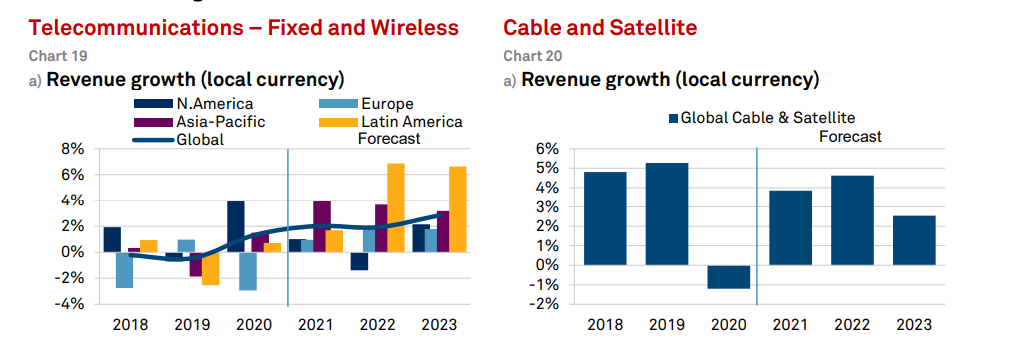
    Telecommunications – Fixed and Wireless

    Revenue Growth (local currency)

    S&P Global 2022, Telecommunication trendsSource: S&P Global 2022, Telecommunication trends

    Telco Revenue is Declining, but the Future Holds Promise.

    The traditional telecom operator is no longer an isolated entity in the market. They engage in multiple collaborations for audio, video, content, analytics, cloud solutions, etc., to cater to the various needs of different customer segments. The growth trajectory is undoubtedly promising, thanks to an ecosystem replete with diverse and lucrative partners. But, monitoring long-term profitability remains a concern.

    For instance, a 2022 global report by S&P predicts that CSP revenue growth will decline in 2023 compared to 2022. Several trends are steering this shift:

    • New Over-the-Top (OTT) players are eating into telecom revenues by offering a wide bouquet of customer-centric services at competitive prices.
    • Evolution of telecom technologies like 4G and LTE are depleting voice revenues while increasing demand and consumption of data services.
    • Business partnerships are now highly complex, and the lack of granular visibility into products and services leads to shrinking margins.
    Why do Telcos Struggle with Profitable Revenue Decisions?

    To retain their edge, telcos instituted changes in how they operate and what they offer customers. But these also affect revenues for the following reasons:

    1. Product complexity impacts profitability

    The primary offering from traditional telecom operators was voice and SMS services. But, as customer usage patterns become increasingly data-heavy, we see a shift towards consume-all-you-can packs. Moreover, to keep customers engaged, telcos need to do more. They have to offer apps, bundled OTT services, and intelligent offerings. It has created an intricate portfolio governed by complex product structures and multiple offerings, which are very hard to manage from a service delivery perspective. Significantly, executing smart pricing decisions and measuring profitability among these numerous and complex interactions is hard.

    2. OTT partnerships eat into telco margins

    Customer demand for OTT content – such as videos, music, movies, etc. – delivered through communication networks forces operators to enter into partnerships with OTT providers on local, regional, and global levels. Bundling such services is a competitive differentiator for telcos to retain and attract subscribers. However, margins are sometimes affected because telcos have limited ways of gauging whether the partnerships are, in truth, profitable and contributing to top-line growth. In some cases, these have low cost-benefit value, leading to partnerships with low profitability for telcos.

    3. New tech is Capex-heavy

    The pace of digital transformation has accelerated over the past five years, which puts pressure on telcos to upgrade their networks and adopt next-gen technologies such as automation, AI, network functions virtualization, etc. And while these initiatives bleed heavily into Capex budgets, many players are still unclear about actual RoI. Consider how network technologies took decades to evolve from 2G to 3G and then 4G. But moving from 4G to 5G is happening in just a few short years. These days, telcos are focusing more on metrics like average margin per user (AMPU) to get visibility into their service delivery stack rather than average revenue per user (ARPU), which is no longer an accurate indicator of profitability.

    Decoding the Power of Margin Assurance

    Margin Assurance is a comprehensive way for telecom operators to identify and measure direct and indirect costs in their balance sheet across operations, partnerships, customer services, and product/service offerings. It leverages analytics and automation to give business decision-makers visibility into revenue and margin KPIs, empowering smarter, strategic, and real-time decisions that effectively increase profitability.

    Here is a concise table mapping the capabilities of margin assurance to tangible business benefits for telcos:

    Areas Capabilities Benefits
    Operational efficiencies Maintains operational margins across costs plus essential margins as per industry best-practices Accurately derive, compute, and report on profitability
    Revenue KPIs Leverage AMPU to segment customers as profitable ones Enhance customer satisfaction by creating targeted campaigns
    Marketing & campaigns Devise strategies for cross-selling products based on customer segmentation Improve business decisions that result in higher revenue
    Partnership analytics Transparent margin analytics to channel resources into the right partnerships and customers Elevates productivity of telcos resources through insights into RoI of existing and new programs, products, and services
    Business intelligence Provides market intelligence and margin evaluation to understand one’s position against challenges based on subscriber behavior and margin trends Improves competitiveness through profitable pricing, unique margin products, and customer retention
    Sharpen Your Edge with Margin Assurance Best Practices

    Leveraging years of domain experience within the telecommunications industry, Subex has developed a powerful margin assurance solution that gives telcos granular insights into margins, revenue, and profitability. The three pillars of our solution approach are:

    • Robust cost allocation models, driven by best practices, whereby every cost line item is part of the P&L account
    • Advanced margin analytics that immediately identifies low-performing areas with simulation to determine how to boost performance along with intuitive dashboards for visualizing costs, insights, areas of action, and recommendations
    • Pioneering solution design that is exceptionally comprehensive across customers, products, segments, network levels, technologies, products, pricing, and more
    A Definitive Guide to Transform the Telco Business

    As a means to empower CSPs with the best practices when it comes to assuring margins, Subex has shared its approach in detail in the TMForum Guidebook titled ‘Business Assurance Transformation – Margin Assurance’, where we are the lead contributor along with other leading telecom operators and vendors. The guide examines how an approach that leverages automated cost allocation models for dynamic insights rather than static ones can drive better business decisions using next-gen technologies.

    Members can instantly download the TMForum guidebook here.

    To learn more about Subex’s approach to margin assurance.

    Read our white paper

  • Part 2: From Telcos to Tech-cos – Leapfrog to the Future with AI

    Part 2: From Telcos to Tech-cos – Leapfrog to the Future with AI

    In the 1960s, Xerox renewed its entire business model based on a single premise: Customers don’t want products. They want services. Having reached its tether’s end, the brand pivoted and is now one of the most successful providers of digital printing solutions. As Renee Montagne, the CEO of Xerox, in 2012 aptly stated, “If you don’t transform, you’re stuck.”

    Our touched on stories of AI and digital transformation. While traditionally slower to innovate than others, the telecom industry is waking up to the benefits of rapid digitalization, aggressive automation, and AI-led ecosystems.

    So, what’s next for telcos, and how do they leapfrog their AI programs? By transforming the entire operational process pipeline with AI at the core. Here are 5 ways to do this:

    1. Make AI Pervasive in Networks

    Software-defined networking (SDN) and network functions virtualization (NFV) help telcos rewire their networks dynamically for unprecedented gains. The applications rise beyond capacity planning and network management. For context, think of how replacing an appliance, like a ceiling fan, from a mechanical one to a smart fan alters user behavior as well as fan performance. Customers can download an app to start and stop the fan remotely, change its speed, monitor energy efficiency, and get recommendations for optimal settings. All of this is done remotely, delivering extreme user convenience. The seller, on the other hand, gets insights into performance to predict failures, diagnose issues, and preemptively schedule maintenance, saving on ad-hoc costs. Similarly, SDN facilitates a revolution in network provisioning and customer experience.

    2. Create AI-centric Business Models.

    More than providing infrastructure to run various innovative services, telcos must join the flurry of disruption by doing more with AI. One fundamental change is the ecosystem mindset that spawns new partnership models whereby telcos also grab a slice of the market thanks to their vast customer reach. As the saying goes, “Alone, I can run fast. Together, we can run far.” Telecom is ripe with examples of this. Consider how mobile wallets have bled into the FinTech space, nudging telcos into evaluating how they can offer solutions for fraud, encryption.

    3. Stay Agile with Open Architecture.

    An example in the previous blog illustrated how small shops can offer seamless customer onboarding. One of the levers is back-end data encryption for the digital verification of a customer’s credentials, which is impossible without open architecture. To simplify, one could compare open architecture to the standard-issue fuel inlet in all motor vehicles. No matter the automotive brand, all vehicles are outfitted with a single type of inlet valve, allowing the motorist to refill fuel at any fuel station. Similarly, the open architecture enables telcos to move away from proprietary software to those that grant fast, secure, and seamless interconnections to a larger ecosystem.

    Telcos can monetize data in resourceful ways, as in the case of alternate credit scoring using telecom data to support microfinance loans and creditworthiness to numerous non-banked populations where there is no conventional credit bureau. Open infrastructure and architecture equips telcos to wield innovations such as the movement towards Open RAN or the development of Open APIs by TMForum. It also streamlines collaborations among vendors so telcos can onboard partners and bundle services and packages with agility. Modern mobile apps of traditional telcos is a classic case, replete with non-telco services such as utility payments, mobile wallets, media and content, eCommerce, OTT subscriptions, and more.

    4. Strategize for AI-driven Sales, Channel, and Supply Chain Management.

    Indian insurance behemoth Life Insurance Corporation (LIC) set a precedent in how efficacious indirect channel marketing is when it empowered nearly 1.3 billion agents across India to sell its policies raking in nearly 96% of the titan’s revenues. Traditionally, telcos have not fully monetized indirect channels. With AI, this will change. Through cost-effective and seamless onboarding via digital apps and robust security protocols, AI can channelize visibility to new subscribers. For instance, when a customer books a flight ticket, telcos can promptly offer roaming plans customized to the subscriber based on their usage patterns. Similarly, AI can also revamp supply chain operations by infusing intelligent sourcing practices that respond intuitively to unpredictable market forces. The widespread impact on food supplies and other essential manufacturing raw materials due to unrest in Ukraine is a prime example of why diversified and intelligent supply chains are essential.

    5. Curate Frictionless Customer Experiences.

    Finally, all of this will bring to bear delightful customer experiences. As telcos use AI to reimagine their operations and processes, models and infrastructure, services, and products, it will have a game-changing impact on customers. Customers will not only experience first-hand the frictionless, delightful interactions crafted via AI but also cement their loyalty to a telecom provider that helps them live better lives and that prioritizes their conveniences and preferences – all in one single window.

    Imagine the opportunities. And now, reimagine them with AI.

    Subex is at the forefront of driving AI-led transformation. To watch a demo or learn how we help you revolutionize your business with AI, reach out to us at

    hypersense@subex.com

  • Part 2: From Telcos to Tech-cos – Leapfrog to the Future with AI

    In the 1960s, Xerox renewed its entire business model based on a single premise: Customers don’t want products. They want services. Having reached its tether’s end, the brand pivoted and is now one of the most successful providers of digital printing solutions. As Renee Montagne, the CEO of Xerox, in 2012 aptly stated, “If you don’t transform, you’re stuck.”

    Our touched on stories of AI and digital transformation. While traditionally slower to innovate than others, the telecom industry is waking up to the benefits of rapid digitalization, aggressive automation, and AI-led ecosystems.

    So, what’s next for telcos, and how do they leapfrog their AI programs? By transforming the entire operational process pipeline with AI at the core. Here are 5 ways to do this:

    1. Make AI Pervasive in Networks

    Software-defined networking (SDN) and network functions virtualization (NFV) help telcos rewire their networks dynamically for unprecedented gains. The applications rise beyond capacity planning and network management. For context, think of how replacing an appliance, like a ceiling fan, from a mechanical one to a smart fan alters user behavior as well as fan performance. Customers can download an app to start and stop the fan remotely, change its speed, monitor energy efficiency, and get recommendations for optimal settings. All of this is done remotely, delivering extreme user convenience. The seller, on the other hand, gets insights into performance to predict failures, diagnose issues, and preemptively schedule maintenance, saving on ad-hoc costs. Similarly, SDN facilitates a revolution in network provisioning and customer experience.

    2. Create AI-centric Business Models.

    More than providing infrastructure to run various innovative services, telcos must join the flurry of disruption by doing more with AI. One fundamental change is the ecosystem mindset that spawns new partnership models whereby telcos also grab a slice of the market thanks to their vast customer reach. As the saying goes, “Alone, I can run fast. Together, we can run far.” Telecom is ripe with examples of this. Consider how mobile wallets have bled into the FinTech space, nudging telcos into evaluating how they can offer solutions for fraud, encryption, and Anti-Money Laundering (AML).

    3. Stay Agile with Open Architecture.

    An example in the previous blog illustrated how small shops can offer seamless customer onboarding. One of the levers is back-end data encryption for the digital verification of a customer’s credentials, which is impossible without open architecture. To simplify, one could compare open architecture to the standard-issue fuel inlet in all motor vehicles. No matter the automotive brand, all vehicles are outfitted with a single type of inlet valve, allowing the motorist to refill fuel at any fuel station. Similarly, the open architecture enables telcos to move away from proprietary software to those that grant fast, secure, and seamless interconnections to a larger ecosystem.

    Telcos can monetize data in resourceful ways, as in the case of alternate credit scoring using telecom data to support microfinance loans and creditworthiness to numerous non-banked populations where there is no conventional credit bureau. Open infrastructure and architecture equips telcos to wield innovations such as the movement towards Open RAN or the development of Open APIs by TMForum. It also streamlines collaborations among vendors so telcos can onboard partners and bundle services and packages with agility. Modern mobile apps of traditional telcos is a classic case, replete with non-telco services such as utility payments, mobile wallets, media and content, eCommerce, OTT subscriptions, and more.

    4. Strategize for AI-driven Sales, Channel, and Supply Chain Management.

    Indian insurance behemoth Life Insurance Corporation (LIC) set a precedent in how efficacious indirect channel marketing is when it empowered nearly 1.3 billion agents across India to sell its policies raking in nearly 96% of the titan’s revenues. Traditionally, telcos have not fully monetized indirect channels. With AI, this will change. Through cost-effective and seamless onboarding via digital apps and robust security protocols, AI can channelize visibility to new subscribers. For instance, when a customer books a flight ticket, telcos can promptly offer roaming plans customized to the subscriber based on their usage patterns. Similarly, AI can also revamp supply chain operations by infusing intelligent sourcing practices that respond intuitively to unpredictable market forces. The widespread impact on food supplies and other essential manufacturing raw materials due to unrest in Ukraine is a prime example of why diversified and intelligent supply chains are essential.

    5. Curate Frictionless Customer Experiences.

    Finally, all of this will bring to bear delightful customer experiences. As telcos use AI to reimagine their operations and processes, models and infrastructure, services, and products, it will have a game-changing impact on customers. Customers will not only experience first-hand the frictionless, delightful interactions crafted via AI but also cement their loyalty to a telecom provider that helps them live better lives and that prioritizes their conveniences and preferences – all in one single window.

    Imagine the opportunities. And now, reimagine them with AI.

    Subex is at the forefront of driving AI-led transformation. To watch a demo or learn how we help you revolutionize your business with AI, reach out to us at

    hypersense@subex.com

  • Part 1: From Telcos to Tech-Cos: Carpe ‘AI’ Diem

    Part 1: From Telcos to Tech-Cos: Carpe ‘AI’ Diem

    A few years ago, if you were in India and visited any of the mom-and-pop mobile shops to buy a new SIM card, you would be presented with forms, asked to submit photocopies and a passport-size photograph, and to physically sign a document. Paperwork was then dispatched to another data entry center, an appointment date was set to verify your address, and after a few days of processing, your SIM was activated.

    Today, the entire workflow takes a mere few minutes. First, you choose your number and your package. Then, present your Aadhaar, which is scanned using its QR code, snap a picture on-the-spot to verify it is you, validate your fingerprint with a nifty little biometric machine, and receive your new SIM, which is activated and ready to go.

    At first, this scenario may appear like digitalization on steroids. But in fact, it is the organic shift of digitalization towards AI that enables intricate and differentiated experiences.

    We are all in the business of technology.

    Nearly every industry is brimming with examples of disruptive market trends driven by agile players. Think about the spate of acquisitions in the US where forward-thinking Japanese players bought out their lagging competitors who couldn’t respond to change fast enough.

    If we look at Tesla, a classic disruptor in the technology space, we can see how different their approach is. Their problem statement was not to build a car; it was to offer mobility, convenience, and safety. And they are eagerly curious to leverage the most cutting-edge technologies to achieve all of this. With the power of AI, they are pioneers in their own right in the autonomous driving and electric vehicle market and are leading the market although there were so many other companies prior to them who launched electric cars. They have also created a channel to resell their cars, unlocking a new revenue stream for the brand. Tesla is unafraid of change and is constantly reinventing itself, its products, and its models through the latest tech.

    In 2015, Anand Mahindra, Chairperson of Mahindra Group, displayed sharp foresight when he tweeted, “The age of access being offered by taxi-hailing apps like Uber and Ola is the biggest potential threat to the auto industry.”

    And he was right.

    Platforms like Uber, Lyft, Rideshare, Zoomcar, etc., have transformed the global automotive industry from being an ownership-driven one to on-demand mobility. It gave users budget-friendly travel options rather than simply buying a vehicle, thereby reaping multi-fold benefits: riders can save on down payments, EMI, parking fees, maintenance, depreciation, and more, while remaining mobile in the most convenient way. Similarly, the next generation of competition for telcos is not going to be from other telcos but from an army of digital enterprises offering a wide bouquet of services and experiences that customers are eager to lap up.

    Everybody benefits.

    It is crucial to remember that the power of AI lies not in simply digitizing a few workflows and automating processes for marginal efficiency gains. Instead, organizations realize the actual value of AI when they pan their sights outwards to visualize the entire operations landscape and reshape these, putting AI at the core.

    With AI, we are seeing a mindset of openness and sharing, which is creating profound shifts within industries and needs to be highlighted because, more than competitiveness, companies know that collaboration is what steers success today. The market share for disruptive services is too large to be monopolized by a single entity. Instead, early AI adopters are nurturing holistic digital ecosystems where AI-led innovation facilitates interoperable infrastructure, effective billing mechanisms, transparent revenue sharing agreements, strong governance frameworks, and robust security protocols.

    So, widen your AI lens.

    Some forward-thinking telecom operators have jumped on the AI bandwagon to reach more subscribers through untapped channels and accelerate onboarding through frictionless, instant, and secure workflows.

    Consider how T-Mobile is on a mission to build networks for the future. AT&T uses AI/ML to understand how climate change impacts service continuity. Telefonica leverages AI to craft immersive and intelligent living room experiences for movie watchers. Verizon 5G is grabbing the reins of Industry 4.0 by enabling smart factories through automated industrial machinery.

    Here’s an excellent place to start.

    Go back to the beginning. Relook at your business problem statements as a whole, rather than its components, and ask yourself:

    • Where do redundancies lie, and how much can we eliminate?
    • Where are inefficiencies costing us, and how can we optimize productivity?
    • What are the highest cost drivers, and where can we use AI to slash this?
    • Is there an entirely new way of performing this process that leverages everything AI stands for?

    The answers to these questions give organizations the key elements to probe AI’s value beyond incremental gains. With so much innovation happening in the telco domain – think 5G, IoT, the metaverse – telcos must push the boundaries of their imagination. Indeed, AI helps telcos do one of two things:

    1) Remain a telco that does better – They can use AI to improve the service stack, like faster broadband connectivity through 5G, and achieve incremental benefits from offerings like IoT packages to enterprises. Such point solutions will certainly deliver value like revenue and efficiency gains, albeit in a marginal manner.

    2) Transform into a tech-co that disrupts the ecosystem – They can unlock boundless opportunities to do much more than previously imagined by crafting new journeys, curating new revenue streams, and taking pole position as an enabler driver than a follower of the AI revolution.

    Which would you choose?

    Note: This is a two-part blog series. Stay tuned for the second blog that dives into how telcos can reimagine AI.

    Learn how augmented analytics can help transform your approach to enterprise AI

    Schedule a demo

  • Using KPIs to drive profitable telco-content partnerships

    Using KPIs to drive profitable telco-content partnerships

    Digital content is vogue.

    Now, more than ever, people across the globe are consuming greater quantities of different kinds of media, including news, music, books, and films, via digital channels. The shift towards digital content is guided by many factors: online content is cheaper, more varied, readily available, supports on-demand access, and provides extreme customization, to name a few.

    Underscoring the disparity between traditional and digital channels is the fact that, during the pandemic, the viewers of online TV surpassed those of broadcast TV among Gen-Z and Millennial users. In the same demographics, more listened to music streaming services instead of radio and more accessed online news instead of physical press. As global smartphone sales proliferate and network innovation and data speeds continue to improve, digital is reaching far more users in the past year than ever before. Hootsuite’s Digital 2021 Report states that since January 2020, mobile users have grown by 93 million and mobile connections by 72 million.

    Content partnerships are exploding. Here’s why.

    Telecom operators seeking to leverage the revenue advantage of customers aggressively consuming digital media want to pursue avenues to collaborate with content creators and content aggregators. The opportunity is real: A study across 5 Asian markets reveals that 42% of users feel that having a bundled media service encourages them to spend more on their mobile or fixed-line telecom plan. It is no surprise then that video streaming, OTT, and value-added service providers are in demand.

    While this is exciting for telecom, a few bottlenecks surface. For instance, how do they decide what type of content is relevant to their subscriber base? In a sea of content providers, how do they choose the most profitable ones? Finding the answers to these questions is difficult, particularly since ascertaining such criteria lies outside the scope of a telecom operator’s core operations.

    To truly tap into the potential of content-based revenue streams, telecom operators need an innovative strategy to evaluate, choose, and measure their partners.

    Using KPIs to key partner management challenges

    From a business standpoint, telecom operators want to know whether the content provider or aggregator being onboarded is legitimate, beneficial, and provides content that is relevant to the telco’s users. Two seminal questions faced by telcos are:

    1. How do I vet partners before onboarding? 

    Before determining whether the content is relevant to a user base, one should first have an idea about different content key performance indicators (KPIs) and discover data for each of these. Some parameters to consider are content relevancy, content shares, content downloads, content popularity, and user reviews.

    Such information may reside online, within different content aggregator platforms (like ratings on IMDB or likes on Spotify), within external databases, and on internal systems. The data sources are numerous, and data must be pulled from these sources and analysed to arrive at a decision. This is a tall order for just humans to do. Each KPI varies based on the type of content, making it extremely complicated to track. Above all, none of these actions lie within the domain expertise of telecom operators.

    An automated and configurable KPI-based approach to partner onboarding equips telcos with appropriate content-specific parameters for different content partners. With this, they can easily identify partnerships that will contribute to revenue growth. A useful workflow leveraging new technologies is listed below:

    • Define content-specific KPIs to assess whether the content fits within the telco’s business model and landscape
    • Capture data using APIs from distributed but relevant data sources and map these to KPIs within a matrix
    • Integrate all data on a single platform and apply analytics to arrive at a pre-boarding score
    • Assign different thresholds based on scores to automate actions such as approval, applying conditions, re-evaluation, rejection, and more
    • Configure thresholds based on scores
    • Automate reports to recommend actions, conditions, and SLAs for on-boarding

    It will not only drive faster and informed decision-making but also promote seamless onboarding for VAS and OTT partners.

    2. How do I ensure my chosen partner is beneficial?

    Measuring partner performance is vital to ensure profitability. As users search for and find the content they enjoy, they are likely to continuously engage with the telecom operator and avail or consume services, especially if the content is curated well. This means telcos must be on top of their game, constantly assessing the type of content being made available by their partners.

    Say a content aggregator has launched a new TV series, but the telco observes that viewership is scarce. Reasons could vary: The quality of content may be poor, which is the content creator’s responsibility. The price of the series could be marked higher than usual, which depends on the content aggregator. The issue of price is significant for telcos since nearly 49% of users report that they are likely to cancel their video subscription and 38% of their music subscriptions if costs increase. Similarly, the underlying issue could be slow network speeds, resulting in a poor viewing experience. This falls under the purview of the telecom provider. In each case, the resolution lies with a different entity, i.e., revising content quality guidelines, providing a pricing discount, or upping network capacity.

    To sustain profitable long-term partnerships, telecom operators need frameworks that track partner performance and encourage consistency. Here too, KPIs bring in clarity for smarter decision-making through data that is accurate, captured in real-time, and granular for intelligent insights. Coupled with new technologies, a KPI-based approach can enhance partner evaluation by helping operators:

    • Define configurable KPIs quickly for numerous content partners based on content types
    • Leverage APIs to capture data from different systems about the customer, network, and partner behaviour
    • Conduct root cause analytics to understand and resolve issues like low engagement, missed opportunities, lost sales, and more
    • Assess the success of campaigns and promotions for new releases
    • Recommend actions to course-correct and ensure high-quality content is delivered without disruption to users
    • Simplify auditing of partners and their performance, and transform this into a proactive rather than a reactive task

    Cement partner delight and operator profitability

    Telecom operators need partner lifecycle management solutions that help them handle partner interactions in a seamless and transparent manner. The need of the hour is for a partner management system that:

    • Acts as a single point of contact to manage the relationships with providers, aggregators, and merchants on a unified platform.
    • Supports partners, end-to-end, across the journey of onboarding, negotiating, contracting, reporting, assurance, billing, reconciliation, dispute management, etc.
    • Ensures accountability and visibility, both for operators as well as partners, into processes, KPIs, and SLAs, laying the foundation for rewarding relationships.
    • Provides partner enablement through a single system to easily share documents, training materials, FAQs for partner-related requests, and other information, enabling transparent collaboration across the ecosystem.

    Integrated partner lifecycle management empowers telecom providers to find the right partners, track pricing models, assess content KPIs, and evaluate partner performance without shifting their focus from the core business. It also provides insights that can drive success in other functions such as revenue assurance, sales enablement, and network planning.

    Learn to Enable end-to-end partner lifecycle management for profitable partnerships

    Request Demo

  • Part 1: From Telcos to Tech-Cos: Carpe ‘AI’ Diem

    A few years ago, if you were in India and visited any of the mom-and-pop mobile shops to buy a new SIM card, you would be presented with forms, asked to submit photocopies and a passport-size photograph, and to physically sign a document. Paperwork was then dispatched to another data entry center, an appointment date was set to verify your address, and after a few days of processing, your SIM was activated.

    Today, the entire workflow takes a mere few minutes. First, you choose your number and your package. Then, present your Aadhaar, which is scanned using its QR code, snap a picture on-the-spot to verify it is you, validate your fingerprint with a nifty little biometric machine, and receive your new SIM, which is activated and ready to go.

    At first, this scenario may appear like digitalization on steroids. But in fact, it is the organic shift of digitalization towards AI that enables intricate and differentiated experiences.

    We are all in the business of technology.

    Nearly every industry is brimming with examples of disruptive market trends driven by agile players. Think about the spate of acquisitions in the US where forward-thinking Japanese players bought out their lagging competitors who couldn’t respond to change fast enough.

    If we look at Tesla, a classic disruptor in the technology space, we can see how different their approach is. Their problem statement was not to build a car; it was to offer mobility, convenience, and safety. And they are eagerly curious to leverage the most cutting-edge technologies to achieve all of this. With the power of AI, they are pioneers in their own right in the autonomous driving and electric vehicle market and are leading the market although there were so many other companies prior to them who launched electric cars. They have also created a channel to resell their cars, unlocking a new revenue stream for the brand. Tesla is unafraid of change and is constantly reinventing itself, its products, and its models through the latest tech.

    In 2015, Anand Mahindra, Chairperson of Mahindra Group, displayed sharp foresight when he tweeted, “The age of access being offered by taxi-hailing apps like Uber and Ola is the biggest potential threat to the auto industry.”

    And he was right.

    Platforms like Uber, Lyft, Rideshare, Zoomcar, etc., have transformed the global automotive industry from being an ownership-driven one to on-demand mobility. It gave users budget-friendly travel options rather than simply buying a vehicle, thereby reaping multi-fold benefits: riders can save on down payments, EMI, parking fees, maintenance, depreciation, and more, while remaining mobile in the most convenient way. Similarly, the next generation of competition for telcos is not going to be from other telcos but from an army of digital enterprises offering a wide bouquet of services and experiences that customers are eager to lap up.

    Everybody benefits.

    It is crucial to remember that the power of AI lies not in simply digitizing a few workflows and automating processes for marginal efficiency gains. Instead, organizations realize the actual value of AI when they pan their sights outwards to visualize the entire operations landscape and reshape these, putting AI at the core.

    With AI, we are seeing a mindset of openness and sharing, which is creating profound shifts within industries and needs to be highlighted because, more than competitiveness, companies know that collaboration is what steers success today. The market share for disruptive services is too large to be monopolized by a single entity. Instead, early AI adopters are nurturing holistic digital ecosystems where AI-led innovation facilitates interoperable infrastructure, effective billing mechanisms, transparent revenue sharing agreements, strong governance frameworks, and robust security protocols.

    So, widen your AI lens.

    Some forward-thinking telecom operators have jumped on the AI bandwagon to reach more subscribers through untapped channels and accelerate onboarding through frictionless, instant, and secure workflows.

    Consider how T-Mobile is on a mission to build networks for the future. AT&T uses AI/ML to understand how climate change impacts service continuity. Telefonica leverages AI to craft immersive and intelligent living room experiences for movie watchers. Verizon 5G is grabbing the reins of Industry 4.0 by enabling smart factories through automated industrial machinery.

    The use cases keep growing: AI technologies like natural language processing, face trace, liveness detection, and face match can greatly streamline governance by instantly validating ID proof against applicants and cross-checking authenticity. ML algorithms can mine data to understand customer preferences and personalize offers within seconds.

    Here’s an excellent place to start.

    Go back to the beginning. Relook at your business problem statements as a whole, rather than its components, and ask yourself:

    • Where do redundancies lie, and how much can we eliminate?
    • Where are inefficiencies costing us, and how can we optimize productivity?
    • What are the highest cost drivers, and where can we use AI to slash this?
    • Is there an entirely new way of performing this process that leverages everything AI stands for?

    The answers to these questions give organizations the key elements to probe AI’s value beyond incremental gains. With so much innovation happening in the telco domain – think 5G, IoT, the metaverse – telcos must push the boundaries of their imagination. Indeed, AI helps telcos do one of two things:

    1) Remain a telco that does better – They can use AI to improve the service stack, like faster broadband connectivity through 5G, and achieve incremental benefits from offerings like IoT packages to enterprises. Such point solutions will certainly deliver value like revenue and efficiency gains, albeit in a marginal manner.

    2) Transform into a tech-co that disrupts the ecosystem – They can unlock boundless opportunities to do much more than previously imagined by crafting new journeys, curating new revenue streams, and taking pole position as an enabler driver than a follower of the AI revolution.

    Which would you choose?

    Note: This is a two-part blog series. Stay tuned for the second blog that dives into how telcos can reimagine AI.

    Learn how augmented analytics can help transform your approach to enterprise AI

    Schedule a demo