Author: Mark Jenkins

  • Cash in on Reverse Logistics

    Cash in on Reverse Logistics

    Reverse logistics has long been the problem child of supply chain management. Increasingly that child has been in need of some serious help. This is due to two factors. The way in which the internet has transformed how we shop, and the short lifecycle of consumer goods. Although most consumers still like to shop in high street stores to find the products they like, at least 8% of sales are now from consumers just clicking on a picture to buy a product, comfortable in the knowledge that they can return it if necessary. In most countries, consumers have a legal right to return goods purchased on the internet. Many retailers now even offer free ‘try-before-you-buy’ returns, but the processes for managing those returns, known as reverse logistics, are far more fragile, costly, and susceptible to issues than the generally well-controlled forward logistics processes. Although return rates vary widely across different verticals, the average return rate has been calculated to be around 17 to 18%.
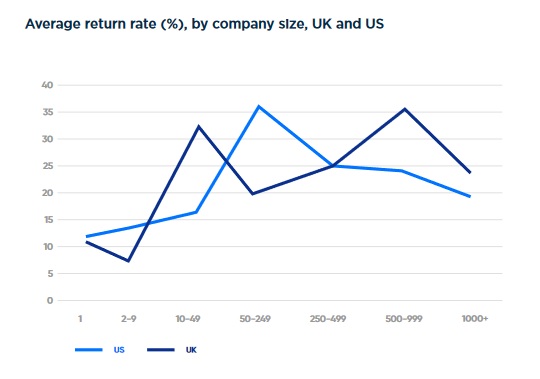
    Brightpearl

    Source: Brightpearl

    Reverse logistics faces complex issues due to the ad hoc way in which consumers return items and vulnerabilities in the returns processes. Because reverse logistics is not seen as a revenue-generating process, it sometimes doesn’t get the attention it needs, but recently it’s been getting more widely recognized as having a key role in the company’s profitability. Having efficient processes for collecting, re-selling or recycling used items can bring in additional revenue and improve a company’s bottom line. There are other important reasons for giving more attention to reverse logistics.  Consumers are now judging companies on their green credentials, and consumers are aware that many electronic devices contain some highly toxic chemicals. Providing a channel through which old devices can be traded in and reliably recycled is a positive selling point. The efficiency of the returns process also has a significant impact on customers impression of a business.

    Although the ‘returns revolution’ impacts all retail lines of business, high-value consumer electronics are especially prone to issues in the returns process.  Huge volumes of handsets, set-top boxes, routers, even TV’s and laptops, are now being returned through a multitude of channels for a variety of reasons. Warehouses may receive thousands of such goods per week. Most of those devices may still be working and able to be resold, but tracking such devices back from customers, assessing their viability for resale, refurbishing, repackaging, and then re-distributing them, is a substantial challenge.
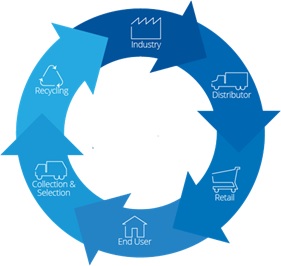
    The problems begin as soon as a customer says they want to return a device. Whether it is because the device is faulty, unfit, incorrect, unwanted, or because they’re terminating their contract, they must provide notification that the device is getting returned. Agents must correctly capture the details of why the device is getting returned and issue an RMA (Return Merchandise Authorisation). This will trigger a complex sequence of processes to terminate services in the network, calculate bill adjustments, prepare downstream systems for receipt of the returned devices, update inventories on receipt, manage the inspection, refurbishment, and resale of those devices, and potentially issue replacements for faulty devices. Depending on factors such as contract, warranty, device status, termination type or customer rating, customers may be liable for additional charges or eligible for compensation.
    Reverse Logistics

    Typical return channels would be to send a device by courier, return it to a shop, or a technician may return the goods.  Whatever the channel is, devices will often arrive without a clear indication of which customer account they relate to.  Returns to stores are particularly problematic with agents failing to scan in barcodes or register returns correctly. In-store systems may not be able to record IMEI, IMSI and/or serial numbers, and there is no motivation for staff to label returned devices accurately.

    With so many moving parts it’s no surprise that many devices become stranded or lost along the way, and customers getting charged incorrectly. Operators have been known to write off more than $5+ million in lost devices per month.

    One solution is to implement automated controls that provide monitoring across all systems in both forward and reverse logistics, thus assuring that devices can be monitored from the initial order in CRM, in and out of warehouses, with couriers, shipping, refurbishment partners, finance companies and activation status in network service provisioning.  With monitoring systems in place that can even detect the physical location where devices are installed, it’s possible to validate inventory, bill customers and partners accurately, prevent fraud, recover maximum value from returned devices and understand why devices are getting returned.

    Subex provides ROC Device Assurance solutions to operators around the globe, helping to track down missing devices, reconcile and correct billing, CRM, provisioning, distribution and inventory systems with world leading discovery and reconciliation capabilities.

    Want to know how our Asset & Inventory Assurance solution can help your organization

    Read a Demo

  • Customer Analytics:  Data Breaches and Consumer Trust

    Customer Analytics: Data Breaches and Consumer Trust

    In this (possibly) final blog of this series I will be looking at how customers are becoming increasingly concerned at companies’ inability to keep their data safe, and how high publicity data breaches are eroding public confidence.

    I previously wrote how it was possible to know where someone stood on issues of internet security just by checking their birth date. Those born after 1980, the so called Generation Y, or Millennials, are generally more comfortable sharing information online.   But things are gradually changing. In a 2014 survey by eMarketer it was found that Generation Y and Z were also becoming significantly more concerned about how well companies protected their personal data.

    This concern can have a major impact on a company’s profits, as a recent report by the Ponemon Institute’s 2015 Cost of Data Breach Study (in conjunction with IBM) showed:-

    Lost business has, potentially, the most severe financial consequences for an organization. The cost increased from a total average cost of $1.33 million last year to $1.57 million in 2015. This cost component includes the abnormal turnover of customers, increased customer acquisition activities, reputation losses and diminished goodwill. The growing awareness of identity theft and consumers’ concerns about the security of their personal data following a breach has contributed to the increase in lost business

    By studying many data breaches across many industries, Ponemon have developed an approach whereby they can attach cost per record lost in order to estimate the cost of data breaches. What they have found is that, not only are data breaches becoming more common, but they are also becoming more costly.

    The average cost paid for each lost or stolen record containing sensitive and confidential information increased 6 percent, jumping from $145 in 2014 to $154 in 2015.

    2015 was perhaps the worst year so far for data breaches. NetworkWorld’s Top-10 data breaches of 2015 reported that many firms became the victim of very public data breaches including

    • Children’s toy companies (vTech)
    • Phone companies (T-Mobile, TalkTalk)
    • Healthcare firms (Premera, Anthem)
    • Dating agencies (Ashley Madison)
    • Government departments (IRS)
    • Security consultancies (Hacking Team)

    + Many more.

    The trend does not look good, with the number of breaches predicted to increase in both size and cost for the foreseeable future.

    Consumers are now realising that many companies are not vigilant enough in protecting their data, but just as bad, that customer data is being used in ways that are inappropriate and may adversely affect the consumer.

    In a poll conducted by leading consultancy Radius Global 78% of internet users said they only purchased from companies they trusted.

    The message is clear. If companies are to use customer’s data to provide a better service then they must do everything in their power to ensure the security of their systems and the responsible use of customer data, or run the risk of facing big fines and a catastrophic loss of consumer trust.

    Big data and advanced analytics are forcing governments to bring in new regulations to ensure that companies use customer data responsibly, but it’s in every companies interest to ensure that the bond of trust is not broken.

  • Customer Analytics:  Securing our Future

    Customer Analytics: Securing our Future

    In the previous blog in this series I looked at how the use of persona, and creating customer journey maps for those persona, can give new insights on how to engage customers. By collecting customer data and tracking user interactions across all touchpoints, it’s possible to not only create an revealing profile of a customer’s interests and behaviour, but also better understand if the products and marketing are addressing customer’s wants and needs.

    Technology is now rapidly opening up new sources of customer data including everything from health and well-being apps to our children’s activity online. Soon our heating systems, cars, refrigerators and every other connected appliance that’s about to hit the shelves will be churning out a stream of data back to the marketing departments of big corporations. The effective use of this big data undoubtedly has great potential to improve our lives, but there is also an increased risk that the individual’s privacy could be compromised, or the data could also be used to discriminate against an individual unfairly. In a recent case in the UK vulnerable customers were advised to buy energy on tariffs that were far higher than others available.   The same is true of insurance and medical care, and many cases exist where it’s been found that corporations are exploiting data to prey on the vulnerable. Add to this the substantial risks of identity theft and fraud as a consequence of data breaches, and consumers could be forgiven for feeling anxious about how well their data is being protected, and how it’s being used.

    In an effort to stop corporations from exploiting big data negatively and better protect consumers the European Union has raised the bar on data protection by drafting the the General Data Protection Regulation (GDPR). This new set of rules will apply not only to countries within the EU, but also to companies operating outside the EU, if they have networks or trade data with partners within the EU. Enforcement is expected to start in the spring of 2018.

    The European commission’s website states that:

    The objective of this new set of rules is to give citizens back control over of their personal data, and to simplify the regulatory environment for business.

    Furthermore, as reported by consultancy group itgovernance,

    The Regulation will enforce tough penalties – proposed fines up to 4% of annual global revenue or €20million, whichever is greater

    For a large multinational the fines could get very substantial and significantly impact on share prices.

    The GDPR sets out 8 Data Protection Principles that must be followed. The ICO, UK’s independent Information Commission, has provided clarification of how these principles need to be applied. For example, Principle 1 refers to Processing personal data fairly and lawfully. As described on their website,

    In practice means that you must:

    • have legitimate grounds for collecting and using the personal data;
    • not use the data in ways that have unjustified adverse effects on the individuals concerned;
    • be transparent about how you intend to use the data, and give individuals appropriate privacy notices when collecting their personal data;
    • handle people’s personal data only in ways they would reasonably expect; and
    • make sure you do not do anything unlawful with the data

    Perhaps one of the key new areas is in the use of big data and analytics for customer profiling. This is covered under Principle 6 of the GDPR under the somewhat obtuse description of ‘automated decision making’. ComputerWeekly have produced a number of documents and guides to help businesses to understand how the GDPR will affect them. In one of their latest blogs they explain

    The regulation introduces a number of restrictions on profiling, including the right for an individual not to be subject to a decision which significantly affects the individual and which is based on automated profiling. In many cases, profiling will only be permitted where the explicit consent of the individual has been obtained. 

    The implications for targeted marketing are unclear, but potentially significant, as it makes companies accountable for ensuring that customers

    1. Are made fully aware of exactly how their data will be used
    2. Explicitly agree to the way in which the data will be used
    3. Do not suffer any negative consequences from the use of their data.

    As ComputerWeekly reports

    These restrictions are likely to have a considerable impact on businesses engaging in, for example, big data analytics, as well as more general business activities, such as credit scoring and employee monitoring

    In an article by the International Association of Privacy Professionals , they add that data subjects (customers)

    …may also request to know the purposes of processing, the period of time for which data will be stored, the identity of any recipients of the data, the logic of automatic data processing, and the consequences of any profiling.

    Corporations are now in real danger of drifting into a situation in which they are in breach of the new regulations, face substantial fines and seriously damage customer relations.

    In the final blog of this series I will be looking at how customers are becoming increasingly concerned at the inability of corporations to keep their data safe, and how high publicity data breaches are eroding public confidence.

  • Trends Driving the Telecom Industry

    Trends Driving the Telecom Industry

    Technology has put consumers are in the driver’s seat, demanding a seamless experience across all their devices.  The Internet of Things (connected living), Mobile Money, Video Streaming, Social Apps, VOIP and other OTT services are straining the network and operators’ ability to manage relationships with customers and partners in a profitable way.  With an increasingly convergent market as the background, Capgemini, one of the world’s largest consulting firms, has published its predictions of where the telecoms industry is heading by 2020.  Below is a summary of their top 5 predictions (in italics) with added insights from the industry:

    Integration with content providers

    The recent trend of telco’s acquiring or partnering with content providers (Comcast and NBC Universal, AT&T and Direct TV) may be overtaken by content providers predicted to be acquiring telecoms companies. Net Neutrality is increasingly at risk as content distribution and content providers join up and could control the content available to consumers.

    Internet of Things: The next major trend that will impact is the explosion of connected devices

    Also referred to as the rise of connected living, it’s predicted that IoT will drive data volumes into the realm of zetabytes per year. As Raj Talluri, a senior vice president of Qualcomm, has said

    “I don’t think anyone really knows yet how big it’s going to get because the possibilities are really endless”

    IoT is not just about connected devices, but about the analytics that makes sense of this tsunami of data. It is also the usefulness of the analytics that will drive the success of IoT devices.

    IoT covers a range of different applications:

    The Connected Home

    For consumers IoT can help to save money by running homes more efficiently, improve security and provide entertainment. In an increasingly complex world IoT can help us to manage all the products and services we depend on by automating household administration and providing remote monitoring and control of devices.

    Connected Health

    Wearables are opening the door to great possibilities in health and fitness. While wearables have gained popularity amongst the health conscious, the potential of wearables is also being applied in assisting to provide essential monitoring and care for those in need.

    The connected car

    As cars are an extension of our homes so the connected car is, in part, an extension of our connected homes.  Cars now have entertainment systems that stream our favourite music, tracking systems so friends and relatives can know where we are and, of course, SatNav that knows current traffic and weather conditions. Connected cars can also provide automated diagnostics and reduce our insurance premiums through conscientious driving.

    Gartner forecasts that 1 in 5 cars will be connected by 2020.

    Mobility

    While PC’s are still a popular choice for many tasks, the growth in mobility is being driven by the developing world, where mobile is often cheaper and more convenient than fixed line services.

    Five big trends in mobility

    1. Wearables

    According the Mashable 15 Mobile Trends to Watch the battleground for wearables has only just begun

    1. Mobile payments go big

    Emarketer are predicting that in the US mobile payments will triple in 2016

    1. Security

    Mobile and BYOD are major threats to enterprise security, so mobile apps need to ensure the highest levels of security are implemented.

    1. Mobilization of Enterprise Apps

    As reported by 451 Research, 40% of companies are planning to prioritize development of business apps.  Many of these will be “companion apps” that augment, rather than replace, existing enterprise applications.

    1. Automotive and Transport will be a key vertical, according to Analysis Mason in the explosive IoT market for life automation

    Market Saturation

    A growing adoption of connected health and safety apps will ensure that even the latest of mobile adopters, the elderly, will eventually be getting connected, leaving that last remaining market saturated. This will drive the need for operators to differentiate themselves further through content.

    Security

    Beyond mobile device security, consumers are increasingly concerned about the security of their data held by enterprises, which will drive a demand for more secure systems and better data management processes.

    The challenges faced by telecoms operators are immense. With such diverse forces pushing the market forward, operators need to adopt an efficient, robust and highly elastic enterprise architecture more than ever.  Managing different lines of business and marketing efforts with different departments is no longer an option, as customers expect companies to provide a seamless experience across multiple services.  Subex have specialised capabilities in helping telcos improve organisational efficiency for years, and now the latest version of the ROC product suite is more highly integrated than ever before, allowing it to deliver the insights and efficiencies that are essential for a telco to compete in today’s rapidly evolving market.

  • Customer Analytics:  Walking in the Customers Shoes

    Customer Analytics: Walking in the Customers Shoes

    In the first blog in this series on customer analytics, the technique of Customer Journey Mapping (CJM) was discussed as a way to follow how customers move from one touch point to the next, and track their emotional well-being during those interactions. In the last blog I described how using a persona to represent a group of customers would allow marketing to get a better understanding of customers. In this blog I will explore how Customer Journey maps can be created for persona to visualize an idealized journey for the group represented. This is now becoming a well-accepted technique for not only improving user experience in software design, but also in the design of products, digital and conventional marketing channels, architecture and many other areas.

    There are two basic approaches for creating persona. One is to base the persona on in-depth research of the customers within a market segment, and the other is to base the persona on intuition, sometimes referred to as a provisional persona. In reality, it makes most sense to use a combination of research and intuition, and then verify the persona with those who have front line contact with customers. Generally customers belonging to a company’s biggest market segment would be targeted first and a primary persona is created to represent them. If the team creating the persona do not have direct knowledge of the customers in that segment then they will need to conduct research to understand the values and motivations of the group.

    Once a persona has been defined then it’s possible to look at how the company would engage that persona in a sale, and the hope is that the persona would follow each engagement at every touchpoint, even long after they’ve made the purchase and are using the product. The framework for this is known as the Customer Lifecycle. There are many versions of this but they all share some basic stages, as described by Jim Sterne and Matt Cutler in a paper called “E-metrics, business metrics for the new economy

    • Reach: Trying to get the attention of the people we want to reach.
    • Acquisition: Attracting and bringing the reached person into the influence sphere of our organization. 
    • Conversion: When the people we reach or have a more established relationship with, decide to buy something from us.
    • Retention: Trying to keep the customers and trying to sell them more (cross-selling, up-selling).
    • Loyalty: We would like the customer to become more than a customer: a loyal partner and even a ‘brand advocate’ Moments of truth

    This can be represented either horizontally or in a circular lifecycle type chart

    The Customer Life Cycle – Source: E-Metrics Business Metrics for the New Economy by Jim Sterne and Matt Cutler

    The persona journey describes how it’s anticipated that a particular persona would move through the lifecycle. It would describe the channels through which it’s expected they are made aware of a product, how it’s expected they would research the product and what would motivate them to make a decision to buy. Key points in the journey where customers decide whether to continue or abandon the process are known as ‘Moments of Truth’, a term coined by Jan Carlzon, the well-known CEO of SAS Airlines who turned the company around in just a couple of years.

    Walking in the customers shoes in this way is not easy, and would normally be done as a workshop with representatives from across an organisation, but it’s an exercise that can provide many useful insights. Service quality gaps, cross channel alignment, ways to better engage customers and align internal teams are just a few of the many benefits that come from journey mapping. When idealised journey maps are compared with the actual journeys that customers take then many preconceived ideas about how customers see and engage with the company may get thrown out and fresh ways to engage, retain and acquire new customers be discovered.

    In the next part of this customer analytics based series of blogs I will be looking at the security implications of big data and advanced customer profiling, and how regulators around the world are trying to protect an individual’s right to be treated equally by large corporations.

  • Customer Analytics :  Meeting the Model Me

    Customer Analytics : Meeting the Model Me

    In my last blog I discussed how different generations are challenging marketing departments to meet them on their own ground. For one key demographic, the Millennials, that ground is the mobile and highly social world in which these digital natives live. For another, the more cost conscious middle aged parents with teenage kids, the battleground is through more conventional channels. However it’s not enough to just choose the right channel for marketing a product. The products, product branding, and marketing language itself needs to be appropriate for those customers as well. Different customers have not only different expectations of the products they use, but also different expectations of the way they like to be told about those products.

    The one thing all customers have in common is that they like to be treated as individuals. Individualism is a relatively recent phenomenon in human history, although it could be said to have first really been expressed by Jean-Jacques Rousseau (1712-1778), as Angus Jenkinson identified in his paper ‘Beyond Segmentation’. Rousseau says that truth is subjective, and that traditions and customs must pass the individual’s test ‘can they be authentic for me’. That is a test that consumers increasingly appraise every product with. Can it be authentic for me?

    It may seem an impossible challenge to treat every customer in a way which is appropriate to them alone, but there is another approach which can help product designers and marketing departments have a much better understanding of customers, and that is through the use of persona.

    The concept of archetypes and persona was formalized early in the 20th century by the Swiss psychologist Carl Jung, but it was the Angus Jenkinson who more recently defined the meaning in a marketing context. Jenkinson suggested that marketing needed to move beyond the top down reductionist approach of segmentation and take a more bottom up approach of grouping customers with similar attitudes and behaviors.

    ‘segmentation, as normally understood, represents only the first stage in response to the market (individualism) phenomena. It is the first breakdown of the monolithic market into smaller units. It is possible to go further.’

    There are definitely strong similarities between the concepts of segmentation and grouping, but there is a fundamental, if subtle difference. It is the difference between gathering individuals into groups, as opposed to dividing the group into segments. As Jenkinson says,

    It is much easier to think of developing a relationship with a group (of people) than a segment. How many segments do you personally have a relationship with? Do you want to be part of one? A group connotes…a community of individuals.

    Consumers, as individuals tend to gravitate and have loyalty towards something. To change the corporate perception of customers from being part of a segment to being individuals in a group is a fundamental paradigm shift in building customer relationships, and it requires marketers to develop a much more personal understanding of their customers. Marketers have to understand customer goals and frustrations, their values and behaviors. It is with this new understanding of the importance of the individual that the marketing concept of the ‘persona’ has arrived. Personas are ‘model’ characters created to represent all the members of a group. The term persona as used in this context was actually coined in 1999 by Alan Cooper in his seminal book ‘The Inmates Are Running the Asylum’, in which he says that persona, among other benefits,

    Provide a human “face” so as to create empathy for the persons represented by the demographics.

    Not only do persona models give a detailed account of the emotional needs and values of that group, they often even include a picture of what a typical individual in that group may look like. This is not to say that segmentation is dead. Far from it. Segmentation is still an important tool to help identify the key groups of ideal buyers, but once those groups have been identified then persona need to be created for the segments to give them emotional characteristics and values that they can be identified with. Only by understanding what really motivates customers and providing products that fit in with customer’s lives can marketers grow brand loyalty and trust in a world where the customer is truly king.

    In the fourth in this series of customer analytics blogs, Walking in the Customers Shoes, I will be looking at combining the concept of persona with customer journey mapping to understand how to deliver a better customer experience.

  • Customer Analytics : Gen X and Y and the Millennial Divide

    Customer Analytics : Gen X and Y and the Millennial Divide

    We live in a world where technology is like a digital liquid that’s flowed around every aspect of our lives. There’s no doubt that technology can help to oil the craggy wheels of daily life, and while some find this enabling and liberating, others consider the intrusion to be more insidious. Working out where people stand on this issue is generally just a simple matter of checking their birth date. Many born before 1980 tends to view social and on line everything with suspicion, whereas those consumers born after that date, referred to as Generation Y, or Millennials, are far more comfortable with social media and sharing everything online. In a recent report from Pew research it was shown that the Millennials are much greater users of social media than their parents.

    This is probably because Millennials are the first generation that have grown up entirely with the internet and mobile phones.  They are ‘digital natives’. It’s difficult to know exactly what effects this has on general culture, but one surprising change is that Millennials tend to be far more optimistic that their parents were when they were young. While Generation X and before are more inclined to have a cynical and pessimistic attitude towards the future, a recent report by the Pew Research Centre, Millennials in Adulthood, has found that, despite feeling detached from politics or religion and burdened by debt and recession, the Millennials are inexplicably much more optimistic. According to a recent Gallup poll, eighty percent of millennials, aged 18 to 29, feel positive about the future and say their standard of living is improving.  The reasons for this relentless optimism are unclear but researchers at Pew have pondered that it may be down to more nurturing parenting, or perhaps it’s because millennials always feeling at the centre of their own social network.

    Another characteristic of the millennial generation is that, contrary to predictions that technology would free us all from work, they are now working harder and are more driven to succeed than ever before. In his book ‘Generational Teaching: Motivating the Minority’ Christopher Alan has also found that Millennials are ‘more polite and considerate’, ‘attentive and respectful’ and prefer to work in teams rather than in a hierarchy. Goldman Sachs also says that they are also more health conscious and savvy than earlier generations.   But, as ever, the picture is never that simple, because it seems that the Millennial generation is itself divided in two, as Pew Research has written

    Just 40% of adults ages 18 to 34 consider themselves part of the “Millennial generation,” while another 33% – mostly older Millennials – consider themselves part of the next older cohort, Generation X.

    This all has very great implications on marketing, and how companies should reach out to different generations. Connecting with customers is one of the greatest challenges marketers face, and capturing Millennials is now one of the key battlefields for competing companies. As Leah Swartz of Millennial Marketing says

    ‘When it comes to fashion and shopping, there isn’t a more important demographic for retailers to reach than millennials.’

    Goldman Sachs have even put together an infographic dedicated to marketing to Millennials in which they identify several key things to consider when marketing to the ‘largest generation in US history’. In summary they are

    • Living at home longer
    • Marrying later
    • Sharing, not owning
    • Exercise choice in purchasing
    • More health conscious

    From a non-millennials perspective it may seem that they are so immersed in instant messaging and playing computer games that they are oblivious to the real world, but, on the contrary, millennials are very much aware of the state of the world. It’s just that this revolution is a lot quieter than the ones before, taking place as it does silently from the screens of our phones and laptops. The silence is an illusion. The volume of noise is now measured in packets of data rather than decibels, and it’s loader than ever. If companies don’t engage with different generations of customers on their own ground then they will not be heard at all.

    In my next blog I will look at how Millennials and other demographic groups can be better served by adopting a customer-centric approach to marketing.

  • A Sentimental Journey

    A Sentimental Journey

    When Doris Day sang the jazz classic ‘Sentimental Journey’ she described the joy of returning home to the things she had missed. Back here in the 21st century we also feel a sense of joy when we get home, but it’s often because we can finally get a reliable internet signal through our Wi-Fi.   Mails download, WhatsApp messages pour in and all those photos and vids we took get uploaded to share.   The sentiment that people feel when they get home and find their internet service is not working is generally far less happy. It’s a sentiment that I experienced first-hand, having suffered from a service that was slower than old fashioned dial-up for several months. Web pages with sliding graphical widgets and targeted advertising completely stopped loading. After endless rounds of calling support, listening to distorted 80’s pop tunes while stuck on hold, and re-booting of modems I just didn’t want to speak to them anymore. In today’s marketing vernacular, I was not having a good “customer experience”, so I left them and went to another service provider.

    Although the initial buzz around customer experience may have died down from a few years ago it is still regarded as the single most important ingredient needed to have a successful business. In a recent report Watermark Consulting studied the cumulative stock returns of the top 10 “Leaders” and bottom 10 “Laggards” in Forresters CX index and found

    Leaders outperformed the broader market, generating a total return that was 35 points higher than the S&P 500 Index.

    Laggards trailed far behind, posting a total return that was 45 points lower than that of the broader market.

    In a world of commoditized products and services businesses now rely on customer experience more than ever to differentiate themselves from the competition. However, in the report ‘Customer Analytics: How to make Best use of Customer Data’ the Aberdeen Group has reported that

    ‘96% of companies are not fully satisfied with their ability to use data (both customer and operational) in CEM programs’

    In order to provide good a customer experience companies need to do 5 things

    1. Introduce good data governance practices around customer data
    2. Create a unified view of customers across all touch points
    3. Profile and segment their customers
    4. Track the emotional impact of a customer interactions with the company over time.
    5. Use that intelligence to guide agents on how to provide the best support for customers.

    Enter the world of the customer journey map. A customer journey map (CJM) is a visual representation of all the interactions a customer has with a company, through every touch point, with a measure of the customer’s attitude towards the company during those interactions. For example, receipt of a bill may be a negative experience, whereas receipt of some reward, like bonus loyalty points, would be viewed more positively. These sentiment scores may be collected directly through touch point surveys and recording call dispositions, or inferred based on history and through the use of analytics.

    Agents that have an immediate grasp of a customer’s journey and level of satisfaction are far more successful at resolving issues and upselling than agents who do not have that insight.

    The first step in understanding a customer’s journey is to introduce good data governance practices and create a unified view of the customer. The Aberdeen group also observed (in their ‘Big Data in CEM’ study) that

    More than half of all (56%) businesses lack a unified view of the data captured across multiple channels and stored in systems such as customer relationship management (CRM), marketing automation, e-commerce and enterprise resource planning (ERP)

    Customers should then be profiled and segmented along demographic, financial and behavioral lines. Then, by recording their changing sentiments during various interactions with the company, a picture can be built up of how different segments progress through their customer journeys and it becomes possible to understand which interactions lead to greater customer loyalty and value, and which lead to churn.

    Customer journey mapping helps companies to understand their customer needs and provide the kind of personal advice and support that builds trust.   Trust that encourages customers to buy more, stay loyal and spread good news about your business.

  • It’s in the DNA

    It’s in the DNA

    Last year the 100th anniversary of a profound scientific achievement which shaped the modern world went by completely unnoticed by the general public. It was 100 years ago that the physicists William and Lawrence Bragg shot x-rays through various crystallized substances and were able to decipher the resulting diffraction patterns to reveal their hidden atomic structure. For that discovery they won the Nobel Prize and the science of X-Ray crystallography was born, a technique which now underpins almost all modern science, from medicine through to astronomy. Crystallography has been used to reveal the chemical composition of penicillin, insulin, Vitamin B12 and, more recently, the Mars rover Curiosity is utilizing the CheMin instrument for detecting the chemical composition of the Martian soil. Perhaps one of crystallography’s greatest triumphs started with Photo 51, the nickname given to the image Rosalind Franklin took of the DNA molecule back in 1952, and which was subsequently used by Watson and Crick to unravel the double helix structure of DNA. DNA is often described as the blueprint of life, since it contains all the instructions by which living creatures are built.

    The discoveries of pioneers like Bragg, Franklin, Watson and Crick are inspiration for those who are fascinated by finding the data patterns that reveal what’s hidden beneath. Like the X-rays of crystallography the Subex ROC RA product can see through the B/OSS by automatically analysing inputs and outputs to reveal, report and even auto-correct the hidden misalignments and other issues within. Issues which can lose a company millions overnight.

    Now ROC RA has also taken Revenue Assurance a quantum leap forward by introducing DNA. DNA provides the building blocks to automatically audit data streams from throughout an organisation and reduces the configuration effort drastically. The predefined blocks of DNA code can be used to rapidly build up the system topology and reconcile the data and interfaces thorough simple point and click selection of modules. Any adjustments or enhancements to the audit processes can be quickly made through a highly intuitive graphical interface. DNA templates cover Prepaid, Post Paid, Interconnect, Roaming, Content and many others traffic types from almost 100% of known switches, mediation and billing systems.

    Coupled with DNA are powerful new visualization and analytics capabilities that let you forecast how KPI will change over time, correlate KPI, apply what if modelling and alert you long before issues get critical. ROC RA lets you incorporate those KPI and alerts into a built-in model of your business so that the right information is channeled to the right person at the right time. You decide what level of detail you want and how and where you want to see it, be it by email, mobile dashboard, SMS or desktop dashboard.

    DNA now makes ROC RA even easier to use than ever and will make the picture of what’s really happening in your business crystal clear.

  • Service Orientated Architecture – A Balance of Form and Function

    Service Orientated Architecture – A Balance of Form and Function

    The concept of form following function was at the heart of modernist Bauhaus architecture in the early 20th century and, according to Wikipedia, extols the principle that…

    “…the shape of a building or object should be primarily based upon its intended function or purpose.”

    The phrase ‘form ever follows function’ was actually coined as long ago as 1896 by American architect Louis Sullivan, although the concept stretches back all the way to the Roman architect Marcus Vitruvius Pollio who asserted in the 1st century BC that structures should exhibit the qualities of being “solid, useful and beautiful”.

    In contrast to the modernist architecture of buildings, architecture of enterprise software is frequently guided more by engineering constraints than the needs of a business.  Functional requirements are gathered but are often implemented in ways which are more optimal for engineering than for the business processes they are meant to support.  The result is that business processes must be made to fit with the form of the software, rather than the software fitting the function of the business.  The software becomes like a strait jacket on the business which prevents it from adapting or being able to react to external conditions.

    However, innovations in enterprise architecture are freeing software to mould itself to the business processes in ways not possible a few years ago.  A system built using a modern Service Orientated Architecture (SOA) is comprised of discrete, loosely coupled modules that can communicate with each other without human intervention.

    The Open Groups definition of SOA is:

    Service-Oriented Architecture (SOA) is an architectural style that supports service-orientation.

    Service-orientation is a way of thinking in terms of services and service-based development and the outcomes of services.

    They go on to say that the SOA Architectural style

    “…is based on the design of the services – which mirror real-world business activities – comprising the enterprise (or inter-enterprise) business processes”

    By modularising the code, providing standardised interfaces (API’s) and adopting standard communication protocols, such as web service calls using SOAP,  it’s possible for features and functions to be re-combined in endless ways to support a variety of different applications.  SOA also provides a way to organically grow functionality in an iterative way.  By adopting an agile software development methodology developers can design, built and test modules that support small units of business process a piece at a time.  Since the modules are self-contained they can be re-used and re-combined with other modules to reduce development effort.  Maintenance costs are also reduced since single modules can be swapped in and out with a minimum of disruption.

    By adopting a modular service orientated architecture software developers can now at last follow the principles first laid down by Vitruvius and create solutions that fit business processes beautifully.