Author: Alok Kumar Sinha

  • 2021: el año de la transformación acelerada de la red

    2021: el año de la transformación acelerada de la red

    “El secreto del cambio es concentrar toda tu energía, no en luchar contra lo viejo, sino en construir lo nuevo”.

    – Sócrates

    El 2020, fue un año que redefinió muchos aspectos de nuestras vidas y desafió a cada individuo, industria y nación a repensar, replantear estrategias, re-innovar y revivir el impacto brutal de una de las pandemias más espantosas en la historia de la humanidad. Por un lado, la pandemia provocó pérdidas en diversas formas. Por otro lado, nos llevó a cambiar el enfoque hacia la construcción de algo nuevo, que nos equiparía mejor en tiempos desafiantes.

    Mientras miramos hacia el 2021, es esencial tener en cuenta que, si bien COVID-19 aceleró las iniciativas de transformación digital, la pandemia también reiteró que la verdadera transformación digital en la industria de las comunicaciones móviles solo podría suceder a través de una ejecución integral de la estrategia de transformación de la red.

    A medida que avancemos, las redes de todo el mundo serán testigos de una aceleración en la transición de implementaciones LTE a LTE-advanced / pro, 5G-NSA (no autónomo) a 5G-SA (autónomo). La etapa puede variar de un CSP a otro, pero una cosa es evidente: la adopción de 5G está ganando impulso y está dando forma a las perspectivas del sector de las telecomunicaciones como nunca.

    En muchos sentidos, el 2021 verá algunos hitos importantes de 5G que redefinirán la búsqueda de un CSP para alterar la economía digital. No importa dónde se encuentre o estará en su viaje de transformación de red; Las siguientes tendencias críticas impulsarán innovaciones para ayudar a los CSP a darse cuenta del verdadero valor digital derivado de la red. Redefinirá el viaje de un CSP para las décadas, no solo los años venideros.

    Tendencias clave hacia la transformación de la red de LTE a 5G SA

    1. Adopción de la nube: una inversión centrada en la nube en dominios de negocios y tecnología donde las plataformas en la nube pueden permitir mayores ingresos y mejores márgenes será un paso obligatorio hacia el viaje 5G. Una empresa de telecomunicaciones puede adoptar una nube pública o una nube privada o una nube híbrida para transitar desde su infraestructura local existente. Las empresas que adopten bien la nube traerán nuevas capacidades al mercado más rápidamente, innovarán más fácilmente, reducirán los riesgos de manera efectiva y escalarán de manera más eficiente.

    Uno no puede darse cuenta del verdadero potencial de 5G sin pasar a la nube. Algunos de los significados y relevancia de la nube en el 5G son:

    • Computación de borde 5G: la tecnología 5G abre un nuevo segmento comercial para CSP, es decir, empresas. La informática de borde 5G será esencial para aprovechar estas oportunidades, ya que proporcionará recursos de infraestructura de nube distribuidos más cerca de una ubicación donde se requiera y ayudará a los CSP a aprovechar nuevas oportunidades comerciales al respaldar una variedad de casos de uso en un entorno de nube distribuida.
    • Núcleo 5G: según los nuevos estándares 3GPP para el núcleo 5G, la mayoría de las funciones serán nativas de la nube y basadas en contenedores. Nativo de la nube, un enfoque moderno para la creación y ejecución de aplicaciones que aprovechan al máximo las ventajas del modelo de computación en la nube, requerirá una infraestructura de nube robusta para una implementación independiente 5G exitosa. El enfoque nativo de la nube del desarrollo de aplicaciones para admitir funciones 5G se establecerá en contenedores, microservicios y orquestación dinámica y aprovechará las características de escalabilidad y alta disponibilidad de la nube.
    • Experiencia 5G: para ofrecer una experiencia 5G superior a consumidores y empresas, los CSP deben considerar el crecimiento exponencial de la red, los dispositivos y el volumen de datos, lo que resultará en enormes complejidades que pueden simplificarse y administrarse significativamente mediante la adopción de la nube. Esto ayudará a los CSP a implementar nuevos servicios rápidamente, innovar y escalar más rápido para satisfacer las demandas de los clientes en el menor tiempo posible.

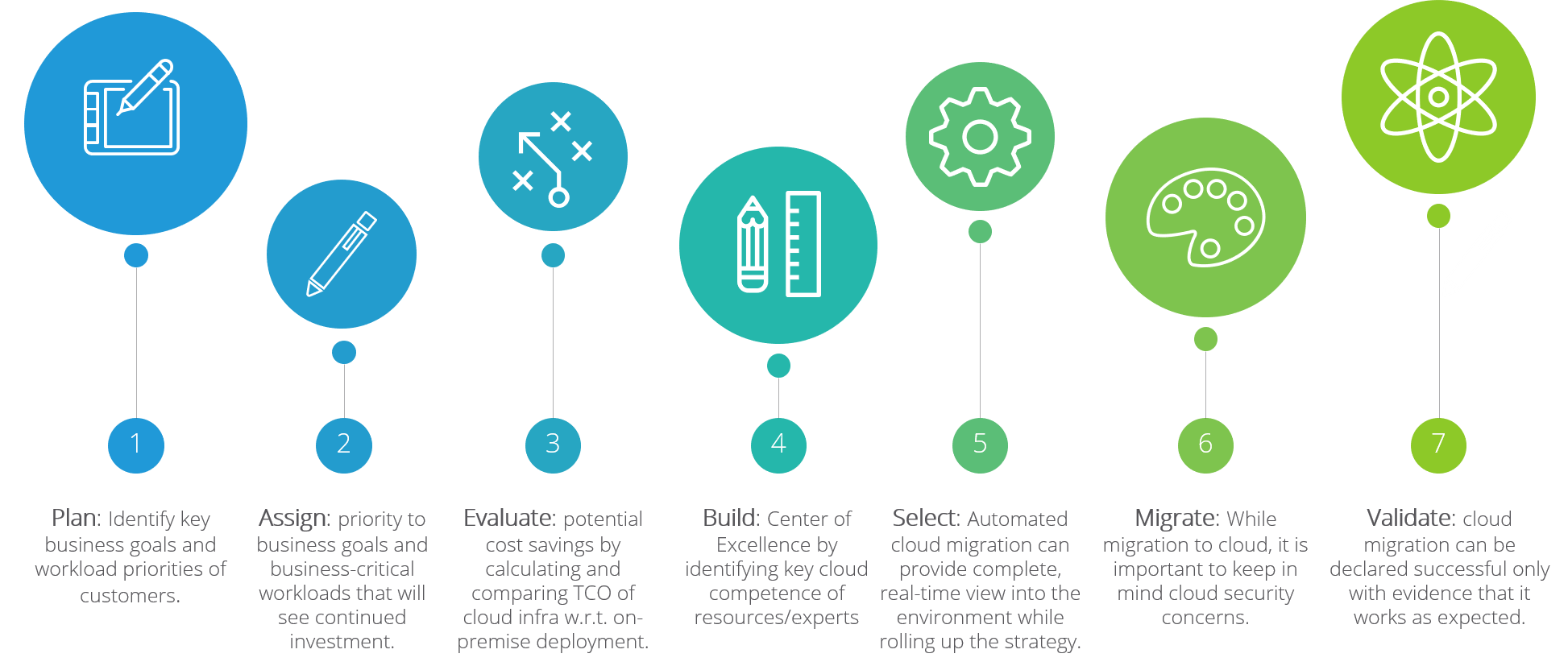
    A continuación, se muestra un recorrido de adopción de la nube recomendado:

    “Para ser nativo de la nube, primero debe sumergirse completamente en la nube”

    2. Evolución del Open RAN: “Open RAN”, que se considera una revolución en la industria de las comunicaciones móviles, desagrega hardware y software y crea interfaces abiertas entre ellos, creando nuevas vías para la innovación, lo que eventualmente resulta en eficiencias de Capex y Opex. Antes de entrar en “por qué” la RAN abierta es una tendencia crucial para la transformación de la red, analicemos las siguientes predicciones clave de algunas de las empresas establecidas:

    GSMA:

    • A nivel mundial, se prevé que los CSP gasten el 80% del Capex del sector ($ 890 mil millones) en redes 5G durante los próximos cinco años.
    • El 57% de los CSP tienen la intención de introducir nuevos proveedores en su lista de proveedores de red.

    Omdia:

    • En 2021, las inversiones de 5G RAN superarán a las de LTE RAN, y predice que 5G representará más de la mitad de todas las inversiones de RAN durante el año.

    Deloitte:

    • Actualmente hay 35 implementaciones de RAN abiertas activas en todo el mundo.
    • Muchos de estos involucran a operadores de redes móviles que prueban el RAN abierto en mercados nuevos, rurales y emergentes.
    • Las implementaciones de Open RAN podrían duplicarse fácilmente en 2021.

    RAN (Radio Access Network) siempre ha sido un dominio de inversión intensiva, que consume más del 70% de las inversiones totales de la red. Para garantizar la rentabilidad, ha llegado el momento de que los CSP busquen una opción alternativa e innovadora. Los CSP ven abierta como una forma de acelerar la introducción de servicios y potencialmente impulsar nuevas combinaciones de servicios. Open RAN podría, a su vez, desbloquear nuevas oportunidades comerciales al permitir nuevas formas de construir redes.

    Según la encuesta de operadores Open RAN 2020 de Heavy Reading, el 20% de los operadores con ingresos superiores a $ 5 mil millones tendrán más de 1000 sitios macro al aire libre Open RAN para fines de 2023.

    De cara al futuro, Open RAN ya no es simplemente un concepto; ahora es una realidad. A partir de 2021, la mayoría de las implementaciones comerciales de Open RAN se centrarán en RU (Unidades de radio) y DU (Unidades distribuidas). A partir de 2022, se espera que comiencen las implementaciones comerciales de RIC (RAN Intelligent Controller).

     “Revolucionemos la parte más compleja y costosa de la red: la RAN”.

    3. Automatización de circuito cerrado impulsada por AI / ML: a medida que los CSP planean pasar de 5G NSA a 5G SA, la gestión de segmentos de red de extremo a extremo (e2e) será obligatoria. La complejidad del segmento de red será extremadamente alta, ya que consta de subredes de segmento de red central, transporte y RAN. Cada una de estas subredes posiblemente consta de más subredes. Por ejemplo, la subred RAN se puede descomponer aún más en funciones de red fronthaul, midhaul y RAN. La gestión manual de un entorno de segmento de red tan complejo no será una opción viable; requerirá un gran nivel de automatización.

     La automatización de la red ha evolucionado significativamente en las últimas décadas. A continuación, se muestra una vista simplificada de esta evolución:

    “Es hora de llevar inteligencia en automatización en cada parte de la red”.

    La automatización de circuito cerrado impulsada por máquinas y modelos de aprendizaje profundo es una etapa emergente y prometedora de la automatización. Redefinirá el ecosistema general de gestión y orquestación de redes.

    El proyecto Open Network Automation Platform (ONAP), un proyecto de código abierto, proporciona una plataforma para diseñar, implementar y administrar diferentes servicios de red. La última versión de ONAP (versión de Guilin) ​​ha dado un paso significativo al implementar los aspectos fundamentales de la NSSMF (función de administración de subred de segmento de red) especificada por 3GPP para las subredes de RAN, transporte y núcleo, y también se conecta a una NSSMF de RAN externa para la subred RAN. También se realizaron mejoras en la funcionalidad NSMF (función de administración de cortes de red) al unir un corte de extremo a extremo.

    Se han implementado un par de escenarios básicos de circuito cerrado (uno con aprendizaje automático realizado fuera de línea) que involucran la subred RAN y los pasos iniciales para monitorear los KPI por parte del operador / inquilino del segmento.

    Veremos mejoras significativas en los próximos lanzamientos, y ONAP, al ser un proyecto de código abierto, será un campo abierto para la innovación, no solo para los titulares sino también para las empresas emergentes.

    La pandemia de COVID-19 ha cambiado tanto la trayectoria como el ritmo de la transformación digital y probablemente continuará haciéndolo en 2021. Las tendencias clave asociadas con la transformación de la red son una invitación abierta a innovar e interrumpir. Verá a muchas organizaciones tratando de resolver algunos de los desafíos comerciales críticos y ayudando a los CSP a darse cuenta del verdadero potencial de 5G. Ofrece una oportunidad única de traer un nuevo cambio en la industria de las telecomunicaciones mediante la construcción de algo nuevo, algo nunca antes probado, algo radical y revolucionario.

    Para comprender los pilares clave y desbloquear todo el potencial de su red
    Leer el documento técnico

  • 2021: The Year of accelerated network transformation

    2021: The Year of accelerated network transformation

    “The secret of change is to focus all of your energy, not on fighting the old, but on building the new.”
    – Socrates

    2020, a year that redefined many aspects of our lives and challenged every individual, industry, and nation to rethink, re-strategize, re-innovate, and revive the brutal impact of one of the most gruesome pandemics in the history of humanity. On the one side, the pandemic led to loss in various forms. On the other, it led us to shift focus towards building something new, which would better equip us in challenging times.

    As we look forward to 2021, it is essential to note that while COVID-19 accelerated digital transformation initiatives, the pandemic also reiterated that true digital transformation in the mobile communication industry could only happen through a holistic network transformation strategy execution.

    As we move forward, networks across the globe will witness an acceleration in the transition from LTE to LTE-advanced/pro to 5G-NSA (Non-Standalone) to 5G-SA (Standalone) deployments. The stage may vary from one CSP to another, but one thing is evident: the adoption of 5G is gaining momentum and shaping the telecom sector outlook like never.

    In many ways, 2021 will see some significant 5G milestones that will redefine a CSP’s quest to disrupt the digital economy. It does not matter where you are or will be in your network transformation journey; the below critical trends will drive innovations to help CSPs realize the true digital value derived from the network. It will redefine a CSP’s journey for the decades, not merely years, to come.

    Key trends towards the network transformation from LTE to 5G SA

    1. Cloud adoption: A focused cloud-led investment in business and technology domains where cloud platforms can enable increased revenues and improved margins will be a mandatory step towards the 5G journey. A telco can either adopt a public cloud or a private cloud or hybrid cloud to transit from their existing on-premise infrastructure. Companies that adopt the cloud well will bring new capabilities to the market more quickly, innovate more easily, reduce risks effectively, and scale more efficiently.

    One cannot realize the true potential of 5G without moving to the cloud. Some of the significance and relevance of the cloud in the 5G are:

    • 5G edge computing: 5G technology opens a new business segment for CSPs, i.e., enterprises. 5G edge computing will be quintessential to realize these opportunities as it will provide distributed cloud infrastructure resources closer to a location where it is required and will help CSPs tap into new business opportunities by supporting a variety of use cases in a distributed cloud environment.
    • 5G core: As per the new 3GPP standards for 5G core, most of the functions will be cloud-native and container-based. Cloud-native, a modern approach to building and running applications that fully exploit the advantages of the cloud computing model, will require a robust cloud infrastructure for successful 5G standalone deployment. The cloud-native approach of application development to support 5G functions will be established in containers, microservices, and dynamic orchestration and will leverage the scalability and high-availability characteristics of the cloud.
    • 5G experience: To offer a superior 5G experience to consumers and enterprises, CSPs need to consider the exponential growth in network, devices, and data volume, which will result in enormous complexities that can be significantly simplified and managed through cloud adoption. This will help CSPs roll out new services quickly, innovate, and scale faster to meet the customer demands in the shortest time.

    A recommended cloud adoption journey is shown below:


    “In order to be cloud-native, you need to first immerse yourself completely into the cloud”

    2. Open RAN Evolution: “Open RAN,” which is seen as a revolution in the mobile communication industry, disaggregates hardware and software and creates open interfaces between them, creating new avenues for innovation, eventually resulting in Capex as well as Opex efficiencies. Before I get into “why” open RAN is a crucial trend for network transformation, let’s look into below key predictions by some of the established firms:

    GSMA:

    • Globally, it is forecasted that CSPs will spend 80% of the sector’s Capex ($890 billion) on 5G networks over the next five years
    • 57% of CSPs intend to introduce new vendors into their network supplier roster

    Omdia:

    • 2021 will see 5G RAN investments will exceed those in LTE RAN, and it predicts that 5G will account for more than half of all RAN investments during the year

    Deloitte:

    • There are currently 35 active open RAN deployments across the globe
    • Many of these involve MNOs testing open RAN in greenfield, rural, and emerging markets.
    • Open RAN deployments could easily double in 2021.

    RAN (Radio Access Network) has always been an investment-intensive domain, consuming more than 70% of overall network investments. To ensure profitability, it is now time for CSPs to look for an alternative and innovative option. CSPs see open as a way to accelerate service introductions and potentially drive new service combinations. Open RAN could, in turn, unlock new business opportunities by enabling new ways of building networks.

    As per Heavy Reading’s 2020 Open RAN operator survey, 20% of operators with revenues greater than $5 billion will have 1000+ Open RAN macro-outdoor sites by the end of 2023.

    As we look ahead, Open RAN is not merely a concept anymore; it is now a reality. From 2021 onwards, most of the Open RAN commercial deployments will be centered around RUs (Radio Units) and DUs (Distributed Units). From 2022 onwards, RIC (RAN Intelligent Controller) commercial deployments will be expected to start.

    “Let’s revolutionize the most complex and cost intensive part of the network: the RAN.”

    3. AI/ML-driven Closed-Loop Automation: As CSPs plan to transit from 5G NSA to 5G SA, end-to-end (e2e) network slice management will become mandatory. Network slice complexity will be extremely high as it consists of RAN, transport, and core network slice subnets. Each of these subnets possibly consists of further subnets. For example, the RAN subnet can be decomposed further into fronthaul, midhaul, and RAN network functions. Managing such a complex network slice environment manually will not be a feasible option; it will require a hyper-level of automation.

     Network automation has evolved significantly over the last few decades. A simplified view of this evolution is shown below:

    “It is time to bring intelligence in automation across every part of the network.”

    Closed-loop automation powered by machine and deep learning models is an emerging and promising stage of automation. It will redefine the overall network management and orchestration ecosystem.

    The Open Network Automation Platform (ONAP) project, an open-source project, provides a platform for designing, implementing, and managing different network services. The latest ONAP release (Guilin release) has taken a significant step by implementing the fundamental aspects of the 3GPP-specified NSSMF (Network Slice Subnet Management Function) for the RAN, transport, and core subnets, and also connecting to an external RAN NSSMF for the RAN subnet. Enhancements were also made to NSMF (Network Slice Management Function) functionality in stitching together an end-to-end slice.

    A couple of basic closed-loop scenarios (one with Machine Learning done offline) involving the RAN subnet and initial steps to monitor KPIs by the operator/slice tenant have been implemented.

    We will see significant enhancements in upcoming releases, and ONAP, being an open-source project, will be an open ground for innovation, not just for incumbents but for start-ups as well.

    The COVID-19 pandemic has changed both the trajectory and the pace of digital transformation and will likely continue to do so into 2021. The key trends associated with network transformation are an open invitation to innovate and disrupt. It will see many organizations trying to solve some of the critical business challenges and helping CSPs realize the true potential of 5G. It offers a unique opportunity to bring a fresh change in the telecom industry by building something new, something never tried before, something radical and revolutionary.

    To understand the key pillars, and unlock the full potential of your network

    Read The Whitepaper

  • A través de los ojos de un profesional de redes, cómo lidiar con la tormenta de incertidumbre

    A través de los ojos de un profesional de redes, cómo lidiar con la tormenta de incertidumbre

    El mundo de las telecomunicaciones está lleno de incertidumbre. Es durante estas situaciones de incertidumbre cuando el aumento de la demanda de los clientes y la carga en la red aumenta exponencialmente, el verdadero papel de un profesional de la red entra en juego. Durante estos momentos, cuando la red está bajo tensión, los profesionales de la red deben hacer un gran esfuerzo para garantizar la continuidad del servicio 24 × 7.

    Pero, ¿qué pasa con la “incertidumbre” que podría surgir de una calamidad natural, o interrupciones masivas del sitio, causa estrés en la red?

    En general, una red móvil sufre numerosos cambios. Estos podrían ser cambios planificados como ajuste de parámetros, optimización física, prueba / implementación de nuevas funciones, actualizaciones de software, etc., la mayoría de los cuales están dirigidos a mejorar el rendimiento de la red y la experiencia del usuario final.

    Sin embargo, por otro lado, son los cambios “no planificados” los que tienden a arrojar una llave inglesa al sistema. Estos cambios podrían ser estacionales o debidos a fluctuaciones a nivel del sistema en los elementos de la red que provocan una degradación severa en términos de rendimiento. Si tal incidente ocurriera en la hora más ocupada del día, entonces el impacto también se sentirá en el negocio.

    En ambos casos, planificados o no planificados, la acción para resolver un problema podría estar dirigida a cualquier dominio de una red, por ejemplo, radio, transporte, núcleo, etc. También requeriría la resolución de problemas de extremo a extremo y el análisis de la causa raíz.

    Tradicionalmente, los profesionales de la red manejan el impacto de tales cambios de manera reactiva, lo que a menudo resulta en casos en los que el “tiempo medio para reconocer” (MTTA) y el “tiempo medio para responder” (MTTR) potencialmente toman horas o, en algunos casos, días. De hecho, algunos casos complejos entre dominios pueden incluso quedar sin resolver.

    Sin embargo, a lo largo de los años, gracias a los avances en la automatización, los profesionales de la red han podido evolucionar hacia el manejo proactivo de dichos problemas. Al aprovechar las herramientas integradas con la experiencia en la materia, junto con los métodos estadísticos, los profesionales de la red pueden lograr una reducción significativa en MTTA y MTTR. Sin embargo, este enfoque está lejos de ser perfecto, ya que las acciones necesarias solo se pueden tomar después de que el impacto en la red ya haya ocurrido.

    Para comprender el enfoque correcto que debe adoptarse, demos un paso atrás y profundicemos en la vida de un experto en planificación y optimización de redes involucrado en la gestión del rendimiento diario de la red.

    Convencionalmente, un profesional de la red realiza un análisis del impacto de la red en un conjunto de KPI críticos y toma las medidas necesarias para mejorar el rendimiento de la red. Se invierte mucho esfuerzo en otra ronda de análisis para concluir si la acción tuvo un impacto en cascada en cualquier otro KPI importante o no. Una vez que el impacto de la acción tomada se considera exitoso, el análisis pasa al siguiente conjunto de acciones. Muy a menudo, tales acciones son tomadas por múltiples partes interesadas para mejorar el desempeño de sus respectivas regiones / grupos / sitios.

    En una red 4G, podría haber miles de contadores / KPI y cientos de parámetros, lo que hace que sea casi imposible para un ser humano analizar el impacto de un cambio de un conjunto de parámetros en todos los contadores / KPI relevantes, de extremo a extremo, diariamente. Los servicios como la transmisión de video y VoLTE a menudo requieren un análisis entre dominios para garantizar la continuidad del servicio.

    Es en tales escenarios donde Machine Learning (ML) comienza a surgir como la respuesta para manejar estas complicaciones desde una perspectiva de extremo a extremo.

    Sin embargo, el término “Aprendizaje automático” tiene una forma de introducirse en tales debates. Es, de hecho, casi en su propio detrimento a veces, ya que el aprendizaje automático casi se ve como un trabajo de magia, en el mejor de los casos, o simplemente un truco de marketing, en el peor de los casos. Casi todos lo mencionan en algún momento.

    Entonces, permítame tomarme un momento para defender por qué lo menciono ahora y por qué creo que el análisis avanzado basado en el aprendizaje automático puede resolver significativamente algunos de los problemas críticos que enfrentan los profesionales de la red.

    La respuesta corta de dos palabras sería “Agilidad” y “Precisión”. Permítanme dar más detalles.

    Un CSP puede aprovechar los modelos de ML que capturarán todos los tipos de impactos de red de manera consistente a partir de los datos de red generados en forma de contadores / KPI y parámetros a diario y ayudará a proporcionar información procesable a los profesionales de la red, que de lo contrario pasarían desapercibidos.

    Además, estos conocimientos son especialmente útiles cuando se utilizan en la planificación y gestión de eventos especiales, como la proyección de un evento deportivo mundial. En tal caso, donde se espera que aumente el aumento del tráfico, el modelo aprenderá del desempeño del evento anterior y proporcionará aportes críticos para la planificación del evento.

    Según la misma lógica, los modelos de ML generarán ideas procesables cuando se produzca una crisis y equiparán a los profesionales de la red para hacer frente a cualquier evento anormal que ocurra en tiempos de incertidumbre. Además, al aprovechar los modelos ML, los profesionales de la red pueden estar equipados para ejecutar simulaciones múltiples para realizar con precisión el análisis de impacto de la red para cualquier acción que tengan la intención de realizar en el futuro. Algunos escenarios clave que podrían gestionarse con mayor agilidad en cualquier momento, pero que adquieren una dimensión adicional de importancia durante una situación de “red bajo tensión”, serían:

    • Pronosticar con precisión el tráfico peak, la utilización de recursos y el uso de aplicaciones para planificar con anticipación
    • Optimización y ajuste de los parámetros de red para la expansión de la capacidad y la mejora de la calidad en tiempos de tendencias anormales de la red.
    • Mejora de la experiencia del cliente al realizar una correlación de calidad de experiencia (QoE) con QoS de extremo a extremo para servicios de transmisión como video Full HD.
    • Mantener la continuidad continua del servicio VoLTE de extremo a extremo.

    Como dicen, las situaciones únicas requieren medidas únicas, y durante los momentos en que la red está bajo estrés, los profesionales de la red deben hacer un gran esfuerzo solo para mantener la red a flote. Es un esfuerzo que a menudo pasa desapercibido, pero ayuda a mantener a los clientes conectados y a mantener intacta la reputación de la empresa. Machine Learning puede asumir un papel esencial en la transformación de estos “héroes de la red” en “superhéroes de la red” al equiparlos con poderes de agilidad y precisión mejoradas.

    La verdad es que la industria de las telecomunicaciones se encuentra en un punto de inflexión en el que los responsables de la toma de decisiones deben tomar una decisión sobre las capacidades que deben aportar a la red y cómo pueden equipar a sus héroes de red hoy en día. Estas decisiones críticas tomadas ahora proporcionarán beneficios en los próximos años.

    Para comprender los desafíos que enfrentan los CSP para ofrecer contenido de video de calidad a través de dispositivos móviles

    LEER BLOG

  • How to ride the storm of uncertainty through the eyes of a network professional

    How to ride the storm of uncertainty through the eyes of a network professional

    The telecom world is one that is fraught with uncertainty. It is during such situations of uncertainty when the surge in demand from customers and load on the network increases exponentially, the true role of a network professional comes into the fray. During these moments, when the network is under stress, network professionals need to put in a tremendous effort to ensure 24×7 service continuity.

    But what about ‘uncertainty,’ that might emerge from the likes of a natural calamity, or massive site outages, causes stress on the network?

    Generally, a mobile network undergoes numerous amounts of changes. These could be planned changes like parameter tuning, physical optimization, new feature trial/implementation, SW upgrades, etc., most of which are targeted towards improving the network performance and end-user experience.

    However, on the other side, it is the ‘unplanned’ changes that tend to throw a monkey wrench into the system. These changes could be seasonal or due to system-level fluctuations in network element(s) bringing severe degradation in terms of performance. If such an incident was to happen in the busiest hour of the day, then the impact will be felt in the business as well.

    In both the cases, planned or unplanned, the action to resolve a problem could be targeted towards any domain of a network, e.g., radio, transport, core, etc. It would also require end-to-end troubleshooting and root-cause analysis.

    Traditionally, network professionals manage the impact of such changes reactively, which often results in instances where the ‘mean time to acknowledge’ (MTTA) and ‘mean time to respond’ (MTTR) potentially take hours or, in some cases, days. In fact, some complex cross-domain cases can even remain unresolved.

    Over the years, however, thanks to advancements in automation, network professionals have been able to evolve towards handling such issues proactively. By leveraging tools embedded with subject matter expertise, coupled with statistical methods, network professionals can bring a significant reduction in MTTA and MTTR. However, this approach is far from perfect as necessary action can only be taken after the impact on the network has already occurred.

    To understand the right approach that needs to be taken, let us take a step back and delve into the life of a network planning and optimization expert involved in day-to-day performance management of the network.

    Conventionally, a network professional performs network impact analysis on a set of critical KPIs and takes necessary steps to improve the network performance. A lot of effort is invested towards another round of analysis to conclude if the action had a cascading impact on any other major KPIs or not. Once the impact of the action taken is deemed successful, the analysis moves to the next set of actions. Very often, such actions are taken by multiple stakeholders to improve the performance of their respective regions/clusters/sites.

    In a 4G network, there could be thousands of counters/KPIs and hundreds of parameters, making it almost impossible for a human to analyze the impact of a change of a set of parameters on all relevant counters/KPIs, end-to-end, daily. Services like video streaming and VoLTE often require cross-domain analysis to ensure seamless service continuity.

    It is in such scenarios where Machine Learning (ML) starts cropping up as the answer to handling these complications from an end-to-end perspective.

    However, the term ‘Machine Learning’ does have a way of creeping into such discussions. It is, in fact, almost to its own detriment at times, as machine learning is almost looked at as a work of magic, at best, or just another marketing gimmick, at its worst. Almost everyone brings it up at some point.

    So, let me take a moment to defend why I bring it up now, and why I believe machine learning-driven advanced analytics can significantly solve some of the critical problems faced by network professionals.

    The short two-word answer would be ‘Agility’ and ‘Accuracy.’ Allow me to elaborate.

    A CSP can leverage ML models that will capture all types of network impacts consistently from the network data generated in the form of counters/KPIs and parameters on a daily basis and will help in providing actionable insights to the network professionals, which would otherwise go unnoticed.

    Furthermore, these insights come in especially handy when used in planning and managing special events like the screening of a global sports event. In such an event, where the surge in traffic is expected to rise, the model will learn from the previous event’s performance and will provide critical inputs for event planning.

    By the same logic, ML models will generate actionable insights when a crisis strikes and will equip network professionals to deal with any abnormal events happening in times of uncertainty. Furthermore, by leveraging ML models, network professionals can be equipped to run multiple simulations to accurately perform network impact analysis for any actions they intend to perform in the future. A few key scenarios that could be managed with better agility at any point of time, but take on an additional dimension of importance during a “network under stress” situation, would be:

    • Accurately forecasting the peak traffic, resource utilization, and application usage to plan well in advance
    • Optimizing and fine-tuning network parameters for capacity expansion and quality improvement in times of abnormal network trends
    • Improving customer experience by performing Quality of Experience (QoE) correlation with end to end QoS for streaming services like full HD video.
    • Maintaining seamless end to end VoLTE service continuity.

    As they say, unique situations call for unique measures, and during times when the network is under stress, network professionals need to put a whole lot of effort just to keep the network afloat. It is an effort that often goes unnoticed, but it is one that helps keep customers connected and the company’s reputation intact. Machine Learning can take on an essential role in transforming these ‘network heroes’ into ‘network superheroes’ by equipping them with powers of enhanced agility and accuracy.

    The truth is that the telecom industry is at an inflection point where decision-makers need to take a call on what capabilities they must bring into the network and how they can equip their network heroes today. These critical decisions taken now will provide benefits for years to come.

    To understand the challenges faced by CSPs in offering quality video content over mobile devices

    Read Blog

  • ¿Todavía se están cargando videos? Ya no es necesario.

    ¿Todavía se están cargando videos? Ya no es necesario.

    El video continúa ejerciendo su influencia como el medio digital más popular, convirtiéndose rápidamente en la nueva norma de narración de historias, sobre texto e imágenes fijas. Sin embargo, el consumo de video de alta calidad a través de dispositivos móviles, que es la opción de visualización más popular, depende de tecnologías avanzadas como 4G, que es la tecnología móvil de transmisión predominante en la actualidad y en los años venideros. Con 5G en el horizonte, la tecnología promete una velocidad de datos ultrarrápida que aprovechará la base construida por 4G.

    El gran volumen de contenido de video en línea ha sido testigo de un aumento exponencial en los últimos años y solo se espera que se dispare en el futuro cercano. Considere estas estadísticas:

    • El 82% del tráfico IP total (tanto de negocios como de consumidores) será video para 2022 [1]
    • El tráfico de video a pedido del consumidor (VoD) casi se duplicará para 2022 [2]
    • El video móvil aumentará nueve veces entre 2017 y 2022, representando el 79% del tráfico total de datos móviles para 2022 a finales [3]

    Es obvio que el video es ahora la norma y los próximos años solo serán testigos de la creciente demanda de los consumidores de contenido de video de alta calidad consumido en dispositivos móviles, incluso en formatos 4K y 8K (en dispositivos móviles que se lanzarán próximamente). La creciente demanda de experiencias de visualización ininterrumpidas y consistentes en múltiples dispositivos y plataformas conducirá a un aumento en la necesidad de tecnologías móviles avanzadas que admitan velocidades más altas, conectividad ininterrumpida y capacidad suficiente.

    El sentimiento de la industria es que 5G será el factor de potencia para la entrega de video de alta definición sin interrupciones. Sin embargo, creo que 4G, siempre que esté planeado y administrado de manera inteligente, podrá entregar según sea necesario. Esto viene con la advertencia de que los CSP necesitan superar los desafíos que han surgido de sus procesos actuales de planificación de inversiones en redes.

    Desafíos que enfrentan los CSP para ofrecer contenido de video de calidad a través de dispositivos móviles

    Aunque los avances tecnológicos en la transmisión de video en vivo continúan proliferando, los proveedores de contenido se enfrentan a ciertos desafíos críticos a la hora de proporcionar experiencias fluidas a los consumidores. Algunos de los principales desafíos incluyen:

    Crecimiento de la intensidad de la comunicación: La intensidad de la comunicación se puede definir como: la relación entre la cantidad de tiempo que los usuarios pasan en sus dispositivos, en comparación con el número absoluto de clientes digitales (suscriptores únicos, teléfonos inteligentes y dispositivos). En el ecosistema actual, ambas métricas están aumentando exponencialmente y, según Ovum, la intensidad de la comunicación crecerá un 63% en los próximos diez años. Esta tendencia se ve impulsada principalmente por el contenido relacionado con el video.

    El aumento dramático en la demanda realmente ha desafiado a los CSP a mantener altos puntos de referencia para la experiencia del cliente, mientras que los suscriptores móviles consumen grandes cantidades de contenido de transmisión.

    Falta de disponibilidad ubicua de 4G

    Como se describió anteriormente, 4G puede ofrecer más del ancho de banda requerido para transmitir videos en tiempo real. Sin embargo, la velocidad es de poco beneficio si no es accesible. Se han realizado mejoras en términos de cobertura, sin embargo, la disponibilidad omnipresente de 4G todavía está muy lejos. Esta es una lucha que incluso las naciones más desarrolladas enfrentan la mayor parte del tiempo.

    Para dar más detalles, cuando digo disponibilidad 4G, significa la proporción de tiempo que los usuarios con un teléfono 4G tienen una conexión 4G. Para ponerlo en contexto, la disponibilidad 4G del 80% de un CSP de nivel 1 significa que, en promedio, sus suscriptores están conectados a los servicios 4G el 80% del tiempo.

    Entonces, ¿qué sucede exactamente durante el 20% restante? Cuando los suscriptores pierden su conexión a una red 4G, su teléfono inteligente generalmente se transfiere a una tecnología heredada como 3G para mantener la continuidad del servicio. En tal escenario, continuar transmitiendo un video de alta definición probablemente sea hasta 4-5 veces más lento que 4G, lo que resulta en una experiencia de transmisión de video extremadamente pobre.

    Falta de planificación inteligente a prueba de futuro

    La tecnología 4G, que puede ofrecer una experiencia de banda ancha móvil verdaderamente superior, ha sido testigo de un aumento extraordinario en el uso que resulta en un crecimiento exponencial de datos. Si este crecimiento no se gestiona de manera inteligente, dará lugar a la congestión de la red, degradando la experiencia del usuario final. Por esta razón, los CSP deben comprender su estado actual de la red en términos de QoS de extremo a extremo, condiciones de radio y requisitos de capacidad. En base a esto, los CSP pueden establecer mecanismos sólidos para medir QoE a partir de contenido de video cifrado transmitido a su red y aprovechar análisis avanzados para establecer correlaciones accionables entre QoE, QoS, condiciones de radio y capacidad. Solo entonces podrán estar verdaderamente preparados para el futuro para satisfacer las demandas de los consumidores de contenido de video y manejar el crecimiento exponencial pronosticado del tráfico de video de manera transparente y eficiente.

    Además, una poderosa solución analítica permite a los CSP tener una visibilidad de 360 grados del impacto de la red y las tendencias de los consumidores en el crecimiento de los datos de video para mejorar los ingresos y obtener una ventaja competitiva.

    [1] https://www.cisco.com/c/en/us/solutions/collateral/service-provider/visual-networking-index-vni/white-paper-c11-741490.html

    [2] https://www.cisco.com/c/en/us/solutions/collateral/service-provider/visual-networking-index-vni/white-paper-c11-741490.html

    [3] https://www.cisco.com/c/en/us/solutions/collateral/service-provider/visual-networking-index-vni/white-paper-c11-738429.html

    Conozca más sobre los factores que permiten una experiencia de transmisión de video sin interrupciones, vea nuestro seminario web On demand sobre: “Los ingredientes esenciales para obtener una ventaja competitiva en la era del video móvil”

    ¡VER AHORA!

  • From 4G to 5G, keys to digital transformation

    From 4G to 5G, keys to digital transformation

    The journey of digital mobile communications began with the inception of 2G technology in the 90s. In retrospect, the technology evolved multi-fold, mainly due to the promising growth the industry witnessed. One of the prime reasons for evolution was the constant progression of technological enhancement to overcome legacy technology challenges. One such challenge that has served as an impediment for a smooth technological transformation has been the need to do a hard transition from one standard to the next. I personally witnessed it as the technology evolved from 2G to 3G, as well as 3G to 4G, throwing multiple challenges to network professionals as we sought to ensure service continuity while maintaining user experience targets.

    More recently, with the inception of 5G technology, the approach of network standard replacement has vanished away.  Early adoption of 5G technology doesn’t need 4G replacement. As a matter of fact, it gradually builds upon the LTE network. Let’s get into a little depth on this:

    • 5G technology primarily has two deployment strategies, refer to figure 1. Non-Standalone (NSA) is the first version currently being used by all existing 5G networks. NSA has its own limitations when compared to full standalone or SA, the other version of 5G.
      Setting aside the limitations and noting the fact that the time span taken for complete transition of previous generation technologies was quite high, I see the introduction of NSA deployment strategy as a good pragmatic move. 5G NSA lays a strong foundation to prevent such a repeated flaw in standards development, facilitating smooth transition from 4G to the full 5G SA standard.

    standalone deploymentFigure 1: Non-standalone and standalone deployments

    In practical terms, the early implementations of 5G will use a combination of 4G and 5G technologies to function. This combination will evolve across geographies and the ratio will vary across the regions, depending mainly upon the availability of spectrum and CSPs’ digital transformation strategies.

    • The latest GSMA mobile economy 2019 report predicts that by 2025, 4G will remain the predominant technology with a market share of 59%. 5G will continue to grow but will only cover a market share of 15% by that time. The fact that 4G will remain the dominant technology by 2025 is not surprising, considering 3GPP standards for 4G is being developed and enhanced to LTE-advanced pro, which is often termed 4.9G (or the more dramatic “Road to 5G”).

    This will lead us to a very interesting phase in the mobile communication industry and eventually to a very important question: “How should a CSP plan for 5G networks or most importantly how should it plan the transition from 4G to 5G technology?”. Frankly, there is no fool-proof guiding principle but there are some real-world use cases that I would like to take you through.

    • Case 1: Rakuten network in Japan will not initially offer 5G services. Instead, it will leverage its 4G LTE network with macro and small cells. Most interestingly, it will be fully virtualized from the radio access networks (RAN) to the core, with end-to-end automation for both network functions and services. This approach is intended to construct a network quickly and cost-effectively, which should put them in the pole position when it comes to launching and monetizing 5G. Obviously, Rakuten has had the luxury of being a greenfield operator, however, there are still some key lessons that other CSPs can take from their approach. These will come handy towards balancing the Capex lift of 5G while fighting an uphill ARPU battle.
    • Case 2: US operator AT&T, from the current state of 5G deployments, is encouraging the upgrade of 4G networks to its most advanced versions. LTE advanced and LTE advanced-pro have been available for some years now and CSPs like AT&T in the US are referring to it as “5G Evolution” (5GE), even though it is most definitely not an official 5G standard, but rather the latest version of 4G.

    Each of the above cases demonstrates that consolidating the existing LTE network and gradually making it 5G ready may be the most optimal and cost-effective way of evolving from 4G to 5G. Moreover, as the technology itself provides this smooth and seamless transition capability, CSPs should leverage it.

    The bottom line is, while 5G clearly points the way forward, it’s the foundation of 4G that will be a critical part of its planning, operation, and success. Additionally, the strength of the current 4G foundation depends on how seamlessly and smoothly content on LTE networks (primarily data-driven) is delivered to the end-users. Mobile users want both smooth experiences and obvious incremental improvements in network speeds to feel satisfied with network performance. Evolving networks toward 5G is crucial to keeping up with the appetite for higher speeds and quality user experience.

    Subex network analytics offerings take into account the key aspects of digital transformation and help a CSP consolidate its current 4G LTE network and plan for 5G network in a most cost-effective way with focus on enhancing the customer experience and maximizing returns on network investments.

    To understand more on Network Investment Planning

    Schedule a meeting

  • Network Capacity Management and how AI/ML can improve Network Investment Planning

    Network Capacity Management and how AI/ML can improve Network Investment Planning

    The telecom world as we know it is constantly evolving, with technology innovation and enhancements coming on a regular basis. And today, with mobile technology evolving from 4G/LTE to 5G, there is an evolution in terms of customer experience demand and competition landscape as well. This puts CSPs in a precarious position to deliver the best experience to their consumers while keeping costs low, and competitive advantage intact.

    This is where Intelligent Network Capacity Management comes in:

    What CSPs need today are network capacity management solutions that can significantly help them enable smart network investment planning to maximize return on network investments.

    However, in reality, this is far from as straightforward.

    Strategically, CSPs leverage capacity management investments to gain competitive advantage and enhance end-user experience. However, such investments are highly cost intensive, both in terms of Capex and Opex. Any inaccuracies in the overall network investment planning can lead to unintended impacts on company financials and can create significant network inefficiencies.

    How do CSPs come up with network investment plans which are accurate, has optimal cost, meets current & future requirements of users and gives competitive advantage over a long term?

    In our view, the overall Network Investment Plan has 3 prime enablers which can help CSPs to formulate an efficient and robust Network Capacity Management framework comprising of: Network Capacity Assessment, Network Capacity Planning, Network Capacity Optimization, Network Capex Optimization, and a lot more.

    Key Enablers:

    • End to end domain expertise: CSPs with capability to proactively manage end-to-end network would ensure high flexibility, reliability and availability of network service continuity. Deep network domain and service expertise to address broad set of use cases deployment fitting across CSPs key business objectives will ensure superior network and business performance.
    • Strong data management capability: As per GSMA mobile economy report, by 2025 around 130 exabytes of data would be generated every month, four times increase in volume as compared to current data volume, which is around 30 exabytes per month. Seamless handling of such a massive amount of data would ensure CSPs to efficiently extract relevant and meaningful insights at the right time for analysis.
    • Leveraging advanced analytics: Complexity of running a 4G and 5G network with plenty of data points in IoT will make it impossible for human hands for network planning, capacity management, quality optimization and predictive capacity analytics to enhance the customer experience. CSPs leveraging machine learning and deep learning models today will reap significant benefits in their overall network management, an ecosystem comprising of 2G, 3G, 4G and 5G technologies.

    The three major enablers are quite significant in today’s digital era and will be extremely crucial in the 5G ecosystem. Delivering extraordinary customer experiences, staying ahead of competition and most importantly being profitable should be part of every CSPs strategy for evolution towards 5G technology.

    Predictive network management modules considering the key aspects of digital transformation can help CSPs consolidate current 4G LTE network and plan for 5G network in a most cost-effective way with focus on enhancing the customer experience and maximizing returns on network investments.

    Read a case study on how we helped a Tier-I telcos increase their revenues by over 12% through intelligent network investment planning.

    Download Now!


    This blog was originally published on Whatech

  • Videos still loading? They don’t need to anymore

    Videos still loading? They don’t need to anymore

    Video continues to exert its sway as the most popular digital medium, quickly becoming the new storytelling norm, over text and still images. However, the consumption of high-quality video through mobile devices – which happens to be the most popular viewing option – is dependent on advanced technologies such as 4G, which is the prevailing streaming mobile technology for today, and the years to come. With 5G on the horizon, the technology holds promise for lightning-fast data speed which will leverage on the foundation built by 4G.

    The sheer volume of online video content has witnessed an exponential increase in the last few years and is only expected to skyrocket in the near future. Consider these statistics:

    • 82% of total IP traffic (both business and consumer) will be video by 2022[1]
    • Consumer Video-on-Demand (VoD) traffic will nearly double by 2022[2]
    • Mobile video will increase nine-fold between 2017 and 2022, accounting for 79% of total mobile data traffic by 2022 end[3]

    It’s a no-brainer that video is now the norm and the coming years will only witness burgeoning consumer demand for high-quality video content consumed on mobile devices, including in 4K and 8K formats (in soon-to-be-released mobile devices). Growing demand for seamless and consistent viewing experiences across multiple devices and platforms will lead to an increase in the need for advanced mobile technologies supporting higher speeds, seamless connectivity, and sufficient capacity.

    Industry sentiment is that 5G will be the powering factor for true seamless, high-definition video delivery.  However, I believe that 4G, provided it is smartly planned and managed, will be able to deliver as required. This comes with a caveat that CSPs need to overcome challenges that have emerged from their current network investment planning processes.

    Challenges Faced by CSPs in Offering Quality Video Content over Mobile Devices

    Though technological advancements in live video streaming continue to proliferate, content providers are faced with certain critical challenges when it comes to providing seamless experiences to consumers. Some of the top challenges include:

    Communication intensity growth: Communication intensity can be defined as: The ratio of the amount of time users spend on their devices, as compared to the absolute number of digital customers (unique subscribers, smartphones and devices). In today’s ecosystem, both metrics are increasing exponentially, and according to Ovum, communication intensity will grow by 63% over the next ten years. This trend is being fueled predominantly by video-related content.

    The dramatic increase in demand has really challenged CSPs to maintain high benchmarks for customer experience while mobile subscribers consume copious amounts of streaming content. 

    Lack of ubiquitous 4G availability

    As described above, 4G can offer more than the required bandwidth to have videos stream in real-time. However, speed is of little benefit if it isn’t accessible. There have been improvements made in terms of coverage, however ubiquitous 4G availability is still far away. This is a struggle which even the most developed nations deal with most of the time.

    To elaborate further, when I say 4G availability, it means the proportion of time users with a 4G handset have a 4G connection. To put it into context, 4G availability of 80% of a tier 1 CSP means that on an average their subscribers are connected to 4G services 80% of the time.

    So, what exactly happens during the remaining 20%? When subscribers lose their connection to a 4G network, their smartphone usually gets handed over to a legacy technology such as 3G to maintain service continuity. In such a scenario, continuing to stream a high definition video will likely be up to 4-5 times slower than 4G, resulting in an extremely poor video streaming experience.

    Lack of intelligent future proof planning

    4G technology, which can offer a truly superior mobile broadband experience, has witnessed an extraordinary surge in usage resulting in exponential data growth. If this growth is not managed intelligently then it will lead to network congestion, degrading end-user experience. For this reason, CSPs must understand their current state of the network in terms of end-to-end QoS, radio conditions, and capacity requirements. Based on this, CSPs can establish strong mechanisms to measure QoE from encrypted video content streamed into their network and leverage advanced analytics to establish actionable correlations between QoE, QoS, radio conditions and capacity. Only then can they be truly future-ready to meet the demands of consumers of video content and handle the forecasted exponential growth of video traffic seamlessly and efficiently.

    Moreover, a powerful analytics solution enables CSPs to have a 360o visibility into the network impact and consumer trends of video data growth to improve revenue and gain competitive advantage.

    [1] https://www.cisco.com/c/en/us/solutions/collateral/service-provider/visual-networking-index-vni/white-paper-c11-741490.html

    [2] https://www.cisco.com/c/en/us/solutions/collateral/service-provider/visual-networking-index-vni/white-paper-c11-741490.html

    [3] https://www.cisco.com/c/en/us/solutions/collateral/service-provider/visual-networking-index-vni/white-paper-c11-738429.html

    To learn more about the factors that enable a seamless video streaming experience, Watch our on-demand webinar : “The essential ingredients to gain competitive advantage in the mobile video era”

    Watch Now!

  • What is the role of Machine Learning for an intelligent Network Investment Planning

    What is the role of Machine Learning for an intelligent Network Investment Planning

    “Capacity, not speed is the true 5G revolution”

    Dave Dyson, 3 UK CEO

    This thought-provoking statement has a tremendous resonance for me, not just from a 5G perspective, but for any technology that promises to offer a true broadband experience. It roused my curiosity to think about “Capacity” in detail and find answers to questions like: What does this mean to communication service providers (CSPs)? How is capacity being addressed from a technology perspective – today and in the future? And most importantly, how can capacity (or lack thereof) impact end user experience? Let’s look at these questions in isolation.

    Technology Evolution: CSPs have seen significant evolution of technologies over the past few decades. While the original digital 2G networks were focused on providing improved voice capacity, 3G networks introduced basic mobile data connectivity with a substantial increase in voice and data capacity. Over the last decade, we witnessed LTE networks offering increased data speeds using IP architectures with significant improvement in spectral efficiency, resulting in an exponential increase in data consumption. From the network perspective, this fuelled even more capacity demand.

    The other important aspect of technology evolution comes from the end user experience perspective.

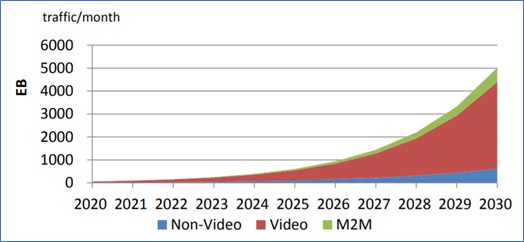
    User Experience: Rapid growth in usage of the network and heightened user expectations led 3GPP to come up with multiple releases (rel 8 to rel 14) for LTE. These helped in accelerating the evolution of LTE technology. Now with 3GPP release 15+, the subsequent move to 5G is mainly driven by the changing demands of consumers and enterprises.  Mobile end users are demanding more network capacity, more data bandwidth and higher mobile data speeds with very low latency. They want to use their mobile devices in more places and have more devices connected to the networks. ITU predicts a huge upsurge in data traffic, mainly video traffic, which will require an immense capacity “blanket” to meet the end user expectations.

    Figure 1: Estimation of mobile traffic (in Exabyte) by different service types globally by ITU

    Such a tremendous technology evolution and corresponding end user expectations bring in a lot of challenges to CSPs.  However, I see these challenges as an ocean of opportunity, if addressed in an efficient way. Let’s explore some key related questions that need to be asked:


    2-Part Webinar Series on Intelligent Network Investment Planning

    DOWNLOAD WEBINAR RECORDING NOW!


    1. What are the primary challenges and the associated opportunities that CSPs need to address?

    Strategically, CSPs leverage capacity-driven investments to gain competitive advantage and enhance end user experience. Most of the time, such investments are highly cost intensive, both in terms of Capex and Opex. Any inaccuracies in the overall network investment planning can lead to unintended impacts on company financials and can create significant network inefficiencies. Such inaccuracies eventually impact end user experience and erode competitive advantage.

    Conventionally, capacity investment plans require substantial amounts of historical data and consumes plenty of time in stitching the data for forecasting. Most of the time, it takes multiple iterations to test different scenarios. Moreover, inputs across multiple domains often tend to be overlooked, which could lead to further increase in iterations. Collectively it makes the overall process cumbersome and brings further inefficiencies as well.

    So, the next obvious question is, how can we come up with a network investment plan which is accurate, has optimal cost, meets current & future requirements of users and gives competitive advantage over a long term?

    1. Is there a better approach to capacity management and planning?

    In my view, cross domain analytics is quintessential for an accurate and effective investment plans. Establishing seamless alignment and strong correlation between data from different domains like network, user, business, marketing and operations will give CSPs a better understanding of how consumers and enterprises are using their mobile network. It also helps them to understand how capacity can be optimized and how the user base can be segmented based on behaviour (not simply demographics).

    A strong data driven correlation between domains will help CSPs unlock hidden revenues from their networks, as well as understand which services are being used and valued (and those that are not). And most importantly, it can yield deep analytical insights for smart decision making towards future network investments.

    Figure 2: Cross domain network view

    1. What are the key enablers to achieve an efficient network investment plan?

    I believe there are 3 key pillars that can help CSPs overcome challenges in achieving an efficient network investment plan.

    Cross domain data: Cross domain historical data (in years) is one of the basic requirements to achieve an efficient plan. With perhaps billions of records flowing, the plan will need seamless big data handling capabilities which could efficiently extract relevant and meaningful attributes for analysis. An intelligent handling of abnormal values can be leveraged to get desired aggregated data as per the requirement. I call it the most basic and important step, this will lay a strong foundation for later steps in the process.

    Machine Learning: A good set of processed and aggregated data, taken as an input to train machine learning algorithms, will help in establishing the right forecasting model(s) for specific scenario(s). Such a fine-tuned model(s) can then be fed as a critical input for smart network investment plans, yielding optimized business decisions. Machine learning is a must to handle cross domain data efficiently.

    Visualization: Complex analytical outcomes can be simplified with interactive visualization. It can enable and empower decision makers to identify relevant and meaningful patterns for decision making. A strong visualization capability can further help CSPs focus on areas most likely to influence their key business objectives.

    I truly believe these enablers can bring significant efficiency in overall network investment plan process. It can help CSPs fulfil the demanding end user expectations proactively, while giving them a huge long-term competitive advantage.

    To understand more on network investment planning, join our 2-part webinar series on “Intelligent Network Investment Planning”.

    DOWNLOAD WEBINAR RECORDING NOW!