Category: Analytics

  • How Advanced Analytics can help Telcos sail through the Challenges and achieve Success

    How Advanced Analytics can help Telcos sail through the Challenges and achieve Success

    Data has been moved from being a technological asset to become the most important business asset. The whole business strategy right from entering new business verticals, expanding service or product portfolio to creating marketing or sales strategies, everything revolves around data. Telecom industry has been at the forefront in terms of having huge volumes of customer data and analyzing this for different purposes. But basic analytics is the story of the past. For Telecom companies, advanced analytics brings in insights that were impossible to imagine earlier. Simple analytics talked about descriptive or diagnostic analytics but advanced analytics for telecom goes one step further. It offers predictive analytics and prescriptive analytics that can help CSPs to plan their growth with some surety on ROI.

    Why We Need Advanced Analytics for Telecom?

    The growth in terms of number of users and the magnitude and scale of services that are offered speaks for the need for advanced analytics for Telcos. The number of unique mobile subscribers has reached to 5.1 billion in 2019. Some parts of the world have already started using 5G while some are still on 4G/3G. We have innovations in IOT, M2M, AI and cloud computing as this brings another opportunity for CSPs i.e. enterprise business offering. As this will accumulate humongous amount of data and simple metrics and analysis are no more capable to offer real time insights for business problems, hence it further advocates the need for advanced analytics as the process are going to be more cumbersome. We need advanced analytical capabilities that are agile, fast and easy to execute at the same time.

    What are the various ways Telcos can use advanced data analytics?

    CSPs can apply advanced analytics in all business areas and help in achieving operational efficiency. Some of the prominent use cases that advanced analytics can solve for telecom are from revenue analytics, risk analytics, customers and campaign intelligence, product intelligence or sales and marketing campaign intelligence.  It can help with forecasting analytics to help CSPs design their action plans. The advanced analytics’ s near real time capability to provide insights can allow timely actions to avoid or tackle any unexpected challenges.

    Benefits that Advanced Analytics Offers

    Advanced analytics for telecom offer lot of value additions for all business verticals. CSPs can use advanced analytics to plan their network planning. Various metrics such as user density, usage pattern, device types will offer insights to plan their network availability. Analysing customer data will help with churn prediction, revenue forecasting, insights for new products & services.

    Advanced analytics has opened a plethora of new information that was not accessible earlier. It shares insights beyond the usual metrics and build creative models that can easily cater to the unusual business problem statements.

    Conclusion

    Subex Analytics Center of Trust (ACT) offers advanced analytics capabilities to harness the real power that data can provide. It is driven by the Trifecta approach that keeps the business goals in mind. It is agile and quick at responding to the latest trends and technical requirements.
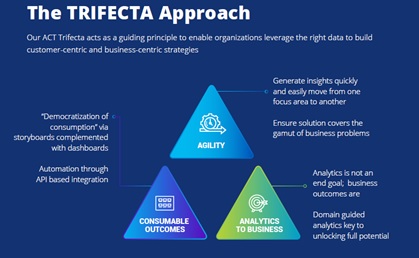
    trifectaAnalytics to Business to help you build a future proof infrastructure that saves a significant CAPEX. The consumable outcomes approach combines the best of both worlds – human intelligence and machine learning; hence it addresses the concerns logically and accurately. The result is you get a fully automated intelligent architecture that can deliver consumable outcomes across all audience levels in a democratized fashion.

    To find out more about how domain-driven analytics can impact your ROI, Increase Customer Experience and Profitability.

    Download the webinar recording now!

  • ¿Está midiendo los KPIs de negocios en los Sitios Celulares? – Subex Limited

    ¿Está midiendo los KPIs de negocios en los Sitios Celulares? – Subex Limited

    Impulsados ​​por las posibilidades ilimitadas de la tecnología celular inalámbrica, las empresas de telecomunicaciones están en  un punto de inflexión, apostando fuerte por los datos. Sin embargo, las nubes oscuras pasan sobre la excelencia operativa amenazando con arruinar las oportunidades. Los ingresos y las dimensiones técnicas son a menudo los únicos KPIs utilizados por las empresas de telecomunicaciones para las métricas de rendimiento. ARPU (Average revenue per user/ Ingreso promedio por usuario), churn, adquisición y crecimiento de suscriptores, y múltiples KPIs de NOC relacionados con la calidad de la red, son métricas confiables para la evaluación del desempeño. Sin embargo, a menudo se ignoran los KPIs más importantes del sitio celular desde un punto de vista comercial, que ofrecen mayor conocimiento para lograr la excelencia operativa

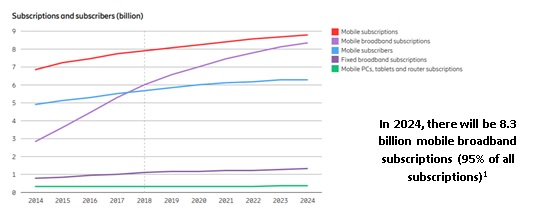
    Los sitios celulares, virtualmente, el último punto de contacto con los usuarios finales, ofrecen a las empresas de telecomunicaciones una vista de los suscriptores. El Informe de movilidad de Ericsson revela que los servicios de banda ancha móvil [1] representarán el 95% de las suscripciones móviles para el 2024. Curiosamente, las métricas de uso de los sitios celulares revelan una clara distinción y no son las mismas entre todos los usuarios. Por ejemplo, los suscriptores en un área industrial son únicos, con más usuarios de teléfonos inteligentes y teléfonos 4G. Con el uso rutinario de la transmisión de video y las llamadas de conferencia en los teléfonos inteligentes, la cantidad de datos utilizados por los suscriptores en dichos sitios celulares es mayor. Por el contrario, el ADN de un sitio celular rural se caracterizará por teléfonos con funciones / teléfonos básicos, con más SMS y llamadas de voz. Por extensión de las estadísticas del sitio celular, el tráfico y el uso también serán diferentes: en las áreas industriales, el tráfico alcanzará su punto máximo durante las horas de trabajo, mientras que, en las áreas residenciales, el aumento en el tráfico es en las noches.

    Forrester-report-spanishEl informe Forrester, Drive Revenue with Great Customer Experience del 2017, señala un área que requiere corrección de políticas para que las empresas de telecomunicaciones logren una mejor experiencia del cliente. El informe destaca que las empresas de telecomunicaciones necesitan mejorar las malas experiencias de los suscriptores en lugar de trabajar en mejorar las experiencias que ya son satisfactorias / buenas [2]. Por ejemplo, un operador en Kenia, utilizó Subex Cell Site Intelligence  para identificar sitios potenciales para actualizar los sitios 4G. La compañía tenía la intención de actualizar una cuarta parte de sus torres de telefonía celular, pero tenía pocas directrices para elegir sitios que ofrecieran el mejor retorno de la inversión y la satisfacción del cliente. Cell Site Intelligence analizó la densidad del teléfono 4G e identificó los sitios que tenían el mayor potencial con la garantía de un alto ROI. Las decisiones informadas ayudaron a la compañía de telecomunicaciones a implementar actualizaciones con los mejores resultados.
    Las empresas de telecomunicaciones lidian con interrupciones en los sitios celulares de forma rutinaria, enfrentan problemas en múltiples ubicaciones simultáneamente, estirando los recursos. El mantenimiento de la red y los problemas de resolución ya no pueden ser binarios, existe una clara necesidad de priorizar la resolución del problema. Las redes utilizadas para aplicaciones críticas y sitios celulares que generan mayores ingresos necesitan una resolución de problemas más rápida. Analytics ayuda a las empresas de telecomunicaciones a identificar ubicaciones donde la red necesita ser restaurada con prioridad.

    La Analítica Avanzada ayuda a identificar con precisión los sitios celulares de los hogares y el trabajo de los usuarios. Esto les da a las empresas de telecomunicaciones la capacidad de mapear clientes de alto valor y ubicaciones geográficas, ayudando a las empresas de telecomunicaciones a trabajar para obtener ganancias y flujos de ingresos adicionales. Si bien esta opción actualmente también está disponible en los navegadores, los análisis dependen del inicio de sesión del usuario. En el caso del análisis de sitios celulares, no se requiere el inicio de sesión del usuario, y los teléfonos móviles se asignan con precisión a través de varios parámetros, para crear un mapa destacado.

    A pesar de los avances espectaculares en tecnología y estándares inalámbricos, las empresas de telecomunicaciones carecen de análisis integrados y KPIs. Las operaciones en silos, donde los datos y los análisis nunca están correlacionados, no logran crear el panorama general o la capacidad de pensamiento crítico. La medición de los KPIs del sitio celular unifica los datos de fuentes dispares, ofreciendo a los equipos información que permite la excelencia operativa.

    Las empresas de telecomunicaciones deben enfrentar múltiples desafíos para hacerse ricos en una era de oportunidades. La necesidad de agregar continuamente capacidad, actualizar la infraestructura, la tecnología y manejar una base de clientes en expansión conlleva desafíos adicionales que evolucionan con los requisitos. Los KPI del sitio celular se están convirtiendo lentamente en una dimensión no negociable para detener el abandono, aumentar la experiencia del cliente y ayudar a las empresas de telecomunicaciones a lograr el mejor ROI y la ventaja competitiva.

    Para saber más sobre nuestra solución, programe una reunión con uno de nuestros expertos.

    Programe ahora!

  • Are You Measuring Business KPIs Across Cell Sites?

    Are You Measuring Business KPIs Across Cell Sites?

    Spurred by the limitless possibilities of wireless cellular technology, telcos are at inflection point, betting big on data. However, dark clouds loom over operational excellence threatening to spoil the opportunities. Revenues, technical dimensions are often the only KPIs used by telcos for performance metrics. ARPU, churn, subscriber acquisition & growth, and multiple KPIs from NOC pertaining to network quality are metrics relied upon for performance evaluation. However, the all-important cell site KPIs from a business point of view that offer hyper-awareness for achieving operational excellence are often ignored.

    Cell sites, virtual final touchpoints of end users, offer telcos a ringside view of subscribers. Ericsson’s Mobility Report reveals that mobile broadband services[1] will account for 95% of mobile subscriptions by 2024. . Interestingly, usage metrics from cell sites reveal a clear distinction, and are not the same among all users. For instance, subscribers in an industrial area are unique, with more smartphone users and 4G handsets. With routine use of video streaming and conference calls on smartphones, the amount of data used by subscribers in such cell sites are higher. Contrastingly, the DNA of a rural cell site will be characterized by feature phones/basic handsets, with more SMS and voice calls. By extension of cell site statistics, traffic and usage will also differ—in industrial areas, traffic will peak during working hours, whereas in residential areas, the spike in traffic is in the nights.

    The Forrester report, Drive Revenue with Great Customer Experience, 2017, pinpoints an area that requires policy correction for telcos to achieve better customer experience. The report highlights that telcos need to improve the worst experiences of subscribers rather than working on enhancing experiences that are already satisfactory/good[2]. For instance, an operator in Kenya, roped in Subex for Cell Site Intelligence[3] to identify potential sites for upgrading to 4G sites. The company intended to upgrade one fourth of its cell towers, but had little direction on choosing sites that would offer the best ROI and customer satisfaction. Cell Site Intelligence analyzed the 4G handset density and identified sites that had the highest potential with assurance of high ROI. The informed decisions helped the telco to roll out upgrades with the best outcomes.

    Telcos grapple with outages in cell sites routinely, facing issues in multiple locations simultaneously, stretching resources. Network maintenance and resolution issues can no more be binary, there is a clear need to prioritize problem resolution. Networks used for critical applications and cell sites that generate higher revenue need faster problem resolution. Analytics helps telcos identify locations where network needs to be restored on priority.

    Advanced analytics helps identify home and work cell sites of users accurately. This gives telcos with the ability to map high-value customers and geographical locations, helping telcos work towards revenue gains and additional revenue streams. While this option is presently also available in browsers, analytics depend on user login. In the case of cell sites analysis, user login is not required, and mobile handsets are mapped accurately across various parameters, to create a heat map.

    Despite spectacular advances in technology and wireless standards, telcos lack integrated analytics and KPIs. The siloed operations, where data and analytics are never correlated fail to create the big picture or the critical thinking ability. The measurement of cell site KPIs unifies data from disparate sources, offering teams information that enables operational excellence.

    Telcos need to contend with multiple challenges to strike it rich in an era of opportunities. The need to continually add capacity, upgrade infrastructure, technology, and handle an expanding customer base comes with additional challenges, that evolve with requirements. Cell site KPIs are slowly turning into a non-negotiable dimension to arrest churn, boost customer experience and help telcos achieve the best ROI and the competitive edge.

    To know more about our solution, schedule a meeting with one of our expert.

    Schedule now!

  • Why Analytics Alone is Insufficient for Telcos Seeking Increase in Customer Experience and Profitability?

    Why Analytics Alone is Insufficient for Telcos Seeking Increase in Customer Experience and Profitability?

    The past decade has seen the telecom industry embark upon a momentous growth path. The number of unique mobile subscriptions worldwide has almost doubled from 2.6 billion in 2009[1] to 5.1 billion[2] in 2019, thanks to the quick evolution from 2G to 3G, 4G, and now 5G, along with innovations in IoT, M2M, Artificial Intelligence (AI) and cloud computing. While this growth phase has led to the industry accumulating humongous amounts of data, a majority of them have not reaped the benefits of monetizing the data at their disposal—similar to how Facebook, Google or the many others are successfully doing.

    Data monetization is vital for Telcos to stay ahead

    Telcos are advantaged by a unique position in the ICT value chain. For example, a simple event such as planning a holiday today involves using your smartphone for a variety of tasks—from booking flights and hotels to researching the best places to explore. All of these result in the generation of varied datasets, to which telcos have access to. However, a complicated ecosystem of challenges is preventing telcos from successful internal and external data monetization.

    As Telcos continue to face increasing pressure in their top-line business, internal data monetization can bring them a strategic advantage in solving business problems. From the understanding of revenue trends such as the accurate pinpointing of developments in the voice or data business to gaining deep insight into customer likes and dislikes, data analytics can address several business issues. Similarly, external monetization opens opportunities for telcos in a range of industry verticals.

    However, to stay relevant in the market, telcos will have to stay ahead on the trends, which can lead them to opportunities. Messaging (SMS), which was an exclusive offering of telcos has now been taken up by players like WhatsApp and Facebook Messenger. Employing data analytics to analyze and predict trends is the only way to stay ahead.

    Why analytics alone won’t help?

    Several leading telcos have already realized the power that lies in data analytics as a key strategic pillar and continue to invest in advanced data technologies. However, the ROI for data analytics investments by telcos continues to stand unproven, especially on an incremental basis. The reason: Most telcos view data analytics as a technology asset, leaving open a wide gap between technology and business goals. This severe lack of coordination has resulted in analytics and data science being viewed as a technology solution rather than a business problem, causing business goals to suffer.

    The answer lies in domain-driven analytics

    For telcos seeking to stay competitive, domain-driven analytics is the answer. Spearheaded by deep domain knowledge and wide industry exposure a domain-driven analytics solution understands the requirements of telcos operating in specific regions or market conditions. Through the analysis of existing data sets, domain-driven analytics can transform current stats into future possibilities.

    Take the successful use case of how a telco in a developing market used domain-driven analytics to increase revenue. The telco was using its existing business model of acquiring more customers to increase revenue. Using domain-driven analysis, however, it was found that the current ‘active base’ which was 8.5 days needed to be improved in order to increase revenue. The telco used the recommendations and conducted an integrated campaign which led to the increase of the ‘active base’ from 8.5 to 9.5 days and a boost in revenue by 25%.

    With 25+ years of experience in driving data-driven business transformation for global telcos, Subex has garnered a lot of experience in applying domain-driven analytics for telecom.

    [1] https://www.budde.com.au/Research/Global-Telecoms-The-Big-Picture-2019-Key-Industry-Statistics

    [2] https://www.gsmaintelligence.com/


    To find out more about how domain-driven analytics can impact your ROI, Increase Customer Experience and Profitability.

    Download the webinar recording now!

  • The 6 worst pitfalls of not having an Analytics Maturity Assessment in place

    The 6 worst pitfalls of not having an Analytics Maturity Assessment in place

    Most organizations use analytics to improve their operations to enhance business performance and growth. However, through our experience of working with telecom organisations across various geographies, we have witnessed that analytics in many cases is done in an ad-hoc manner rather than in a planned phase. This results in organisations not witnessing the kind of return they were expecting from their analytics investments. An Analytics Maturity Assessment (AMA henceforth) helps in identifying such pitfalls and avoiding them. Few of the pitfalls that AMA helps in identifying are:

    1. Data Issues & trust: The root of any analytics project is the Data element. It is important that the end user does not have any form of data trust issues when it comes to their data. Proper data capturing, storing, infrastructure design, validation etc. are important dimensions which AMA investigates with proper checks and balances based on industry standards.
    1. Lack of Clarity: The first step to having clean data comes from having a good understanding of the data. There are basic graphs, queries, questions that every data analysis requires at the start of any project. For companies to be truly data driven, a Data Analysis pack consisting of the above elements and beyond is necessary. AMA checks these points to help figure out whether the first cut is robust enough. This understanding, the results of such a pack, is essential not only for the analytics team but helps business users as well gather lots of useful insights.
    1. Lack of Business Understanding: Analytics is a means to an end and not an end in itself. The intention is to help the organization improve on its top line, bottom line and operational efficiency. This is not possible unless the analytics team has a good understanding of the business as well the business team clearly understands what analytics can bring to the table. Synergy between the two is needed for implementable outcomes. The analytics solution should answer the questions that the end user wants to know. AMA helps in avoiding this pitfall or checks the status quo by having multiple checklists such as SMEs, trainings, meetings, presentations on this dimension.
    1. Improper Implementation: After what is to be done is clear, how it is done is essential for effective implementation. Ad hoc project work and repetition of same mistakes are cost centers for organizations. There must be standard practices for project implementation.
    1. Information Asymmetry: Having to constantly reinvent the wheel is another cost factor which takes the essential time of resources. This issue is usual the result of teams working in silos and not functioning as a larger team. Often similar analytics projects are undertaken in different verticals such as say finance and operations. This is another grey area which AMA helps in identifying and avoiding.
    1. Missing dollar accountability: Many organizations do not have long term vision in place. In these cases, analytics becomes good to have but it remains just a cost center. The vision and purpose of analytics needs to should come from the top and be clearly identified and communicated. Each project’s expected outcomes should be predefined and once implemented, its ROI calculated. This is essential for the integration of analytics into the DNA of the organization for it to be able to make a string contribution to the growth story.

    Conclusion:

    It is essential for every organizations to take stock of the situation after certain intervals. It is even more important when trying to inculcate something very different and new within the organisation to bring about a mindset/cultural change. Most of organizations are investing in analytics but find using it effectively difficult. AMA helps in streamlining this change. It helps in asking pertinent questions and figuring out the change methodology. As noted above, there are quite a few pitfalls of not having an AMA for an organization, and not having an AMA in place can be expensive considering the associated risks.

    To understand more on how you can adopt an AMA within your organisation, view a recent webinar we had conducted on the topic.

    Click here to view the webinar

  • The Road to Being Data-Driven Starts with Knowing Where You Are

    The Road to Being Data-Driven Starts with Knowing Where You Are

    The telecom world is changing, and organisations are challenged to not only grow, but to merely stay relevant.  To cope up with the fast-changing environment, organizations need to be at a certain level of maturity where the decision-making process needs to move from gut feelings to number & reasoning-based practices. The mandate here is clear: Organisations need to become data-driven or risk being left behind. However, the reality is bleak considering that nearly 100% of enterprises want to become more data-driven, but only less than a third have accomplished that goal. The starting point to being data-driven starts with being able to assess where one stands, and which is the best way to move ahead to a certain objective, a notion which continues to remain challenging for organisations.

    Almost all organisations have ventured into the woods of data analytics with a purpose to make a sense and get the best out of the huge volumes of data they have. Sometimes they ask what others (either in the same industry or across industries and academia) are doing and how they can replicate it, while at times they ask what new can be done that no one else has. To analogize the entire data analytics practice to the workings of an engine, an engine can be only as good as the sum of its parts. The parts must fit in well, the oiling mechanisms should help in friction reduction, the oil supply has to be timely and of course, the sparks need to be perfect. As many say, data is indeed the new oil and data analytics is fast becoming the engine (in this case, of growth).

    Fine tuning this engine is the need of the hour. Assessing where we stand, which directions we can move towards and where would that lead us to, what would be the best enabler to move in each direction, and how to go about doing it, is mission critical. This, in itself, is an optimization problem where maximizing returns and minimizing costs given the multiple constraints is challenging.

    Transformation is important, but to ensure true competitive advantage, organizations must transform themselves in a planned phase. The approach to analytics cannot be stochastic as it would result in more troubles than benefits. Organizations must traverse one stage at a time. Not only defining those stages is the need of the hour but also is knowing what steps one needs to take at a point of time to move from one stage to another. In this scenario, an Analytics Maturity Assessment becomes imperative.

    We have been working with customers across the globe in helping them assess their Analytics Maturity, to define the business objectives and carve out an Analytics roadmap towards said objectives, through our Subex Analytics Maturity Models. Subex Analytics Maturity Models defines those stages and the steps between those stages, through an assessment across People, Process, Technology and most importantly Data.

    To know more about why an Analytics Maturity Assessment is important, and how it can help your organisation, Schedule a Demo with us and our Subject Matter Experts will get in touch with you.

  • Addressing the Trust Gap. It is Possible

    Addressing the Trust Gap. It is Possible

    In our previous blog, we spoke about how in today’s world of rapid and constant change it has become ever so important to make the most of real-time inflow of data. Data is the new oil – and like oil, data needs a refinery before it is used across business use cases. To quickly take a step back, this trend always reminds me of the comic Tintin and The Land of Black Gold – “Boom! … One day your car goes Boom!”. The plot revolves around car engines exploding because of faulty petrol at its source. Similarly, if data is not clean at the source, your business decisions are bound to go “BOOM”!

    ‘TinTin: Land of Black Gold’ by Hergé


    Analytics has been commoditized today, with the entry of open source tools and technologies. However, there is a significant trust gap when it comes to the consumption of analytics. How much do you trust your data? How significant is the output of analytics in the organisations board meeting? While in our last blog we looked deeply into the trust gap and its roots, at the end of the day, we need to realise that analytics is just an application of Math-Technology-Business on data. So, if we believe in Mathematics, have faith in the technological revolution and are confident of our business intuition, there is no reason for analytics not to be considered as the most critical function – all that remains is refining the oil, i.e., data.

    We at Subex, recognize and respect this trust gap. We also believe an analytics strategy should build around the golden triangle – People, Process, and Technology.  The first and most critical step would be to have analytics done in a democratized manner. Everyone in the organization, from the C-Level, to the Department Head level, to the Analyst level should be armed to be data-driven. The involvement of machine should not undermine the trustworthiness, nor should it lead to a decrease in human involvement; instead, you should leverage the best of both human and machine intelligence to improve products, enhance the quality of service (QoS) and derive more returns from your investments.

    Does Human Intelligence + Machine Intelligence = Trust?

    Taking the Human Intelligence + Machine Intelligence philosophy into account, we have come up with a concept known as Subex ACT (Analytics Centre of Trust), designed to bridge the Trust gap by covering the end-end cycle of Data-Insights-Decisions (D.I.D.). Let us take a quick look at the three pillars of our ACT program:

    1. Defining a Strategy

    Before starting the analytics journey, it is imperative to assess the following

    1. What is the analytical maturity of the organization?
    2. What are my objectives from the analytical program vis-à-vis the business vision
    3. Do I have a roadmap in place?

    The main Objectives of this process are:

    • Setting up the goals for the organization: The Strategy can help deliver competitive advantage, create incremental revenue opportunities, and reduce costs.
    • Assessing your analytics maturity vis-à-vis your goals: Understand where you are in terms of your analytics maturity and identify the target maturity which will help you reach the goals defined in step 1
    • Plan for the Transition: Understand how you will transition from your current maturity level to the desired maturity level and ensure the process is time-bound, tangible and step-wise. What we recommend is that you identify tangible use cases, such as churn, and move the analytics maturity of addressing churn from, say, 3 to 4. Once that is completed, define another use case and increase the maturity to address that similarly
    1. Setting up an Information Infrastructure

    Post defining the analytical strategy it is imperative we have the right set of tools to handle the task at hand. The tools which organisations need today need to be the following:

    • Agile: Create the ability to address the problem statements based on the requirements
    • Scalable: Should be able to handle massive volumes and different types of data
    • Reliable: The information that is generated by the system needs to be trustworthy
    • Real-Time: For quick and accurate decision making the reports should be in real-time
    • API Integration: The tools should be compatible with API-based integration
    • User-friendly: Consumption of the reports/data should be easy to use
    • Secure: The tool should be compliant with security guidelines
    • Self-Serviceable: Accessible UI enabling the end user to self-generate reports

    Such an Information Infrastructure should offer a self-service reporting environment wherein each stakeholder gets the access to the tools to analyze and act upon the information. This will not only reduce the time gap in execution but raise the operational efficiency to a new level. As the model evolves into an Analytics Centre of Trust (ACT), the transformation journey becomes smooth.

    • Analytical Driven Business Outcomes

    The final piece of the Analytical Framework, is clearly towards the analytical output. For too long, organisations have set up analytics practices with a mandate towards delivering on analytics outcomes. Subex is of the firm belief that the key to analytics is to attain business outcomes while ensuring insights are available across all audience levels in a democratized fashion which is easily understandable.

    Conclusion

    The world of digital technologies is open for Telcos to build new business opportunities as well as excel on the existing ones. It’s time to identify the gaps in your analytics strategy and develop an ACT that helps you climb the ladder faster. As an organization is preparing to capture the active markets, your analytics goals must focus on using information as a strategic asset to generate revenue, improve operational efficiency and provide best-in-class customer service.

    In our next blog, we will cover how Subex ACT helps CSPs regarding addressing these three pillars and how it helps bring Agility, an Analytics to Business mindset and Democratization through Consumable Outcomes to your organisation.

  • The Analytics Trust Gap. It Is Very Real

    The Analytics Trust Gap. It Is Very Real

    So, you are looking to start an Analytics Program within your organisation. You have the tools ready, you have the resources designated for the task, and you have all the required process you need in place to run a robust Analytics program. You expect to see a massive revenue growth within a year; however, after the passage of 365 days, the outcomes are well short of your expectations. At this point, you have a set of questions to ask yourself:

    • Where could I have gone wrong?
    • My organisation has a massive volume of data. Was the quality of my data not up to mark?
    • I had all the tools in place, with Artificial Intelligence automating all the processes. Where did I fall short?
    • I have received data from multiple sources? Is this causing the shortfall?
    • Have I ensured that the data residing in my data lakes are free from breaches and attacks?

    All these questions which arise could ultimately lead you to lose faith in your analytics program.

    Over the past several years, we have seen how data analytics has evolved from the simple exploratory level to the current predictive level. With Business Intelligence (BI) playing the pivotal role in decision making, organizations are seeking the power of advanced analytics and machine intelligence to attain agility and competitive differentiation. Telcos, which own the most significant share of customer data among all the industries, are in the best position to leverage them to achieve higher levels of maturity. However, a recent KPMG report reveals a paradox that despite the huge investments in data analytics, organizations are not able to build value around it due to lack of trust. According to the report, only 35% of decision-makers have a high level of trust in their own organization’s analytics, and 25% admit that they either have limited trust or active distrust in their analytics. Moreover, only 10% said they excel in managing the quality of data and analytics, and 13% said they excel in the privacy and ethical use of data and analytics

    What Causes the Trust Gap?

    The above findings come as no surprise considering the growing complexity associated with handling the data originating from disparate sources. Many studies now indicate that the once 4 Vs to describe key aspects of data (Volume, Velocity, Variety, and Velocity) has now grown to 10 (to include Variability, Veracity, Validity, Vulnerability, Volatility, and Visualization).

    But besides the growing complexity of data, there are multiple other aspects which are leading to the trust gap, some of which are captured below.

    Quality- a top concern

    As the data grows more complex, analysis can be challenging. Poor data quality or incompetent analysis can lead to disaster. As Gartner puts it, “As organizations accelerate their digital business efforts, poor data quality is a major contributor to a crisis in information trust and business value, negatively impacting financial performance.”

    Working with false or incomplete data could result in uninformed and biased decisions, which could prove harmful to the overall business. Gartner has also estimated that poor data quality can lead to an average of $15 million per year in losses.

    Can we trust machines?

    In today’s machine-controlled analytics landscape, building trust becomes even more challenging. The advent of artificial intelligence (AI), coupled with the advancements in machine learning (ML), has opened a plethora of opportunities in data analytics. We have seen many horror stories wherein placing complete faith in AI without human intervention has had disastrous consequences.

    Integration of disparate data

    Considering that organisations do not have a single source of truth when it comes to the data they gather, data integration is another major roadblock, resulting in poor execution and sometimes complete failure of analytics implementation. Organizations which are slow in their transformation journey confront challenges in integrating data of different formats. They lack the skills, training, and tools to build a centralized access and control policy. Historically, the self-service concept is appealing but has often fallen short of expectations due to barriers faced at multiple levels – technology, people, and process.

    Security-an everlasting concern

    There is no respite from data breaches and misuse. The fact that fraudsters are making headway by exploiting advanced techniques escalates the concerns.  The thin line between the security breach and the reputation of an organization brings the transformation to a halt.

    These are but a few reasons to why a trust gap is being created, but they are very real. Should it remain, the trust gap will lead to severe implications in terms of competitive advantage, operational efficiency, and growth. The inability to rise as a data-driven organization means that they also lag mature organizations considering data-driven organisations witness 23x Customer Acquisition, 6x Customer Retention, and 19x Better Profitability (according to McKinsey). And non-data driven companies miss out on all these benefits.

    It is clear – The time has now come to bridge the trust gap! The only question that now remains is, how? Stay tuned to our blog for the answer.

  • Actionable predictive analytics: overcoming the analysis paralysis

    Actionable predictive analytics: overcoming the analysis paralysis

    Why standard forecasting analytics models fail to deliver in today’s world of complex digital networks and why telcos need a domain-specific analytics solution.

    “Your analytical dashboards and visualizations look good, but I prefer actionable reports and insights”, said the deputy CEO of a Southeast Asia-based telecom service provider during one of our meetings last year. This was not just one odd instance. We have heard this many times in the past year from other CSP executives. There are many domain-agnostic AI/ML based analytics solution providers in the market, but what telcos really want is an analytical solution which provides end-to-end domain-specific actionable insights. Forecasting traffic or pointing out anomalies is one thing, but how to incorporate those recommendations into capacity planning? What is the root-cause for that anomaly so that it could be prevented in future? Instead of getting lost in analysis paralysis amidst thousands of fancy statistical metrics; a simpler, actionable and reliable predictive analytics solution is the need of the hour.

    With the right mix of domain knowledge and analytics advantage, centered around the actual requirements of the network planners; Subex has come up with the concept of actionable predictive analytics. Network planners should be enabled for efficient, reliable and cost-effective capacity planning. Hence, here the focus is more on what matters to the telco network teams, i.e. the business values such as capex optimization, network performance improvement, customer experience enhancement and operational efficiency; rather than on underlying analytical components such as configured models or feature engineering.

    Here are two of the most important aspects about Subex’s approach to predictive analytics which are different from the traditional forecasting models –

    Multi-variate analysis

    Unlike the traditional forecasting systems which predict the future trends for a metric based on the historical pattern of that given metric, in multivariate approach, the system understands the lagging or leading effect on the given KPI from other KPIs. With this, the telco can predict, in near real-time, what is going to happen in the future and adopt appropriate measures to prevent capacity issues. A multi-variate, self-learning forecasting model which runs on the in-house machine learning platform is complemented by domain-specific configurations and expertise which is equally essential for intelligent forecasting.

    The figures below compare a multivariate model scenario that considers the lagging effect of KPI1 (e.g. customer complaints) on KPI2 (e.g. capacity utilization) with that of a traditional model that does not give such insights. In the first case, the operator does not get accurate results as yielded in the second case because there is a direct relation between traffic and customer complaints. For example, if there was an aberrant increase in traffic, the operator can take that fact into consideration for accurate prediction of future customer complaints.

    One more use-case could be accurately predicting the time to capacity exhaust for a site if one of the neighboring sites is planned for decommissioning soon. In this case, with the help of geo-spatial analytics, the additional load on the given site due to decommissioning of the neighboring site would also be considered for calculating time to capacity exhaust.

    capacity exhaust

    Domain Specific Insights

    Be it wireless or hybrid fiber-coaxial networks, even an accurate capacity forecast is incomplete without the required domain-specific insights. Without a proper root cause analysis for a network element exhausting soon (in terms of capacity), the network planners won’t be able to make the right decision about its proactive mitigation.

    These are some questions to consider when developing your network augment action plan:

    • How many customers will be impacted when a given network element hits a capacity exhaustion threshold?
    • Will prioritizing the given candidate for capacity augment above other options result in the best customer experience improvement and maximized ROI?
    • What is the reason for this capacity exhaust? Is it because of seasonality, periodicity or cyclicity? Is it an anomaly due to some one-off event?
    • Will new Capex be required to address the capacity bottleneck, or are there alternatives to new spending?

    Some of the insights that could be useful for the planners leveraging predictive analytics for capacity planning and management are shown below –

    capacity planning

    Predictive Analytics

    Apart from the above two key differentiators, some other important aspects for a pragmatic, accurate and reliable predictive analytics solution are scalability and flexibility.

    Multi-variate forecast models need to run thousands of simulations across the network to identify the correct correlated metrics for accurate predictions.  Such models need to be configurable, flexible and easy-to-understand for non-data scientists.

  • Are Traditional Data Warehouse Challenges Affecting Your Business?

    Are Traditional Data Warehouse Challenges Affecting Your Business?

    With data emerging as the new currency for businesses, data warehousing demands a new approach in dealing with the challenges. As Gartner puts it, poor data warehousing practices “undermine the organization’s digital initiatives, weaken their competitive standing and sow customer distrust.” Telecom operators are among the most affected by data warehousing challenges as they handle billions of customer data generated from multiple sources like files and probes (SS7, SIP, SIGTRAN), as well as the massive volume of data streamed from social media platforms.

    As the volume, velocity, variety, and veracity of data generated continue to grow; the traditional data warehouse approach flounders while managing and analyzing the data. With conventional data warehouse analytics offerings, answering even seemingly simple questions such as “Who are my ten best customers?” could take up to 5-10 days. Even after the team figures out the right criteria, compiling and analyzing the data could again be a time-consuming process. As the questions grow complex, the burden only grows further.

    While in-memory databases have helped alleviate the problem to some extent by providing better performance but with rigid data models, it makes data analytics workloads more and more compute-bound. Even it is well understood that traditional data warehouse approaches have become arduous due to the IT dependency and upfront data modeling. As a result, the time to value grows longer, and the outcome materializes only when the business can start to use the reports and insights provided by the data warehouse. Since this approach is rigid, it may also call for data modeling changes, which will further delay the process execution.

    Working with data always carried an inherent risk that false or incomplete data could lead to uninformed or even misinformed decisions. Telcos have a winning edge as they are the custodian of largest repository of customer data in the world. Therefore, businesses can no longer ignore these challenges as new business opportunities are emerging around data usage. Look at the sheer size of the data generated during a typical business day, an operator serving 80 million mobile subscribers generates around 20 billion Detail Records (xCDRs) daily.

    Worldwide several Telcos have identified opportunities around data monetization – both internal and external. The growth of the Internet of Things (IoT), artificial intelligence (AI) and machine learning (ML) has largely contributed to this upswing. Telcos’ growing engagement with content providers, IoT companies, VAS companies and others prove they are striking it right. At this juncture, it becomes crucial for telecom companies to revise their data strategy around modern big data analytics tools.

    Working with poor-quality data can also bring damage to the existing business, especially concerning customer value. As you know, customer preferences are evolving, so ensuring customer satisfaction and loyalty mostly relies on how quickly you address their issues. Big data and real-time analytics gain relevance in this context.

    Hence, a robust big data platform is no more a luxury but a business imperative! Stay tuned to know more about Subex’s approach in handling the complexities around a traditional DWH and data quality issues.

    For more information on how Subex is helping Telcos address gaps in their analytics approach through an end-to-end framework, attend a webinar we are hosting with Telecoms.com entitled, Bridging the Analytics ‘Trust Gap’ Within Telcos.

    Register yourself here: https://bit.ly/2NzFXJF