Category: Digital

  • Thoughts from the trenches

    Thoughts from the trenches

    [vc_row][vc_column][vc_column_text]It is just another usual day for the telcos. The industry has weathering so many metaphorical storms for so long, that resilience has become its permanent virtue.

    Over the last 45-60 days, we have all seen numerous research reports and thought papers talking about how the COVID-19 crisis has changed the world, and what it means for telecom operators. This is perhaps one of those rare instances when every industry is trying to draw inferences, make forecasts, finetune strategies and prepare for weathering the storm. Like all other businesses, we too made diligent notes, brainstormed with our brightest minds, and came out with sophisticated presentations on what this situation means for our customers, and how we can add value. However, we did one additional thing. Instead of going by just the reports and studies that were published online, we decided to take firsthand inputs from our customers, and truly understand what the impact means to them. So, we interviewed a dozen or more of our customers, and here are our top 10 takeaways.

    And oh! Just to make sure this doesn’t end up being yet another strategy-heavy blog on “What COVID-19 means for telcos”, we have tried to keep it light. Because, these are observations based on real conversations beyond PowerPoint slides and Excel sheets.[/vc_column_text][vc_row_inner][vc_column_inner width=”1/2″][vc_column_text]1. Capacity is a problem, but addition is not easy

    It is true. People are now dependent on connectivity more than ever. This means, more load on the network, demanding capacity expansion to service existing customers. The only problem is, given the circumstances, adding new capacity by way of additional infrastructure isn’t an easy option. Operators may have purchased infrastructure prior to the lockdown, but with the lack of resources to deploy these on field, capacity addition is not easy. Reallocation of capacity is one option, but some operators are hesitant to do it, thinking it may have to be soon reversed.[/vc_column_text][/vc_column_inner][vc_column_inner width=”1/2″][vc_single_image image=”23829″ img_size=”full”][/vc_column_inner][/vc_row_inner][vc_row_inner el_class=”planning_5g_wrapper”][vc_column_inner width=”1/2″][vc_single_image image=”23832″ img_size=”350×332″][/vc_column_inner][vc_column_inner width=”1/2″][vc_column_text]2. Enterprise focus shifting from latency to bandwidth

    Enterprise business for telcos has always been a different ball game. The customer needs are different, the pricing strategy is different, and even the landscape of offerings is different. The recent report from GSMA highlighted that Enterprise business might finally be able to overtake consumer business for telcos in the next 1-2 years (a big part of this attributed to 5G), and that was good news. The low latency of 5G was meant to redefine the term ‘real-time’, opening up a host of new possibilities for businesses. Enter COVID-19, and all of this is set to change. Well, not all, but at least the low latency part. The crisis has made businesses rethink what ‘essential’ means, and it appears like latency is not as essential as bandwidth and availability for enterprises.[/vc_column_text][/vc_column_inner][/vc_row_inner][vc_row_inner][vc_column_inner width=”1/2″][vc_column_text]3. Consumption is increasing, but revenues aren’t

    This one almost seems borderline unfair but sadly is the reality. With most people working remotely, the dependence on data and connectivity has risen multi-fold for the average consumer. Their usage patterns have also show severe spikes, with some of our customers reporting up to 40% increase in 2 weeks. The usage of fixed broadband has also significantly increased due to the large number of video conferences, virtual events and webinars happening. Even for leisure, the only sources of entertainment seem to be the likes of Netflix, Amazon Prime, Hulu etc., all of which are bandwidth heavy. Furthermore, as a social responsibility, many operators are partnering with governments to roll out online learning programs, which further increase data consumption. While this kind of increase in usage would have been generally seen as good news, in the current circumstances it is not the case. The general economy is not conducive for price-hikes of packages, and operators will struggle to justify it. While operators will try to roll out innovative bundles, the impact of these efforts are yet to be seen.[/vc_column_text][/vc_column_inner][vc_column_inner width=”1/2″][vc_single_image image=”23834″ img_size=”full”][/vc_column_inner][/vc_row_inner][vc_row_inner][vc_column_inner width=”1/2″][vc_column_text]4. Cost pressures to continue till the end of the year

    Barring a handful of industries, this statement is probably applicable to all other businesses for the next few months. While the telecom industry is fairly resilient to the COVID-19 crisis, it is not spared of uncertainty. And, what do we do in such times? We hold on to what we have, and make sure every Dollar spent is extremely thought through. Over the next few months, some reductions in Opex will be inevitable for telcos. Further, Opex optimization might become a more stringent practice, leading to increased dependence on automation.[/vc_column_text][/vc_column_inner][vc_column_inner width=”1/2″][vc_single_image image=”23835″ img_size=”full”][/vc_column_inner][/vc_row_inner][vc_row_inner el_class=”planning_5g_wrapper”][vc_column_inner width=”1/2″][vc_single_image image=”23840″ img_size=”full”][/vc_column_inner][vc_column_inner width=”1/2″][vc_column_text]5. Capex remains same, but priorities change

    An interesting observation that came out from multiple operators is that their Capex spends may largely remain the same, with minor reductions if any. At first, this might seem surprising, but given the fact that lockdown restrictions are beginning to ease out, telcos are looking at ways to meet the increasing demand from customers. The priorities of Capex however seem to be changing from value-add (like 5G) to essentials (capacity enhancement, higher availability, etc.). An important point that became evident is that Capex allocations are now being reassessed and restructured to align with corporate goals in light of the COVID-19 crisis.[/vc_column_text][/vc_column_inner][/vc_row_inner][vc_row_inner][vc_column_inner width=”1/2″][vc_column_text]6. Accelerated Digital Transformation due to COVID

    Over the years, there have been several continued efforts on pushing for digital transformation across telcos, but it appears like COVID-19 has single-handedly acted as the tipping point. Customer expectations have changed permanently, and consumers will now seek a richer omni-channel digital experience and demand higher level of self-service. Be it the use of intelligent algorithms to aid call center agents or the creation of digital stores, telcos are forced to think digital in every aspect. An interesting outcome of this transformation will be the significant increase in the emphasis on trust, because of multiple unknown entities operating behind ‘digital curtains’.[/vc_column_text][/vc_column_inner][vc_column_inner width=”1/2″][vc_single_image image=”23841″ img_size=”full”][/vc_column_inner][/vc_row_inner][vc_row_inner el_class=”planning_5g_wrapper”][vc_column_inner width=”1/2″][vc_single_image image=”23843″ img_size=”full”][/vc_column_inner][vc_column_inner width=”1/2″][vc_column_text]7. 5G rollouts will slow down

    Last year’s MWC was a 5G jungle. Anyone who had been there would come back believing that within a couple of years, we would have doctors performing remote surgeries, autonomous cars becoming common, industrial automation going in full throttle and many more things. However, if you haven’t realized it yet, here is some bad news for those. 5G rollouts will slow down. The reasons are multi-fold, starting with the realignment of Capex priorities, to inability to support additional buildout, the pause in the production of 5G handsets, and the lack of complete clarity on some of the standards. While 5G and related services will eventually benefit from the increased adoption of digital services, in the short term 5G deployments are expected to slow down.[/vc_column_text][/vc_column_inner][/vc_row_inner][vc_row_inner][vc_column_inner width=”1/2″][vc_column_text]8. Functions are keen to utilize allotted budgets

    While newer budgets are not being allocated, or are being scrutinized before approval, functional heads of various departments seem to have the ability to make use of already allotted budgets. These are budgets allotted for strong use cases that remain important and are expected to contribute to the corporate objectives. With the looming threat of budget cuts and cost optimization, there is a sense of urgency to take decisions and move forward on putting some of the already allotted budgets to use. After all, no one wants the already allotted budgets to be rolled back, because they were unutilized, right?[/vc_column_text][/vc_column_inner][vc_column_inner width=”1/2″][vc_single_image image=”23844″ img_size=”full”][/vc_column_inner][/vc_row_inner][vc_row_inner el_class=”planning_5g_wrapper”][vc_column_inner width=”1/2″][vc_single_image image=”23845″ img_size=”full”][/vc_column_inner][vc_column_inner width=”1/2″][vc_column_text]9. Telcos looking at vendors that can think ‘beyond normal’

    They say necessity is the mother of invention. A corollary of this could be to say that crisis is the mother of innovation. It is in situations like the current one that businesses are required to bring innovation to the forefront, in order to survive and thrive. While telcos are certainly on the right track to innovate and improvise, their strength lies in carrying out their business in the best way possible. This is where they expect vendors and partners to bring in interesting perspectives and value propositions to help them do things that are outside the spectrum of normal. So, a clear advise from most telcos to partners like ourselves is “Do not engage with us if you are only talking about what we are doing today. Come to us if you have propositions that differentiate us.”[/vc_column_text][/vc_column_inner][/vc_row_inner][vc_row_inner][vc_column_inner width=”1/2″][vc_column_text]10. New business models are being explored and adopted

    Well, this point may not be a direct impact of COVID-19, but it is certainly happening. The reasons could be multiple, ranging from digital disruption, to OTT services, to non-traditional competition, but the current situation seems to have brought in an urgency to reimagine business models for telcos. At a time when connectivity is of utmost importance, if telcos remain simply as network providers, they’re losing out on tremendous opportunities that will be picked up by hyperscalers like Amazon and Google. The need of the hour – think like disruptors, get into spaces that were earlier ignored, and hack your way into a growth path. Case in point: JioMart[/vc_column_text][/vc_column_inner][vc_column_inner width=”1/2″][vc_single_image image=”23853″ img_size=”full”][/vc_column_inner][/vc_row_inner][vc_row_inner][vc_column_inner][vc_column_text]So, there you have it, folks. Those were the 10 key observations from our recent conversations with customers. If you are in the telecom space, let me know your thoughts in the comments section below, and add any points that I might have missed in this blog.[/vc_column_text][/vc_column_inner][/vc_row_inner][/vc_column][/vc_row]

  • The Digitalization Wave – How is it revolutionizing the Telecom Industry

    The Digitalization Wave – How is it revolutionizing the Telecom Industry

    A change can be a blessing in a disguise. Or change can bring in a lot of complications.

    It’s all a matter of perspective.

    Probably the most critical question that telcos should ask themselves in this age and time is how to perceive this change; Digitalization, a not so old term, that has seen itself float around a lot of modern verticals is here to stay. Perhaps one of the most impacted vertical on this front is the telecommunication industry. Digitalization is the key that unlocks a world full of possibilities for telcos. But is it all fun and play? Does this incur more costs and responsibilities?

    Defining Digitalization

    There are multiple ways in which one can define this rather interesting term. Perhaps the most straightforward way to absorb it is to understand that business processes and models are yet to reach their fullest potential without the involvement of digital technologies. When a telco fully embraces and leverages these digital technologies into their day to day processes, they are said to undergo a process of digitalization. Not only do these open new doors of opportunity, but operators can also realize revenue from new lines of businesses. But what is it precisely that operators can expect from this change?

    Digital transformation: What’s on the table?

    The core services – SMS, voice, and data are drastically evaporating along with revenue associated with these services. Networks are becoming increasingly complex, so are the services delivered by them. Consumers are looking out for network systems that can upscale to offer a better quality of service (QOS) and cater to digital offerings. It is trends like these that probably make people perceive it as a threat. Let’s further deep dive into what other offers are on the table:

    1. Virtualized communications and cloud infrastructure

    Traditional OSS network components will soon take a hit thanks to the explosion of data traffic that is being carried across the globe today. The challenge also lies in the fact that maintaining these components also becomes a complicated activity when dealing with data of such enormous proportions while simultaneously trying to provide quality services to customers. Virtualized communications and a cloud-based deployment makes it easier for telcos to manage traffic without burning too much of a hole in their pockets.

    2.5G

    Addressing the elephant in the room, 5G will completely revolutionize the customer experience. Apart from this, 5G will connect things, vastly expanding the capabilities and application of IoT, which demands better and faster connectivity. This opens up an opportunity for around the internet of things, artificial intelligence & augmented reality.

    3. Diverse portfolio of digital services

    Telcos must learn how to expand their service portfolios to offer new suites of digital services, addressing new vertical markets, with strong revenue growth potential. They must also determine which service niches best suit their competencies, and ultimately transform their operations to manage these diverse service portfolios while minimizing operational complexity efficiently.

    4. Redefining customer engagement

    A series of accelerated technological advances have transformed customer expectations in the digital era. A few of these include

    • Payment options that are rather easy to use
    • Transparency to consumers in terms of features of a product or service
    • Contextualized interaction for their personal wants and needs

    5. Internet of things:

    IoT will generate tremendous amounts of data, particularly unstructured in nature. Big data will be a key enabler to absorb this data into some useful insights. An operator strategy to embrace this would be to simplify IoT as much as possible and accelerate its adoption in major verticals such as telecom, healthcare, energy, and connected cities. From a threat perspective, IoT brings in a whole spectrum of fraud use cases that might not be detected by a traditional CDR based fraud management system. OPCO’s must also look into systems that can tap into data packets, analyze and report if the content is malicious or not.

    Embracing digitalization: Help it help you.

    To meet the changing needs of the marketspace, service providers must chart out a few initiatives to be able to accommodate the changes above. Revamping business processes may be a challenge at the early stages, but operators must take the leap to make the most of this transformation. Below are some steps telcos can take to leverage the full capability of digitalization.

    • Define your vision

    Before telcos can start implementing changes in processes, it is imperative to understand what is the end goal that they are trying to achieve. Whether it is a seamless customer experience or launching a new off the shelf product, keeping an eye on the bull at every stage of this change will streamline how the results will pan out.

    • Assess your digital maturity

    Knowing where you stand is another important step to deliver your vision planned out for your subscriber base. Operators can assess their current digital maturity level with respect to industry standards using consulting vendors or other forums. This assessment must be spread across governance, risk, and compliance and operational efficiency so that telcos can decide if they can deliver the originally planned vision with their current maturity level or if it requires specific tweaks.

    • Transformation Gap

    Identify the gaps between where you are today and your desired digital maturity. Pinpoint the areas for improvement as that will have the most significant impact on reaching your business goals.

    • Know your customers

    The strategy needs to have a deep, comprehensive understanding of each customer in a much broader context; A 360° view. Deliver portfolios & digital products that provide your customers with true value because they are the ultimate end users of your product/service. While working on new designs/processes, always start from the customer and work your way backward to ensure that your delivery is aligned with their expectations.

    • Reframe thoughts on data

    As operators, you have access to an enormous amount of customer data. Hence telcos must leverage this data and analytics to implement a digital transformation strategy. Agile platforms and approaches are needed to respond to the continually evolving needs of your customers. The key drivers include building/outsourcing a better visualization layer, having a robust IT system in place, streamlining the application landscape, and innovating around customer experience.

    In addition to the above points mentioned, it is also equally important for telcos to have the right partners in their digital transformation journey to manage the plethora of risks arising from digitalization.

    To know how Subex can help you in your Digital transformation journey

    Schedule a meeting today!

  • How Industry Trends are Impacting Telecom Partnerships

    How Industry Trends are Impacting Telecom Partnerships

    Trends that are creating a shift

    With democratizing access to technology, more and more people are embracing it and telecom is one of the industries which is most affected by this shift. More and more people will have mobile by 2020 and the amazing thing is the revenue of this user acquisition will be driven by data consumption as compared to voice/SMS or other traditional services which were the base of telecom offering till recent time.

    Operators are sensing the shift happening in the user choices and trying to figure out ways to stay in the competition. Mobile broadband connection to increase from 55% of the total in 2016 to 73% by 2020. The number of smartphone users will reach 5.7 billion by 2020 which means more and more people will be using data as a telco service and be a part of the digital ecosystem. Mobile data is expected to grow at a CAGR of 47% till 2020.

    If we see the driving factors behind this shift, OTT, content and other digital service providers have played a major role. See the below graph on how the composition of services has changed over time.

    It’s not only the addition of new partners to the digital ecosystem, but the traditional wholesale is also evolving. Here are the new trends which we can see happening in wholesale.

    Implications on Telcos due to digitalization

    Telcos no more work in silos as they are disrupted by the new age service providers hence looking for new partners to offer competitive and exciting services to its consumers. The below chart shows the changes happening in the telecom industry. This is forcing telcos to search for innovative and unique economic models.


    New Possibilities for Telcos

    These trends have opened a lot of possibilities to explore additional business avenues and try new economic models. The telco revenue mix is also changing with the partner mix as we can see in the graph and it is impacting the way telcos operate and manage partnerships in a traditional format. Hence the partner lifecycle management is also becoming imperative for telcos to embrace the digital revolution. For example, there will be 25 billion connected things by 2025 with enterprise verticals as the main drivers. Blockchain in telco has so far been limited to roaming but experimentation could take this further, especially if eSIM came to smartphones.

    Smartphone connection will increase to 79% of the total mobile connection bringing in new customers. Over a fifth of the world’s markets will have launched 5G by 2020, spending a combined $244 billion on networks in the process which will bring new capabilities for telcos.

    How Telcos can Embrace Digitalization Successfully

    The need of the hour is a unified solution which can cater to all the requirement of the ecosystem. The system should be able to provide visibility for everyone in the ecosystem to establish trust among the partners. Right from efficiently managing the partner onboarding, to partner settlements and dispute management, the system should be able to make the whole journey seamless for both traditional and digital service partners. The below image shows some of the capabilities of the system.

    This unified solution will allow telcos to transition through the changing paradigm and add agility and scalability to the business to embrace any new technology and consumer behavioral shift.

    To learn how telcos can leverage partnerships to gain competitive advantage

    Watch the Webinar now!

  • Managing Complex Partner Agreements in the Digital Era

    Managing Complex Partner Agreements in the Digital Era

    Digitalization has opened a plethora of opportunities for Communication Service Providers (CSP) across the globe to transform their traditional service offerings, moving from telephony into content-driven businesses and reaching the status of Digital Service Providers (DSP). There is a paradigm shift in the telecommunications ecosystem with the entry of technological disruptors (like OTT players) resulting in a portfolio of services with competitive pricing models. The depletion of voice revenues and the rise of data services has changed the dynamics of business partnerships.

    The traditional telecom service provider is no longer isolated in the market and has multiple collaborations for audio, video, content, analytics, cloud, etc. Furthermore, due to shrinking margins, operators are looking forward to having contracts/agreements with their vendors and partners, which will create a win-win situation for the parties involved. According to a recent survey by TM Forum, DSPs have a revenue opportunity of around $142 billion from digital services. Whether it is AT&T acquiring Time Warner for $85.4 billion or Reliance Jio integrating with Saavn to create JioSaavn app, telcos are looking to roll out exclusive content to their end customers. Considering that there is much to gain, a DSP without a strong content offering in today’s scenario is almost unimaginable.

    A DSP often has hundreds of content provider contracts (mostly with aggregators) to manage, and there is a huge diversity of partners ranging from a garage developer to the likes of Google.

    Building success factors:

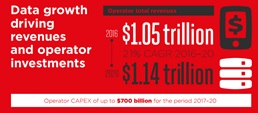
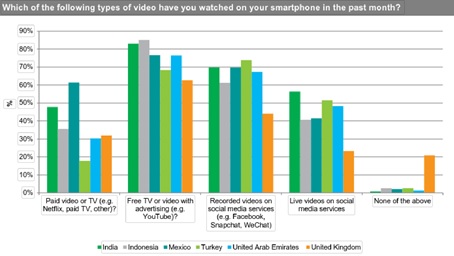
    The phenomenal surge in data consumption by subscribers and free content is driving the majority of telcos’ core businesses today. In addition to this, few telcos are partnering with OTT players to provide exclusive content and niche services in the form of premium bundles. Operator-led OTT subscriptions have become the new business model driving revenues and customer segments.
    Building Success Factors
    Source: IHS Markit

    Driving new business models – The increasing level of complexity

    Initially, rate cards were exchanged between partners for billing the usage of services. Later they entered into bilateral agreements to settle the revenues between them. Now, telcos are moving to digital contracts by partnering with content providers and other OTT players. These digital contracts involve tier/slab ratings, along with exclusions/discounts. Commitments and rating based on specific parameters have increased the level of complexity with respect to rating and charging their partners.

    Let us go through 3 types of agreements that are executed between partners these days:

    There are several agreement scenarios (deals) between the operator and content partner based on different business models. Furthermore, revenue sharing models have been evolving from fixed % based to a tier/slab-based approach across product scenarios.

    1. An agreement based on new subscriptions

    No of New Subscriptions    Revenue Share

    0 – 500                                           P %

    501 – 2000                                     Q %

    2001 and above                              Q % and additional T % for no of subs >2000

    As per the partner agreement, if new subscriptions are negative for a particular month, no pay-out will be made to the partner for that month.

    2. An agreement based on promotions

    Revenue sharing between the parties will be on a monthly basis. The promotion period can be for a few months or it can be ongoing. If the user subscribes to the content for

    Months                  Revenue Share

    1 month                         P %

    2 months                       Q %

    3 months and above      R %

    3. An agreement based on market penetration

    In this scenario, the operator is liable to share the revenue based on the penetration of subscribers in an area. The complexity involved here is that the penetration level of each market is different from the other. In addition to this, there are certain areas where the radius is defined with respect to a landmark. Subscribers within the radius will be charged a premium and accordingly the revenue share.

    In today’s competitive market scenario, partnerships have become the need of the hour for telecom operators and they are moving ahead by signing innovative and complex contracts. The above mentioned examples of digital contracts/agreements are a few models that we have recently dealt with. In the future, we will see many such models with increased complexity and innovative digital contract definitions.

    If you are interested in knowing more about managing complex wholesale contracts

    DOWNLOAD THE WEBINAR RECORDING NOW!

    Have you negotiated or signed any complex contract recently? Let us know in the comments section below. Looking for partner who can help you handle complex contact? Talk to us.
  • 5G and the dawn of “age of inventions” – Key Takeaways from MWC19! – Subex Limited

    5G and the dawn of “age of inventions” – Key Takeaways from MWC19! – Subex Limited

    I am just back from MWC 2019 and am really excited to share my thoughts. The mood at this year’s MWC was of general enthusiasm and exuberance, particularly with respect to 5G and the possibilities it opens up for telcos.

    When 3G and 4G happened telcos were slow to evolve and transform their business models. Global internet giants such as Google, Apple, Facebook made most of the mobile internet revolution in the last decade, whereas telcos saw continued pressure on margins, revenue and customer experience.

    5G is yet another chance for telcos to #makeithappen if they can get their acts together. I firmly believe telcos have learnt from their previous experiences and are much better prepared for the next wave.

    Here are my top three takeaways from MWC 2019

    1. The dawn of “age of inventions”: 5G has finally broken through the hype and we saw some groundbreaking innovations being displayed around at MWC 2019. This is after the last few years where there was, in my view, a higher degree of tentativeness. We saw low latency, reliable connectivity-based use cases such as:

    a)  Remotely operated medical surgery/ emergency medical treatment

    b)  Ushering of “second great inflection point” # in transportation with autonomous cars, cars with natural language interface, cars with cognitive interface

    We also saw several announcements in the area of IoT and Industry 4.0 with SAP, AT&T, Vodafone, Ericsson, Telstra etc. launching new solutions.

    From Subex’s point of view, these are exciting times as our IoT Security solution is well positioned to help operators, smart cities and autonomous cars by providing much needed security cover.

    2. 5G means intense Capex: While developing economies will continue to focus on monetizing 4G networks, developed economies will start rolling out 5G networks starting 2019. 5G rollouts will be Capex heavy needing massive investments in Radio Access Network with network densification, mmWave network rollouts etc. and in core network to support high speed, high capacity, low latency use-cases which 5G promises.

    Subex showcased its Network Analytics portfolio driving smart spend, smart asset management and AI/ML driven network capacity planning use cases and these were very well received by both customers and prospects alike.

    3. Digital Trust key to success in 5G: According Vittorio Colao, Ex CEO Vodafone one of the main challenges facing telcos is “the lack of a genuine customer orientation, which, if you have it, makes customers truly love your services and thereby drives value” (McKinsey Quarterly).

     As the 5G juggernaut rolls out, telcos will need to do aggressive network build outs, forge new partnerships, and offer far more critical services. Customers will expect ubiquitous connectivity of very high quality, investors will expect better management and ROI.

    All this means telcos will need to really focus on building digital trust – a mechanism that creates trust in their offerings, processes and information systems. Failure would mean yet again handing over advantage to the internet giants who already benefit from global scales, not having to invest in expensive networks, and who have shown to be far more nimble in responding to customer needs. Subex with its focus on enabling digital trust through privacy, security, risk mitigation, predictability and confidence in data, is yet again well positioned to work closely with operators in building this much needed digital trust.

    What do you think of dawn of age of invention powered by 5G? Let me know in the comments section below.

    # Mckinsey Quaterly 

    PS: Oh! Here is a bonus takeaway for those among you planning to be at MWC 2020. Wear comfortable shoes. One easily clocks 20,000 steps each day.

  • Digital Transformation: The Art of War!

    Digital Transformation: The Art of War!

    Straight from the Board Room

    15th Jan, 16:00 Hours: The Board Room at the Telco HQ

    The silence is deafening, and the breathing heavy. Everyone is waiting with heavy anticipation. The top comes off the Mont Blanc, and the only sound is of the pen on the paper. The VP-Sales surreptitiously pulls out his iPhone, and drafts a text “Deal Done! Congrats…”. The finger is playing near the send button, with every passing second feeling like an eon.

    The last dot underneath the signature is placed, and without missing a beat, the send button is pressed. The room is filled with a sense of relief, and the muted claps soon turn into backslaps and congratulations…The multi-million $ deal for Digital Transformation is now underway….

    15th Jan, 22:05 Hours: The Conference Room at the Vendor HQ

    1000s of miles away, the CEO phone beeps discretely. All the weary eyes turn towards the CEO. A faint smile emerges. With the “Yes” and the fist-pump, the room erupts. Years of arduous work has come to fruition. The clinking of the glasses, and the pops of champagne bottles could not drown the enthusiasm, and the spirit of the crowd.

    The Chief Marketing Manager sneaks out, to work the PR lines. Minutes left before the item makes into tomorrows’ news.

    16th Jan, 06:00 Hours: Leading Media Publications

    “Vendor X inks a multi-million $ Digital Transformation deal with Telco Y”

    Telco Y, one of the leading telecommunications services providers, has signed a multi-million $ partnership with Vendor-Y, for Digital Transformation. Digital Transformation is a strategic initiative of the Telco Y and is aimed at offering an extensive portfolio of services to its customers, enhance customer experience & engagement, and quality of services delivery.

    01st Jul, 10:00 Hours: The Board Room at the Telco HQ

    The silence is deafening, and the breathing heavy. Everyone is waiting with heavy anticipation. The Head of Billing is pouring through the recent twitter reactions to the Digital Transformation.

    twitter-reactions

    The VP-Sales surreptitiously pulls out his iPhone, and sends a text “Bad, looks very bad…”. 1000s of miles away, the exasperation sets in …

    Let’s look at one of the major transformation challenges faced by telcos

    Digital transformation has become the norm now, and it is nothing short of a war – the war to win over customers, to stay profitable, and survive amongst the fiercest competition. However, studies indicate that most of the migration attempts have resulted in an increase in revenue leakages and has negatively impacted the brand and customer experience.

    The unfortunate reality is that a majority of telcos are currently seeing issues in their transformation process leading to negative impact aspects around revenue and non-revenue. Reasons for this vulnerability are quite straightforward – the controls that existed with a set process get disrupted, and start to diminish once the transformation begins, thus leaving the operators in a bit of a handicap.

    As per the recent reports, a leading telecom operator was fined for serious breaches of consumer rule due to inconsistencies in the new billing system and incurred a financial loss of close 4.6 Million Euros. There are also reports of operators losing up to 50 million due to migration failures.

    “Victorious warriors win first and then go to war, while defeated warriors go to war first and then seek to win”.

    – Sun Tzu, the famous Chinese general, military strategist, philosopher, and the writer

    Which side are you on? The Victorious warrior or the Defeated warrior? Download the datasheet to find ways of becoming proactive in your transformation, and being a victorious warrior.

  • How to empower Business Assurance with Artificial Intelligence at the world of Digital Transformation

    How to empower Business Assurance with Artificial Intelligence at the world of Digital Transformation

    TMForum recently concluded Digital Transformation World 2018 event at Nice, France. As the name indicates the key theme of the event was on enabling telecom operators to move their business to the digital world. The event was bustling with fresh ideas, innovations and technology which have the potential to cause disruption in the telecom industry. I represented Subex at the event and we participated in one of the catalysts. Catalyst projects are rapid collaboration initiatives driven by Forum member companies. Forum members work together to create proof-of-concept demonstrations for today’s most pressing business, operational and IT challenges.

    The catalyst that Subex participated was “Empowering Business Assurance with Artificial Intelligence”. The catalyst goal was to bring in Artificial Intelligence(AI), Machine Learning & Big Data Analytics to empower the assurance teams in the world of digital transformations. This catalyst had enabled Subex to collaboratively deliver not only solutions for problems that can be solved using advanced analytics but also to create best practices and standards, helping hundreds of Forum member companies reduce cost, risk, and time-to-market as they transform for success in the digital world.

    The use cases we worked on for the catalyst focussed on using AI based Machine learning techniques and advanced analytics to:

    • Enable Telcos to track fraudsters faster and minimize revenue loss caused by arbitrage
    • Allow KPI tracking and anomaly detection with a minimal manual intervention
    • Help Telcos differentiate fraudsters from genuine customers by identifying important features

    Telcos we interacted at the event were very impressed with how AI & Machine learning can help them  manage challenges in the digital world.

    The highlight of the keynote at the event was on the open Digital architecture and open APIs which provide a platform to rapidly partner and innovate, to deliver business and technology integration between the companies. The biggest announcement at the keynote was on one of the excellence awards, Reliance Jio from India was announced for an award for ‘Business transformation’ for making greatest strides in transforming its business operation to a low cost, agile and customer-centric model.

    The other topics that were covered in the catalyst initiative were Block Chain Unleashed, Blade Runner, Smart Cites, Cognitive Customer care. Most of the catalysts and their theme was around disruptive technologies such as Blockchain platforms, Internet of Things, and Machine learning. This is a clear indication that industry is moving towards using these cutting-edge technologies to solve some of key business problems Telcos are facing today.

    The most exciting part of the 3-day event was the Catalyst awards. Of the 25 catalysts that were part of the catalyst program, our catalyst won an award for Outstanding Contribution to TMForum Assets. We were thrilled and excited for having got the award. For me, key take away from the event is, in the road to digital transformation Telcos are looking at OSS/BSS not only as watchdog systems to monitor revenue leakages & frauds but are exploring ways by which these systems can help them generate revenues. We as Subex need to look at delivering to value to our customers considering these business assurance needs.

  • Why Telcos Need Real-Time Revenue Assurance?

    Why Telcos Need Real-Time Revenue Assurance?

    Revenue leakage is one of the major worries affecting telcos around the world.  The number says it all. The 2017 Global Fraud Loss Survey by CFCA says telcos lose $29.2 Billion (USD) annually, equivalent to 1.27% of global telecom revenues, to several revenue frauds. For telcos, who are also aggrieved by the declining margins from traditional voice business, safeguarding the existing revenue sources thus becomes critical. The rising concerns over revenue loss have brought the discussion around a new approach to revenue assurance (RA). While the revenue assurance solutions in the market address some of the possible threats in revenue leakage, they lag behind in delivering a faster detection and reconciliation capabilities.

    Why Real-Time Revenue Assurance?

    As we see today, the main drawbacks associated with traditional RA solutions is the long gap between revenue leakage detection and revenue realization. Since these systems adopt conventional methods for data consolidation and streamlining, the process requires manual intervention in parsing and auditing. Considering the enormous volume of transaction generated in today’s customer-centric world, telcos cannot ignore such lapses in remediation. Thus, the need arises for an intelligent, automated RA platform that can reduce the gap between these processes to a minimum. Legacy systems also face challenge due to the rapid surge in user data generated from millions of transactions every day. In the wake of new challenges brought by IP networks and the sophisticated interconnection frauds, detecting and remediating the anomalies becomes even more challenging.

    Real-Time Revenue Assurance: How?

    Real-time revenue assurance focuses on minimizing the time gap between fault detection and reconciliation. With analytics at the core, the technology enables service providers to detect the threat as soon as it occurs and start the reconciliation process within hours of data inception. Let me elaborate the process a little. The files collected at the source will be pushed to the real-time RA system within a few minutes. The data is parsed and loaded within, say 30 minutes, and the reconciliation process starts within the next two hours, enabling the early revenue reconciliation than the traditional approaches.

    Analytics plays a crucial role in ensuring real-time RA.  The complex algorithm segregates the data based on a set of parameters, so anomalies can be detected quickly and accurately. Advancements in real-time RA also promise near real-time and even real-time controls on revenue leakage. The output of RA controls can deliver additional insights on each transaction, which can be used to improve sub-optimal processes.

    What Business Benefits Real-Time Revenue Assurance Bring to Telcos?

    Since revenue assurance is the most crucial element in a telco business, the impact brought by real-time RA is huge. As mentioned in the beginning, the loss attributed to different types of fraud is incomparable, so a reduction in leakage exposure time results in significant savings. Also, revenue assurance in a telco business is linked to multiple processes including data collection, billing, settlement and operations. Thus real-time RA allows telcos to gain increased visibility into all aspects of subscriber data, which in turn helps them to improve Quality of Service (QoS).

    Subscriber management is a key aspect of revenue assurance as it helps telcos to deal with customer attrition. The operators need to have visibility into subscriber’s usage and billing patterns. Such insights will help them to launch the right mix of services that enhance customer value and improve ARPU. Subscriber management, especially in IP-based systems, proves crucial to eliminate billing errors and disputes. Real-time revenue assurance scores in this context as it provides real-time visibility into customer behavior and capture anomalous activities before it impacts the network.

    Watch this column to gain more insights on revenue assurance for telcos.

  • My tale of the Mobile World Congress 2018

    My tale of the Mobile World Congress 2018

    I attended the recently concluded Mobile World Congress 2018 in Barcelona, representing Subex. At Hall 5 Stand 5F10, Subex had put up an elegant booth focusing on analytics, insights and IoT security, and set the stage for many back to back meetings with customers, partners, media, new connects and more, over the span of four days. The Conversations we had focused around IoT, Analytics and Insights with discussions revolving around live honeypot attacks, IoT secure stack, B2B business models, web scale applications retail billing, Capex and Opex optimization, customer experience management with edge computing, network investment modeling, innovative analytics & insights offering, telecom frauds using machine learning, big data scale stacks and many more. Overall, it was an engaging, invigorating and truly a great learning experience.

    Among the various keynotes, the one which stood out was by Turkcell CEO Kaan Terzioglu, who swept the audience with his inspiring speech making a strong pitch for the optimistic Telecom future. During his keynote, he shared all the stats about what he and his team were delivering on the digital frontline over the last year – music apps, cloud services, instant messenger, TV+ apps – all topping the charts on their own turf.

    There were a lot of expectations on big OEM vendors to put up a jazzy 5G show. However, with exception to Huawei, and to some extent Ericsson, most OEM vendors pulled off monotonous exhibits. The remarkable thing was that many operators had come up with exceptional messaging to market. For instance, Orange had put up many 5G demo use cases on IoT, V2N2X, Ultra low latency use cases; Vodafone launched an out-of-the-world 4G lunar project in collaboration with Nokia labs and displayed demos on connected vehicles, IoT and edge computing use cases; Docomo showcased robotic arms; and China Mobile demonstrated use case around 5G manufacturing robots. This clearly shows that operators have started driving towards innovation and digital services.

    The other set of players who left a deep impression were semiconductor players. Intel showcased its autonomous car, along with its machine learning capabilities and showcased its low latency automobile use cases. At the same time, it showcased its next-generation chipsets for 5G. Qualcomm showcased its AI chipset and an array of applications on automotive use cases. But the winner among all was Huawei, who came out with all guns blazing with all possible 4G/5G/Fiber access use cases including 4K/8K video streaming, array of innovations around small cells, cloud computing, network slicing, edge computing and the attention grabber 4G connected flying taxi (drone)!

    MWC-collage

    One key takeaway for me, personally, is that MWC is an important networking event. You have a superb setting to meet your customers, network with potential clients, partners, media, competition and anyone who is remotely interested in your products! This opportunity is an unmatched and unbeatable one!!

    If you look at this actioned packed event with an open mind you will be truly left with an assortment of emotions. The kind of competition in your space will spook you, the pace at which the technological landscape changes will awe you and the time, energy and money spent behind the bleeding edge / cutting edge technologies will simply numb you with a realization of your own relative position!

    There is so much to experience here within such a limited time!!

  • Strategies for Telcos to drive the digital economy Part 2

    Strategies for Telcos to drive the digital economy Part 2

    The internet waits for no one! It is changing the way businesses run and in today’s era, digital economy is not a distant dream but a reality.

    As promised in my last blog, I will elaborate on the key strategies that I disclosed in my previous blog which will help CSPs in their digital transformation journey to become Digital Service providers and thus drive the economy.

    Core Rediscovery – As said earlier, being digital does not always mean discovering new revenue streams of the digital world. It also means doing the basics brilliantly. Ensuring innovation can be brought with in the traditional services. It also means identification of a new way(s) of doing business to pull in more revenue, a classical example in interconnect business is Origin based billing & routing. Other ways of innovation are Direct CSP billing – MVNOs to cater to niche markets to indirectly gain customer base and revenues. SaaS models like billing-as-a-service to support smaller partners. DVBT2 – Digital Video Broadcasting, SMS based Cab booking, Toll free based calling Apps, Secure SMS/Missed Call – Mobile Banking etc. Rating and discounting models to define rating plans that can also assist in bringing in more revenue generation opportunities for existing and new traditional partners. These can be revenue share models or the new age models like pay as you go.

    Discover New – There is absolutely no denial that digital world is surely opening new revenue streams for CSPs. The mantra to grab a share of this pie is to act fast. CSPs need to establish a fail fast strategy so that they can identify core area of strength early in the digitalization journey. Fail fast strategy shall enable them in continuing only with those new streams that make sense to the eco system in which they do their business. No doubt, IoT & M2M are the most fascinating areas in digital world. Other areas where CSPs can generate revenue are APIs, Analytics as a service, supporting new age MVNOs like Uber and Micheline (Tier-as-a-service), smart homes solutions provided by Qivicon founded by Deutsche Telekom. Digitalization is fueled by the capabilities of operators, and hence the outreach of the operators is now domain agonistic.

    Collaboration Platform –With digitalization, difference between a partner and the end subscriber relationship is becoming blur. Partners also need attention and care like your end subscribers. CSPs will fascinatingly find innovative partners in garage companies, startups, small organization etc. Hence it is terribly essential that CSPs have a collaboration platform that addresses partner empowerment issues.

    There are two ways in which operators can bring in novelty. One is by revolutionizing their own, which we see in the case of the telecom giants acquiring platform that enables the disruptive capabilities inhouse.  The Another way is to look for vendors who can provide them a converged platform to leverage the entire gamut of the partner ecosystem. The end goal is to stay ahead of the competition by providing traditional and digital services to end customers.

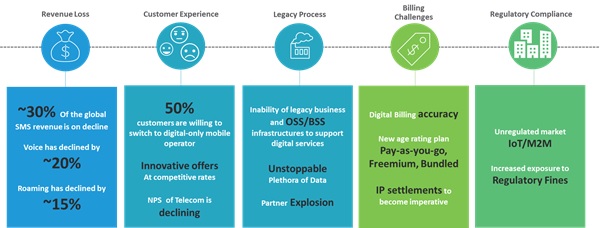
    Customer Experience – Telecom market used to be oligopoly in nature, wherein the major players of telecom industries use to commodify the subscribers to mint money out of them.  Whereas now, in a perfectly competitive transition, we need to shift the paradigm to make customer and CSP relationship more human centric. This will help a CSP in designing the offerings to ensure consumer retention and to win new customers. The new age subscriber is demanding in nature and prefers an operator who is agile, innovative and cost effective.

    Below is the survey shared by Capgemini, which shows low net promotor scores of mobile operators.


    mobile-operators


    This survey also talks about that 58% of customers are willing to switch to Digital only service provider and high value customers are more willing to change. Unless operators reform their customer satisfaction approach, the NPS will stay low and operators will keep losing revenue and customer base to digital players.

    Operational Efficiency – Digitalization will lead to increase in number of partner relationships. Soon a CSP, during its transformation journey, will experience partner explosion. Digital services will result in plethora of data getting generated. To keep things under check, a CSP must bring in efficiency by making its operations also digital. Operations can be digitalized by automation, reducing redundancy of systems and data, seeking help from domain and system experts (consultation and managed services), empowering partners with self-care capabilities. CSPs design their partner handling capabilities both in terms of processes and solutions considering mostly trusted partners, hence the partnerships are also limited and the systems are also multi step and user dependent. In case of digitalization, CSPs need to associate with multiple entities who can bring in renovation, hence will see surge in partnerships. To handle partner explosion, processes of on-boarding and partner care should be particularly efficient. Partners are the new age customers, they are aware that they bring innovation and new revenue stream for a CSP, hence they should be treated with lot of care. Having an efficient eco-system for partner will surely bring in satisfaction and shall maintain a healthy partnership.

    Expense Optimization – Expenses are inversely proportional to profit. An aspiring digital operator must form a strategy around cost reduction. Based on a research house, software industry is gradually moving towards convergent approach from siloed ecosystem. This helps in reducing overhead of investing in multiple systems. Leveraging solutions that are based on open source technologies is another way of optimizing hefty recurring costs. If a telco can bring in operational efficiency, expense optimization will happen automatically.

    This transformation will be a challenging journey for both CSP and its partners, but this will surely help an operator to rediscover itself and shall bring in more agility to accept and act on whatever comes down the path. Though there are many other factors and strategies that can be adopted along with the mentioned ones, these 6 strategies are our take on the transformation journey. However, it is very important for an operator to clearly identify the purpose of its modification, but it is completely okay to move step by step instead of adopting all 6 strategies at once. To start with the transformation, CSPs should reexamine the existing offerings, existing expense optimization plan, make the current operations efficient and ensure customer satisfaction in the existing services offered. Once there is a clarity in becoming digital in current line of business, identification of new streams will automatically fall in place.

    We are discussing these strategies in detail at our booth (Booth # 5F10, Hall 5) in MWC 2018. Meet us in the booth to know more about how we can help in your transformation journey to drive the digital economy.