Category: Revenue Assurance

  • Maximizing Telecom Profits: The Strategic Advantages of Cost optimization and Margin Assurance

    Maximizing Telecom Profits: The Strategic Advantages of Cost optimization and Margin Assurance

    Abstract

    Telecommunications service providers worldwide are grappling with shrinking revenue margins amid fierce competition. For both wireless and wireline operators, cost management has become essential. Achieving significant cost reductions necessitates profound changes in the business and operating models, along with a shift in mindset to embrace innovative, “outside-the-box” thinking. In regions such as Europe and the U.S., the telecom industry risks transitioning into a low-profit sector, with global profit margins potentially declining from 12.5% to as low as 5% within the next five years.

    The situation in the Indian telecommunications industry over the past decade has been particularly challenging. The entry of new competitors into the market has severely impacted incumbent operators. These new entrants often trigger price wars by offering substantially cheaper data plans, with voice and SMS services included at no additional cost disrupting the traditional revenue streams of existing operators who relied heavily on voice services. This dynamic has substantially benefited prepaid and postpaid subscribers, who now enjoy unprecedented low prices and attractive offers.

    Existing operators have struggled to manage their capital and operational expenditures while being forced to lower tariffs to remain competitive. The challenge intensified with the advent of 4G services, as many incumbents were still limited to offering 2G and 3G services despite having invested heavily in their respective spectrum licenses. To compete, these operators needed to upgrade their networks to support 4G, a move that was both costly and complex, particularly as they continued to service debts incurred from earlier 2G and 3G investments, with banks growing increasingly concerned about loan recoveries.

    Amid these challenges, one critical internal strategy that can help maximize revenue is cost optimization across all organizational functions and departments. This approach not only addresses immediate financial pressures but also positions telecom operators to better navigate future market disruptions.

    Cost Optimization and Its Importance: Unlocking Efficiency and Profitability

    Cost Optimization and Margin assurance is a field that draws on many streams to balance costs and spends. It includes handling a complex mix of service offerings, defining a holistic view for cost allocation, enabling real-time visibility, margin automation, etc.

    The strategy of cost optimization remains vital and can be implemented in various areas within telecommunications. Here are several detailed opportunities for reducing expenses:

    1. Network Cost Optimization: This involves replacing outdated and expensive legacy technologies with newer, less costly alternatives. By adopting more efficient and modern technologies, operators can decrease maintenance and operational costs, thus optimizing the overall network expenditure.
    2. Outgoing Call Routing: Implementing Least Cost Based Quality Routing (LCBQR) for international outgoing traffic is another effective cost-saving measure. LCBQR algorithms select the least expensive route for each call without compromising on quality, significantly reducing the costs associated with international traffic.
    3. Disconnect Unused Telecommunications Circuits: Often, telecommunications circuits that are no longer in use still incur costs, especially in jurisdictions where fixed costs are levied on circuits provided by public limited companies or government-operated telecom entities. Actively identifying and disconnecting these unused circuits can eliminate unnecessary expenses.
    4. Adjust Bandwidth and Trunks to Match Traffic Consumption: Operators often scale up their network infrastructure to accommodate expected increases in traffic during special events like festivals or the New Year. However, after these peak times, it’s essential to reassess and realign the network capacity. This involves reducing the bandwidth and the number of trunks to better match the normal traffic levels, thus avoiding the costs of maintaining unutilized resources.
    5. Carrier & Vendor Contract Optimization: The terms of carrier and vendor contracts can have a significant impact on costs. It’s crucial for operators to regularly review and renegotiate these agreements to ensure they reflect the best possible terms. Factors to consider include pricing, rates, discounts, and credits. If it has been over a year since the last contract review, if the company’s usage of vendor services has increased significantly, or if minimum revenue commitments with carriers have been met, it might be time to renegotiate these contracts to secure better terms and potentially significant cost reductions.

    By focusing on these areas, telecom operators can effectively reduce their operational costs, which is essential for maintaining profitability in the highly competitive telecommunications market.

    Benefits of Cost optimization and Margin Assurance

    • It improves profitability computation

    CSPs can derive and report profitability accurately. They will also maintain operational margins (cost + basic margin) as per industry best-practices.

    • It leads to better decision-making

    CSPs can devise more effective strategies for cross-selling to clearly defined profitable customer groups. They can also target prospective customers having similar characteristics as their profitable ones, thereby achieving higher customer satisfaction scores.

    • Effective Margin evaluation against competitive pricing

    CSPs will be better positioned with the market intelligence to compete effectively against challengers by understanding their subscriber behavior and evaluating margin trends leading to better competitiveness, customer loyalty and retention, and even special margin products.

    • It elevates productivity across the organization

    Transparent customer identification and margin analysis helps departments channelize efforts to deal appropriately with different customer groups (profitable, prospective, low margins, etc.).

    Conclusion

    Cost optimization and margin assurance involve a comprehensive approach to managing the complex mix of service offerings by defining clear metrics for cost allocation, real-time assurance, and margin automation. This structured approach allows for precise profit computation, flexible cost allocation, and streamlined cost modeling. Such methods enable operators to expand their scope of work significantly, accommodating a broader range of cost line items. By implementing these strategies, operators can enhance their financial performance, making it easier to adapt to market demands and improve profitability.

    Maximizing telecom profits through strategic cost optimization and margin assurance!

    Request a demo now!

  • The False Positive Fallacy in Revenue Assurance and Fraud Management

    The False Positive Fallacy in Revenue Assurance and Fraud Management

    Alex Gendler published an interesting TED-Ed video on the false-positive paradox. He narrates a hypothetical scenario where a precious metal ‘unobtainium,’ present within only 1% of rocks in a specific quarry, must be mined. Joe, the miner, uses a reading device to identify which rocks contain the precious metal. His device will always detect unobtanium when present. It will also give the correct reading 90% of the time when a rock does not contain unobtanium. Now say Joe’s device beeps when pointed to a rock, and he offers to sell it to you for $200. Is it worth buying this rock from Joe for $200, knowing that you can sell an unobtanium rock for $1000, based on the reading of the detection device?

    To determine the answer to this question, it is imperative to note how rare the presence of unobtanium is as well as the 10% likelihood of false positives from the reading device.

    Any anomaly detection test or model that is not 100% accurate bears the risk of false negatives and false positives. In the revenue assurance and fraud management (RAFM) domain, the presence of false positives can be tricky as it utilizes resources to investigate that the anomaly is, in fact, not a problem.

    Like Gendler’s scenario, one fundamental point to remember is that revenue leakage within revenue assurance and fraud management departments is quite rare. But since nearly 75% of operators report at least 1% leakage of the total revenue, false positives warrant some investigation.

    What would be the successful formula for investing in a system that identifies rare leakages or fraud, especially when false positives abound? 

    Here are some key elements to look out for:

    1.  Calculating ROI 

    Any well-designed revenue assurance and fraud management strategy must articulate short-term as well as long-term benefits. But as time passes, software/controls age, become redundant, or lose their effectiveness. Moreover, it is seen that as operator maturity increases, leakages decrease and, hence, the probability of identifying these leakages.

    Recommendations:

    From a practical perspective, operators need updated solutions to adapt flexibly to changing scenarios such as new revenue streams and broader risk coverage.

    Each solution should encompass well-defined KPIs to measure not only the intended output of revenue assurance and fraud management (like the number of subscribers impacted and revenue at risk) but also its quality (like the effectiveness of a revenue assurance and fraud management control).

    2. Choosing controls

    The process of designing a ‘control’ or a ‘check’ is the key to minimizing the hassle of false positives. Revenue assurance and fraud management teams often struggle to manage the reference data, data specifications, connectivity, latency, etc. All data management parameters can influence false positives and, thus, require timely correction. Since all control systems are not equal, arriving at an effective control design (including the alarm thresholds) is challenging.

    Recommendations: 

    Establish key indicators to measure system performance for business outcomes as well as revenue assurance and fraud management processes.

    Track support processes on overall outcomes to avoid unwanted influences on the quality of revenue assurance and fraud management controls.

    Streamline processes through artificial intelligence (AI) and machine learning (ML) to correlate different outcomes and reduce the number of false positives. To understand the significance of this, even low levels of false positives compromise the ability to detect genuine leakages.

    3. Maintaining accuracy

    The probability of finding a genuine alarm in the revenue assurance and fraud management system indicates how much effort is needed to identify leakages. It also signals the number of alarms that will be closed as ‘non-fraud.’ False positives are usually measured from the system’s perspective, i.e., how many false alarms exist out of the total alarms generated? But most systems do not reflect the actual effort involved in getting the expected benefits of the control.

    Recommendations:

    Identify the potential trade-offs between implementing a control, its benefits, and its costs. The cost is mostly understood as a development effort but should also include maintenance and monitoring effort.

    Consider each control in the broader context of the overarching control framework and risk coverage. This may unearth risks that are over-controlled or under-controlled, thereby suggesting areas that need improvement.

    4. Easy monitoring 

    When the probability of identifying a genuine fraud attempt or revenue leak decreases, the monitoring effort increases because more alarms and controls will need to be set to identify the incident.

    Recommendations: 

    • AI and ML can quickly identify false positives, determine likelihoods, and present these to analysts for immediate action.
    • Revenue assurance managers can save time spent on investigating cases that are not leakages. For fraud management leaders, it helps avoid customer discontent when cases are not fraudulent.

    Dealing with the uncertainty of false positives is a painstaking exercise. By implementing the right controls and tweaking these systematically, revenue assurance and fraud management teams can maximize the return on investments of their monitoring systems.

    (The answer to the unobtainium question is: No. Statistically, the buyer has only a 9% chance of finding unobtainium in the rock, which is pretty poor odds that the $200 investment will pay off!)

    In your experience, what best-practices help deal with false positives?

    On-demand Webinar: AI Master Class for Fraud Management

    Watch Now

  • Unleashing the Power of Asset Assurance: Overcoming Telecom Challenges

    Unleashing the Power of Asset Assurance: Overcoming Telecom Challenges

    Subex proudly stands as a key contributor to the GB1004C Business Assurance Transformation – Asset Assurance v1.1.0

     Introduction

    In today’s rapidly evolving telecommunications industry, effective asset management has become paramount. With the proliferation of new technologies and an array of valuable assets, telecom operators face numerous challenges. However, with the implementation of Asset Assurance, a crucial layer of protection, these challenges can be effectively mitigated. In this blog, we will delve into the challenges faced by telecom operators and explore how Asset Assurance provides robust solutions to optimize operations, reduce risks, and maximize profitability.

    Challenges in Telecom Asset Management:

    1. Understanding Total Cost: One of the foremost challenges in asset management is gaining a comprehensive understanding of the total cost involved. From initial purchase to operations, repairs, maintenance, and eventual resale or depreciation, telecom operators need to analyze the financial aspects of assets. Asset Assurance enables operators to gain clarity on cost structures, aiding in making cost-effective choices and optimizing financial planning.

    2. Increasing Complexity: As the telecom landscape continues to evolve with the introduction of 5G, IoT, and cloud technologies, the complexity of managing network assets grows exponentially. Densification of networks, deployment of virtual environments, and handling diverse workloads require streamlined asset management processes. Asset Assurance provides a structured framework to handle the complexity, ensuring assets are efficiently managed throughout their lifecycle.

    3. Process Gaps: Process gaps within organizations can lead to operational losses and inefficiencies. Inadequate controls and deviations from standardized asset management processes expose telecom operators to risks such as loss, theft, and displacement of equipment. Asset Assurance emphasizes the importance of robust controls, enabling end-to-end tracking and management of assets. By addressing process gaps, operators can enhance efficiency, reduce errors, and minimize operational losses.

    4. Loss of Assets: Loss, theft, and displacement of equipment pose significant challenges for telecom operators. These incidents not only impact the operator’s books but also result in operational losses and compromised customer experiences. Asset Assurance promotes rigorous tracking and management of assets, ensuring their integrity and minimizing the risk of asset loss. By implementing comprehensive asset tracking systems, operators can mitigate losses and enhance their overall asset management practices.

    5. Inadequate Controls: Inefficient controls and a lack of centralized asset tracking mechanisms can hinder effective asset management. Without proper controls in place, telecom operators may struggle to monitor assets, track their movements, and ensure compliance with industry regulations. Asset Assurance emphasizes the need for robust controls, including asset acquisition management, distribution management, and return management. By implementing stringent control mechanisms, operators can improve asset visibility, reduce errors, and optimize their asset management processes.

    Asset Assurance is a solution for Telecom Challenges: Asset Assurance serves as a comprehensive solution to address the challenges faced by telecom operators in asset management. By implementing the following strategies, operators can unlock the full potential of Asset Assurance:

    1. Inventory Management: Effective inventory management is vital for telecom operators. Asset Assurance ensures accurate asset acquisition management, optimal storage and distribution processes, and streamlined return management. By leveraging advanced technologies and analytics, operators can enhance inventory visibility, minimize losses, and improve overall asset utilization.

    2. Cost Optimization: Asset Assurance enables telecom operators to optimize costs associated with asset acquisition, storage, repairs, and maintenance. By leveraging real-time data analytics, operators can identify cost-saving opportunities, negotiate favorable terms with vendors, and make informed decisions regarding asset disposal or resale. By optimizing costs, operators can enhance profitability and financial performance.

    3. Marketing Strategies: Asset Assurance empowers operators to devise effective marketing strategies for devices. Accurate device pricing, bundled service offerings, buy-back programs, and customer upgrade management can all be streamlined with Asset Assurance. By aligning marketing strategies with asset management practices, operators can enhance customer satisfaction, drive revenue growth, and foster customer loyalty.

    4. Customer Satisfaction and Loyalty Management: Asset Assurance plays a pivotal role in customer satisfaction and loyalty management. By offering efficient device pricing, seamless upgrade options, and hassle-free return processes, operators can enhance the overall customer experience. Asset Assurance helps build trust, strengthen customer relationships, and boost long-term customer loyalty.

    Partnering with Subex for Asset Assurance Implementation:

    Subex, a leading provider of telecom analytics solutions, offers expertise and support for telecom operators looking to implement Asset Assurance. With extensive experience in asset management and risk mitigation, Subex assists operators in optimizing their asset lifecycle processes. By leveraging advanced analytics and control calculation capabilities, Subex helps operators quantify and monetize asset leakage, identify risks, and achieve tangible benefits from Asset Assurance implementation. With Subex as your partner, you can streamline your asset management practices, enhance operational efficiency, and maximize profitability.

    Conclusion:

    Asset Assurance has emerged as a critical component in addressing the challenges faced by telecom operators in asset management. By implementing Asset Assurance, operators can optimize costs, streamline processes, mitigate risks, and enhance customer satisfaction. With the support and expertise of Subex, operators can unlock the full potential of Asset Assurance, enabling them to thrive in the dynamic telecommunications industry. Embrace Asset Assurance today and experience the transformative power it brings to your telecom operations.

    Subex, in collaboration with TM Forum and leading telecoms and vendors, has played a pivotal role in creating the TM Forum Asset Assurance Guidebook. This comprehensive guidebook offers valuable insights and best practices to help telecom operators overcome the challenges associated with asset management. It is the result of extensive industry collaboration and expertise, providing operators with a trusted resource to enhance their asset management practices. If you are a member of the TMF Forum community, download this essential guidebook and unlock the power of Asset Assurance in your telecom operations, click [here]. Don’t miss out on this opportunity to optimize your asset management and drive operational excellence.

    Book a free session today with Harish Patnala, a key contributor and subject matter expert who played a lead role in creating this TM Forum Asset Assurance Guidebook.

    Click here to book your session now

  • From Leakage Detection to Strategic Insights: The Power of Business Assurance in Telecom

    From Leakage Detection to Strategic Insights: The Power of Business Assurance in Telecom

    Introduction

    In the rapidly evolving telecommunications industry, the traditional practice of revenue assurance is undergoing a significant transformation. With declining average revenue per user (ARPU) and the need for real-time insights, telecommunication service providers are embracing a broader approach known as “Business Assurance.” This blog post explores the changing landscape of assurance practices and highlights the four key areas that business assurance encompasses.

    The State of Assurance ‘As-is’

    For telecommunication service providers, revenue assurance has long been a fundamental practice for profitable business operations. Dating back to the early 2000s during the age of 2G and CDMA, revenue assurance practices focused on validating services against billing. While technology has evolved from 2G to 3G and 4G, the mode of operations has remained relatively unchanged, with an increase in the number of source systems. Telecommunication operators now run hundreds or even thousands of revenue assurance controls, validating data from voice, data, SMS, MMS, subscribers, and content from creation to billing.

    What’s Changing?

    The declining ARPU across various geographical locations has brought about a significant shift in the telecommunications industry. As telecommunication services become cheaper, what was once considered a significant revenue leakage is now a fraction of its original value in today’s market. This downward trend in ARPU has prompted telecommunication service providers to invest in systems that provide quicker insights, such as near real-time reconciliations.

    This changing environment has given rise to the concept of “Business Assurance,” which is gradually gaining significance among major telecommunication revenue assurance practices worldwide. Operators are renaming their revenue assurance functions as “Wholesale Assurance” and “Margin Assurance,” signaling the shift towards a broader scope of assurance.

    Business Assurance – Why Your Practice Needs to Adopt It Now?

    Unlike traditional revenue assurance, which primarily focuses on leakage detection, business assurance expands the scope of revenue assurance practice in four key areas:

    1. Single Source of Truth

    Revenue assurance has mastered the art of collecting, enriching, and validating data from various network sources over the past two decades. This practice has created a single source of accurate, clean, and usable data for various upstream process requirements. For example, instead of starting from scratch, revenue assurance systems can provide clean and accurate data for tasks like product profitability prediction. Today, revenue assurance systems are critical contributors to data lakes, blurring the boundaries between revenue assurance and data management.

    2. Revenue Assurance

    While transitioning to business assurance, it is essential to maintain traditional leakage detection practices to ensure process integrity. However, with the emergence of bundled pricing models and fixed-rate plans, conducting record-by-record reconciliations may not make business sense. For instance, many mobile users rarely review their bills as they consistently stay within the bundled limits. Telecommunication operators must evaluate the cost versus benefit of conducting revenue assurance practices on granular or aggregate data.

    3. Active Risk Intelligence

    Business assurance expands the revenue assurance scope to support and enable revenue enhancements, cost reduction, and seamless service enablement. This evolution includes assurance areas such as margin assurance, collections, revenue accounting, partnership dispute management, and order-to-cash processes. By embracing active risk intelligence, revenue assurance practices can go beyond leakage detection and become holistic contributors to the operator’s profit and loss statement.

    4. Decision Boarding

    While data-driven decision making has become the norm in today’s business landscape, the telecommunication industry has been slow to adopt analytical solutions. Telecommunication operators possess vast amounts of data on customers, products, services, markets, and trends, yet their analytical capabilities remain underutilized. Business assurance emphasizes the availability of clean, accurate, and enriched data in near real-time. By leveraging advanced analytics, telecommunication operators can predict risks and opportunities, enabling measurable actions to

    Conclusion

    The future of revenue assurance lies in embracing business assurance, which expands the traditional revenue assurance practice into new territories. Telecommunication service providers must adapt to the changing landscape, leveraging the power of data and analytics to drive revenue enhancements, cost reductions, and informed decision making. By broadening the scope to include single source of truth, revenue assurance, active risk intelligence, and decision boarding, operators can position themselves for success in the ever-evolving telecommunications industry. The time to embrace change is now, as it enables revenue assurance to regain its stature as a vital component of profitable business operations.

    Business Assurance enabled through Active Risk Intelligence

    Request Demo

  • Maximizing Profitability: The Key Role of Business Assurance in Telcos’ Omnichannel Evolution

    Maximizing Profitability: The Key Role of Business Assurance in Telcos’ Omnichannel Evolution

    Introduction

    Telecom operators are recognizing the importance of omnichannel customer experience as digitalization introduces new avenues for customer interaction. To maintain customer engagement across multiple channels, a customer-centric strategy that shares data and provides a holistic view of customer requests is crucial. This blog explores how telecom operators can transform their ecosystem omnichannel experience with the adoption of Business Assurance, overcoming challenges and optimizing business outcomes.

     Why CSPs struggle with end-to-end omnichannel CX and role of Business Assurance:

    Business Assurance can facilitate the implementation of digital customer journey analytics for Communication Service Providers (CSPs), ensuring an optimal customer experience in terms of efficient response time, easy interaction, educational guidance, collaborative study, and trustful decision-making. This allows for the collection of data-driven insights and informed decision-making based on customer-facing applications across various platforms, such as e-commerce platforms, knowledge management systems, web content management systems, and billing applications.

    However, without customer journey analytics adoption, the process of achieving positive business outcomes remains incomplete, and the expected customer experience is not delivered. This can result in significant operational expenditure (Opex) or capital expenditure (Capex) bottlenecks and process inefficiencies, leading to less profitable growth.

    To meet the evolving needs of customers, CSPs must provide an omnichannel experience that includes effective personalization across channels, the use of chatbots as front-line tools, and centralizing social channels to ensure privacy, security, and trust at every touchpoint. However, such personalization can lead to leakages in various areas, such as customer experience, product profitability, ecosystem, and provisioning/activation.

    To ensure a long-term customer journey, CSPs must analyze customer complaints and contacts to maintain process integrity. This requires identifying mass customer impact and addressing the dynamic nature of customer interactions. CSPs must also obtain a detailed view of all cost components based on usage and cut-off price points to identify profitable products. The value chain for digital services is complex, involving multiple partners, networks, products, and services, and CSPs must ensure effective interaction and integration across the ecosystem. Accurate recording and monitoring of customer orders are crucial to prevent errors and delays in provisioning/activation, which can impact customer behaviour and business profitability.

    Business Assurance with Ecosystem Omnichannel for CSPs

    Business Assurance with Ecosystem Omnichannel can help protect and contribute to digital growth for CSPs in multiple ways. It enables trust and improves customer experience, provides assurance for Blockchain ecosystems, and ensures a trusted environment for new multi-party business models. The system also helps in early detection of obstacles in the customer journey and provides real-time insights to optimize business outcomes.

    Moreover, the integration of AI and analytics-based models with an approach of Business Assurance can effectively build the Ecosystem Omnichannel enablement. This can be achieved by formulating the right approach, including enabling digital experience layers, measuring CX data, and ensuring integration, and designing a roadmap based on key themes of Business Assurance, such as unification, reusability, personalization, and cloud enablement and DevOps.

    These capabilities feed AI and machine learning models that help CSPs invest in the right technology, make the right decisions, and measure actual value. By implementing an effective Business Assurance approach, CSPs can transform into data-driven analytical organizations, personalize offers, and proactively resolve issues for a seamless and cohesive omnichannel experience, which is critical for success in today’s digital ecosystem.

    Conclusion

    Business Assurance is a comprehensive solution that enables businesses to ensure trust, enhance customer experience, and protect against revenue loss. It can be implemented through an API-based architecture, which enables integration of components across multi-vendor environments. The system can provide real-time insights by monitoring data from various components and leveraging analytical processes to generate actionable insights. Business Assurance can also offer a flexible runtime environment, where new services and products can be rapidly designed and onboarded. With a data-driven analytics catalog, the system can capture relevant information and automatically configure new service chains. Security by design is a critical feature, whereby security concerns are continuously weighed against business opportunities in open architectures. By providing agility and feasibility, Business Assurance can help businesses respond effectively to market needs and ensure autonomy, oversight, and consistency across distributed teams, local products, and centralized processes.

    Transforming the Omnichannel Customer Experience for Modern Telcos with Business Assurance.

    Request Demo

  • 5 Mantras of Accounting Assurance for Telecom Operators to optimise profit growth

    5 Mantras of Accounting Assurance for Telecom Operators to optimise profit growth

    Numerous organisations use accounting assurance services to verify the validity of their financial data. Businesses typically also use assurance services for risk assessment, information systems reliability, e-commerce, healthcare and business performance. In telecom, accountants often use this autonomous professional program to examine financial documents and improve the quality of the data contained in those records.

    What is assurance in accounting?

    Assurance services concentrate on overlooking the procedures, operations and management of a company to ensure it is operating with the necessary precision. Assurance operates on past data from enterprise reports to analyze and improve the quality of information which in turn helped individuals make informed decisions. The most standard assurance benefit is the assessment of financial reports for accounting departments. Assurance services are not only used for analyzing financial systems but also systems in other departments of business like internal controls or IT systems.

    Most telcos need to use accounting assurance because the law demands them to, while other domains use these services for voluntary, regulatory or compliance grounds. The use of assurance services in telcos is necessary to navigate complexities, risks and opportunities by proactively managing and monitoring risks associated with financial decision-making that affect partner networks or third-party relationships. Businesses find that assurance services help achieve greater financial performance, create sustainable revenue growth and provide competitive techniques for differentiation.

    Why is Accounting assurance needed?

    Accounting Assurance is important to mitigate the cause of revenue leakage such as inaccurate treatment of revenue streams, incorrect revenue accounting, reporting errors etc. If accounting assurance services are not applied it leads to multiple challenges like:

    • Lack of knowledge of accounting procedures received from controlling departments resulting in delays in accounting the revenue
    • Inaccurate design of business logic and general logistic systems across systems like Charging / Billing / Data Warehouse causing errors in data records
    • The lack of management resulted in poor visibility of the revenue numbers reported
    • Inconsistent updates or faulty maintenance of existing statements resulting in mistakes in revenue accounting across revenue streams
    • Inaccurate booking of Invoices and the inefficient process by operators for desperate voucher sales
    • Ineffective tracking of the voucher and SIM sales caused by the absence of a voucher control system

    Inaccurate mapping of invoices to general logistics for revenue analysis

    What are the components of Accounting Assurance?

    Here are 5 elements that build up accounting assurance services:

    • Three-team relationship: This contains the liable party who organizes the data, the practitioner who acquires the information and the application users who make informed decisions based on the assurance’s output.
    • Subject matter: There must be a clear subject of issue for assurance services. Generally, this is the balance sheet, income statement or statement of cash flow.
    • Benchmark criteria: In the case of mandated criteria, such as the International Financial Reporting Standards, the assurance specialists review the subject concern.
    • Criteria evidence: The assurance professional conducts this by forming performance reports of the subject matter with accurate and high-quality data.
    • Assurance report: This is the reported result of the assurance service that explains and finalizes the subject concern.

    What are the processes involved in Telecom Accounting Assurance?

    Telecom operators are often trying to expand significantly to bring in optimised profits since it is a very competitive business domain. With reference to this, accounting assurance has evolved from its function as a business regulator to a business achiever.

    Revenue accounting is a vital area of CSP business. Here, operators encounter tough challenges when it comes to estimating revenue across earned and unearned values, compliance, and recording of financial data. Telcos also find it hard to monitor leakages within order to cash bookings, voucher generation (electronic and physical), starter kits and bundled offers, pre-provisioning invoicing of channels etc., leading to mistakes, delayed processes, inaccuracies in customer data records or overstatement/understatement of revenue gathered.

    When recorded, prepaid and post-paid service validations provide crucial insights into possible areas of revenue leakages within a corporation’s accounting activities.

    Here are a few steps involved in the accounting assurance process :

    1. End-to-end process verification
    2. Stock management review
    3. Distribution process review
    4. Invoicing process validation
    5. Account receivables review
    6. Independent method analysis
    7. Report and transaction analysis
    8. Configuration validation
    9. Billable versus billed validation
    10. Invoice to ERP action
    11. Unbilled revenue validation
    12. Financial reporting

    Existing revenue accounting processes have in-built tools to determine discrepancies that might cause revenue leakages. These processes are based on operator policies, review of payments by subscribers, and real revenue collected through the charging systems. Detailed comparisons between distinct metrics involved can forewarn revenue assurance teams about probable leakages, thereby reducing conflicts in the earned and unearned revenue accounting across services.

    Accounting Assurance as a service can improve the quality and transparency of information and reduce the likelihood of problems occurring from incorrect data. Assurance processes can be regulatory or compliance-based. Their function is to ensure that a business is following guidelines, rules and policy and provide both internal and external assurance for financial accounts.

    Accounting experts are qualified independent performers who can tackle such services and verify processes are streamlined. Reducing risk enables intended users to confidently make informed decisions. Thus, assurance guarantees better decision-making for users, such as investors and analysts.

    Also, assurance services follow up on their procedures by testing the validity of past data within the business cycle. The most popular assurance service is financial statement verification, but they incorporate a wide range of other complex assessments as well.

    How Tier-I APAC telco optimise its Revenue reporting process by identifying $ 2.5 million understated revenue

    Download Case Study

  • How Margin Assurance helps telcos grow their Business

    How Margin Assurance helps telcos grow their Business

    Introduction

    Modern technologies and digital transformation are disrupting the existing business models for communication service providers (CSPs). With the breakneck speed of innovation CSPs are constantly investing in new technologies leading to escalating Capex and stiff competition from players like Over the Top (OTT) solution providers. With such dynamic ecosystems, flexible products, and increasing customer demand for digital services, it is challenging for CSPs to secure margins. Yet, they must keep pace with change to remain relevant in today’s competitive landscape. Telcos should focus on how these disruptions impact their bottom line and profitability. The need of the hour is robust margin assurance programs and solutions that enable data-driven decisions and strategic investments with greater RoI.

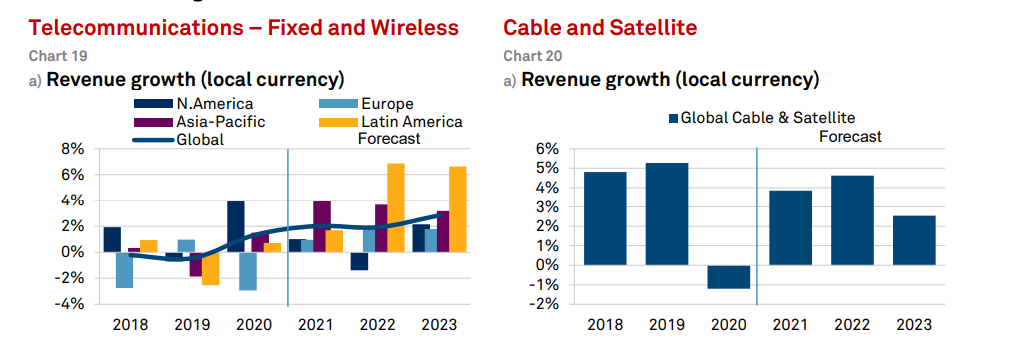
    Telecommunications – Fixed and Wireless

    Revenue Growth (local currency)

    S&P Global 2022, Telecommunication trendsSource: S&P Global 2022, Telecommunication trends

    Telco Revenue is Declining, but the Future Holds Promise.

    The traditional telecom operator is no longer an isolated entity in the market. They engage in multiple collaborations for audio, video, content, analytics, cloud solutions, etc., to cater to the various needs of different customer segments. The growth trajectory is undoubtedly promising, thanks to an ecosystem replete with diverse and lucrative partners. But, monitoring long-term profitability remains a concern.

    For instance, a 2022 global report by S&P predicts that CSP revenue growth will decline in 2023 compared to 2022. Several trends are steering this shift:

    • New Over-the-Top (OTT) players are eating into telecom revenues by offering a wide bouquet of customer-centric services at competitive prices.
    • Evolution of telecom technologies like 4G and LTE are depleting voice revenues while increasing demand and consumption of data services.
    • Business partnerships are now highly complex, and the lack of granular visibility into products and services leads to shrinking margins.
    Why do Telcos Struggle with Profitable Revenue Decisions?

    To retain their edge, telcos instituted changes in how they operate and what they offer customers. But these also affect revenues for the following reasons:

    1. Product complexity impacts profitability

    The primary offering from traditional telecom operators was voice and SMS services. But, as customer usage patterns become increasingly data-heavy, we see a shift towards consume-all-you-can packs. Moreover, to keep customers engaged, telcos need to do more. They have to offer apps, bundled OTT services, and intelligent offerings. It has created an intricate portfolio governed by complex product structures and multiple offerings, which are very hard to manage from a service delivery perspective. Significantly, executing smart pricing decisions and measuring profitability among these numerous and complex interactions is hard.

    2. OTT partnerships eat into telco margins

    Customer demand for OTT content – such as videos, music, movies, etc. – delivered through communication networks forces operators to enter into partnerships with OTT providers on local, regional, and global levels. Bundling such services is a competitive differentiator for telcos to retain and attract subscribers. However, margins are sometimes affected because telcos have limited ways of gauging whether the partnerships are, in truth, profitable and contributing to top-line growth. In some cases, these have low cost-benefit value, leading to partnerships with low profitability for telcos.

    3. New tech is Capex-heavy

    The pace of digital transformation has accelerated over the past five years, which puts pressure on telcos to upgrade their networks and adopt next-gen technologies such as automation, AI, network functions virtualization, etc. And while these initiatives bleed heavily into Capex budgets, many players are still unclear about actual RoI. Consider how network technologies took decades to evolve from 2G to 3G and then 4G. But moving from 4G to 5G is happening in just a few short years. These days, telcos are focusing more on metrics like average margin per user (AMPU) to get visibility into their service delivery stack rather than average revenue per user (ARPU), which is no longer an accurate indicator of profitability.

    Decoding the Power of Margin Assurance

    Margin Assurance is a comprehensive way for telecom operators to identify and measure direct and indirect costs in their balance sheet across operations, partnerships, customer services, and product/service offerings. It leverages analytics and automation to give business decision-makers visibility into revenue and margin KPIs, empowering smarter, strategic, and real-time decisions that effectively increase profitability.

    Here is a concise table mapping the capabilities of margin assurance to tangible business benefits for telcos:

    Areas Capabilities Benefits
    Operational efficiencies Maintains operational margins across costs plus essential margins as per industry best-practices Accurately derive, compute, and report on profitability
    Revenue KPIs Leverage AMPU to segment customers as profitable ones Enhance customer satisfaction by creating targeted campaigns
    Marketing & campaigns Devise strategies for cross-selling products based on customer segmentation Improve business decisions that result in higher revenue
    Partnership analytics Transparent margin analytics to channel resources into the right partnerships and customers Elevates productivity of telcos resources through insights into RoI of existing and new programs, products, and services
    Business intelligence Provides market intelligence and margin evaluation to understand one’s position against challenges based on subscriber behavior and margin trends Improves competitiveness through profitable pricing, unique margin products, and customer retention
    Sharpen Your Edge with Margin Assurance Best Practices

    Leveraging years of domain experience within the telecommunications industry, Subex has developed a powerful margin assurance solution that gives telcos granular insights into margins, revenue, and profitability. The three pillars of our solution approach are:

    • Robust cost allocation models, driven by best practices, whereby every cost line item is part of the P&L account
    • Advanced margin analytics that immediately identifies low-performing areas with simulation to determine how to boost performance along with intuitive dashboards for visualizing costs, insights, areas of action, and recommendations
    • Pioneering solution design that is exceptionally comprehensive across customers, products, segments, network levels, technologies, products, pricing, and more
    A Definitive Guide to Transform the Telco Business

    As a means to empower CSPs with the best practices when it comes to assuring margins, Subex has shared its approach in detail in the TMForum Guidebook titled ‘Business Assurance Transformation – Margin Assurance’, where we are the lead contributor along with other leading telecom operators and vendors. The guide examines how an approach that leverages automated cost allocation models for dynamic insights rather than static ones can drive better business decisions using next-gen technologies.

    Members can instantly download the TMForum guidebook here.

    To learn more about Subex’s approach to margin assurance.

    Read our white paper

  • Business Assurance: Evolution and What It Means to CSPs

    Business Assurance: Evolution and What It Means to CSPs

    Evolution of Revenue Assurance into Business Assurance 

    By now, it is almost common knowledge that the telecom world has moved well beyond the conventional idea of Revenue Assurance (RA). But what were the factors which led to this?

    Conventionally, telecom Revenue Assurance used to be a non-real-time, post-facto, and reactive method of finding revenue leakages amongst the data about events that have already happened.

    To understand this further, conventional Revenue Assurance predominantly revolved around reconciling events between the source of origination to the final culmination point – billing and actioning on the outcomes in the form of mismatches.

    While this methodology was leveraged on a reactive basis for ages, with time and the evolution of sophisticated data transfer technologies, we could derive more capabilities around real-time revenue assurance, thereby mitigating the leakage run-time to the least possible extent.

    However, the effective yield from the RA functionalities mentioned above started to diminish and became increasingly insignificant due to the below factors:

    1. Stiff competition between operators fighting for supremacy on subscriber acquisition meant that the prices of conventional telecom services were constantly reduced.
    2. Consequent to the above, the average revenue per user dropped, which meant that even if the findings from evolved revenue assurance practices were significant, they did not translate to the same level of significance in dollar value.

    Naturally, this set the ball rolling for the evolution of conventional Revenue Assurance into Business assurance.

    What does this really mean?

    Fundamentally, Revenue Assurance (RA) revolves around identifying anomalies across the operator’s business. These anomalies might be systemic, human, process-related, or stemming from a lack of coordination, either technical or intra-departmental, in an operator ecosystem.

    This means that while conventionally, RA revolved around usage, mainly source (switch) to destination (bill) reconciliations, it can be expanded to cover other more expansive business areas. From detecting leakages in usage revenue, it can expand to assure aspects of product margins, customer satisfaction, rating, contract management, etc., to name a few.

    Another aspect to consider in this context is the already available, clean, normalized, ready-to-use and extremely useful data that RA systems have at their disposal, out of which only a sub-set has been tapped into. This has ensured the evolution can be more seamless and natural.

    Collectively, by virtue of the above factors and more, Revenue assurance can and has evolved to what we call it today – Business Assurance.

    The definition of Business Assurance and what it means to CSPs: 

    As clichéd as it is, we all know the Communication Service Providers (CSPs) have transformed dramatically in terms of the services they offer to their customers to being Digital Service Providers (DSPs). This, consequently, means that they have to address new, dynamic, and constantly evolving risks and challenges. As a result, they would have to redefine and rejig their existing resources to equip them with the skills required for a more comprehensive Business Assurance view across the organization.

    Source: Dimensions of BA as per TMF

    Business Assurance amalgamates conventional assurance and risk areas into a data-driven, proactive, all-encompassing framework to protect financial integrity while ensuring seamless customer experience and business value.

    In addition to the above, Business assurance would constitute a wide array of areas – Product & Offer Management, Customer Management, Order Management & Provisioning, Network Management, Rating & Billing Assurance, Finance & Accounting, etc. It would be imperative to say that all these areas need to be supported by sophisticated technologies around data analytics, artificial intelligence, and blockchain.

    While the above BA views are relatively generic, it seldom works in a one-size-fits-all approach. Hence, it is imperative that each organization refines the relevance and extent of the BA scope in their particular environment basis the business needs.

    Webinar on Business Assurance in 5G:
    5 controls you cannot do without

    Watch Now

  • Critical Revenue reporting Measures in Telecom Business Assurance

    Critical Revenue reporting Measures in Telecom Business Assurance

    In the highly competitive and rapidly evolving landscape of the telecom industry, telecom operators are expected to expand significantly to bring in optimised profits. In this context, revenue assurance has greatly evolved in its role as a business controller to a business enabler.

    Revenue reporting is a critical area of CSP business. Here, operators face severe challenges when it comes to computing revenue across earned and unearned revenue, compliance, recording of financial data. The operators also find it hard to identify leakages within order to cash processes, voucher generation (electronic and physical), starter kits and handset bundles, pre-provisioning processes (shipment of stock and invoicing of channels), etc., leading to miscalculation, siloed process, inaccuracies in customer collection data or overstatement/understatement of revenue.

    Accounting validations to identify revenue leakage

    The existing sales process across all channels for prepaid and post-paid services comprise crucial configurations and validations. When clearly documented, these validations provide important insights into potential areas of revenue leakages within an operator’s accounting activities. The ‘need to follow’ configurations and validations for prepaid and post services is described below:

     Prepaid validations

    •  End-to-end process validation: Involves computation and validation of the complete process from demand forecasting to voucher generation, voucher transfer, starter kits to warehouse etc. Every single discrepancy observed in this process gets highlighted with the result of the end-to-end support performed in the validation.
    • Stock management review: It helps understand and measure the entire stock management process at the warehouse for recharges as well as starter kits including voucher or roaming recharge packs. If gaps are identified, a mitigation plan can be recommended.
    • Distribution process review: This involves a fulfilment process review for all recharges and starter kit sales. It is majorly recommended to identify issues around distribution
    • Invoicing process validation: This validates the invoicing process for sale of recharges and starter kits. It can highlight issues around invoice quantity, denominations, tax, etc.
    • Account receivables review: This helps understand the account receivables for all vendors and compare this against the bank guarantees to derive the net receivables. Through this, operators can identify those vendors with net receivables that increase bad debt
    • Independent method analysis: This involves independent calculations of liability based on billing methods and compares these with financials to identify discrepancies. It helps operators analyse the product constructs and their impact on deferment of revenue
    • Report and transaction analysis: This includes an independent review of revenue by analysing IT reports, usage transactions, subscriptions, other adjustments, expired vouchers/balances, and deferment logic for monthly rentals. It gives operators a holistic overview of revenue flow and liability.

    Postpaid validations

    • Configuration validation: This validates the configuration of charge code to GL code between Billing system and ERP for accurate integration of automation revenue flow
    • Billable versus billed validation: This facilitates reconciliation to ensure that all subscribers have participated in the invoicing process.
    • Invoice to ERP: Validation of invoice amount billed in the system against the account receivables created in ERP system
    • Unbilled revenue: This validation compares usage and other components against reported numbers. It considers analysis of all the components to bring the result in a form for a detailed comparison.
    • Financial reporting: This provides an analysis of postpaid revenue streams across all billing cycles. It helps to understand and highlight the concerns if they occur.

    Current revenue accounting process have in-built mechanisms to identify discrepancies that may lead to revenue leakages. These mechanisms or validations are based on operator group guidelines, review of amounts credited to subscribers, and revenue realized through usage recorded in charging systems. Careful comparisons between different parameters can alert revenue assurance teams about potential leakages, thereby minimizing variances in the earned and unearned revenue computations across prepaid and billed and unbilled revenue computation for postpaid.

    Learn More on Optimising Revenue Reporting with Subex Business Assurance

    Download Here

  • Redefining Rating Assurance with Analytics

    Redefining Rating Assurance with Analytics

    Significance of Accuracy in Rating Assurance 

    Revenue Assurance has been accepted by the telco world as a critical solution to improve data quality and processes. The solution can help CSPs increase profits, revenues, and cash flows and gain a strong Revenue market share without influencing demand. Globally today, most of the Revenue Assurance controls managed by the RA teams focus on the completeness of data used by business processes focussed towards revenue generation, thereby confirming the undisputable value the function brings to the business.

    However, let’s check some other dimensions relevant to RA. TMForum RA guides show the completeness, validity, accuracy, and timeliness of data quality. To delve deeper into accuracy, a very critical aspect for any RA function; most of the time, accuracy is associated with quantitative measures attached to the charging and rating processes such as: duration accuracy, data volume accuracy, or rating accuracy.

    In this article, we aim to look closer into rating accuracy specifically. According to RAG (Risk Assurance Group), “Data records accurately describe the event or object in the real world that they correspond to.” As a result, the rating accuracy of a tariff applied for a usage event or to a recurring or one-time fee is consistent with the Marketing teams’ intent.

    Limitations of the current approach in Rating Assurance 

    To date, rating accuracy is achieved by using a complex approach that consists of re-performance of rating processes and then comparing the output of the parallel rating with the actual rate. This approach comes with a set of limitations:

    Sample-based method: There is a sample of usage events utilized for a selection of price plans. Though the tried and tested 80/20 rule is a powerful way of cutting through the clutter around a complex decision the outcome remains only as a sub-set of the rating universe tested.

    High efforts required: Configuration of a rate plan, an add-on to a rate plan, maintaining it, etc., are activities which require massive efforts.

    Sampling criteria: It is difficult to identify and arrive at valid sampling criteria, i.e., widely agreed and approved by the company. At the same time, these criteria should be regularly updated to avoid sample bias (providing assurance over the subscribers in the sample).

    Shift from traditional to analytics-based accuracy for rating assurance 

    Due to the above-mentioned limitations, it becomes necessary to identify and execute alternative ways to deal with uncertainties coming from rating accuracy. However, the alternative way has to satisfy several objectives, to be considered effective in validating rating process accuracy. A few of the goals are listed as follows:

    • Ability to reuse existing data:Rated events are already processed, but the usage remains very limited where the central part is only utilizing completeness controls of a RA solution.
    • Ensure complete data usage:The validation is required to be performed for all rated events and for all rate plans. In statistics, this would mean analysing all the population value of measurement, rather than its sample measure only.
    • Perform Statistical measures:Revenue assurance stayed away from statistics for a long while. While sampling is not easy, it shouldn’t be understood that statistics address only decisions under limited data. Measures like mean, median, mode, standard deviation belong to statistics 101 and can be efficiently used to enrich RA’s data.

    Can this analytics approach be accepted as a new Future approach? 

    Definitely, the statistical approach is not new, as it has been used for ages now, to develop quality controls across industries, advance science, and advising on decisions. But fundamentally, the use of statistical controls for validating rating accuracy is proving to be “new.” It may not be a one-size-fits-all approach, and it may not give the same sense of control as that of a re-rating approach however, it shows promising results, particularly for RA teams, which have limited resources to maintain a parallel rating configuration, as required by the standard approach. A few examples of rating accuracy issues can be identified in this way:

    • Different complex implementation ways of tariff and rates from the usual defined
    • Inaccurate international and roaming charges for voice and SMS
    • Mobile data roaming charges applied incorrectly.
    • Unbilled add-ons
    • Free of charge out-of-bundle usage

    Analytics can help solve several sets of the above limitations. Subject matter experts in the area of rating assurance have found that an analytical approach can be very efficient while comparing the limitation of traditional methods.

    The way forward

    In a nutshell, A Revenue Assurance Solution combined with Advanced Analytics, which powers the solution ability and agility to manage and generate insights using large volumes of data, can be a winning approach. This doesn’t mean sunsetting the advanced rating engines from the RA solutions but letting analytics do what they do best: add value from the wealth of data the telco operators are sitting on.

    Download our Point of View to learn more on How AI Can Complement Business Assurance for 5G

    Download Here