Category: Telecom Insights & Analytics

  • Emerging Trends in Data Management

    Emerging Trends in Data Management

    As data is generated at an exponential rate, companies are awash with data, struggling to unlock its true value. Data is not only increasing in volume but also in complexity. In terms of ‘Global Datasphere’, it is estimated that by the end of 2019 it stood at 4.4 Zeta Bytes (ZB), up from 2.7 ZB in 2017. In addition, the growth in connected IoT devices is expected to generate 79.4 ZB of data across 41.6 billion IoT devices, according to IDC Forecast.

    As organizations find their way through analyzing the data, it has become critical to have a data management system that can help solve challenges of data integration, silos, manual data management and governance throughout the organization. This can lead to challenges such as increased costs, threat to data security, prone to error and subject to bias.

    If the company wants to continually evolve and stay ahead in the competition, it must have a data and technology-centric approach to Data Management. According to the survey, only 25% of companies feel like they are exactly where they want to be with corporate data management. The new emerging trends democratizes an entire data management value chain. Some of these trends are:

    1. AI-enabled Data Management

    The combination of Data Management systems and AI are synergistic in nature. When AI becomes embedded throughout the data management system, it has potential to impact an entire data value chain. AI-enabled data management helps in automating repetitive and complex tasks. It improves the performance, accuracy, and productivity in an enterprise.

    Data scientists spend around 80% of their time on manual data preparation, feature engineering, and model selection. So, Augmented Data Management utilizes AI/ML capabilities to automate the manual data management tasks allowing highly skilled technical resources to focus on high-value tasks where AI is less mature. According to Gartner, by 2022 data management manual tasks will be reduced by 45% through augmented data management.

    Augmented Analytics democratizes AI across the whole data value chain to automate data preparation process, key aspects of data science and ML/AI modelling using ML (AutoML) techniques and narrate relevant insights using NLP and conversational analytics.

    Even today, organizations rely upon historical databases instead of real-time data for analysis. So, there is a need to collect, index and analyze all data in real-time.  Continuous Intelligence is a seamless AI-driven solution that allows the companies to automatically integrate continuous and insightful data from disparate sources. It completely changes the time-consuming data wrangling process performed in Big Data. Backed with AI, ML, and right training data it minimizes human intervention throughout the process. According to Gartner, by 2020, more than half of the major new business systems will incorporate continuous intelligence that uses real-time context data to improve decisions.

    2. Semantic Data Catalog

    As data is integrated from disparate sources, it is difficult to make efficient use of siloed data sources to easily access, interpret, and track data and its history. Semantic Data Catalog leverages knowledge graph model encoding a Semantic layer that map relationships and describes the data in its business context while integrating data from disparate sources. When linked with self-service tools, it will help data stewards and business users to prepare datasets and curate the data. It is quite necessary in data management initiatives like improving governance, data lineage and data quality as well.

    3. NLP and Conversational Analytics

    Until recently, it has all been about visualization of data which requires highly skilled users, but with NLP/Conversational analytics, it will allow users to ask questions about the data using NLQ search, as well as receive visualization of data and an explanation of insights supported by NLG. Natural Language Query (NLQ) interact with the data reducing technical and analytical query expertise necessary by mainstream business users. By 2020, 50% of analytical queries will be generated via search, natural language processing or voice, or will be automatically generated, according to Gartner.

    4. Data Fabric

    Data is available in a variety of formats which is distributed across multiple on-premises locations as well as hybrid and multi-cloud. As organizations are using many applications, their data becomes increasingly siloed and inaccessible. To provide single view of all the data, data fabric is used. It provides a single environment for accessing, collecting, and analyzing the data making an enterprise extremely agile and eliminating silos. It enables data ingesting, integration, quality, governance and sharing, by eliminating multiple tools and providing faster access to data.

    With the advancement in data collection and storage methods, the future of data management is autonomous. To stay ahead of the competition, companies are compelled to keep up with new and innovative technologies. By doing so, companies become more agile enabling greater access and self-service, more cost- efficient by 38%, gain faster insights, gain better understanding of the data, enables informed and accurate decisions by 33%.

    How does your organization tackle data management challenges? What are the plans to deal with it? Did your organization adopt any of the new trends for managing data? Feel free to share your thoughts in the comments section.

    Learn how augmented analytics can help transform your approach to enterprise AI

    Schedule a demo

  • Measuring the True Profitability: A holistic and granular approach

    Measuring the True Profitability: A holistic and granular approach

    In today’s rapidly evolving but oversaturated market, the telecommunication industry has changed its way of working. It has started to merge or intersect with other industries, such as media and financial services, offer more variants of products and personalized services to valuable customers, and quickly embrace new technical advents and adapt to the latest offerings, like 5G. As a result, the process starts involving multiple departments in core strategy and decision making. But each department monitors one’s own set of KPIs, which are in isolation from others. As a result, easier to monitor KPIs like revenue, subscriber base, number of installations, and site upgrades get priority while the concept of profits and margins take a hit and, thus, the accountability of multiple cost items. To overcome this issue requires a rejig in overall strategy involving collaboration between departments and a change in success criteria from top-line growth (revenue-based) to bottom-line growth (profit-based) with a presence of every stakeholder in the Profit & Loss(P&L) view of the company, resulting in a single version of the truth.

    Approach

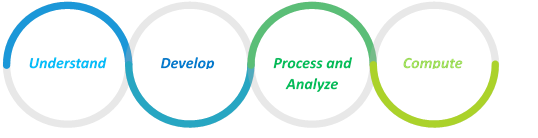
    A holistic and granular approach is an attempt to measure the true profitability of customers, products, network assets, and geographical regions by adopting a more structured and methodical approach. The whole process can be divided into four steps, as shown below.

    1. Understand: Companies have most of the information needed for profit calculation, but it is scattered across multiple systems and departments. In this step, meetings with different stakeholders are done to analyze existing business models and understand their revenue & cost overheads, current margin computation methodology, and available data sources.

    2. Develop: Once all the line items related to revenue and cost items are identified, a logic is developed

    • a. to align the items into meaningful categories. For example: Usage revenue (within/outside product), Interconnect Revenue (Domestic/International), Network cost (e.g. Rentals/Energy), Insurance (Handset/Managed Services), etc.
    • b. to define cost model for ascertaining the per-unit cost. E.g., total network site cost is divided by overall network site usage(duration) to derive a cost per sec, and then cost is multiplied to obtain the network cost per transaction. Same way, a subscriber’s revenue is reverse mapped to network sites in the ratio of the subscriber’s usage.

    3. Process and Analyse: Once the logic is developed, different revenue and cost line items are processed and analyzed at the granular level possible. The state-of-the-art hardware & computing engine is put in place, combining multiple sources from different systems and running profilers to derive the final margin in a scheduled way.
    4. Compute: This step involves setting up a system with features of roll-up and slice-dice to derive the final margin against different parameters. Rules are defined to include or exclude the line items based on the type of level. E.g., margin can be computed against different parameters like Customer, Product, Segment, State, etc. as shown below.

    Fig. Margin Computation P&L View Illustration.

    Use Cases

    Some of the use cases where Subex has delivered using the given methodology are as follows:

    1. Visibility of network cost components in product profitability: In the given engagement, the network team wanted accountability from the product team while designing new products as the network team tries hard to meet the network requirements for the products. Subex created a detailed P&L view accounting in all network cost components for the products based on their usage and derived cut-off price points for the products given the services offered. We were able to identify some products with high sales revenue, but with negative or shallow margin after network cost allocations. The whole process brought more transparency, seeking coordination between both departments.
    2. Identifying high profitable customers: In this engagement, the client wanted to change the criteria of most valued customers, from revenue to profits. Subex helped the client to understand the exact contribution each customer made to the bottom line. The client acknowledged that the revenue method had been deceptive and inaccurate as two customers having similar revenue can have varying costs. Also, it helped the client identify the key cost components, making high revenue customers into low margin customers.

    Conclusion

    In a situation when prices are becoming harder to intervene, optimizing cost and service offerings become essential to push margins and require re-defining the yardstick of success from revenue & sales to profitability. The proposed holistic and granular P&L view increases transparency leading to more actionable insights and a better understanding of the cost structure, helping identify root cause drivers.

    See how Subex Analytics Centre of Trust can help your business.

    Schedule a demo

  • How to build trust in your wholesale business and move beyond plugging leakages

    How to build trust in your wholesale business and move beyond plugging leakages

    Telecom fraud continues to be a major problem for telcos across the globe. With technological advances, fraudsters are rapidly changing their patterns and finding new ways of committing fraud. According to the 2019 CFCA survey, telcos are losing approximately USD 14 billion in total through IRSF, Arbitrage, Bypass, Traffic Pumping, and Wholesale SIP trunk frauds. With the advent of OTT services, we have seen a steep decrease in international voice traffic. The annual TeleGeography reports show that international OTT voice traffic reached 1 Trillion minutes in 2019 as compared to 432 Billion minutes of international carrier traffic. The research shows that international voice revenue has declined from $99 billion in 2012 to $60 billion in 2019 and could fall more up to $50 billion by 2024. There is almost a 50% decrease in wholesale revenues in the last decade.

    The need of the hour for a wholesaler is to take the lead and protect their telco partners for any fraudulent activity and reduce losses due to fraud. Wholesalers need to build their business strategies around risk focusing on trust other than leakages.  These leakages may not have a direct impact on them as fraudulent traffic is not necessarily a revenue loss for a wholesale service provider but is a direct loss to their telco partners and the call originator. Fraud majorly impacts the retail service providers.

    Here are some of the best practices that wholesalers can follow and have a strong partnership with the telcos:

    1. Be equally responsible for fraud: The wholesale service providers should monitor the traffic keeping in mind their telco partners and treat fraud as common problems to build trust in this partnership.
    2. Maintain a risk matrix: Maintain a risk control matrix, including traditional and non-traditional risks, and have a mitigation plan to reduce the impact of fraud on telco revenues.
    3. Dispute management: Though telcos remain liable for the traffic sent but to handle the disputes, wholesalers need to keep track of the deadlines and timeframes for the commercial terms of the agreement to avoid conflicts and ensure timely payments.
    4. Share information with telco partners: Fraudulent data can be interchanged between Wholesalers and Telcos. This information can help to bar B party fraudulent ranges and also highlight the A numbers dialing the fraudulent traffic to telco partners. Telcos can either block the services or handle blocking requests from retail customers and apply a monetary threshold for barring.
    5. Use advanced data analytics:  In a few cases, individual call detail records (CDRs) may look normal. However, in aggregate with complex statistical analysis and leveraging machine learning on training data, wholesalers can detect anomalies and uncover both known knowns and Unknown unknowns.
    6. Risk scoring: Define a risk score for supplier validation, global routing plan, and commercial rate sheets to build a trustful network.

    Wholesalers have access to massive volumes of traffic. Being the nervous system of interconnect, connecting operators across the globe, they are in the best position to scale up and improve the customer experience for the telco partners.  We have observed that customer dissatisfaction, which leads to churn, ultimately leads to a reduction in traffic. It is time for wholesalers and telcos to work as a team and build a strong partnership on trust.

    To understand the need of building trust in your wholesale business.

    Schedule a demo

    harmeet

    Harmeet is a Director- Business Solution and Consulting Group at Subex. He has over 14 years of  experience in Business Development, Solution Design, Consulting, IT Operations, OSS/BSS product implementation, and delivering customized as well as in-house client solutions to large and small to medium scale Telcos in the APAC and Europe region. He is responsible for Pre-Sales for Subex Portfolio around Digital trust.

  • How CFOs in Telecommunications can increase their productivity and lead the change

    How CFOs in Telecommunications can increase their productivity and lead the change

    On reading articles about new Chief Financial Officer (CFO) appointments, we often see directorial boards or CEOs remark that they needed “a strategic finance officer” or someone who can “partner with key stakeholders to define strategy.”

    With data and risk falling under the prerogative of CFOs, these executives are emerging as key value drivers within organizations. A study conducted by TCS in September 2019 found that the top 5 areas where CFOs want to invest their energies are:

    • Technology-enabled business model evolution/transformation
    • Capital allocation for digital transformation initiatives
    • New product and service development
    • Non-traditional risk management
    • Enterprise-wide analytics, data and talent governance

    Comparing this with an earlier study on CFO goals in the telecommunications industry, it seems like not much has changed in the past 4 years. In 2015, the strategic goals of CFOs in the telecommunications industry were listed as:

    • Gain deeper insights into customer needs as well as P&L drivers
    • Reduce costs from manual business processes
    • Accelerate speed through innovative business models
    • Achieve operational excellence with timely quality business information
    • Use technology to improve service delivery and profitability

    In reality though, as a Deloitte survey reveals, CFOs spend 60% of their time on traditional finance operations including managing revenue, accounting, internal audits, and compliance.

    Clearly, transitioning from an operational controller to a leader who drives strategic vision within the enterprise calls for wide-scale alignment between people, processes, and technology.

    Here are some ways I believe CFOs can reduce operational bandwidth and shift their focus to leadership tasks:

    1. Improve data governance

    Revenue and cost reporting are critical in all organizations, and these depend largely on the existing data sets within the enterprise. Every CXO must trust their own data, which requires strong data governance. This could include unifying data within large data lakes, cleansing data, and making it easily and securely consumable in reports. Based on one of their own surveys, the Japan Association for Chief Financial Officers (JACFO) argue that there is a strong link between profitability and structure within CFO organizations. CFOs who participate actively – whether by analyzing return on investments (ROI) or product profitability and making decisions on retiring non-performing products – contribute to increasing the top line.

    2. Create a comprehensive risk catalog

    CFOs need a well-defined risk catalog for their revenue models, which must also be non-traditional, to adapt to dynamic trends. This can include auditing irregularities, inaccurate rating and billing, and measuring risk around digital transformation. Such a catalog should capture risk comprehensively and define plans for mitigation, business continuity, and continuous improvement.

    3. Infuse support across the organization

    As CFO roles evolve from revenue reporting to financial planning and analysis, (predictive as well as prescriptive), they are shifting from enabling revenue assurance to delivering business assurance. Thus, financial officers find themselves reaching into areas like customer experience, marketing, sales, and network profitability. It is no longer enough to simply update costs at high level, rather they need to track revenue and distribute the indirect and direct cost to the end consumer to define the customer’s profitability or margin. For example, access to ARPU data will help CFOs better validate customers. Tapping into revenue from a user receiving many incoming calls may generate more margin than, say, a customer making high value recharges or paying high rental but without any usage.

    4. Use technology and automation

    The adoption maturity of AI/ML technologies among CSPs remains patchy. For instance, while there is deep penetration of AI in revenue forecasting, some CFOs still grapple with Excel sheets and lack basic automation like reading invoices, performing credit and debit checks, etc. The absence of workflow automation can deeply impact productivity, especially in situations like the current COVD-19 pandemic when remote working and email communication can cause poor versioning, data duplication, etc., leading to higher inefficiencies.

    Despite having the right talent and vision, CFOs may continue to struggle to progress beyond stewardship roles as long as they lack the right tools and technologies.

    Subex’s consulting and advisory services can help CFOs align people, process and technology through strong capabilities around data governance, risk mitigation, cross-functional transparency, and more.

    Looking to transform your finance organization into an agile and strategic one?

    Schedule a meeting with us

  • Telecom operators are well poised to aid in fight against COVID-19

    Telecom operators are well poised to aid in fight against COVID-19

    These are challenging times for the world as the COVID-19 pandemic has claimed 350,000+ lives and infected more than 6 million people. There is a significant amount of economic loss as the majority of the business activities were stopped. Although government authorities have implemented various measures such as enforcing lockdown, travel restrictions, and more. Despite all the reassuring measures, there are undeniable challenges in enforcing these restrictions at scale, especially in densely populated zones. It negates the purpose of these measures and increase the risk of a rise in infection. Watch the video to know how operators can support the government in their fight against COVID-19.

    Register for our on-demand webinar to know what operators can do to overcome the uncertainties unfolded by COVID-19 to enhance customer experience and profitability.

    Register webinar

    This article was originally Published at Analytics India Magazine.

  • The Road to Being Data-Driven Starts with Knowing Where You Are

    The Road to Being Data-Driven Starts with Knowing Where You Are

    The telecom world is changing, and organisations are challenged to not only grow, but to merely stay relevant.  To cope up with the fast-changing environment, organizations need to be at a certain level of maturity where the decision-making process needs to move from gut feelings to number & reasoning-based practices. The mandate here is clear: Organisations need to become data-driven or risk being left behind. However, the reality is bleak considering that nearly 100% of enterprises want to become more data-driven, but only less than a third have accomplished that goal. The starting point to being data-driven starts with being able to assess where one stands, and which is the best way to move ahead to a certain objective, a notion which continues to remain challenging for organisations.

    Almost all organisations have ventured into the woods of data analytics with a purpose to make a sense and get the best out of the huge volumes of data they have. Sometimes they ask what others (either in the same industry or across industries and academia) are doing and how they can replicate it, while at times they ask what new can be done that no one else has. To analogize the entire data analytics practice to the workings of an engine, an engine can be only as good as the sum of its parts. The parts must fit in well, the oiling mechanisms should help in friction reduction, the oil supply has to be timely and of course, the sparks need to be perfect. As many say, data is indeed the new oil and data analytics is fast becoming the engine (in this case, of growth).

    Fine tuning this engine is the need of the hour. Assessing where we stand, which directions we can move towards and where would that lead us to, what would be the best enabler to move in each direction, and how to go about doing it, is mission critical. This, in itself, is an optimization problem where maximizing returns and minimizing costs given the multiple constraints is challenging.

    Transformation is important, but to ensure true competitive advantage, organizations must transform themselves in a planned phase. The approach to analytics cannot be stochastic as it would result in more troubles than benefits. Organizations must traverse one stage at a time. Not only defining those stages is the need of the hour but also is knowing what steps one needs to take at a point of time to move from one stage to another. In this scenario, an Analytics Maturity Assessment becomes imperative.

    We have been working with customers across the globe in helping them assess their Analytics Maturity, to define the business objectives and carve out an Analytics roadmap towards said objectives, through our Subex Analytics Maturity Models. Subex Analytics Maturity Models defines those stages and the steps between those stages, through an assessment across People, Process, Technology and most importantly Data.

    To know more about why an Analytics Maturity Assessment is important, and how it can help your organisation, Schedule a Demo with us and our Subject Matter Experts will get in touch with you.

  • Addressing the Trust Gap. It is Possible

    Addressing the Trust Gap. It is Possible

    In our previous blog, we spoke about how in today’s world of rapid and constant change it has become ever so important to make the most of real-time inflow of data. Data is the new oil – and like oil, data needs a refinery before it is used across business use cases. To quickly take a step back, this trend always reminds me of the comic Tintin and The Land of Black Gold – “Boom! … One day your car goes Boom!”. The plot revolves around car engines exploding because of faulty petrol at its source. Similarly, if data is not clean at the source, your business decisions are bound to go “BOOM”!

    ‘TinTin: Land of Black Gold’ by Hergé


    Analytics has been commoditized today, with the entry of open source tools and technologies. However, there is a significant trust gap when it comes to the consumption of analytics. How much do you trust your data? How significant is the output of analytics in the organisations board meeting? While in our last blog we looked deeply into the trust gap and its roots, at the end of the day, we need to realise that analytics is just an application of Math-Technology-Business on data. So, if we believe in Mathematics, have faith in the technological revolution and are confident of our business intuition, there is no reason for analytics not to be considered as the most critical function – all that remains is refining the oil, i.e., data.

    We at Subex, recognize and respect this trust gap. We also believe an analytics strategy should build around the golden triangle – People, Process, and Technology.  The first and most critical step would be to have analytics done in a democratized manner. Everyone in the organization, from the C-Level, to the Department Head level, to the Analyst level should be armed to be data-driven. The involvement of machine should not undermine the trustworthiness, nor should it lead to a decrease in human involvement; instead, you should leverage the best of both human and machine intelligence to improve products, enhance the quality of service (QoS) and derive more returns from your investments.

    Does Human Intelligence + Machine Intelligence = Trust?

    Taking the Human Intelligence + Machine Intelligence philosophy into account, we have come up with a concept known as Subex ACT (Analytics Centre of Trust), designed to bridge the Trust gap by covering the end-end cycle of Data-Insights-Decisions (D.I.D.). Let us take a quick look at the three pillars of our ACT program:

    1. Defining a Strategy

    Before starting the analytics journey, it is imperative to assess the following

    1. What is the analytical maturity of the organization?
    2. What are my objectives from the analytical program vis-à-vis the business vision
    3. Do I have a roadmap in place?

    The main Objectives of this process are:

    • Setting up the goals for the organization: The Strategy can help deliver competitive advantage, create incremental revenue opportunities, and reduce costs.
    • Assessing your analytics maturity vis-à-vis your goals: Understand where you are in terms of your analytics maturity and identify the target maturity which will help you reach the goals defined in step 1
    • Plan for the Transition: Understand how you will transition from your current maturity level to the desired maturity level and ensure the process is time-bound, tangible and step-wise. What we recommend is that you identify tangible use cases, such as churn, and move the analytics maturity of addressing churn from, say, 3 to 4. Once that is completed, define another use case and increase the maturity to address that similarly
    1. Setting up an Information Infrastructure

    Post defining the analytical strategy it is imperative we have the right set of tools to handle the task at hand. The tools which organisations need today need to be the following:

    • Agile: Create the ability to address the problem statements based on the requirements
    • Scalable: Should be able to handle massive volumes and different types of data
    • Reliable: The information that is generated by the system needs to be trustworthy
    • Real-Time: For quick and accurate decision making the reports should be in real-time
    • API Integration: The tools should be compatible with API-based integration
    • User-friendly: Consumption of the reports/data should be easy to use
    • Secure: The tool should be compliant with security guidelines
    • Self-Serviceable: Accessible UI enabling the end user to self-generate reports

    Such an Information Infrastructure should offer a self-service reporting environment wherein each stakeholder gets the access to the tools to analyze and act upon the information. This will not only reduce the time gap in execution but raise the operational efficiency to a new level. As the model evolves into an Analytics Centre of Trust (ACT), the transformation journey becomes smooth.

    • Analytical Driven Business Outcomes

    The final piece of the Analytical Framework, is clearly towards the analytical output. For too long, organisations have set up analytics practices with a mandate towards delivering on analytics outcomes. Subex is of the firm belief that the key to analytics is to attain business outcomes while ensuring insights are available across all audience levels in a democratized fashion which is easily understandable.

    Conclusion

    The world of digital technologies is open for Telcos to build new business opportunities as well as excel on the existing ones. It’s time to identify the gaps in your analytics strategy and develop an ACT that helps you climb the ladder faster. As an organization is preparing to capture the active markets, your analytics goals must focus on using information as a strategic asset to generate revenue, improve operational efficiency and provide best-in-class customer service.

    In our next blog, we will cover how Subex ACT helps CSPs regarding addressing these three pillars and how it helps bring Agility, an Analytics to Business mindset and Democratization through Consumable Outcomes to your organisation.

  • How to empower Business Assurance with Artificial Intelligence at the world of Digital Transformation

    How to empower Business Assurance with Artificial Intelligence at the world of Digital Transformation

    TMForum recently concluded Digital Transformation World 2018 event at Nice, France. As the name indicates the key theme of the event was on enabling telecom operators to move their business to the digital world. The event was bustling with fresh ideas, innovations and technology which have the potential to cause disruption in the telecom industry. I represented Subex at the event and we participated in one of the catalysts. Catalyst projects are rapid collaboration initiatives driven by Forum member companies. Forum members work together to create proof-of-concept demonstrations for today’s most pressing business, operational and IT challenges.

    The catalyst that Subex participated was “Empowering Business Assurance with Artificial Intelligence”. The catalyst goal was to bring in Artificial Intelligence(AI), Machine Learning & Big Data Analytics to empower the assurance teams in the world of digital transformations. This catalyst had enabled Subex to collaboratively deliver not only solutions for problems that can be solved using advanced analytics but also to create best practices and standards, helping hundreds of Forum member companies reduce cost, risk, and time-to-market as they transform for success in the digital world.

    The use cases we worked on for the catalyst focussed on using AI based Machine learning techniques and advanced analytics to:

    • Enable Telcos to track fraudsters faster and minimize revenue loss caused by arbitrage
    • Allow KPI tracking and anomaly detection with a minimal manual intervention
    • Help Telcos differentiate fraudsters from genuine customers by identifying important features

    Telcos we interacted at the event were very impressed with how AI & Machine learning can help them  manage challenges in the digital world.

    The highlight of the keynote at the event was on the open Digital architecture and open APIs which provide a platform to rapidly partner and innovate, to deliver business and technology integration between the companies. The biggest announcement at the keynote was on one of the excellence awards, Reliance Jio from India was announced for an award for ‘Business transformation’ for making greatest strides in transforming its business operation to a low cost, agile and customer-centric model.

    The other topics that were covered in the catalyst initiative were Block Chain Unleashed, Blade Runner, Smart Cites, Cognitive Customer care. Most of the catalysts and their theme was around disruptive technologies such as Blockchain platforms, Internet of Things, and Machine learning. This is a clear indication that industry is moving towards using these cutting-edge technologies to solve some of key business problems Telcos are facing today.

    The most exciting part of the 3-day event was the Catalyst awards. Of the 25 catalysts that were part of the catalyst program, our catalyst won an award for Outstanding Contribution to TMForum Assets. We were thrilled and excited for having got the award. For me, key take away from the event is, in the road to digital transformation Telcos are looking at OSS/BSS not only as watchdog systems to monitor revenue leakages & frauds but are exploring ways by which these systems can help them generate revenues. We as Subex need to look at delivering to value to our customers considering these business assurance needs.

  • ¿Por qué Analíticas es la respuesta para el Director Financiero moderno?

    ¿Por qué Analíticas es la respuesta para el Director Financiero moderno?

    Como bien dijo Gordon Gekko, en la película Wall Street (1987), “La mercancía más valiosa que conozco es la información”. Afortunadamente para las compañías de comunicaciones y sus Directores Financieros, no carecen de esta “mercancía valiosa”, la cual pueden aprovechar mediante analíticas.

    Descubre cómo los Directores Financieros pueden aprovechar sus datos mediante analíticas de telecomunicaciones, para tomar mejores decisiones que impulsen el crecimiento y mitiguen los riesgos, viendo la grabación del webinar llamado “No te quedes atrás: una guía de Directores Financieros para aprovechar las analíticas avanzadas”, que tuvo lugar el 14 de diciembre.

    Pero retrocedamos un momento.
    El mundo de las telecomunicaciones, tal como lo conocemos, está evolucionando y, con él, el rol de los Directores Financieros también está experimentando un cambio drástico. Su papel ya no se limita a centrarse únicamente en el desempeño pasado, en los números y en la información financiera, sino que el mandato parece casi universalmente superado, y el Director Financiero necesita también proporcionar información sobre hacia dónde está yendo el negocio y cuán rápido lo está haciendo.

    La participación de los Directores Financieros en la estrategia corporativa también se ha convertido en una parte integral del trabajo, ya que ahora tienen la capacidad y el mandato de contribuir directamente con la dirección del negocio, así como revisar e informar sobre su rendimiento. Todo esto significa que los Directores Financieros de hoy deben ser más estratégicos y necesitan asegurarse de que haya una mayor alineación con los imperativos estratégicos del negocio, y este requisito coloca al Director Financiero en el punto focal no solo para la presentación de informes financieros, sino también para los reportes gerenciales, además de mantener una hoja de balance sólida y saludable.

    Pero, como sabemos, la naturaleza dinámica del entorno de las telecomunicaciones plantea múltiples obstáculos al Director Financiero moderno, que incluye -aunque no se limita- a lo siguiente:

    _ Los CFO hoy en día deben asegurarse de que son capaces de aumentar el margen y el rendimiento de las ganancias.

    Es un hecho bien conocido que los ARPUs han estado disminuyendo constantemente en todas las regiones del mundo y, junto con el lento crecimiento de los ingresos, está llevando a una erosión constante de los márgenes desde 2010 en la mayoría de las regiones. En medio de estos desafíos, el mandato de los Directores Financieros de aumentar los márgenes y el rendimiento de las ganancias es cada vez más crítico y difícil.

    _Los intentos organizativos de aumentar los ingresos se están desinflando por errores y fugas.

    Abordar las Fugas de Ingresos es una preocupación importante para los operadores de telecomunicaciones, y se está convirtiendo rápidamente en un mandato para los Directores Financieros, considerando que actualmente la mayoría de los equipos de RA reportan a ellos. Teniendo en cuenta que las Fugas de Ingresos tienen un impacto directo en el crecimiento de los ingresos, el rol del Director Financiero consiste ahora en tomar una postura proactiva en el tratamiento de cualquier error o pérdida.

    _Evaluar los riesgos y desarrollar medidas para prevenir las violaciones de seguridad.

    Al igual que las Fugas de Ingresos, las violaciones de seguridad y el fraude de telecomunicaciones pueden costarle mucho a los operadores, y es un obstáculo para asegurar que los Directores Financieros mantengan un balance sólido. $ 38.1 billones (USD) fueron perdidos por fraude en 2015 y, aunque el número está disminuyendo, las Telcos siguen sintiendo el impacto de perder dinero por fraude, y la tarea de resolver esto recae en el Director Financiero.

    _Aumentar los Gastos de Capital durante un período de disminución de ingresos.

    Una reciente encuesta realizada por TMForum, dirigida por Subex, reveló las siguientes conclusiones:
    • 1 de cada 3 operadores no mide los rendimientos de la inversión en CAPEX.
    • 77% de los encuestados considera que la utilización inadecuada de los activos lleva a un aumento de los costos.
    • El 55% de los encuestados cree que la planificación de red se basa en suposiciones.
    • El 64% cree que la planificación de capex está impulsada por la tecnología y no por los objetivos del negocio.

    Por otra parte, los ingresos globales de CSP disminuyeron un 5,3% para el año terminado en marzo de 2016, mientras que el gas Responder a la volatilidad y velocidad de cambio

    Las señales indican que los ingresos de los servicios tradicionales se estabilizarán en los próximos 10 años. De hecho, algunos analistas anticipan que los ingresos de los servicios de comunicaciones tradicionales se reducirán en un 50% respecto de los niveles actuales en 2025. Esto significa que los CSP deben adoptar la revolución digital y ya no pueden seguir siendo tontos sino que deben ser vistos como tubos inteligentes Al ofrecer servicios digitales y ser vistos como DSPs o incluso LSPs (Lifestyle Service Providers)to de capital aumentó, elevando los gastos de capital (capex/ingresos) a 19,8% para el año.

    _Aumento de la competencia, incluso de los jugadores OTT.

    Según Ovum, se espera que cueste a las Telcos un total combinado de $386 billones entre 2012 y 2018.

    _Responder a la volatilidad y velocidad de cambio.

    Las señales indican que los ingresos de los servicios tradicionales se estabilizarán en los próximos 10 años. De hecho, algunos analistas anticipan que, para 2025, los ingresos de los servicios de comunicaciones tradicionales se reducirán en un 50% respecto de los niveles actuales. Esto significa que los CSPs deben abrazar la revolución digital, y ya no pueden permanecer como conductos bobos, sino que deben ser vistos como tubos inteligentes que ofrezcan servicios digitales, y ser vistos como DSPs o incluso como LSPs (Lifestyle Service Providers).

    ¡Y los retos no terminan ahí! Hoy en día, los Directores Financieros necesitan dedicar más tiempo y esfuerzo a gestionar el futuro en lugar de residir en el pasado y, por lo tanto, necesitan analizar aún más los datos analíticos para conectar los puntos y predecir el futuro. Para su ventaja, los Directores Financieros de telecomunicaciones poseen cantidades de datos sin precedentes, de múltiples fuentes, incluyendo datos de clientes y datos de red, y pueden aprovechar estos datos a través del poder de las analíticas de telecomunicaciones.

    Si se aprovecha de la manera correcta, mediante la aplicación de analítica avanzada, los Directores Financieros de telecomunicaciones serán capaces de abordar los desafíos que enfrentan y lograr resultados empresariales que se alineen con su agenda, a través de la generación de conocimientos de telecomunicaciones accionables. Los Directores Financieros podrán tener una visión de 360 grados de su contexto de negocios e identificar e incluso predecir proactivamente los problemas, oportunidades y amenazas, y les ayudará a abordarlos antes de las auditorías internas. Por estas razones, ahora se ha convertido en el mandato del Director Financiero conducir analíticas para la toma de decisiones tanto estratégica como operativa.

    Mediante la generación de Conocimiento de Telecomunicaciones, una Solución de Analítica Avanzada puede ayudar a los Directores Financieros a satisfacer las crecientes expectativas que se les imponen en los cambios en sus roles, permitiéndoles:

    _Proactivamente predecir y dirigir recursos para contrarrestar los riesgos y aprovechar las oportunidades.
    _Reducir la incertidumbre al prever los cambios disruptivos, y responder y adaptarse para crear oportunidades de crecimiento.
    _Predecir Fugas de Ingresos y Fraudes para enfrentar los riesgos de manera proactiva.
    _Predecir las redundancias y reasignar los presupuestos para reducir y controlar los costos.
    _Aumentar el impacto de las decisiones de precios y promociones mediante la optimización.

    La solución Analítica Avanzada de Telecomunicaciones tiene el alcance de ayudar a los Directores Financieros de los operadores de telecomunicaciones a cumplir los objetivos de negocio de manera drástica, e incluso hemos visto o, mejor dicho, ayudado a un CSP de Nivel 1, basado en Norteamérica, a ahorrar costos, simplemente ayudándoles a resolver disputas. A través de la generación de conocimientos de telecomunicaciones, la asociación ayudó al CSP a mejorar su ratio de predecir y resolver disputas a 9x, lo que a su vez les ayudó a ahorrar hasta unos millones de dólares. Este es el poder de la solución Analítica Avanzada de Telecomunicaciones.

    Para obtener más información sobre cómo los Directores Financieros pueden aprovechar las analíticas de telecomunicaciones para maximizar los ingresos y mitigar los riesgos, vea la grabación del webinar “No te quedes atrás: una guía de Directores Financieros para aprovechar las analíticas avanzadas”, el 16 de febrero.

  • Why Analytics is the Answer for the Modern Day CFO?

    Why Analytics is the Answer for the Modern Day CFO?

    As Gordon Gekko from the movie Wall Street (1987), rightly said, “The most valuable commodity I know of is information.” Fortunately for telecom operators and their Chief Financial Officers, they possess no dearth of this ‘valuable commodity’, which they can leverage through telecom analytics

    Find out how CFOs can leverage their data through telecom analytics, by gener to make better decisions to drive growth and mitigate risks by viewing the recording of the webinar on ‘Don’t Get Left Behind – a CFO Guide to Leveraging Advanced Analytics’, which took place on December 14th .

    But let’s take a step back for a moment.

    The telecom world as we know it is evolving, and with it, the role of the CFOs has also been undergoing a drastic change. His role is no longer confined to be solely focused on past performance, on the numbers, and on financial reporting, but the mandate seems almost universally to have been exceeded, with the CFO needing to also provide information about where the business is going and how quickly it is getting there. [1]

    The CFOs involvement in corporate strategy has also become an integral part of the job, with CFOs now having the ability and the mandate to contribute directly to the direction of the business as well as reviewing and reporting on its performance1. This all means that today’s CFOs need to be more strategic and need to ensure that there is better alignment with strategic business imperatives and this requirement puts the CFO at the focal point for not just financial reporting but also managerial reporting, along with his core objective of maintain a strong and healthy balance sheet.

    But, as we know, the dynamic nature of the telecom environment places multiple hurdles in the face of the modern day CFO, which include, but are not restricted to the following:

    • CFOs today need to ensure that they are able to increase margin and earnings performance
      • It is a well-known fact that ARPUs have been steadily declining in every region of the world, and coupled with slow revenue growth is leading to a steady erosion of margins since 2010 in most regions[2]. In the midst of these challenges, the mandate of CFOs to increase margins and earnings performances in becoming increasingly critical, and difficult.
    • Organisational attempts at growing revenues are being deflated by errors and leakage
      • Addressing Revenue leakages are a major concern for telecom operators[3], and is quickly becoming a CFO mandate considering currently most RA teams ultimately report to the CFO[4]. Considering that revenue leakages have a direct impact on revenue growth, it is now the role of the CFO to take a proactive stance in addressing any errors and leakages.
    • Assessing risks and developing measure to prevent security breaches
      • Like Revenue Leakages, security breaches and telecom fraud can cost operators heavily, and is an obstacle in the way of ensuring CFOs maintain a strong balance sheet. $38.1 Billion (USD) was lost to fraud in 2015, and though the number is decreasing YoY, telcos are still feeling the pinch of losing cash to fraud, and the task to resolve this lies with the CFO.
    • Increasing Capital Expenses during a period of decreasing revenues
      • A recent survey that was conducted by TMForum led by Subex revealed the following findings:
        • 1 in 3 operators do not measure returns on CAPEX investment
        • 77% of the respondents believed that inadequate asset utilization leads to increase in costs
        • 55% of the respondents believed that network planning is based on guesses
        • 64% believed that capex planning is driven by technology and not business objectives

    Moreover Global CSP revenues declined by 5.3% for the year ended March 2016, while capex increased, pushing up capital expenses (capex/revenues) to 19.8% for the year.[5]

    • Increasing competition, even from OTT players
      • Which according to Ovum, is expected to cost Telcos a total combined $386 billion between 2012 and 2018
    • Responding to the volatility and velocity of change
      • The signs are that revenues from traditional services will plateau over the next 10 years. Indeed, income from traditional communications services is anticipated by some analysts to decline by 50% from current levels by 2025. This means that CSPs need to embrace the digital revolution, and can no longer remain as dumb pipes but need to be seen as smart pipes by offering digital services and be seen as DSPs or even LSPs (Lifestyle Service Providers)

    And the challenges don’t just end there! Today CFOs need to spend more time and effort managing the future rather than dwelling in the past, and hence need to take an even closer look at data analytics to connect the dots and to predict the future. To their advantage, telecom CFOs possess unprecedented quantities of data, from multiple sources including customer data and network data, and can leverage this data through the power of telecom analytics.

    If leveraged in the right way, by applying advanced analytics, telecom CFOs will be able to address the challenges they are facing, and achieve business outcomes that align with their agenda, through the generation of actionable telecom insights. CFOs will possess the power to have a 360 degree view of their business context and identify and even predict issues, opportunities and threats proactively, and will help them address them before internal audits. For these reasons, it has now become the mandate of the CFO to drive analytics for both strategic and operational decision-making.

    By generating Telecom Insights, an Advanced Analytics Solution can help CFOs to meet the increasing expectations placed on their changing roles by enabling them to:

    • Proactively predict and direct resources to counter risks and leverage opportunities
    • Reduce uncertainty by predicting disruptive changes and respond and adapt to create growth opportunities
    • Predict revenue leakages and fraud to proactively address risks
    • Predict redundancies and reallocate budgets to reduce and control costs
    • Increase impact of pricing and promotion decisions through optimization

    Advanced Telecom Analytics has the scope of helping CFOs of telecom operators meet business objectives drastically, and we have even witnessed, or rather helped a Tier 1 CSP, based in North America save costs by purely helping them resolve disputes. Through the generation of telecom insights, the partnership helped the CSP improve their hit ratio of predicting and addressing disputes to 9x, which in turn helped them save up to a few million dollars. Thus is the power of Advanced Telecom Analytics.

    To find out more about how CFOs can leverage telecom analytics for revenue maximization and risk mitigation, view the recording of the webinar on ‘Don’t Get Left Behind – a CFO Guide to Leveraging Advanced Analytics’, on December 14th.

    [1] https://www.ey.com/gl/en/issues/managing-finance/the-dna-of-the-cfo—perspectives-on-the-evolving-role—the-cfo-s-contribution

    [2] https://www.strategyanalytics.com/strategy-analytics/news/strategy-analytics-press-releases/strategy-analytics-press-release/2015/01/23/global-trends-for-mobile-operators-show-stagnant-revenues-and-declining-margins#.WD-iJeZ9600

    [3] https://www.kpmg.com/Global/en/IssuesAndInsights/ArticlesPublications/global-revenue-assurance-survey/Documents/global-revenue-assurance-survey.pdf

    [4] https://www.kpmg.com/Global/en/IssuesAndInsights/ArticlesPublications/global-revenue-assurance-survey/Documents/global-revenue-assurance-survey.pdf

    [5] https://www.ovum.com/research/communications-service-provider-csp-revenue-capex-tracker-1q16/