Category: AI

  • AI Trends in Telecom 2025: Solving Critical Industry Challenges

    AI Trends in Telecom 2025: Solving Critical Industry Challenges

    Telecom is no longer about just connecting people; it’s about empowering businesses and societies with intelligent solutions that anticipate needs, solve problems, and create value. By 2027, global telecom data traffic is projected to surpass 300 exabytes per month, which is about 50mn HD movies on Netflix, a staggering figure that underscores the urgency for operators to turn this deluge into actionable insights. With customer expectations evolving faster than ever, 76% of consumers now expect personalized experiences from their service providers, but less than 37% of telecom operators can generate actionable insights from their analytics.

    The answer lies in Artificial Intelligence (AI), but not in the way you’ve heard before. This is not about automation for cost-cutting or predictive models that work behind the scenes. This is about a seismic shift—a redefinition of how telecom operators function and innovate, moving beyond operational efficiency to a future where intelligence is embedded into every decision, interaction, and system.

    Navigating Telecom’s Core Challenges

    Personalization has become the cornerstone of customer loyalty in the telecom industry. Research shows that 80% of customers are willing to share data for a more personalized experience, expecting services to align with their unique preferences and needs. This demand marks a seismic shift in how customers perceive value, moving beyond speed and reliability to expect tailored interactions across every touchpoint.

    However, many telecom operators struggle to meet these expectations. Legacy systems and traditional segmentation models are ill-equipped to handle the dynamic needs of modern consumers. This gap leads to increased churn, as dissatisfied customers move to competitors that offer a more personalized approach. Beyond this, the inability to tailor offers and services results in missed upselling and cross-selling opportunities, directly impacting Average Revenue Per User (ARPU) and profitability.

    For operators, this isn’t just a matter of keeping up—it’s about redefining the customer relationship. Personalization is no longer a differentiator; it’s a basic expectation. To address this challenge, advanced AI and machine learning solutions are becoming essential. By leveraging real-time customer data, operators can anticipate individual needs, craft targeted offers, and foster deeper engagement. This proactive approach not only reduces churn but also transforms fleeting customer interactions into long-term partnerships that drive sustained growth.

    Use Cases of AI in Telecom

    Enhancing Customer Experience – The Market of One!

    In today’s telecom landscape, Customer Experience (CX) is the defining battleground for competitive differentiation. A customer segment of the future is no more going to be a group of customers, but just one customer! Research by Watermark Consulting shows that CX leaders outperform the S&P 500 by 54%, while CX laggards trail by as much as 240%. Despite significant investments in marketing network coverage, speed, and pricing, no leading Communication Service Provider (CSP) has achieved “beloved” status as measured by Net Promoter Score (NPS).

    This gap presents a unique opportunity for operators to carve out a leadership position by focusing on transformative CX strategies. Customers are clear about what they want: 82% of customers expect brands to understand their needs and preferences, while 71% express frustration when their experience feels impersonal. Historically, aligning with these expectations has posed significant challenges for telecom operators. However, with AI and ML technologies, cost-effective personalization and self-service capabilities are now within reach, making transformative CX achievable at scale.

    • Real-Time Personalization: AI enables operators to analyze customer preferences and behaviors dynamically, delivering tailored recommendations such as data plans, add-ons, and promotions. Personalized interactions foster loyalty, increase engagement, and elevate the brand experience.
      Real-Time Personalisation
    • Predictive Churn Analytics: With customer churn averaging 08-13% annually, predicting and addressing churn is critical. AI-driven models identify early warning signs of churn, such as reduced usage or billing complaints, allowing CSPs to implement targeted retention campaigns.
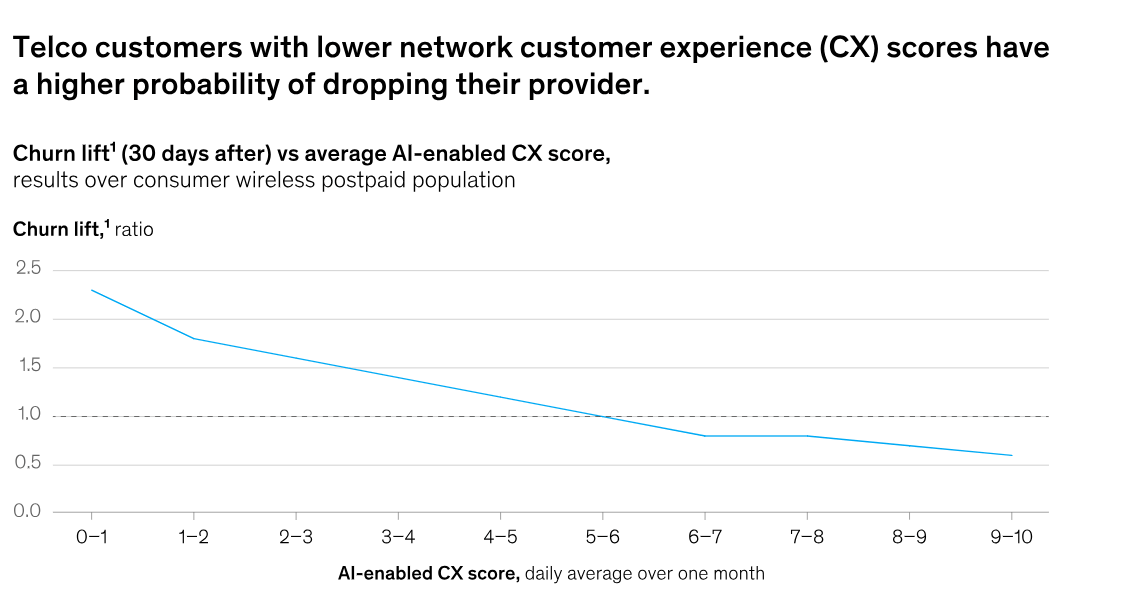
      Source: Google Cloud

    The churn lift ratio indicates the likelihood of customer churn relative to the average, while the AI-enabled CX score measures the quality of customer interactions as determined by AI insights. The trend shows that as the AI-enabled CX score improves (from 1 to 10), the churn lift ratio significantly decreases. This demonstrates that higher CX scores, driven by AI interventions, correlate with reduced customer churn, emphasizing the importance of AI in enhancing customer satisfaction and loyalty.

    • AI-Powered Customer Support: Self-service capabilities, such as virtual assistants and conversational AI, allow customers to resolve routine queries efficiently. From billing inquiries to troubleshooting connectivity, AI-driven systems reduce wait times, provide accurate resolutions, and free human agents to handle complex cases. This creates a seamless support experience, empowering customers while optimizing operational costs.

      Source: Google Cloud

    The chart shows the cumulative volume of customer interactions (vertical axis) against the percentage of use cases (horizontal axis). High-volume issues such as “amount due” and “make payment” dominate the first quartile (25%), while less frequent concerns like “device lost/stolen” and “add line” appear in later quartiles. This prioritization helps organizations focus on high-impact use cases for automation and process improvements, driving efficiency and better customer experience.

    According to McKinsey, AI could create between $80 billion and $174 billion in value for global CSPs, with 90% of this value driven by CX-related improvements. AI-powered personalization, predictive analytics, and self-service tools are no longer futuristic concepts—they are the present-day solutions shaping the future of telecom. By embracing these capabilities, operators can redefine customer relationships and position themselves as CX leaders in a competitive market.

    Driving Revenue Growth with AI

    Traditional telecom revenue streams are nearing saturation, making it critical for operators to explore new avenues for growth. AI has emerged as a game-changing technology, offering a total economic impact of $450–680 billion globally. Of this, $250–400 billion comes from established AI applications such as predictive analytics, advanced machine learning, and process automation, which have already proven their ability to optimize operations and increase profitability.

    Generative AI, however, is driving the next wave of innovation, contributing an additional $60–100 billion—about 15–40% of new economic value. This includes pioneering applications like hyper-personalized customer engagement, conversational AI, and intelligent content generation. Beyond these direct applications, generative AI could boost workforce productivity across telecom use cases, unlocking another $140–180 billion in value by streamlining workflows and enabling high-impact decision-making.

    • Harnessing Topic Mining to Unlock Insights

    The telecom industry generates enormous volumes of unstructured data from call centers, surveys, app stores and social media, yet 85% of this data goes unused (Gartner). Topic mining, powered by AI, transforms this untapped resource into actionable insights by identifying recurring themes, sentiment trends, and customer pain points.

    For example, sentiment analysis can highlight dissatisfaction with billing processes or rising interest in paperless billing. Companies leveraging topic mining report up to 25% improvement in Net Promoter Score (NPS) and a 15-20% reduction in churn. Additionally, this approach allows telecom operators to detect emerging customer needs, enabling them to innovate faster and refine services to meet expectations.

    By addressing key insights from topic mining, operators can enhance customer satisfaction, reduce call center volumes by up to 30%, and drive new revenue streams. As AI adoption grows, topic mining will become a cornerstone of customer experience strategies, helping telecom operators stay competitive and proactive in a dynamic market.
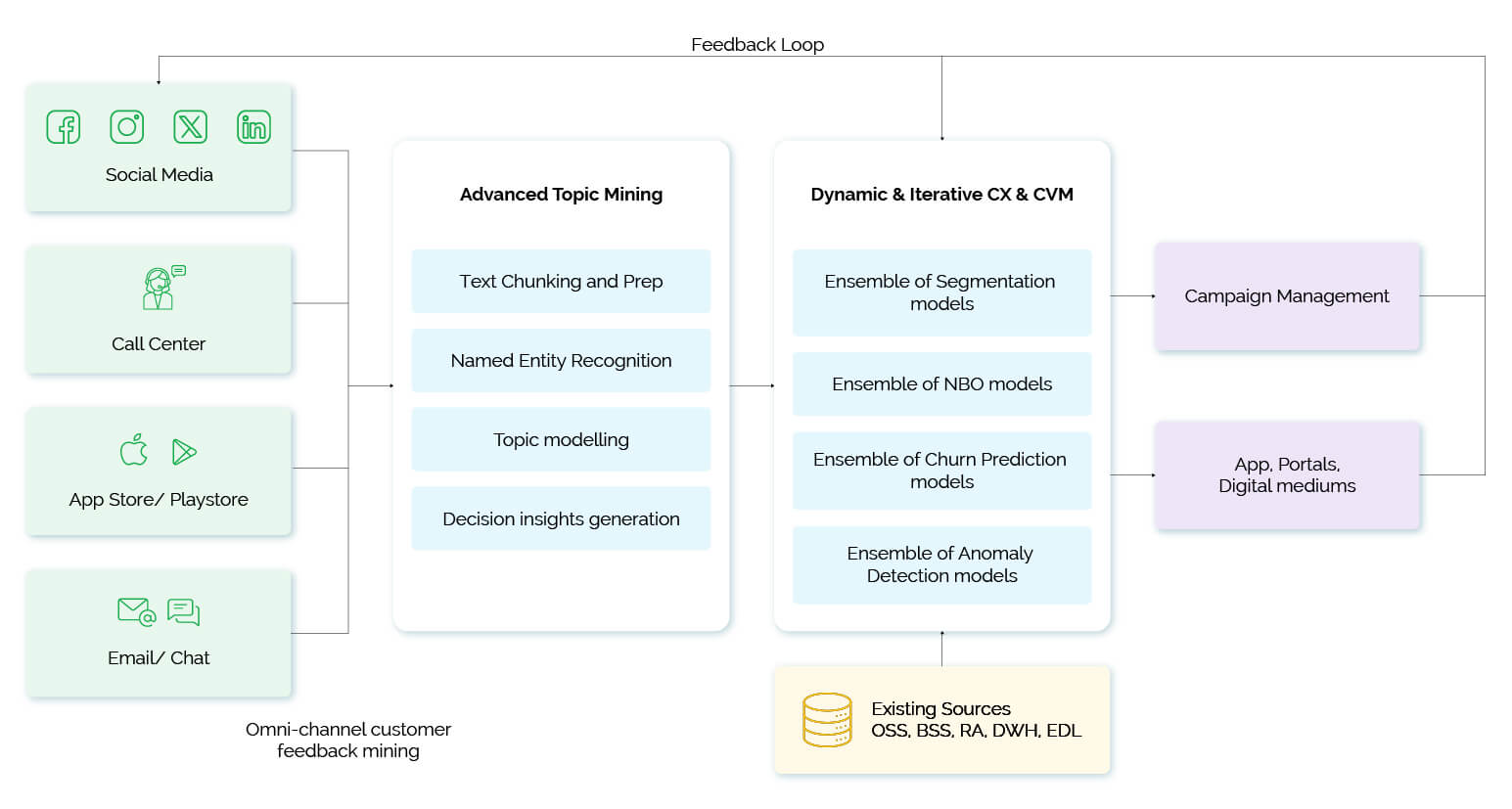
    Ai Flow

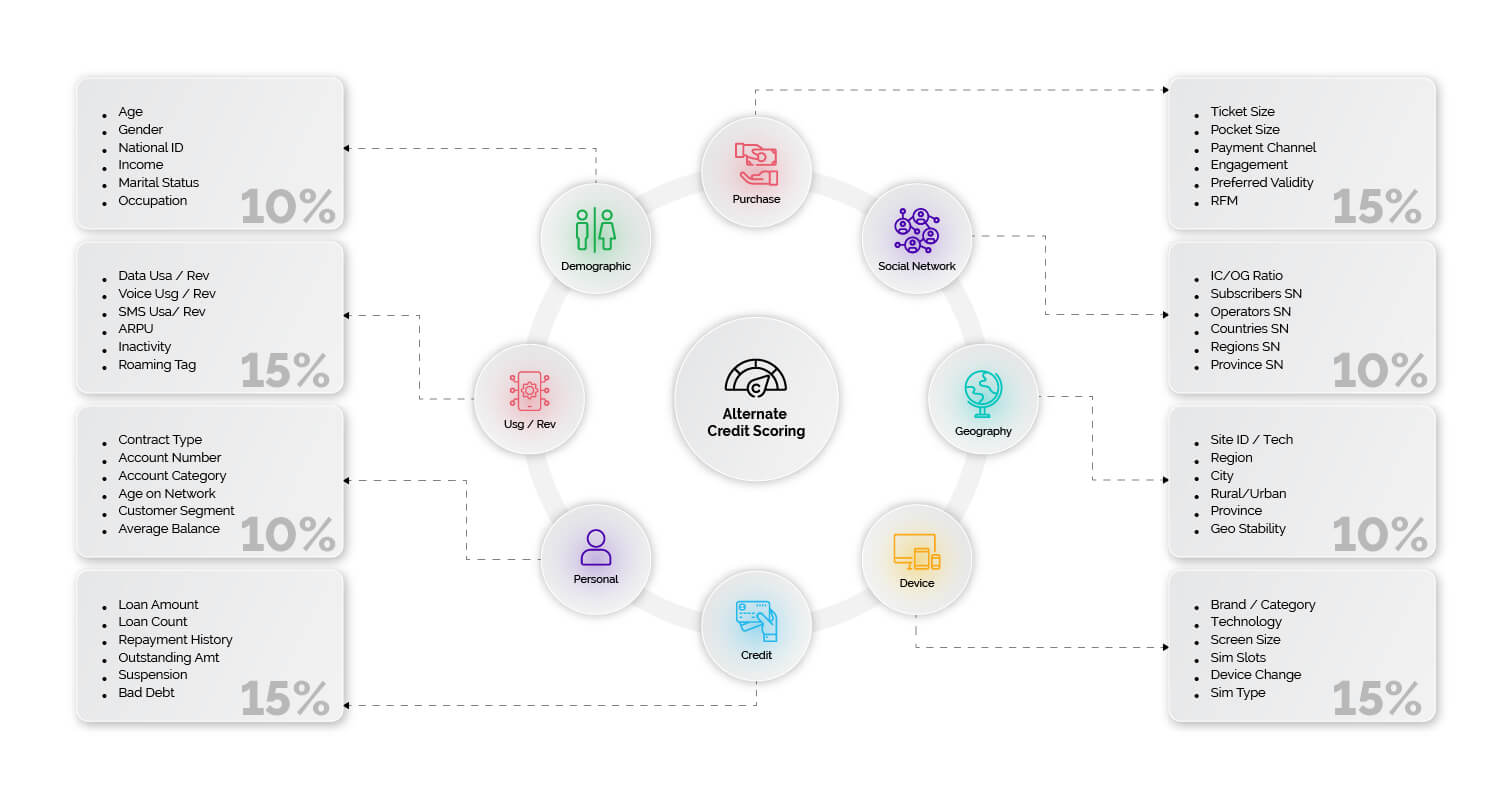
    • Expanding Market Reach with Alternate Credit Scoring

    Traditional credit scoring excludes billions of underbanked individuals, particularly in emerging markets. AI offers a solution by analyzing alternative data such as mobile usage patterns, payment histories, and service subscriptions to assess creditworthiness. This capability allows operators to tap into underserved markets, expanding their customer base and driving new revenue streams.
    • Product Portfolio Rationalization for Profitability

    Telecom operators often struggle with bloated product portfolios that confuse customers and inflate costs. AI evaluates customer preferences, sales performance, and market demand to streamline offerings. By eliminating redundant or underperforming products, operators can reduce marketing and operational expenses while focusing on high-margin offerings.

    • Increasing Customer Lifetime Value with Predictive Analytics

    AI helps identify high-value customers and optimize their journey by delivering personalized offers, loyalty programs, and targeted cross-sell opportunities.

    This ensures that operators maximize revenue potential over the entire lifecycle of each customer, turning one-time buyers into long-term advocates.

    Transformative Advantages of AI for Telecom Operators

    • Enhanced Personalization: AI enables tailored customer experiences, boosting engagement and loyalty.
    • Proactive Issue Resolution: Predictive analytics identify and resolve issues before they affect customers.
    • Revenue Growth: AI unlocks new markets through alternate credit scoring and data monetization.
    • Cost Reduction: Automation and optimization lower operational costs by up to 30%.
    • Improved Decision-Making: AI provides actionable insights from data, enabling faster and smarter decisions.
    • Scalable Operations: AI-driven tools streamline processes, ensuring seamless scalability as demand grows.
    Conclusion

    Telecom operators are rapidly embracing AI to address critical challenges, enhance services, and drive innovation. AI is no longer a futuristic concept—it is a tangible, transformative force reshaping how operators engage with customers, optimize networks, and unlock new revenue streams. Recent trends show significant investments in AI-driven solutions, reflecting a growing recognition of its potential to deliver measurable business outcomes.

    AI adoption is already driving cost reductions, improving customer satisfaction, and enabling operators to scale efficiently. From predictive analytics and generative AI for customer engagement to intelligent network management, telecom operators are leveraging AI to reimagine traditional processes and stay ahead in a competitive landscape.

    This blog demonstrates the opportunities AI offers to transform the telecom sector. Now is the time for operators to act decisively, embracing AI to position themselves as leaders in the next wave of industry evolution. By integrating AI-driven solutions, operators can not only meet the demands of today’s dynamic market but also shape the future of telecommunications

    Embark on Your AI-Powered Journey with Subex!

    Schedule a meeting with our AI experts!

  • Generative AI in the Telecom Industry | The Ultimate Guide

    Generative AI in the Telecom Industry | The Ultimate Guide

    The telecommunications industry, a sector known for its dynamic evolution and technological advancements, is on the cusp of a transformative breakthrough with the integration of Generative AI (Gen AI). This emerging technology heralds a paradigm shift in the operational, customer interaction, and service delivery methodologies of telecom companies. In this blog, we delve into the essence of Gen AI and unravel its potential applications within the telecom sector.

    Understanding Generative AI

    Generative AI, a sophisticated subset of artificial intelligence, harnesses the power of deep learning (DL) algorithms to fabricate digital content, such as images, videos, and audio, that mimics the quality and complexity of human-generated output. This groundbreaking approach empowers machines to assimilate patterns from extensive datasets and generate original content, bypassing the need for predefined templates or human intervention.

    The Mechanics of Generative AI

    At the heart of Gen AI lies its ability to utilize neural networks, which are intricate webs of interconnected nodes. These networks undergo rigorous training to discern and internalize patterns within massive pools of data. During the training phase, the neural networks modify the weights of each node to align the generated output with the targeted outcome. When fully trained, these networks are capable of producing novel content, beginning with a random input (seed value) and progressively refining the output to enhance its realism and coherence.

    Transforming Telecom with Generative AI

    The integration of Gen AI, in synergy with Machine Learning (ML), is poised to revolutionize the realm of mobile telecommunications, particularly in the areas of network orchestration and management. This technological synergy is set to overhaul traditional approaches to telecom operations by injecting automation into complex decision-making processes, enabling predictive responses to real-time network scenarios, and significantly enhancing overall network efficiency.

    One of the most compelling aspects of Gen AI in telecom is its capacity to optimize resource distribution within the network. This capability not only ensures the streamlined operation of telecom services but also opens avenues for innovation in service delivery. Telecom operators equipped with Gen AI tools can now foresee network demands, preemptively allocate resources, and ensure optimal network performance, thus elevating the user experience to unprecedented levels.

    Moreover, Gen AI’s potential in telecom extends beyond operational efficiency. It encompasses a broad spectrum of applications, including customer service enhancements through AI-driven interactions, personalized service offerings, and advanced security protocols that safeguard network integrity against emerging cyber threats.

    As we venture deeper into this Gen AI-driven era in telecom, we witness a convergence of technological finesse and strategic foresight, paving the way for telecom operators to not only adapt to the ever-changing technological landscape but also to redefine the boundaries of what is possible in telecommunications.

    Exploring Different Sectors Leveraging Gen AI Services

    The implementation of Gen AI in the telecom industry is not just confined to network operations. Its applications extend across various sectors, reshaping everything from customer interactions to infrastructural developments:

    1. Advanced Analytics for Customer Insights: Gen AI delves deep into customer data to uncover insights that drive personalized experiences. It goes beyond traditional analytics by predicting customer behavior and trends, leading to more targeted service offerings and improved customer engagement.
    2. Automated Content Creation for Marketing and Communication: In the realm of marketing, Gen AI is revolutionizing content creation. By generating innovative and engaging content automatically, it enables telecom companies to maintain a fresh and appealing presence in their marketing and communication efforts.
    3. Streamlining Operations with AI-Driven Automation: Gen AI significantly enhances operational efficiency by automating routine tasks, thus freeing up human resources for more strategic initiatives. This is particularly beneficial in managing vast telecom networks where efficiency and accuracy are paramount.

    Uses of Generative AI in Telecom

    Building on the transformative applications of Gen AI in telecom, let’s delve deeper into each area:

    1. Automated Anomaly Detection : Generative AI plays a pivotal role in detecting billing anomalies within financial datasets. Utilizing sophisticated algorithms, it scrutinizes billing records, identifies irregularities, and promptly flags potential billing errors, discrepancies, or fraudulent activities. By automating this process, businesses can proactively mitigate financial risks and ensure the accuracy and integrity of their billing systems.
    2. Predictive Billing Analysis and Resolution : AI-driven predictive analysis based on historical billing data assists in forecasting future billing trends. This empowers businesses to anticipate market changes, optimize resources, and strategize proactive financial measures. Moreover, AI algorithms facilitate automated resolution workflows by recommending and initiating appropriate courses of action to rectify billing anomalies swiftly and efficiently. This streamlined approach minimizes manual interventions, enhancing operational efficiency and ensuring accurate billing processes.
    3. Automated Code Completion: Generative AI serves as an invaluable co-pilot for software developers, significantly enhancing productivity through automated code completion. By analyzing code structures and contextual patterns, AI-generated suggestions expedite coding processes, reducing errors and enhancing the overall development experience. This technology not only expedites programming tasks but also aids in learning and understanding coding conventions, fostering efficient collaboration between developers and AI systems.
    4. Writing Assistance and Collaboration: In content creation, AI acts as a collaborative co-pilot by providing real-time writing assistance. It offers grammar checks, refines language nuances, and generates insightful ideas for various forms of written content. This collaborative AI helps authors, bloggers, journalists, and creative writers by suggesting alternative phrasings, offering vocabulary enhancements, and proposing structural improvements. It acts as an indispensable aid in refining the quality of written work and expediting the content creation process.
    5. Enhanced Network Optimization: Gen AI’s capability to analyze complex network data in real-time facilitates the identification and resolution of issues such as signal interference and congestion before they affect service quality. This proactive approach ensures optimal network performance and user satisfaction.
    6. Proactive Predictive Maintenance: By predicting when and where equipment failures might occur, Gen AI enables telecom operators to move from a reactive to a proactive maintenance model. This shift not only minimizes downtime but also extends the life of equipment, thus optimizing capital expenditure.
    7. Revolutionizing Customer Service with Virtual Agents: Gen AI-powered virtual agents and chatbots can handle a wide range of customer queries, from simple FAQs to more complex troubleshooting, providing a seamless and efficient customer service experience.
    8. Data-Driven Personalized Marketing: Utilizing customer data, Gen AI crafts personalized marketing campaigns that resonate with individual customers, significantly enhancing engagement and conversion rates.
    9. Strategic Network Planning: By predicting future demand and usage patterns, Gen AI aids in the strategic planning of network expansions and upgrades, ensuring that resources are allocated where they are most needed.
    10. Resource Allocation for Network Efficiency: Gen AI’s ability to anticipate where and when network resources will be in demand enables a more dynamic and efficient allocation, thus improving overall network performance.
    11. Bolstering Network Security: In an era of increasing cyber threats, Gen AI enhances network security by identifying and responding to potential vulnerabilities and attacks promptly.
    12. Guaranteeing Quality of Service: Gen AI plays a crucial role in maintaining and improving the quality of service by predicting and preventing potential issues that could lead to network degradation.
    13. Building Intelligent Infrastructure: The development of self-optimizing networks powered by Gen AI marks a significant advancement in infrastructure management, leading to networks that are not only more efficient but also more adaptable to changing conditions.
    14. Virtual Assistants and Smart Billing for Enhanced Customer Experience: Gen AI’s role in creating sophisticated virtual assistants and intelligent billing systems personalizes the customer experience, making interactions more convenient and billing more accurate.
    15. Leveraging Network Analytics for Business Growth: Gen AI assists telecom companies in extracting valuable insights from network data, which can be used for strategic decision-making and identifying new business opportunities.

    Challenges in Implementing Generative AI in Telecom

    Implementing Gen AI in the telecom industry involves overcoming several challenges:

    1. Ensuring Data Quality and Availability: High-quality data is the cornerstone of effective Gen AI models. Telecom companies must ensure the accuracy, completeness, and availability of data for training and deploying Gen AI systems.
    2. Seamless Integration with Existing Systems: Integrating Gen AI technologies with current telecom infrastructure and systems can be a complex process, requiring careful planning and execution.
    3. Developing Technical Expertise: Building and maintaining Gen AI solutions requires specialized skills. Telecom companies may need to invest in training existing staff or recruiting new talent with the requisite expertise.
    4. Navigating Regulatory Compliance: The telecom sector is subject to stringent regulations, especially concerning data privacy and security. Gen AI implementations must adhere to these regulatory requirements to avoid legal and reputational risks.
    5. Managing Cost Implications: The initial investment for implementing Gen AI can be significant. Smaller operators, in particular, may find the costs challenging, necessitating a clear understanding of the return on investment.
    6. Addressing Ethical Considerations: Ethical concerns such as privacy, bias, and accountability are crucial. Telecom companies must ensure their Gen AI applications uphold ethical standards and foster trust among stakeholders.
    7. Unintended Bias Amplification: Generative AI models might inadvertently amplify existing biases present in the training data, leading to the generation of biased or prejudiced content. Hallucinations could further exacerbate this issue by creating entirely synthetic content that reflects or exaggerates these biases.
    8. Unpredictable Output: Hallucinations can cause AI models to generate unpredictable and unrealistic outputs, leading to inaccurate or nonsensical information. This challenges the reliability and trustworthiness of the AI-generated content, especially in critical applications such as medical diagnosis or autonomous systems.
    9. Ethical Implications: Generating hallucinations that portray sensitive, offensive, or harmful content raises ethical concerns. This content might infringe upon societal norms, propagate misinformation, or potentially cause harm by disseminating false information or triggering negative emotions.
    10. Lack of Control: AI developers may struggle to control or mitigate hallucinations in their models. This lack of control can hinder the ability to ensure the AI generates content that aligns with desired outcomes, making it challenging to regulate or moderate AI-generated content effectively.
    11. Legal and Regulatory Issues: The emergence of hallucinations in Generative AI could lead to legal and regulatory challenges. If AI-generated content infringes on copyrights, produces malicious content, or violates privacy rights, it could result in legal liabilities for the developers or users of the AI models.
    12. User Perception and Trust: Hallucinations might lead users to distrust AI-generated content, affecting its adoption and acceptance in various domains. Users may become skeptical or hesitant to rely on AI-generated information due to concerns about its accuracy and reliability.
    13. Resource Intensiveness: Addressing hallucinations often requires additional computational resources and complex algorithms to detect and mitigate their occurrence. This increased resource demand could limit the scalability and efficiency of Generative AI systems.
    14. Continual Monitoring and Maintenance: Constant monitoring and updates are necessary to detect and mitigate hallucinations as AI models evolve and encounter new data. This ongoing effort requires significant time, expertise, and resources.

    Conclusion: The Transformative Era of Generative AI in Telecom

    As we witness the unfolding era of technological advancements in the telecom sector, Generative AI emerges as a pivotal force, poised to redefine the industry’s landscape. Its profound impact extends across network optimization, customer service, fraud detection, and personalized marketing, heralding a new age of efficiency and customer-centric innovation. The future of telecom, driven by the dynamic capabilities of Gen AI, is not just about enhanced operational effectiveness; it’s about crafting an ecosystem that is both responsive and intuitive. Telecom companies, by harnessing the power of Gen AI, are not only elevating their services but are also laying the foundation for a future where communication is seamless, secure, and supremely tailored to individual needs and preferences.

    In this rapidly evolving landscape, Gen AI stands as a beacon of transformation, guiding telecom companies through the complexities of modern demands and opportunities. As the industry continues to embrace digital acceleration, Gen AI will play an increasingly critical role, not just in adapting to changes but in shaping the very nature of telecommunication services. This journey into the Gen AI-driven future promises a realm where innovation is continuous, customer engagement is deepened, and the potential for growth is boundless. For the telecom sector, the integration of Generative AI is more than a technological upgrade; it’s a strategic leap into a future rich with possibilities and advancements.

    Additional Resources

    1. AI in Telecom Industry Benefits and Use Cases
      The integration of Artificial Intelligence (AI) in telecom revolutionizes operations, boosting efficiency and customer engagement. AI processes vast data, yielding insights improving service delivery, predictive maintenance, chatbot-driven customer support, and network optimization.
    2.  AIOps Solution for Telecom Industry
      AIOps automates network operations, combining big data analytics and machine learning. It aids 5G and IoT management, enabling real-time anomaly detection, predictive maintenance, and optimal resource allocation for enhanced efficiency and customer satisfaction.
    3.  Robotic Process Automation in Telecom Industry
      Robotic Process Automation (RPA) drives efficiency by automating tasks like billing and customer service. It ensures data accuracy, compliance adherence, and accelerates customer response times.
    4.  Empower your Business with Generative AI Services
      Generative AI creates tailored content for advertising, customer support, and product design, boosting creativity and customer experience.
    5.  Generative AI Assessment and Roadmap
      A structured assessment and roadmap for integrating Generative AI ensure successful implementation, addressing infrastructure, data readiness, and compliance measures.

    Ready to revolutionize your telecom services with generative AI?

    See our Demo in Action!

  • Top AI use cases in Telecom

    Top AI use cases in Telecom

    Transforming Customer Analysis and Marketing

    In the ever-evolving realm of telecommunications, the integration of Artificial Intelligence (AI) has brought about a seismic shift in how companies analyze customer data and strategize marketing initiatives. Let’s explore the various AI-driven applications reshaping customer analysis and marketing strategies within the telecom sector:

    Customer Smart Segmentation

    Telecom providers are leveraging AI-powered algorithms for customer segmentation, going beyond traditional demographic divisions. This advanced segmentation allows for more nuanced categorization based on behaviors, preferences, and usage patterns. By understanding customers at a granular level, telecom AI companies tailor their offerings and services to match diverse customer needs more effectively.

    Sentiment Analysis (Social Media)

    The pulse of public opinion lies within social media platforms, and AI-driven sentiment analysis is enabling telecom AI companies to decipher this sentiment effectively. By analyzing social media feeds, telecom providers gain valuable insights into customer perceptions, concerns, and trends. This understanding helps in promptly addressing issues, improving brand perception, and refining marketing strategies.

    Churn Prediction

    AI algorithms analyze vast datasets to predict customer churn, identifying patterns and behaviors indicative of potential attrition. By forecasting which customers are at risk of leaving, telecom companies can implement targeted retention strategies. This proactive approach aids in reducing churn rates and retaining valuable customers.

    Customer Lifetime Value (CLTV)

    Estimating the Customer Lifetime Value (CLTV) is crucial for telecom AI companies to prioritize and personalize customer interactions. AI helps in calculating CLTV by considering various factors such as past behavior, usage patterns, and spending habits. This insight enables companies to focus resources on high-value customers, optimize offerings, and maximize long-term profitability.

    Port Out Prediction

    AI algorithms predict instances where customers might switch to other service providers. This proactive analysis allows telecom AI companies to intervene with tailored offerings or incentives, aiming to retain customers before they decide to switch.

    Campaign Intelligence & Analytics

    Utilizing AI for campaign analytics empowers telecom providers to optimize marketing strategies. By analyzing data from past campaigns, AI identifies successful patterns and fine-tunes future campaigns for maximum impact. This data-driven approach ensures more targeted and efficient marketing endeavors.

    Recommendation Engine, Next Best Offer (NBO)

    AI-powered recommendation engines analyze customer behavior and preferences to suggest personalized services or products. This capability enhances customer engagement, upselling opportunities, and overall satisfaction by offering tailored recommendations.

    Offer Propensity

    AI algorithms predict the likelihood of customer acceptance for various service offerings. This insight allows telecom AI companies to optimize their offerings, tailoring them to individual customer preferences and increasing the chances of acceptance.

    Ticket Prediction and Classification

    AI-driven systems efficiently manage customer service requests by predicting and categorizing tickets. This streamlines issue resolution, ensuring timely and accurate customer support.

    Primary Application in B2C Product Portfolio Rationalization

    AI empowers telecom providers to optimize their product portfolios by leveraging data-driven insights. Through AI algorithms, telecom companies analyze market demands, consumer preferences, and performance metrics. This data-driven approach aids in making informed decisions about the products offered to consumers, ensuring offerings are tailored to meet customer needs and preferences.

    CX Co-Pilot: Billing Anomalies

    AI-driven CX (Customer Experience) Co-Pilot solutions are instrumental in identifying billing anomalies. These anomalies might range from discrepancies in billing statements to irregularities in invoicing. By utilizing AI algorithms, telecom companies can swiftly detect and rectify billing discrepancies, ensuring accuracy and transparency in customer billing experiences.

    CX Co-Pilot: Promo Queries

    Another area where AI plays a pivotal role in telecom operations is in handling promotional queries. AI-driven CX Co-Pilot solutions efficiently address customer inquiries regarding ongoing promotions or offers. By swiftly and accurately responding to these queries, telecom providers ensure that customers receive comprehensive and timely information about available promotions.

    Forecasting – Value, Customer Count, Volume, Revenue

    AI-powered forecasting tools are invaluable assets in the telecom sector. These tools leverage complex algorithms to predict and forecast crucial metrics such as the value, customer count, volume, and revenue. Telecom companies rely on these forecasts to make informed decisions, plan resources, and strategize for future growth and market trends.

    Churn Prediction for Wallet Users

    AI-based churn prediction models tailored for wallet users have become instrumental for telecom providers. These models analyze user behavior within wallets and predict potential churn instances. By proactively identifying customers at risk of leaving, telecom AI companies can devise targeted retention strategies, ultimately fostering customer loyalty and reducing churn rates.

    Assurance and Fraud Detection:

    AI-driven systems are at the forefront of detecting and preventing fraudulent activities within telecommunications networks. These systems utilize sophisticated algorithms to continuously monitor vast datasets for anomalies, irregularities, and suspicious patterns, ensuring the integrity of telecom operations.

    SIMBOX Fraud Detection:

    AI algorithms are adept at identifying SIMBOX fraud, a prevalent form of telecom fraud involving the illegal rerouting of international calls. By analyzing call data and usage patterns, AI swiftly detects and mitigates instances of SIMBOX fraud, safeguarding telecom operators from revenue losses.

    First Bill Churn Fraud Identification:

    AI plays a pivotal role in identifying instances of first bill churn fraud. This type of fraud occurs when customers terminate services soon after receiving their initial bill to evade payment. AI models analyze billing patterns and customer behavior, flagging potential cases of first bill churn fraud for investigation.

    Subscription and MoMo Fraud Prevention:

    AI-powered systems excel in detecting subscription fraud and mobile money (MoMo) fraud. These systems employ advanced analytics to monitor user activities, identifying suspicious behavior and thwarting unauthorized or fraudulent transactions, thereby ensuring a secure telecom environment.

    Contract Compliance and Risk Minimization:

    AI aids in ensuring contract compliance and mitigating risks associated with contractual violations. By scrutinizing contractual terms and usage data, AI systems verify adherence and promptly highlight discrepancies or potential breaches.

    Co-Pilot Solutions for Handset and Commission Fraud:

    AI-driven Co-Pilot solutions assist in detecting various forms of handset-related fraud and commission fraud instances. These solutions analyze usage patterns and transactional data to identify anomalies, ensuring transparency and fairness in commission-based transactions.

    Conclusion: AI’s Evolutionary Impact in Telecommunications

    AI’s integration has revolutionized telecommunications, empowering companies across multifaceted domains. From customer-centric tools like Smart Segmentation, Sentiment Analysis, and Churn Prediction, to robust fraud detection mechanisms combating SIMBOX, subscription, and financial fraud, AI fortifies security and enhances customer experiences.

    The breadth of AI expertise, from Gen AI innovations to common solutions, signifies continual industry evolution. AI remains pivotal in shaping operational efficiencies and strategic direction, propelling telecom into an era of unparalleled connectivity and security. As AI’s transformative influence expands, the telecom industry embraces innovation, driving a future characterized by seamless connectivity, enhanced services, and customer-centricity. AI isn’t merely a technological enabler; it’s the cornerstone shaping our interconnected world’s evolution within telecommunications.

    Discover the Future of Telecom with AI!

    Download Our Comprehensive Guide on AI Use Cases in Telecom Today!

  • How AI is Redefining Customer Segmentation in Telecom

    How AI is Redefining Customer Segmentation in Telecom

    In the grand tapestry of telecommunications, a sector pivotal to our global dialogue, there emerges a renaissance of sorts, powered by the cerebral might of Artificial Intelligence (AI). Particularly in customer segmentation, this evolution has been nothing short of revolutionary. Traditional segmentation, once reliant on demographic data, is yielding to a more nuanced AI-driven palette. This paradigm shift is not merely a technological leap but a strategic metamorphosis, fundamentally recasting the telecom narrative in terms of customer understanding, engagement, and service.

    The Grand Transition: From Traditional to AI-Driven Segmentation

    The Shift from Traditional to AI-Powered Segmentation

    In the old days, big telecom companies used to steer their way through understanding customers solely based on simple demographics like age, gender, income, and location. It was like sailing with a basic map – helpful, but it only scratched the surface. They’d cast a wide net hoping to catch a few specific types of customers, but their approach lacked that personal touch.

    But here comes AI, the game-changer! Telecom companies are now stepping into a more advanced era. They’re not just looking at who their customers are; they’re diving deep into how they behave, what matters to them, and their entire journey using telecom services. This new approach paints a vivid picture of their customer base, way more detailed than before.

    The Inner Workings of AI-Powered Segmentation in Telecom: Making Harmony from Data

    When it comes to understanding how customers behave, AI is like a conductor, bringing together a symphony of customer data. It includes everything from how they browse to what services they use and how they interact with the company. By studying these patterns, AI divides customers into groups based on their unique habits, paving the way for personalized marketing and service.

    Finding Value: AI’s Search for the Ultimate Prize

    AI takes understanding customer value to the next level. It’s not just about the money they bring in; it’s about predicting their potential worth over time. This method doesn’t just identify high-value customers today but also pinpoints those who might become high-value in the future, helping telecom companies focus their efforts on keeping them around.

    Tracking the Customer Journey: Following the Storyline

    In the world of tracking customer experiences, AI plays the role of storyteller. It follows each customer’s journey with telecom services, from the first sign-up to becoming long-term users. AI identifies and customizes services and messages for every stage of this journey, making it more meaningful for customers.

    Understanding Customer Movement: Predicting the Shuffle

    One of the strong suits of AI-driven segmentation is its ability to predict how customers move around. It can foresee when customers might change their usage or even leave entirely. This kind of insight is crucial for strategies aimed at keeping customers or making their journey better.

    So, in essence, AI is revolutionizing how telecom companies understand and serve their customers. It’s like switching from a basic map to a GPS with real-time traffic updates—a whole new level of precision and understanding.

    The Four Pillars of AI-driven Segmentation in Telecom

    1. Customer Value Segmentation: Precision in Profitability
      In the world of telecom, AI has revolutionized customer value segmentation. Through advanced decile analysis, AI enables telecom companies to classify customers into segments based on their financial value. This method extends beyond the traditional assessment of current value, integrating predictive analytics to forecast a customer’s lifetime value. This strategic approach allows for more refined marketing tactics and enhances profitability by targeting high-value customers with tailored services and offers.
    2.  Customer Behavior Segmentation: Insight-Driven Marketing
      AI is instrumental in dissecting vast repositories of customer behavioral data. By analyzing patterns such as service usage, purchasing habits, and online interactions, AI assists telecom companies in accurately predicting customer needs and preferences. This insight-driven approach leads to more effective marketing campaigns and service offerings, each tailored to match the unique behaviors and preferences of different customer segments.
    3. Customer Lifecycle Segmentation: Targeted Engagement Strategies
      AI-driven segmentation empowers telecom companies to effectively monitor and engage with customers at different stages of their lifecycle with the service provider. From new users to long-term customers, AI helps in identifying the specific needs and opportunities at each lifecycle stage. This enables the development of targeted engagement strategies, such as specialized offers for new subscribers or loyalty rewards for long-standing customers, enhancing customer retention and satisfaction.
    4. Customer Migration Segmentation: Anticipating and Managing Churn
      A critical but often overlooked aspect of segmentation is understanding and managing customer migration patterns. AI plays a key role in identifying customers who are at risk of decreasing in value or churning. By predicting these changes, telecom companies can proactively implement retention strategies and personalized engagement plans to prevent churn and maintain a stable customer base.

    Advanced Segmentation: A Strategic Imperative in the Telecom Industry

    Advanced segmentation, as emphasized by industry experts, is more than just beneficial for telecom businesses; it’s a fundamental requirement for ensuring customer satisfaction. In the highly competitive and rapidly evolving telecom sector, delivering relevant and customized communications to customers is essential. Advanced segmentation enables telecom companies to dissect their customer base into more nuanced groups based on a variety of factors including usage patterns, billing history, and service preferences. This precision allows for targeted marketing and service offerings that resonate more closely with individual customer needs and expectations, thereby enhancing their overall experience and perception of the telecom provider.

    The Role of Personalization: A Key to Customer Loyalty and Market Expansion

    Segmentation is the foundation, but the true value is unlocked through personalization strategies. Personalization in telecom is about tailoring the customer experience to individual preferences, habits, and needs. This approach is increasingly essential in an industry where customer retention and acquisition are paramount. Personalization can range from customized service plans and tailored marketing messages to individualized customer support. It’s about creating a feeling of being uniquely understood and valued by the service provider, which in turn fosters loyalty and can lead to increased customer lifetime value. In an age where customers are bombarded with generic marketing messages, personalization in telecom acts as a differentiator, enhancing customer engagement and satisfaction.

    Navigating the Challenges and Embracing Future Directions in Telecom

    The journey towards effective AI-driven segmentation and personalization in telecom, however, comes with its set of challenges. Paramount among these are concerns related to data privacy and security. In an era where data breaches are increasingly common, telecom companies must ensure that customer data is handled with the highest standards of security and compliance with regulations. This responsibility extends to the ethical use of customer data in segmentation and personalization efforts.

    Another significant challenge is the need for continuous technological advancement. Telecom companies must invest in the latest AI and machine learning technologies to stay ahead in the game of advanced segmentation and personalization. This requires not only financial investment but also a strategic vision to integrate these technologies seamlessly into existing systems.

    Moreover, the rapidly changing customer preferences in the telecom industry require companies to be agile and responsive. The market is dynamic, with new trends and customer expectations emerging constantly. Telecom companies must have a deep understanding of these changes and the flexibility to adapt their segmentation and personalization strategies accordingly.

    Conclusion

    In conclusion, AI is fundamentally revolutionizing the landscape of customer segmentation within the telecommunications sector. By facilitating more precise, dynamic, and predictive segmentation methodologies, AI is enabling telecom operators to refine their customer retention strategies and optimize their targeted marketing efforts. These technological advancements are not merely enhancing operational efficiencies; they are crucial in delivering a more personalized and satisfying customer experience.

    As we navigate through an era marked by rapid technological evolution and increasingly sophisticated consumer expectations, the integration of AI-driven segmentation and personalization strategies becomes imperative for telecom companies. This approach is essential not only for maintaining a competitive edge but also for aligning with the shifting paradigms of customer engagement and satisfaction.

    Embracing these AI-driven methodologies is more than a strategic choice—it is a requisite adaptation to the evolving demands of the telecom industry. Companies that adeptly incorporate these advanced technologies into their customer relationship management frameworks are poised to lead in customer satisfaction, market share growth, and sustainable business success.

    The future of telecommunications is unequivocally intertwined with the continued advancement and application of AI. As the industry continues to evolve, those who harness the power of AI for customer segmentation and personalization will undoubtedly be at the forefront of innovation and customer-centricity.

    Discover the Future of Telecom Customer Segmentation with AI!

    See our Demo in Action!

  • Customer Lifetime Value (CLTV) for a Digital Wallet Business

    Customer Lifetime Value (CLTV) for a Digital Wallet Business

    Customer Lifetime Value (CLTV) is a metric that measures the total revenue/profit that a customer is expected to bring over the course of their lifetime with the business. It is an important metric that calculates the worth of all customers. CLTV models can then help address issues such as

    “We have lost this high-value customer, how much can I afford to spend to win them back?” or

    “Which customers should I be targeting to maximize my return on investment?”

    Here are some reasons why understanding and knowing CLTV is essential to a business:

    1. It helps in targeting profitable customers: When the CLTV of each customer is known, it helps in identifying customers who need to be retained or targeted for more products/services and which customers can be let go if there is a risk of churn.

    2. It helps in understanding the kind of customers a business is acquiring: It is always desirable that a business acquires as many as high-value customers, so to evaluate this, calculating the CLTV of new customers relative to existing customers is important. If the CLTV of new customers is higher than that of existing customers, it is a positive for the business as this indicates that the new customers are of high value and profitable customers.

    3. Campaign Effectiveness: CLTV can also be used as a proxy to determine the effectiveness of campaigns where the purpose is to increase the value or revenue from customers. For instance, if a cross-sell or up-sell campaign is being done on a set of customers, and if the CLTV of those customers goes up in the near term, then we can reasonably say that the campaign has been successful.

    4. Business performance: CLTV can also be used as a business performance metric since it essentially tells us the value of all customers, which in turn tells us the value of the business. So, if CLTV increases over time, it is a positive sign for the business.

    5. ROI on Customer acquisition cost (CAC): For a business, (CLTV: CAC) ratio is a critical business metric. This tells us how much value the customer is bringing to the business for every dollar spent on acquiring the customer. This ratio tells you how profitable a customer will be over their lifetime. CLTV: CAC ratio can also yield insights into how efficiently the sales and marketing team are spending money to acquire customers.

    Calculating Customer Lifetime Value

    There are different ways to calculate based on different business models. Here, we will look at calculating CLTV for a digital wallet business.

    CLTV is calculated as follows:

    CLTV = ((T*AOV) AGM)) ALT

    There are four components when it comes to calculating CLTV:

    Component Definition Calculation
    T Average monthly transactions  No Of Transactions/ No of Active Months
    AVPT Average Value Per Transaction Total Transaction Value/ No of Transactions
    ALT Avg Customer Lifespan (In Months) 1/churn probability
    AGM Average gross margin (Revenue – Costs)/Revenue

    Out of these 4 components, Customer lifespan is somewhat difficult to calculate. If customer churn data is available for a longer period, i.e., 8-10 years, then we can arrive at customer lifespan using 1/ (average churn rate).

    Our Methodology

    We at Subex built a CLTV solution for a digital wallet company as part of our campaign intelligence offering.

    Here is the process we followed:

    • We took Active 90 subscribers as our base for this solution and calculated T, AVPT, and AGM at the monthly level using the last 90 days of data.
    • To calculate Average customer lifespan (ALT), we relied upon our churn probability prediction model, which was already integrated with our campaign intelligence solution, and thus, we arrived at customer lifespan. Since we wanted to reduce skewness in churn probability, we decided to create customer segments using RFM and then took the median of churn probability for each segment and used that to calculate the average customer lifespan.
    • We calculated Recency, Frequency, and Monetary scores and created a composite score by assigning weights to each score.

    RFM Composite Score: 60%(Monetary) +20%(Frequency) + 20%(Recency)

    • Using RFM composite scores, we created RFM segments based on percentiles with the following logic. For example, a very low segment contains customers with RFM scores between 0 and 15th percentile.
    RFM Segmentation Segmentation Logic
    Very Low 0-15th Percentile
    Low 15th – 30th Percentile
    Medium 30th – 45th Percentile
    Medium High 45th – 60th Percentile
    High 60th – 75th Percentile
    Very High 75th – 90thPercentile
    Elite Above 90th Percentile
    • For each of these segments, median churn probability scores were calculated, which were then used to calculate the average customer lifespan. This gave us all the components for the calculation of CLTV.

    Integrating Customer Retention Module

    We also built a customer retention module basis CLTV scores of customers. As mentioned earlier, CLTV provides insights on which set of customers’ needs to be prioritized for retention.

    The process of building this module was as follows:

    • We first created risk buckets based on the churn probabilities.
    Risk Bucket Distribution
    Low Risk 0-50%
    Medium Risk 50-70%
    High Risk 70-90%
    Very High Risk 90-100%

    So, a customer having a churn probability of less than 50% will belong to the Low-Risk bucket.

    • Using our RFM segmentation and risk buckets, we created a matrix to prioritize customers for retention.
    RFM Segmentation Vs Risk Bucket Low Risk Medium Risk High Risk Very High Risk
    Very Low P5 P4 P3 P3
    Low P4 P4 P3 P3
    Medium P4 P3 P3 P3
    Medium High P4 P2 P2 P2
    High P3 P2 P1 P1
    Very High P3 P2 P1 P1
    Elite P2 P2 P1 P1

    For prioritization, we created the order as follows: P1>P2>P3>P4>P5

    • Since a customer belonging to either high-risk or very high-risk segment and high, very high, and Elite RFM segment should be prioritized first in a retention campaign, we tagged them as P1. We then continued to move down the prioritization order for customers with lower risk and lower value.
    • When spending on campaign promotions to retain customers, the strategy should be to spend more on highly valuable customers first and then decrease the spending amount as we go down the prioritization order. We created a spending band for each of the priority groups as follows.
    Campaign Spend Bucket Lower Limit Spend Upper Limit Spend
    P1 20% 25%
    P2 15% 20%
    P3 10% 15%
    P4 5% 10%
    P5 0% 5%

    So, suppose a retention campaign is being run on customers in the P1 category. In that case, the maximum amount we can spend on the campaign is 25% of their respective CLTV, so even if we can successfully retain any of the customers, we will still make 3-4 times of our campaign spends.

    Thus, by using CLTV, we created an end-to-end campaign management solution.

    It is also essential to know some of the pitfalls of CLTV because at the end of the day, CLTV is a prediction; therefore, caution is necessary when using it as a guide for making decisions.

    Pitfalls of CLTV:

    1. CLTV cannot be used to justify campaign expenditure, and it is only good as its assumptions.
    2. CLTV is not immune to changes in the macro environment. If inflation is high or there is some geo-political risk, CLTV cannot reflect it immediately.

    Get a 360-degree view of customers in a powerful all-in-one pane for monitoring and managing the complete life cycle of the customers

    Request a demo now!

  • Part 2: From Telcos to Tech-cos – Leapfrog to the Future with AI

    Part 2: From Telcos to Tech-cos – Leapfrog to the Future with AI

    In the 1960s, Xerox renewed its entire business model based on a single premise: Customers don’t want products. They want services. Having reached its tether’s end, the brand pivoted and is now one of the most successful providers of digital printing solutions. As Renee Montagne, the CEO of Xerox, in 2012 aptly stated, “If you don’t transform, you’re stuck.”

    Our touched on stories of AI and digital transformation. While traditionally slower to innovate than others, the telecom industry is waking up to the benefits of rapid digitalization, aggressive automation, and AI-led ecosystems.

    So, what’s next for telcos, and how do they leapfrog their AI programs? By transforming the entire operational process pipeline with AI at the core. Here are 5 ways to do this:

    1. Make AI Pervasive in Networks

    Software-defined networking (SDN) and network functions virtualization (NFV) help telcos rewire their networks dynamically for unprecedented gains. The applications rise beyond capacity planning and network management. For context, think of how replacing an appliance, like a ceiling fan, from a mechanical one to a smart fan alters user behavior as well as fan performance. Customers can download an app to start and stop the fan remotely, change its speed, monitor energy efficiency, and get recommendations for optimal settings. All of this is done remotely, delivering extreme user convenience. The seller, on the other hand, gets insights into performance to predict failures, diagnose issues, and preemptively schedule maintenance, saving on ad-hoc costs. Similarly, SDN facilitates a revolution in network provisioning and customer experience.

    2. Create AI-centric Business Models.

    More than providing infrastructure to run various innovative services, telcos must join the flurry of disruption by doing more with AI. One fundamental change is the ecosystem mindset that spawns new partnership models whereby telcos also grab a slice of the market thanks to their vast customer reach. As the saying goes, “Alone, I can run fast. Together, we can run far.” Telecom is ripe with examples of this. Consider how mobile wallets have bled into the FinTech space, nudging telcos into evaluating how they can offer solutions for fraud, encryption.

    3. Stay Agile with Open Architecture.

    An example in the previous blog illustrated how small shops can offer seamless customer onboarding. One of the levers is back-end data encryption for the digital verification of a customer’s credentials, which is impossible without open architecture. To simplify, one could compare open architecture to the standard-issue fuel inlet in all motor vehicles. No matter the automotive brand, all vehicles are outfitted with a single type of inlet valve, allowing the motorist to refill fuel at any fuel station. Similarly, the open architecture enables telcos to move away from proprietary software to those that grant fast, secure, and seamless interconnections to a larger ecosystem.

    Telcos can monetize data in resourceful ways, as in the case of alternate credit scoring using telecom data to support microfinance loans and creditworthiness to numerous non-banked populations where there is no conventional credit bureau. Open infrastructure and architecture equips telcos to wield innovations such as the movement towards Open RAN or the development of Open APIs by TMForum. It also streamlines collaborations among vendors so telcos can onboard partners and bundle services and packages with agility. Modern mobile apps of traditional telcos is a classic case, replete with non-telco services such as utility payments, mobile wallets, media and content, eCommerce, OTT subscriptions, and more.

    4. Strategize for AI-driven Sales, Channel, and Supply Chain Management.

    Indian insurance behemoth Life Insurance Corporation (LIC) set a precedent in how efficacious indirect channel marketing is when it empowered nearly 1.3 billion agents across India to sell its policies raking in nearly 96% of the titan’s revenues. Traditionally, telcos have not fully monetized indirect channels. With AI, this will change. Through cost-effective and seamless onboarding via digital apps and robust security protocols, AI can channelize visibility to new subscribers. For instance, when a customer books a flight ticket, telcos can promptly offer roaming plans customized to the subscriber based on their usage patterns. Similarly, AI can also revamp supply chain operations by infusing intelligent sourcing practices that respond intuitively to unpredictable market forces. The widespread impact on food supplies and other essential manufacturing raw materials due to unrest in Ukraine is a prime example of why diversified and intelligent supply chains are essential.

    5. Curate Frictionless Customer Experiences.

    Finally, all of this will bring to bear delightful customer experiences. As telcos use AI to reimagine their operations and processes, models and infrastructure, services, and products, it will have a game-changing impact on customers. Customers will not only experience first-hand the frictionless, delightful interactions crafted via AI but also cement their loyalty to a telecom provider that helps them live better lives and that prioritizes their conveniences and preferences – all in one single window.

    Imagine the opportunities. And now, reimagine them with AI.

    Subex is at the forefront of driving AI-led transformation. To watch a demo or learn how we help you revolutionize your business with AI, reach out to us at

    hypersense@subex.com

  • Part 1: From Telcos to Tech-Cos: Carpe ‘AI’ Diem

    Part 1: From Telcos to Tech-Cos: Carpe ‘AI’ Diem

    A few years ago, if you were in India and visited any of the mom-and-pop mobile shops to buy a new SIM card, you would be presented with forms, asked to submit photocopies and a passport-size photograph, and to physically sign a document. Paperwork was then dispatched to another data entry center, an appointment date was set to verify your address, and after a few days of processing, your SIM was activated.

    Today, the entire workflow takes a mere few minutes. First, you choose your number and your package. Then, present your Aadhaar, which is scanned using its QR code, snap a picture on-the-spot to verify it is you, validate your fingerprint with a nifty little biometric machine, and receive your new SIM, which is activated and ready to go.

    At first, this scenario may appear like digitalization on steroids. But in fact, it is the organic shift of digitalization towards AI that enables intricate and differentiated experiences.

    We are all in the business of technology.

    Nearly every industry is brimming with examples of disruptive market trends driven by agile players. Think about the spate of acquisitions in the US where forward-thinking Japanese players bought out their lagging competitors who couldn’t respond to change fast enough.

    If we look at Tesla, a classic disruptor in the technology space, we can see how different their approach is. Their problem statement was not to build a car; it was to offer mobility, convenience, and safety. And they are eagerly curious to leverage the most cutting-edge technologies to achieve all of this. With the power of AI, they are pioneers in their own right in the autonomous driving and electric vehicle market and are leading the market although there were so many other companies prior to them who launched electric cars. They have also created a channel to resell their cars, unlocking a new revenue stream for the brand. Tesla is unafraid of change and is constantly reinventing itself, its products, and its models through the latest tech.

    In 2015, Anand Mahindra, Chairperson of Mahindra Group, displayed sharp foresight when he tweeted, “The age of access being offered by taxi-hailing apps like Uber and Ola is the biggest potential threat to the auto industry.”

    And he was right.

    Platforms like Uber, Lyft, Rideshare, Zoomcar, etc., have transformed the global automotive industry from being an ownership-driven one to on-demand mobility. It gave users budget-friendly travel options rather than simply buying a vehicle, thereby reaping multi-fold benefits: riders can save on down payments, EMI, parking fees, maintenance, depreciation, and more, while remaining mobile in the most convenient way. Similarly, the next generation of competition for telcos is not going to be from other telcos but from an army of digital enterprises offering a wide bouquet of services and experiences that customers are eager to lap up.

    Everybody benefits.

    It is crucial to remember that the power of AI lies not in simply digitizing a few workflows and automating processes for marginal efficiency gains. Instead, organizations realize the actual value of AI when they pan their sights outwards to visualize the entire operations landscape and reshape these, putting AI at the core.

    With AI, we are seeing a mindset of openness and sharing, which is creating profound shifts within industries and needs to be highlighted because, more than competitiveness, companies know that collaboration is what steers success today. The market share for disruptive services is too large to be monopolized by a single entity. Instead, early AI adopters are nurturing holistic digital ecosystems where AI-led innovation facilitates interoperable infrastructure, effective billing mechanisms, transparent revenue sharing agreements, strong governance frameworks, and robust security protocols.

    So, widen your AI lens.

    Some forward-thinking telecom operators have jumped on the AI bandwagon to reach more subscribers through untapped channels and accelerate onboarding through frictionless, instant, and secure workflows.

    Consider how T-Mobile is on a mission to build networks for the future. AT&T uses AI/ML to understand how climate change impacts service continuity. Telefonica leverages AI to craft immersive and intelligent living room experiences for movie watchers. Verizon 5G is grabbing the reins of Industry 4.0 by enabling smart factories through automated industrial machinery.

    Here’s an excellent place to start.

    Go back to the beginning. Relook at your business problem statements as a whole, rather than its components, and ask yourself:

    • Where do redundancies lie, and how much can we eliminate?
    • Where are inefficiencies costing us, and how can we optimize productivity?
    • What are the highest cost drivers, and where can we use AI to slash this?
    • Is there an entirely new way of performing this process that leverages everything AI stands for?

    The answers to these questions give organizations the key elements to probe AI’s value beyond incremental gains. With so much innovation happening in the telco domain – think 5G, IoT, the metaverse – telcos must push the boundaries of their imagination. Indeed, AI helps telcos do one of two things:

    1) Remain a telco that does better – They can use AI to improve the service stack, like faster broadband connectivity through 5G, and achieve incremental benefits from offerings like IoT packages to enterprises. Such point solutions will certainly deliver value like revenue and efficiency gains, albeit in a marginal manner.

    2) Transform into a tech-co that disrupts the ecosystem – They can unlock boundless opportunities to do much more than previously imagined by crafting new journeys, curating new revenue streams, and taking pole position as an enabler driver than a follower of the AI revolution.

    Which would you choose?

    Note: This is a two-part blog series. Stay tuned for the second blog that dives into how telcos can reimagine AI.

    Learn how augmented analytics can help transform your approach to enterprise AI

    Schedule a demo

  • Gartner Recognizes HyperSense for AI and Data Science

    Gartner Recognizes HyperSense for AI and Data Science

    Gartner listed Subex as a representative vendor for multi-persona Data Science and Machine Learning (DSML) platforms in its recently published ‘Market Guide for Multipersona Data Science and Machine Learning Platforms’ report.

    The representative vendors were evaluated on technical parameters such as: data access, exploration, visualization, model development, and advanced analytics. Other aspects such as user interface modalities, collaboration, infrastructure, performance, and scalability were also considered.

    About the report

    The Market Guide is the latest report published by Gartner in the area of Data Science and Machine platforms, replacing the Magic Quadrant for the same category. The report highlights the rising relevance of data science and machine learning due to data democratization and looks into the rising prominence of AI and data science as organizations start executing their AI strategies. It provides an in-depth view of the DSML market, key recommendations for data and analytics leaders, and touches upon the questions addressed by Data Science and Machine Learning platforms. Key takeaways are:

    • DSML platforms offer comprehensive analytics and business intelligence coverage through descriptive, prescriptive, and predictive insights.
    • These are evolving into a multi-disciplinary approach by enabling meaningful collaboration between advanced data scientists, citizen data scientists, business leaders, and enterprise teams.
    • Strong governance is needed, considering the prominent role Data Science and Machine Learning will play in automated decision-making.

    The Significance of DSML platforms

    The rate at which data is generated requires high computing and intelligent processing power to make sense of information at a speed that can deliver value to businesses. Right now, organizations use several siloed applications to peer into different datasets (that seem most relevant to the specific function) and get insights. However, the power of data lies in its gestalt, and this is why enterprises need a centralized and powerful platform that ingests diverse, unstructured data in an automated manner. Furthermore, as technology investments in 5G, IoT, AR/VR, etc., continue to grow, organizations turn to AI models to handle exploding data volumes. However, moving from data democratization to AI orchestration is a task typically done by advanced data scientists, who are in short supply.

    Yet, AI and data science are in high demand. Gartner predicts that the AI and data science market will exceed US $10 billion by 2025. Early adopters of AI are already running pilot programs while those still in the planning phases want simpler implementation methods. Thus, the onus falls on Data Science and Machine Learning platforms to drive this growth.

    Data Science and Machine Learning platforms, in their no-code automation way, allow business users with good digital understanding to double up as citizen data scientists and start using AI/ML models for business needs. AI-driven decision analytics coupled with strong orchestration makes AI accessible and scalable across business units and organizational levels. In a nutshell, Data Science and Machine Learning platforms help organizations keen on implementing AI to create a useable talent pool, demonstrate early wins, and scale and federate AI-led initiatives.

    The underlying lever of Data Science and Machine Learning platforms is that they augment user support through data democratization. What sets such platforms apart is their ability to deliver and scale enterprise AI through well-governed, risk-proofed, and responsible AI/ML models powered by data science. They empower organizations by:

    • Providing access to many user groups that may be skilled with digital technology and can now create models that use data science, analytics, and intelligence.
    • Automating AI pipelines in a user-friendly and no-code way for improved productivity and efficiency.
    • Accelerating time to value through pre-built use cases and models that are performant, scalable, and secure, thereby increasing adoption.

    How to make better decisions with AI through HyperSense

    HyperSense AI is a cloud-native and SaaS-based platform that democratizes and orchestrates AI across the entire data value chain. Through HyperSense AI, business users can easily unify data from disparate sources, automate tedious and complex data science processes, and convert data into insights through auto visualization. These insights can be translated across organizational hierarchies so leaders can make the best decisions for their teams based on real-time, reliable data.

    With a host of pre-built use cases, HyperSense AI is composable and extremely reusable. The platform has in-built AutoML to automate many data science workflows and MLOps to foster impactful collaboration between enterprise teams.

    The Gartner feature comes on the heels of Subex being named a representative vendor in Gartner’s Market Guide on AI in CSP Customer and Business Operations through HyperSense AI.

    Enhance your customer experience with our AI Orchestration Platform

    Schedule a demo

  • Subex takes home two TM Forum Catalyst Awards

    Subex takes home two TM Forum Catalyst Awards

    We are very excited to announce that Subex has been announced as a winner across two categories in the prestigious TM Forum Catalyst Awards 2021. The Catalyst project, Measurements of Trust in AI Environment, a joint initiative with Dialog Axiata, Ncell Axiata, Axiata Digital Labs, BolgiaTen, Brytlyt, and AWS was recognized in the Sustainability category. Similarly, the Catalyst project, 5G Digital Marketplace Phase II, with Colt, Verizon, Cognizant, AWS, Servicenow, and STL was selected for the Best use of Open Digital Framework Category.

    TM Forum’s Catalyst Awards recognize the world’s leading companies for their outstanding proof-of-concept solutions to challenges facing communications service providers and their technology partners. The award for Sustainability recognizes the team whose project demonstrates the greatest potential to make our world a better place, based on the UN sustainable development goals (SDGs). On the other hand, the Best use of Open Digital Framework award recognizes the team that shows the most powerful use of TM Forum’s Open Digital Framework (ODF) assets in their solution and can quantify the benefits of using these assets.

    Steffen Roehn, Chairman of TM Forum and [StR] Partner of Bain & Company comments: “Throughout the past 18 months, the tech communications industry has mastered the challenge to keep the world connected. This meant to overcome a multitude of obstacles to ensure success for customers. We were extremely impressed by the incredible standard of the demonstrations and true innovation throughout the Catalyst projects this year as we reviewed the creativity of the teams in developing solutions to evolve our industry. I was privileged and proud to be a part of the process and I extend my congratulations to all the winners.”

    John Gillam, Chief Digital Officer, TM Forum comments: “Through the power of collaboration, we can connect, inspire, and ignite change for good to tackle some of the biggest barriers in telecoms. The TM Forum Catalyst Awards are a chance for us to honor the innovative and creative minds within our industry. This year, through the 41 Catalyst teams, we have seen evidence of the way in which we can unite to drive transformation within society, business, and the wider world. I’m delighted to congratulate this year’s Outstanding Catalysts, and the proof-of-concept solutions they have developed together.”

    To see the winners from this year’s TM Forum Catalyst awards, please visit the website here

    About the Catalyst Programs:

    Measurements of trust in AI environment

    Subex joined hands with Catalyst champions, Axiata, Ncell Axiata & Dialog to address the trust issues in AI systems by building a comprehensive framework to measure trust. As part of the catalyst program, the team explores how to bridge the AI trust gap across three use cases: Churn Prediction, Maintaining Model Trust in Real-Time Analytics, and Credit Rating.

    5G Digital Marketplace – Phase II

    Subex collaborated with Catalyst champions Colt and Verizon to demonstrate a digital marketplace involving cross-industry service compositions and the provisioning of appropriate 5G network slices to provide low-latency services faster. As part of the project, Subex’s Capacity Management solution will provide its proprietary predictive Machine Learning models to predict capacity needs. It will also apply advanced analytics on network slices to understand the impact on QoS (quality of service) and QoE (Quality of Experience) and provide an immersive customer experience.

  • Subex announced as a winner in the 2021 Pipeline Innovation Awards

    Subex announced as a winner in the 2021 Pipeline Innovation Awards

    Subex recognized for innovation in Artificial Intelligence category

    Subex, a pioneer in Digital Trust today announced that it has been selected as a winner in the 2021 Pipeline Innovation Awards. The company was declared as the winner in the innovation in Artificial Intelligence category for its no code, Augmented Analytics platform, HyperSense.

    The annual Pipeline Innovation Awards have provided the most credible recognition of technical innovation in the industry over the last decade.  Each year, the Innovation Awards program receives hundreds of nominations which are distilled to a select number of semi-finalists, who compete across more than 10 categories of technical innovation. Contestants submit extensive evaluation information to validate their innovation, which is objectively scored across over 20 different aspects of technical innovation. This information is provided to an esteemed judging panel consisting of key executives who leverage like technology to advance the way we work, live, play and communicate as a globally-connected.  The Judges exclusively select the most innovative competitor in each category.

    The innovation in Artificial Intelligence category recognizes innovations related to the application of artificial intelligence, machine learning and business intelligence solutions. For the same, Subex demonstrated the capabilities of its Augmented Analytics platform, HyperSense. HyperSense is an end-to-end augmented analytics platform, designed to help enterprises make faster and better decisions by leveraging artificial intelligence (AI) across the data value chain. HyperSense’s unique no-code capabilities allow users without a knowledge of coding to easily aggregate data from disparate sources, turn data into insights by building, interpreting, and tuning AI models, and effortlessly share their findings across the organization.

    “The Pipeline Innovation Awards have continually recognized the leading innovators that are transforming the industry, and the world, with the most significant technical advancements,” said Scott St. John, managing editor of Pipeline. “We are happy to see Subex recognized for their innovations in Artificial Intelligence in the 2021 Pipeline Innovation Awards program and applaud their advancements and contributions to the progress of the global landscape.”

    The Pipeline Innovation Awards program is open for nominations, and nominations are accepted from all technology companies, their agents, customers, and suppliers. Select companies are also nominated by Pipeline each year. Those that want to enter the competition can do so by clicking here.

    About Subex 

    Subex is a pioneer in enabling Digital Trust for businesses across the globe.

    Founded in 1994, Subex helps its customers maximize their revenues and profitability. With a legacy of having served the market through world-class solutions for business optimization and analytics, Subex is now leading the way by enabling all-round Digital Trust in the business ecosystems of its customers. Focusing on risk mitigation, security, predictability, and intelligence, Subex helps businesses embrace disruptive changes and succeed with confidence in creating a secure digital world for their customers.

    Through HyperSense, an end-to-end augmented analytics platform, Subex empowers communications service providers and enterprise customers to make faster, better decisions by leveraging Artificial Intelligence (AI) analytics across the data value chain. The solution allows users without coding knowledge to easily aggregate data from disparate sources, turn data into insights by building, interpreting and tuning AI models, and effortlessly share their findings across the organisation, all on a no-code platform.

    Subex also offers scalable Managed Services and Business Consulting services. Subex has more than 300 installations across 90+ countries. For more information, visit dev.enki.studio/test/.

    About Pipeline

    Pipeline is the world’s leading global publication that distributes rich multimedia content and produces programs, content, events, and activities that help service providers and enterprises make informed technology decisions. Pipeline has become the epicenter of industry and technical innovation, has well over 300,000 in annual global circulation, and is read by every major operator and enterprise in more than 150 countries. Pipeline is also read by premier global organization spanning the world’s top universities, government agencies, and financial institutions.  Through its rich content, engaging programs, global platform, and worldwide distribution Pipeline connects the world’s leading technical innovators with those that leverage advanced technology to transform the way we connect as a global society. For the latest content, go to and subscribe today www.pipelinepub.com and subscribe to Pipeline today.

    ###

    Media Contacts:

    For Pipeline:
    Scott St. John
    Managing Editor
    scott@pipelinepub.com
    +1 (734) 707-4988 x100