Category: General

  • The Agile Way – A Strategic Move of Planning by Subex

    The Agile Way – A Strategic Move of Planning by Subex

    Why Agile?

    Agile methodology is based on 4 values and 12 principles.

    Agile values: It explores better ways of developing software

    • Individual interactions over processes and tools
      • People and interactions are valued.For instance: In estimation work, we value interaction and conversation more than the actual estimate.
    • Working software over comprehensive documentation
      • Create a shared understanding by having more conversations with the stakeholders
    • Customer collaboration over contract negotiation
      • Collaborate more with the customer. Work with the customer and client throughout the project to create a win-win situation.
    • Responding to change over following a Plan
      • We need to be able to respond to change as they happen in complex situations.

    What are the 12 principles of Agile project management?

    Agile

    SCRUM | KANBAN|SCRUMBAN

    The framework follows different AGILE Methodologies which can continuously improve the product, team, and working environment.

    1. SCRUM- Framework which lets us execute different AGILE Processes, SCRUM can continuously improve the product, team, and working environment. SCRUM framework consists of associated roles, artifacts, events, and rules.
    2. KANBAN– It works on lean principles; it helps deliver orders continuously with efficient use of resources. It is simply whiteboards, paper cards, or post-it notes.
    3. SCRUMBAN– It’s a hybrid of Scrum and Kanban. Scrumban is an Agile management methodology that is a hybrid of Scrum and Kanban. The name Scrumban comes as a combination of [Scrum + (Kan)ban]. Scrumban was developed to make it easier for existing Scrum teams to transition to Kanban and explore lean methodologies.
    4. Scrumban combines the structure of Scrum with the flow-based methods and visualization of Kanban.

    Features of the methodologies

    Features SCRUM KANBAN SCRUMBAN
    Rule Very descriptive Not descriptive Descriptive
    Board Reset of each sprint Used Continuously Used Continuously
    Role Scrum Master, Product Owner & the team Specialized team Specialized team
    Iteration 1-4 weeks sprint Need based Need based
    Planning Sprint Planning On-demand & release planning On-demand & release planning
    Task estimation Done before each sprint During planning (Optional) Optional
    Task assignment Assigned to the team Taken by team members Taken by team members
    Prioritization By Refining Backlog By priority columns By Priority Columns
    Task Limits Limited by Sprints Limited by WIP Limited by WIP
    Meeting Planned & Mandatory On-demand & Optional On-demand & Optional
    Performance Metrics Burndown Chart Lead & Cycle time Cumulative flow Lead & Cycle time Average Cycle time

    Waterfall and Agile: The key differentiators

    Waterfall methodology has been followed for ages where project deliverables occurred in succession. In the waterfall development project, each of these represents a distinct stage of software development, and each stage generally finishes before the next one can begin.

    There is also typically a stage gate between each; for example, requirements must be reviewed and approved by the customer before design can begin.

    The key differentiators:

    Waterfall Agile
    Deliver result only at end of the project Deliver result early & often continuously
    Perfect for long term projects Perfect for IT & SW Projects
    Change must be managed & controlled; it impacts projects negatively Enable Change more easily on projects
    End project is defined & fixed Support changing request either in market or technologies
    Deliver by task in succession Deliver in sprints

    The benefits of Agile methodology

    We all are aware by now AGILE delivers value on an incremental basis. It does match the dynamic business requirement. However, it does come with certain challenges. The possible challenges with respect to using AGILE include:

    1. It changes the Org Structure
    2. Teams need to be reframed
    3. It works heavily on collaboration and needs less documentation

    The key Agile metrics

    Although the specific criteria to look for will vary depending on the size, maturity, and goals of your organization, be sure that your Agile software solution includes the following aspects:

    1. Visual management
    2. Lean and Agile metrics
    3. Hierarchical structure
    4. Ability to integrate with existing tools
    5. Enables communication
    6. Easy to update and interact with

    The flow of Agile Methodology

    Agile

    How Subex uses the Agile process to drive customer success?

    Subex has adopted a hybrid model of delivery to assess the requirements and deliver the project on or before the stipulated duration. A significant benefit Subex is experiencing on account of the transition from Waterfall to Agile is Revenue Realization into the corresponding Sprints. Here are some of the key benefits:

    1. More Focus
    2. Reduced Cost
    3. More Transparency
    4. Better Quality
    5. High Productivity

    Agile methods generally allow for faster iteration and more frequent releases with subsequent user feedback that can be worked into future development. Waterfall methods tend to greatly lessen the number and severity of errors that will affect the end-user.

    So, in many cases, the optimum project combination incorporates significant planning and QA input early in the development process to mitigate errors while introducing Agile processes to the release schedule and user feedback opportunities, allowing for faster and more controlled improvements.

    At Subex, our customers are at the heart of everything we do, and we utilize every opportunity to empower them to succeed. Our agile approach enables our customers with the speed, agility, and rapid innovation required to get the desired business results. With a structured and iterative agile approach, we, at Subex are committed to delivering winning solutions that inspire trust and help our customers succeed.

    Want to know how we empower leading telecom operators to drive growth? Get in touch with us!

    Connect with us here

  • How CFOs in Telecommunications can increase their productivity and lead the change

    How CFOs in Telecommunications can increase their productivity and lead the change

    On reading articles about new Chief Financial Officer (CFO) appointments, we often see directorial boards or CEOs remark that they needed “a strategic finance officer” or someone who can “partner with key stakeholders to define strategy.”

    With data and risk falling under the prerogative of CFOs, these executives are emerging as key value drivers within organizations. A study conducted by TCS in September 2019 found that the top 5 areas where CFOs want to invest their energies are:

    • Technology-enabled business model evolution/transformation
    • Capital allocation for digital transformation initiatives
    • New product and service development
    • Non-traditional risk management
    • Enterprise-wide analytics, data and talent governance

    Comparing this with an earlier study on CFO goals in the telecommunications industry, it seems like not much has changed in the past 4 years. In 2015, the strategic goals of CFOs in the telecommunications industry were listed as:

    • Gain deeper insights into customer needs as well as P&L drivers
    • Reduce costs from manual business processes
    • Accelerate speed through innovative business models
    • Achieve operational excellence with timely quality business information
    • Use technology to improve service delivery and profitability

    In reality though, as a Deloitte survey reveals, CFOs spend 60% of their time on traditional finance operations including managing revenue, accounting, internal audits, and compliance.

    Clearly, transitioning from an operational controller to a leader who drives strategic vision within the enterprise calls for wide-scale alignment between people, processes, and technology.

    Here are some ways I believe CFOs can reduce operational bandwidth and shift their focus to leadership tasks:

    1. Improve data governance

    Revenue and cost reporting are critical in all organizations, and these depend largely on the existing data sets within the enterprise. Every CXO must trust their own data, which requires strong data governance. This could include unifying data within large data lakes, cleansing data, and making it easily and securely consumable in reports. Based on one of their own surveys, the Japan Association for Chief Financial Officers (JACFO) argue that there is a strong link between profitability and structure within CFO organizations. CFOs who participate actively – whether by analyzing return on investments (ROI) or product profitability and making decisions on retiring non-performing products – contribute to increasing the top line.

    2. Create a comprehensive risk catalog

    CFOs need a well-defined risk catalog for their revenue models, which must also be non-traditional, to adapt to dynamic trends. This can include auditing irregularities, inaccurate rating and billing, and measuring risk around digital transformation. Such a catalog should capture risk comprehensively and define plans for mitigation, business continuity, and continuous improvement.

    3. Infuse support across the organization

    As CFO roles evolve from revenue reporting to financial planning and analysis, (predictive as well as prescriptive), they are shifting from enabling revenue assurance to delivering business assurance. Thus, financial officers find themselves reaching into areas like customer experience, marketing, sales, and network profitability. It is no longer enough to simply update costs at high level, rather they need to track revenue and distribute the indirect and direct cost to the end consumer to define the customer’s profitability or margin. For example, access to ARPU data will help CFOs better validate customers. Tapping into revenue from a user receiving many incoming calls may generate more margin than, say, a customer making high value recharges or paying high rental but without any usage.

    4. Use technology and automation

    The adoption maturity of AI/ML technologies among CSPs remains patchy. For instance, while there is deep penetration of AI in revenue forecasting, some CFOs still grapple with Excel sheets and lack basic automation like reading invoices, performing credit and debit checks, etc. The absence of workflow automation can deeply impact productivity, especially in situations like the current COVD-19 pandemic when remote working and email communication can cause poor versioning, data duplication, etc., leading to higher inefficiencies.

    Despite having the right talent and vision, CFOs may continue to struggle to progress beyond stewardship roles as long as they lack the right tools and technologies.

    Subex’s consulting and advisory services can help CFOs align people, process and technology through strong capabilities around data governance, risk mitigation, cross-functional transparency, and more.

    Looking to transform your finance organization into an agile and strategic one?

    Schedule a meeting with us

  • Aproveche la logística inversa

    Aproveche la logística inversa

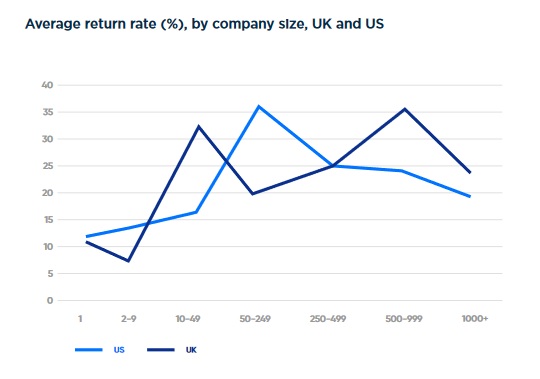
    La logística inversa ha sido durante mucho tiempo el problema hijo de la gestión de la cadena de suministro. Cada vez más, ese niño ha necesitado alguna ayuda seria. Esto se debe a dos factores. La forma en que Internet ha transformado la forma en que compramos y además el corto ciclo de vida de los bienes de consumo. Aunque a la mayoría de los consumidores todavía les gusta comprar en las tiendas de la calle para encontrar los productos que les gustan, al menos el 8% de las ventas son ahora de consumidores que simplemente hacen clic en una imagen para comprar un producto, sabiendo que pueden devolverla si es necesario. En la mayoría de los países, los consumidores tienen el derecho legal de devolver los bienes comprados en Internet. Muchos minoristas ahora incluso ofrecen devoluciones gratuitas de ‘prueba antes de comprar’, pero los procesos para administrar esas devoluciones, conocidos como logística inversa, son mucho más frágiles, costosos y susceptibles a problemas que los procesos logísticos avanzados generalmente bien controlados. Aunque las tasas de retorno varían ampliamente en diferentes verticales, la tasa de retorno promedio se ha calculado en alrededor del 17 al 18%.

    Brightpearl

    Source: Brightpearl

    La logística inversa enfrenta problemas complejos debido a la forma “ad-hoc” en que los consumidores devuelven artículos y vulnerabilidades en los procesos de devolución. Debido a que la logística inversa no se considera un proceso generador de ingresos, a veces no recibe la atención que necesita, pero recientemente se le ha reconocido cada vez más por tener un papel clave en la rentabilidad de la empresa. Tener procesos eficientes para recolectar, revender o reciclar artículos usados ​​puede generar ingresos adicionales y mejorar los resultados de una empresa. Hay otras razones importantes para prestar más atención a la logística inversa. Los consumidores ahora juzgan a las compañías por sus credenciales ecológicas, y los consumidores son conscientes de que muchos dispositivos electrónicos contienen algunos químicos altamente tóxicos. Proporcionar un canal a través del cual los dispositivos antiguos se puedan intercambiar y reciclar de manera confiable es un punto de venta positivo. La eficiencia del proceso de devolución también tiene un impacto significativo en la impresión de los clientes de un negocio.

    Aunque la “revolución de los retornos” afecta a todas las líneas comerciales minoristas, los productos electrónicos de consumo de alto valor son especialmente propensos a problemas en el proceso de devoluciones. Enormes volúmenes de teléfonos, decodificadores, enrutadores, incluso televisores y computadoras portátiles, ahora se devuelven a través de una multitud de canales por una variedad de razones. Los almacenes pueden recibir miles de dichos productos por semana. La mayoría de esos dispositivos aún pueden estar funcionando y pueden revenderse, pero rastrear dichos dispositivos desde los clientes, evaluar su viabilidad para revenderlos, restaurarlos, reempacarlos y luego redistribuirlos, es un desafío sustancial.

    Los problemas comienzan tan pronto como un cliente dice que quiere devolver un dispositivo. Ya sea porque el dispositivo es defectuoso, no apto, incorrecto, no deseado o porque están rescindiendo su contrato, deben notificar que se está devolviendo el dispositivo. Los agentes deben capturar correctamente los detalles de por qué se devuelve el dispositivo y emitir una RMA (Autorización de devolución de mercancía). Esto desencadenará una secuencia compleja de procesos para finalizar los servicios en la red, calcular los ajustes de facturas, preparar los sistemas posteriores para la recepción de los dispositivos devueltos, actualizar los inventarios al recibirlos, administrar la inspección, la renovación y la reventa de esos dispositivos, y potencialmente emitir reemplazos para dispositivos defectuosos, dependiendo de factores como el contrato, la garantía, el estado del dispositivo, el tipo de terminación o la calificación del cliente, los clientes pueden ser responsables de cargos adicionales o elegibles para una compensación.

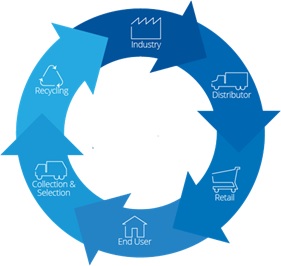
    Reverse Logistics

    Los canales de devolución típicos serían enviar un dispositivo por mensajería, devolverlo a una tienda o un técnico puede devolver la mercancía. Cualquiera que sea el canal, los dispositivos a menudo llegarán sin una indicación clara de a qué cuenta de cliente se refieren. Las devoluciones a las tiendas son particularmente problemáticas con los agentes que no escanean los códigos de barras o registran las devoluciones correctamente. Es posible que los sistemas en la tienda no puedan registrar IMEI, IMSI y / o números de serie, y no hay motivación para que el personal etiquete los dispositivos devueltos con precisión.

    Con tantas piezas móviles, no sorprende que muchos dispositivos se pierdan o se pierdan en el camino, y que los clientes se carguen incorrectamente. Se sabe que los operadores cancelan más de $ 5 + millones en dispositivos perdidos por mes.

    Una solución es implementar controles automatizados que brinden monitoreo en todos los sistemas, tanto en logística directa como inversa, asegurando así que los dispositivos se puedan monitorear desde el pedido inicial en CRM, dentro y fuera de los almacenes, con mensajeros, envíos, socios de renovación, compañías financieras y estado de activación en el aprovisionamiento de servicios de red. Con sistemas de monitoreo que pueden detectar incluso la ubicación física donde se instalan los dispositivos, es posible validar el inventario, facturar a los clientes y socios con precisión, evitar fraudes, recuperar el valor máximo de los dispositivos devueltos y comprender por qué se devuelven los dispositivos.

    Subex proporciona soluciones de ROC Device Assurance a operadores de todo el mundo, ayudando a localizar dispositivos faltantes, conciliar y corregir sistemas de facturación, CRM, aprovisionamiento, distribución e inventario con capacidades de descubrimiento y reconciliación líderes a nivel mundial.

    Grabación de seminario web – Evolución en la mitigación de riesgo de dispositivos

    Mira el seminario web ahora.

  • Thoughts from the trenches

    Thoughts from the trenches

    [vc_row][vc_column][vc_column_text]It is just another usual day for the telcos. The industry has weathering so many metaphorical storms for so long, that resilience has become its permanent virtue.

    Over the last 45-60 days, we have all seen numerous research reports and thought papers talking about how the COVID-19 crisis has changed the world, and what it means for telecom operators. This is perhaps one of those rare instances when every industry is trying to draw inferences, make forecasts, finetune strategies and prepare for weathering the storm. Like all other businesses, we too made diligent notes, brainstormed with our brightest minds, and came out with sophisticated presentations on what this situation means for our customers, and how we can add value. However, we did one additional thing. Instead of going by just the reports and studies that were published online, we decided to take firsthand inputs from our customers, and truly understand what the impact means to them. So, we interviewed a dozen or more of our customers, and here are our top 10 takeaways.

    And oh! Just to make sure this doesn’t end up being yet another strategy-heavy blog on “What COVID-19 means for telcos”, we have tried to keep it light. Because, these are observations based on real conversations beyond PowerPoint slides and Excel sheets.[/vc_column_text][vc_row_inner][vc_column_inner width=”1/2″][vc_column_text]1. Capacity is a problem, but addition is not easy

    It is true. People are now dependent on connectivity more than ever. This means, more load on the network, demanding capacity expansion to service existing customers. The only problem is, given the circumstances, adding new capacity by way of additional infrastructure isn’t an easy option. Operators may have purchased infrastructure prior to the lockdown, but with the lack of resources to deploy these on field, capacity addition is not easy. Reallocation of capacity is one option, but some operators are hesitant to do it, thinking it may have to be soon reversed.[/vc_column_text][/vc_column_inner][vc_column_inner width=”1/2″][vc_single_image image=”23829″ img_size=”full”][/vc_column_inner][/vc_row_inner][vc_row_inner el_class=”planning_5g_wrapper”][vc_column_inner width=”1/2″][vc_single_image image=”23832″ img_size=”350×332″][/vc_column_inner][vc_column_inner width=”1/2″][vc_column_text]2. Enterprise focus shifting from latency to bandwidth

    Enterprise business for telcos has always been a different ball game. The customer needs are different, the pricing strategy is different, and even the landscape of offerings is different. The recent report from GSMA highlighted that Enterprise business might finally be able to overtake consumer business for telcos in the next 1-2 years (a big part of this attributed to 5G), and that was good news. The low latency of 5G was meant to redefine the term ‘real-time’, opening up a host of new possibilities for businesses. Enter COVID-19, and all of this is set to change. Well, not all, but at least the low latency part. The crisis has made businesses rethink what ‘essential’ means, and it appears like latency is not as essential as bandwidth and availability for enterprises.[/vc_column_text][/vc_column_inner][/vc_row_inner][vc_row_inner][vc_column_inner width=”1/2″][vc_column_text]3. Consumption is increasing, but revenues aren’t

    This one almost seems borderline unfair but sadly is the reality. With most people working remotely, the dependence on data and connectivity has risen multi-fold for the average consumer. Their usage patterns have also show severe spikes, with some of our customers reporting up to 40% increase in 2 weeks. The usage of fixed broadband has also significantly increased due to the large number of video conferences, virtual events and webinars happening. Even for leisure, the only sources of entertainment seem to be the likes of Netflix, Amazon Prime, Hulu etc., all of which are bandwidth heavy. Furthermore, as a social responsibility, many operators are partnering with governments to roll out online learning programs, which further increase data consumption. While this kind of increase in usage would have been generally seen as good news, in the current circumstances it is not the case. The general economy is not conducive for price-hikes of packages, and operators will struggle to justify it. While operators will try to roll out innovative bundles, the impact of these efforts are yet to be seen.[/vc_column_text][/vc_column_inner][vc_column_inner width=”1/2″][vc_single_image image=”23834″ img_size=”full”][/vc_column_inner][/vc_row_inner][vc_row_inner][vc_column_inner width=”1/2″][vc_column_text]4. Cost pressures to continue till the end of the year

    Barring a handful of industries, this statement is probably applicable to all other businesses for the next few months. While the telecom industry is fairly resilient to the COVID-19 crisis, it is not spared of uncertainty. And, what do we do in such times? We hold on to what we have, and make sure every Dollar spent is extremely thought through. Over the next few months, some reductions in Opex will be inevitable for telcos. Further, Opex optimization might become a more stringent practice, leading to increased dependence on automation.[/vc_column_text][/vc_column_inner][vc_column_inner width=”1/2″][vc_single_image image=”23835″ img_size=”full”][/vc_column_inner][/vc_row_inner][vc_row_inner el_class=”planning_5g_wrapper”][vc_column_inner width=”1/2″][vc_single_image image=”23840″ img_size=”full”][/vc_column_inner][vc_column_inner width=”1/2″][vc_column_text]5. Capex remains same, but priorities change

    An interesting observation that came out from multiple operators is that their Capex spends may largely remain the same, with minor reductions if any. At first, this might seem surprising, but given the fact that lockdown restrictions are beginning to ease out, telcos are looking at ways to meet the increasing demand from customers. The priorities of Capex however seem to be changing from value-add (like 5G) to essentials (capacity enhancement, higher availability, etc.). An important point that became evident is that Capex allocations are now being reassessed and restructured to align with corporate goals in light of the COVID-19 crisis.[/vc_column_text][/vc_column_inner][/vc_row_inner][vc_row_inner][vc_column_inner width=”1/2″][vc_column_text]6. Accelerated Digital Transformation due to COVID

    Over the years, there have been several continued efforts on pushing for digital transformation across telcos, but it appears like COVID-19 has single-handedly acted as the tipping point. Customer expectations have changed permanently, and consumers will now seek a richer omni-channel digital experience and demand higher level of self-service. Be it the use of intelligent algorithms to aid call center agents or the creation of digital stores, telcos are forced to think digital in every aspect. An interesting outcome of this transformation will be the significant increase in the emphasis on trust, because of multiple unknown entities operating behind ‘digital curtains’.[/vc_column_text][/vc_column_inner][vc_column_inner width=”1/2″][vc_single_image image=”23841″ img_size=”full”][/vc_column_inner][/vc_row_inner][vc_row_inner el_class=”planning_5g_wrapper”][vc_column_inner width=”1/2″][vc_single_image image=”23843″ img_size=”full”][/vc_column_inner][vc_column_inner width=”1/2″][vc_column_text]7. 5G rollouts will slow down

    Last year’s MWC was a 5G jungle. Anyone who had been there would come back believing that within a couple of years, we would have doctors performing remote surgeries, autonomous cars becoming common, industrial automation going in full throttle and many more things. However, if you haven’t realized it yet, here is some bad news for those. 5G rollouts will slow down. The reasons are multi-fold, starting with the realignment of Capex priorities, to inability to support additional buildout, the pause in the production of 5G handsets, and the lack of complete clarity on some of the standards. While 5G and related services will eventually benefit from the increased adoption of digital services, in the short term 5G deployments are expected to slow down.[/vc_column_text][/vc_column_inner][/vc_row_inner][vc_row_inner][vc_column_inner width=”1/2″][vc_column_text]8. Functions are keen to utilize allotted budgets

    While newer budgets are not being allocated, or are being scrutinized before approval, functional heads of various departments seem to have the ability to make use of already allotted budgets. These are budgets allotted for strong use cases that remain important and are expected to contribute to the corporate objectives. With the looming threat of budget cuts and cost optimization, there is a sense of urgency to take decisions and move forward on putting some of the already allotted budgets to use. After all, no one wants the already allotted budgets to be rolled back, because they were unutilized, right?[/vc_column_text][/vc_column_inner][vc_column_inner width=”1/2″][vc_single_image image=”23844″ img_size=”full”][/vc_column_inner][/vc_row_inner][vc_row_inner el_class=”planning_5g_wrapper”][vc_column_inner width=”1/2″][vc_single_image image=”23845″ img_size=”full”][/vc_column_inner][vc_column_inner width=”1/2″][vc_column_text]9. Telcos looking at vendors that can think ‘beyond normal’

    They say necessity is the mother of invention. A corollary of this could be to say that crisis is the mother of innovation. It is in situations like the current one that businesses are required to bring innovation to the forefront, in order to survive and thrive. While telcos are certainly on the right track to innovate and improvise, their strength lies in carrying out their business in the best way possible. This is where they expect vendors and partners to bring in interesting perspectives and value propositions to help them do things that are outside the spectrum of normal. So, a clear advise from most telcos to partners like ourselves is “Do not engage with us if you are only talking about what we are doing today. Come to us if you have propositions that differentiate us.”[/vc_column_text][/vc_column_inner][/vc_row_inner][vc_row_inner][vc_column_inner width=”1/2″][vc_column_text]10. New business models are being explored and adopted

    Well, this point may not be a direct impact of COVID-19, but it is certainly happening. The reasons could be multiple, ranging from digital disruption, to OTT services, to non-traditional competition, but the current situation seems to have brought in an urgency to reimagine business models for telcos. At a time when connectivity is of utmost importance, if telcos remain simply as network providers, they’re losing out on tremendous opportunities that will be picked up by hyperscalers like Amazon and Google. The need of the hour – think like disruptors, get into spaces that were earlier ignored, and hack your way into a growth path. Case in point: JioMart[/vc_column_text][/vc_column_inner][vc_column_inner width=”1/2″][vc_single_image image=”23853″ img_size=”full”][/vc_column_inner][/vc_row_inner][vc_row_inner][vc_column_inner][vc_column_text]So, there you have it, folks. Those were the 10 key observations from our recent conversations with customers. If you are in the telecom space, let me know your thoughts in the comments section below, and add any points that I might have missed in this blog.[/vc_column_text][/vc_column_inner][/vc_row_inner][/vc_column][/vc_row]

  • State of the Network and a Shout-Out to Network Heroes

    State of the Network and a Shout-Out to Network Heroes

    On display in my house is a 1926 Kellogg wall phone.  I can’t use it to place a call, but it looks great.  It’s crafted from beautifully finished oak with a candlestick earpiece and a small platform for taking notes.  It still has the original internal components, including a magneto and dry cell batteries.  The antique phone connects me to a proud lineage of engineers, technicians, field personnel, customer service staff, and network professionals (among many others) who have built this industry.  I’ve worked in telecom my entire career and have been awed by the response from operators around the globe to the current situation.

    While so many service businesses have shed workers and are fighting for survival, other sectors are faring better.  Streaming services like Netflix and online retailers like Amazon and Walmart are seeing demand surge.  We’re all familiar with the ascension of Zoom from an enterprise video-conferencing provider to a social media sensation.

    What do each of these online services have in common?  They are dependent, of course, on ubiquitous, reliable, and relatively cheap communications services. Our digital devices connect us to the people we care about, summon food, keep us entertained and allow many to continue their education.   Communications services have enabled the new “normal”: Do laundry, watch children, stroke a pet, finish a meal… all while joining a conference call!  We’ve perhaps never leaned so heavily on global communications networks.  And by extension, we’ve never been so dependent on the people building and operating these networks.

    Yet both networks and communication service providers (CSPs) are under stress.  Core networks are quite resilient and tend to be robustly engineered with the capacity to accommodate sustained surges in demand.  Edge networks, on the other hand, particularly where there is a legacy copper plant and coax, are often running hot.  No doubt, this is leading to frustration among many as their streams of Tiger King drop packets.  Wireless networks have seen changes in usage patterns and subscriber locality, double-digit increases in peak traffic, and some erosion in average data speeds in many regions.  Broadly speaking, mobile operators have been handling the workload without significant impacts on customer experience.  This is a testament not just to good planning, but to the ongoing work of network professionals who are monitoring and continually optimizing network performance.

    On the business side for CSPs, it’s been a mixed bag.  Demand for consumer services is holding relatively steady.  However, the overall economic climate will lead to an erosion of business services revenue.  Before the crisis, Analysys Mason was projecting a modest 0.7% increase in telecoms revenue.  Their revised forecast predicts a 3.4% decline across developed markets in 2020.  Despite this, operators are adding workers to their rolls to handle frontline services and are increasing salaries for essential workers in some situations. CSPs are stepping up in many cases to offer deferred payment plans, increased data caps, and contributions to various charitable causes.

    As quoted in the Financial Times, Hans Vestberg, the CEO of Verizon, said, “staff who have continued to work in the field to support customers — be they engineers or shopworkers — deserve credit. Those are the heroes.”

    I could not agree more.  Certainly, we all owe a big dose of gratitude to the frontline workers who are staffing health care facilities, delivering groceries, and looking after public safety (among so many other essential services).

    At the same time, frontline workers in the communications industry continue to be dispatched to customer locations (wearing PPE!), enter manholes, climb towers, and staff the few retail outlets that are open.  Behind them are network professionals who are staffing NOCs, data centers, and war rooms to provide critical operations support.  They are so essential that CSPs in India are making temporary living arrangements for them near telco facilities. No doubt, such accommodations are being made worldwide, with communications workers rising to the challenge of keeping global networks running.

    So here’s a shout-out to the Network Heroes!

    To understand the challenges faced by CSPs in offering quality video content over mobile devices

    Read Blog

  • A través de los ojos de un profesional de redes, cómo lidiar con la tormenta de incertidumbre

    A través de los ojos de un profesional de redes, cómo lidiar con la tormenta de incertidumbre

    El mundo de las telecomunicaciones está lleno de incertidumbre. Es durante estas situaciones de incertidumbre cuando el aumento de la demanda de los clientes y la carga en la red aumenta exponencialmente, el verdadero papel de un profesional de la red entra en juego. Durante estos momentos, cuando la red está bajo tensión, los profesionales de la red deben hacer un gran esfuerzo para garantizar la continuidad del servicio 24 × 7.

    Pero, ¿qué pasa con la “incertidumbre” que podría surgir de una calamidad natural, o interrupciones masivas del sitio, causa estrés en la red?

    En general, una red móvil sufre numerosos cambios. Estos podrían ser cambios planificados como ajuste de parámetros, optimización física, prueba / implementación de nuevas funciones, actualizaciones de software, etc., la mayoría de los cuales están dirigidos a mejorar el rendimiento de la red y la experiencia del usuario final.

    Sin embargo, por otro lado, son los cambios “no planificados” los que tienden a arrojar una llave inglesa al sistema. Estos cambios podrían ser estacionales o debidos a fluctuaciones a nivel del sistema en los elementos de la red que provocan una degradación severa en términos de rendimiento. Si tal incidente ocurriera en la hora más ocupada del día, entonces el impacto también se sentirá en el negocio.

    En ambos casos, planificados o no planificados, la acción para resolver un problema podría estar dirigida a cualquier dominio de una red, por ejemplo, radio, transporte, núcleo, etc. También requeriría la resolución de problemas de extremo a extremo y el análisis de la causa raíz.

    Tradicionalmente, los profesionales de la red manejan el impacto de tales cambios de manera reactiva, lo que a menudo resulta en casos en los que el “tiempo medio para reconocer” (MTTA) y el “tiempo medio para responder” (MTTR) potencialmente toman horas o, en algunos casos, días. De hecho, algunos casos complejos entre dominios pueden incluso quedar sin resolver.

    Sin embargo, a lo largo de los años, gracias a los avances en la automatización, los profesionales de la red han podido evolucionar hacia el manejo proactivo de dichos problemas. Al aprovechar las herramientas integradas con la experiencia en la materia, junto con los métodos estadísticos, los profesionales de la red pueden lograr una reducción significativa en MTTA y MTTR. Sin embargo, este enfoque está lejos de ser perfecto, ya que las acciones necesarias solo se pueden tomar después de que el impacto en la red ya haya ocurrido.

    Para comprender el enfoque correcto que debe adoptarse, demos un paso atrás y profundicemos en la vida de un experto en planificación y optimización de redes involucrado en la gestión del rendimiento diario de la red.

    Convencionalmente, un profesional de la red realiza un análisis del impacto de la red en un conjunto de KPI críticos y toma las medidas necesarias para mejorar el rendimiento de la red. Se invierte mucho esfuerzo en otra ronda de análisis para concluir si la acción tuvo un impacto en cascada en cualquier otro KPI importante o no. Una vez que el impacto de la acción tomada se considera exitoso, el análisis pasa al siguiente conjunto de acciones. Muy a menudo, tales acciones son tomadas por múltiples partes interesadas para mejorar el desempeño de sus respectivas regiones / grupos / sitios.

    En una red 4G, podría haber miles de contadores / KPI y cientos de parámetros, lo que hace que sea casi imposible para un ser humano analizar el impacto de un cambio de un conjunto de parámetros en todos los contadores / KPI relevantes, de extremo a extremo, diariamente. Los servicios como la transmisión de video y VoLTE a menudo requieren un análisis entre dominios para garantizar la continuidad del servicio.

    Es en tales escenarios donde Machine Learning (ML) comienza a surgir como la respuesta para manejar estas complicaciones desde una perspectiva de extremo a extremo.

    Sin embargo, el término “Aprendizaje automático” tiene una forma de introducirse en tales debates. Es, de hecho, casi en su propio detrimento a veces, ya que el aprendizaje automático casi se ve como un trabajo de magia, en el mejor de los casos, o simplemente un truco de marketing, en el peor de los casos. Casi todos lo mencionan en algún momento.

    Entonces, permítame tomarme un momento para defender por qué lo menciono ahora y por qué creo que el análisis avanzado basado en el aprendizaje automático puede resolver significativamente algunos de los problemas críticos que enfrentan los profesionales de la red.

    La respuesta corta de dos palabras sería “Agilidad” y “Precisión”. Permítanme dar más detalles.

    Un CSP puede aprovechar los modelos de ML que capturarán todos los tipos de impactos de red de manera consistente a partir de los datos de red generados en forma de contadores / KPI y parámetros a diario y ayudará a proporcionar información procesable a los profesionales de la red, que de lo contrario pasarían desapercibidos.

    Además, estos conocimientos son especialmente útiles cuando se utilizan en la planificación y gestión de eventos especiales, como la proyección de un evento deportivo mundial. En tal caso, donde se espera que aumente el aumento del tráfico, el modelo aprenderá del desempeño del evento anterior y proporcionará aportes críticos para la planificación del evento.

    Según la misma lógica, los modelos de ML generarán ideas procesables cuando se produzca una crisis y equiparán a los profesionales de la red para hacer frente a cualquier evento anormal que ocurra en tiempos de incertidumbre. Además, al aprovechar los modelos ML, los profesionales de la red pueden estar equipados para ejecutar simulaciones múltiples para realizar con precisión el análisis de impacto de la red para cualquier acción que tengan la intención de realizar en el futuro. Algunos escenarios clave que podrían gestionarse con mayor agilidad en cualquier momento, pero que adquieren una dimensión adicional de importancia durante una situación de “red bajo tensión”, serían:

    • Pronosticar con precisión el tráfico peak, la utilización de recursos y el uso de aplicaciones para planificar con anticipación
    • Optimización y ajuste de los parámetros de red para la expansión de la capacidad y la mejora de la calidad en tiempos de tendencias anormales de la red.
    • Mejora de la experiencia del cliente al realizar una correlación de calidad de experiencia (QoE) con QoS de extremo a extremo para servicios de transmisión como video Full HD.
    • Mantener la continuidad continua del servicio VoLTE de extremo a extremo.

    Como dicen, las situaciones únicas requieren medidas únicas, y durante los momentos en que la red está bajo estrés, los profesionales de la red deben hacer un gran esfuerzo solo para mantener la red a flote. Es un esfuerzo que a menudo pasa desapercibido, pero ayuda a mantener a los clientes conectados y a mantener intacta la reputación de la empresa. Machine Learning puede asumir un papel esencial en la transformación de estos “héroes de la red” en “superhéroes de la red” al equiparlos con poderes de agilidad y precisión mejoradas.

    La verdad es que la industria de las telecomunicaciones se encuentra en un punto de inflexión en el que los responsables de la toma de decisiones deben tomar una decisión sobre las capacidades que deben aportar a la red y cómo pueden equipar a sus héroes de red hoy en día. Estas decisiones críticas tomadas ahora proporcionarán beneficios en los próximos años.

    Para comprender los desafíos que enfrentan los CSP para ofrecer contenido de video de calidad a través de dispositivos móviles

    LEER BLOG

  • How to ride the storm of uncertainty through the eyes of a network professional

    How to ride the storm of uncertainty through the eyes of a network professional

    The telecom world is one that is fraught with uncertainty. It is during such situations of uncertainty when the surge in demand from customers and load on the network increases exponentially, the true role of a network professional comes into the fray. During these moments, when the network is under stress, network professionals need to put in a tremendous effort to ensure 24×7 service continuity.

    But what about ‘uncertainty,’ that might emerge from the likes of a natural calamity, or massive site outages, causes stress on the network?

    Generally, a mobile network undergoes numerous amounts of changes. These could be planned changes like parameter tuning, physical optimization, new feature trial/implementation, SW upgrades, etc., most of which are targeted towards improving the network performance and end-user experience.

    However, on the other side, it is the ‘unplanned’ changes that tend to throw a monkey wrench into the system. These changes could be seasonal or due to system-level fluctuations in network element(s) bringing severe degradation in terms of performance. If such an incident was to happen in the busiest hour of the day, then the impact will be felt in the business as well.

    In both the cases, planned or unplanned, the action to resolve a problem could be targeted towards any domain of a network, e.g., radio, transport, core, etc. It would also require end-to-end troubleshooting and root-cause analysis.

    Traditionally, network professionals manage the impact of such changes reactively, which often results in instances where the ‘mean time to acknowledge’ (MTTA) and ‘mean time to respond’ (MTTR) potentially take hours or, in some cases, days. In fact, some complex cross-domain cases can even remain unresolved.

    Over the years, however, thanks to advancements in automation, network professionals have been able to evolve towards handling such issues proactively. By leveraging tools embedded with subject matter expertise, coupled with statistical methods, network professionals can bring a significant reduction in MTTA and MTTR. However, this approach is far from perfect as necessary action can only be taken after the impact on the network has already occurred.

    To understand the right approach that needs to be taken, let us take a step back and delve into the life of a network planning and optimization expert involved in day-to-day performance management of the network.

    Conventionally, a network professional performs network impact analysis on a set of critical KPIs and takes necessary steps to improve the network performance. A lot of effort is invested towards another round of analysis to conclude if the action had a cascading impact on any other major KPIs or not. Once the impact of the action taken is deemed successful, the analysis moves to the next set of actions. Very often, such actions are taken by multiple stakeholders to improve the performance of their respective regions/clusters/sites.

    In a 4G network, there could be thousands of counters/KPIs and hundreds of parameters, making it almost impossible for a human to analyze the impact of a change of a set of parameters on all relevant counters/KPIs, end-to-end, daily. Services like video streaming and VoLTE often require cross-domain analysis to ensure seamless service continuity.

    It is in such scenarios where Machine Learning (ML) starts cropping up as the answer to handling these complications from an end-to-end perspective.

    However, the term ‘Machine Learning’ does have a way of creeping into such discussions. It is, in fact, almost to its own detriment at times, as machine learning is almost looked at as a work of magic, at best, or just another marketing gimmick, at its worst. Almost everyone brings it up at some point.

    So, let me take a moment to defend why I bring it up now, and why I believe machine learning-driven advanced analytics can significantly solve some of the critical problems faced by network professionals.

    The short two-word answer would be ‘Agility’ and ‘Accuracy.’ Allow me to elaborate.

    A CSP can leverage ML models that will capture all types of network impacts consistently from the network data generated in the form of counters/KPIs and parameters on a daily basis and will help in providing actionable insights to the network professionals, which would otherwise go unnoticed.

    Furthermore, these insights come in especially handy when used in planning and managing special events like the screening of a global sports event. In such an event, where the surge in traffic is expected to rise, the model will learn from the previous event’s performance and will provide critical inputs for event planning.

    By the same logic, ML models will generate actionable insights when a crisis strikes and will equip network professionals to deal with any abnormal events happening in times of uncertainty. Furthermore, by leveraging ML models, network professionals can be equipped to run multiple simulations to accurately perform network impact analysis for any actions they intend to perform in the future. A few key scenarios that could be managed with better agility at any point of time, but take on an additional dimension of importance during a “network under stress” situation, would be:

    • Accurately forecasting the peak traffic, resource utilization, and application usage to plan well in advance
    • Optimizing and fine-tuning network parameters for capacity expansion and quality improvement in times of abnormal network trends
    • Improving customer experience by performing Quality of Experience (QoE) correlation with end to end QoS for streaming services like full HD video.
    • Maintaining seamless end to end VoLTE service continuity.

    As they say, unique situations call for unique measures, and during times when the network is under stress, network professionals need to put a whole lot of effort just to keep the network afloat. It is an effort that often goes unnoticed, but it is one that helps keep customers connected and the company’s reputation intact. Machine Learning can take on an essential role in transforming these ‘network heroes’ into ‘network superheroes’ by equipping them with powers of enhanced agility and accuracy.

    The truth is that the telecom industry is at an inflection point where decision-makers need to take a call on what capabilities they must bring into the network and how they can equip their network heroes today. These critical decisions taken now will provide benefits for years to come.

    To understand the challenges faced by CSPs in offering quality video content over mobile devices

    Read Blog

  • ¿Vender dispositivos es una bendición o una pesadilla para las empresas de telecomunicaciones?

    ¿Vender dispositivos es una bendición o una pesadilla para las empresas de telecomunicaciones?

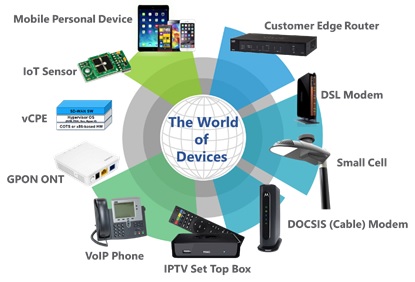
    El teléfono inteligente parpadea cuando se menciona el dispositivo. Sin embargo, los dispositivos son un gran ecosistema más allá de los teléfonos inteligentes: una gama de equipos como dongles, enrutadores, equipos de las instalaciones del cliente (CPE) y teléfonos IP, por nombrar algunos. Los dispositivos son una gran herramienta para que las empresas de telecomunicaciones atrapen y satisfagan a sus clientes. Por ejemplo, las ofertas agrupadas con contratos que abarcan meses proporcionan ingresos predecibles para las empresas de telecomunicaciones.

    La próxima ola de oportunidades.

    Con IoT y 5G haciendo avances, las empresas de telecomunicaciones se están preparando para los dispositivos de próxima generación para redes domésticas y de oficina. Una oportunidad lucrativa para las empresas de telecomunicaciones, ya que los dispositivos son críticos para la penetración de IoT / 5G. Se introducirán dispositivos más nuevos, como celdas pequeñas para aumentar la capacidad de la red y mejorar la cobertura interior. No es de extrañar que las empresas de telecomunicaciones estén invirtiendo en dispositivos.

    ¿Las empresas de telecomunicaciones se están beneficiando de los dispositivos?

    Los dispositivos son una oportunidad atractiva ya que mejoran la adherencia del cliente y el ARPU. Los dispositivos son buenas herramientas de promoción para atraer nuevos clientes y ganar tracción incluso en economías emergentes. Muchos clientes extienden su relación con las empresas de telecomunicaciones más allá del período de contrato.

    Sin embargo, la adquisición, venta y administración de dispositivos está plagada de riesgos. El fraude, las fugas y la deuda inmanejable están obstaculizando los ingresos y las ganancias.

    Una encuesta en los estados de la empresa de telecomunicaciones:

    “A nivel mundial, se pierden al menos 2 USD por dispositivo” Millones de USD están siendo dados de baja impactando P&L

    ¿Cuáles son los riesgos?

    La Telco en promedio gasta el 20% de su OPEX en la adquisición y el mantenimiento de dispositivos. Toda la cadena de suministro que cubre la logística directa e inversa es propensa a riesgos. La cadena de suministro no solo involucra a las partes interesadas dentro de la empresa de telecomunicaciones (marketing, ventas, operaciones, logística, finanzas), sino a muchas partes externas: fabricante, proveedor, socio financiero, distribuidor, socio de envío, red de almacenamiento, agentes minoristas, socio de reparación / renovación, y el cliente final.

    El apilamiento de tecnología es compleja con al menos 10 aplicaciones y plataformas diferentes involucradas. Las fugas de stock en los pedidos ordenados frente a los recibidos, las brechas de inventario, el envejecimiento de los dispositivos en el inventario, las brechas en los puntos de venta son algunos de los riesgos tecnológicos a destacar.

    Gestione los riesgos

    ¿Cómo podrían las compañías de telecomunicaciones controlar los riesgos y las fugas, y aprovechar al máximo la oportunidad?

    Regístrese para nuestro próximo seminario web sobre Evolución en la mitigación de riesgo de dispositivo.

    Pulse aquí para registrarse

  • The future of Revenue Assurance – ‘Expert opinion’

    The future of Revenue Assurance – ‘Expert opinion’

    [vc_row][vc_column][vc_column_text]One of the most evolving functions in the telco BSS side of things is Revenue Assurance. Over the years, it has molded itself into many forms catering to changing business needs, new offerings and market dynamics. However, now seems to be a time that is different from anything we have seen earlier, as the influence of ‘Digital’ on telcos is immense. The possibilities for telcos in the digital world are infinite, and so are the risks – providing immense scope for the evolution of traditional functions like Revenue Assurance. So, we went about asking some of the highly regarded RA experts in the industry what they think is the future of the Revenue Assurance function is, and here is what they said (listed in alphabetical order)

    “The Telecom industry has cut across economic barriers and has created a media that surpasses limitations placed on the economy of a nation by its physical infrastructure. The Telecom revolution has hit all countries across the globe from first world to third world. As markets mature and subscribers grow in numbers, new operators set up operations to tap the markets, existing operators face pressures to maintain their customer base, ARPU and ultimately their margins.
    The advent of competition has brought about a need to maintain the top lines of the companies, which can be achieved by effective strategy and efficient operations which has very well visible digital Impact. One of the key components for maintaining revenues and profitability is through operational efficiency by continuous deployment of is Revenue Assurance controls across Revenue streams.”

    [/vc_column_text][vc_single_image image=”19907″ img_size=”80×80″ alignment=”center” style=”vc_box_outline_circle_2″ css=”.vc_custom_1569831513336{margin-bottom: 10px !important;}”][vc_column_text css=”.vc_custom_1594959803732{margin-top: 0px !important;padding-top: 0px !important;}”]

    linkedin Amit Agrawal, Du – EITC

    [/vc_column_text][vc_separator][vc_row_inner][vc_column_inner][vc_column_text css=”.vc_custom_1569832014954{margin-bottom: 10px !important;}”]

    “RA solutions continue to address different threats as new services are deployed, however IoT usage patterns means need automated customization for each deployment is needed, requiring and understanding of each application.
    Real-time monitoring shifts RA solutions into operational systems providing fraud management capabilities, helping to mitigate risks and build trust for customers.
    CSPs tempted to reduce investments should consider it like continuing vaccinations even when a disease is eradicated”

    [/vc_column_text][vc_single_image image=”20005″ img_size=”80×80″ alignment=”center” style=”vc_box_outline_circle_2″ css=”.vc_custom_1569832029819{margin-bottom: 10px !important;}”][vc_column_text css=”.vc_custom_1594959822284{margin-top: 0px !important;padding-top: 0px !important;}”]

    linkedin Justin van der Lande, Analysys Mason

    [/vc_column_text][vc_separator][/vc_column_inner][/vc_row_inner][vc_row_inner][vc_column_inner][vc_column_text css=”.vc_custom_1569831634897{margin-bottom: 10px !important;}”]

    “I believe as Revenue Assurance is gradually evolving towards Business Assurance and telecom industry is transforming towards the digital arena, the role of business assurance will increasingly focus on adding value in business decision making owing to its enhanced analytical capabilities & commercial ingenuity using artificial intelligence, robotics and next-generation business assurance solutions. This will shift the emphasis from revenue saving to value maximization, operational efficiency and reduction in residual losses through proactive controls & processes.”

    [/vc_column_text][vc_single_image image=”19909″ img_size=”80×80″ alignment=”center” style=”vc_box_outline_circle_2″ css=”.vc_custom_1569831653249{margin-bottom: 10px !important;}”][vc_column_text css=”.vc_custom_1594959840748{margin-top: 0px !important;padding-top: 0px !important;}”]

    linkedin Mustafa Ali, Batelco

    [/vc_column_text][vc_separator][/vc_column_inner][/vc_row_inner][vc_row_inner][vc_column_inner][vc_column_text css=”.vc_custom_1569831676789{margin-bottom: 10px !important;}”]

    “Automation, Digitalization, Process Optimization, everything evolves with customer needs and business risks. In essence, RA should be an agile process with no manual activity: you always need to have the right indicators, suitable and comprehensive, scalable and quickly. In my opinion, a large part of RA should be integrated and taken into account at the time of the construction of the equipment managing offers and revenue streams.
    Solution providers and manufacturers should combine their know-how to integrate upstream and perfect this dimension of control.”

    [/vc_column_text][vc_single_image image=”19913″ img_size=”80×80″ alignment=”center” style=”vc_box_outline_circle_2″ css=”.vc_custom_1569831689905{margin-bottom: 10px !important;}”][vc_column_text css=”.vc_custom_1569848446251{margin-top: 0px !important;padding-top: 0px !important;}”]

    Ndeye Coumba, Sonatel

    [/vc_column_text][vc_separator][/vc_column_inner][/vc_row_inner][vc_row_inner][vc_column_inner][vc_column_text css=”.vc_custom_1569907892544{margin-bottom: 10px !important;}”]

    “Business transformation is taking place faster and the sources of income generation change in the same way. Traditional revenues are being replaced by new digital businesses, which are supported by processes with technologies that require evolving with more efficient control models, capable of processing a lot of information in real time.
    Revenue from new digital businesses and carrier billing has been rising in the order of 25% per year and from the revenue assurance area we have the challenge of transforming ourselves to detect unknown errors that are not evident today. The idea is to take advantage of big data always safeguarding the relevance of information security and privacy, to strengthen and give intelligence to our controls, anticipating risks and avoiding potential leaks, not only with the view of income, but in an integral way that allows us to ensure the business margin in an increasingly competitive market.”

    [/vc_column_text][vc_single_image image=”19915″ img_size=”80×80″ alignment=”center” style=”vc_box_outline_circle_2″ css=”.vc_custom_1569831733075{margin-bottom: 10px !important;}”][vc_column_text css=”.vc_custom_1594959855998{margin-top: 0px !important;padding-top: 0px !important;}”]

    linkedin Nelson Sepúlveda B., Telefónica / Movistar Chile

    [/vc_column_text][vc_separator][/vc_column_inner][/vc_row_inner][vc_row_inner][vc_column_inner][vc_column_text css=”.vc_custom_1569831753812{margin-bottom: 10px !important;}”]

    “In the era of 5G, CSPs are looking at their revenue assurance functions to monetise zeta-bytes of structured & unstructured data to detect patterns, outliers, and learning behaviours. The proliferation of products and the emergence of and API based economy have pushed RA/FM professionals have to find new ways to keep pace with the industry. AI/ML algorithms will assist RA/FM experts to relieve some of the workload and will allow them to take data driven decisions. Data scientists will play a role in creating, adapting and executing models that will detect new issues, reduce the number of false positives, increase the coverage, and improve accuracy. In the future years, Revenue Assurance will play an even more crucial role to protect the bottom line and create enough opportunities to enhance the top line.”

    [/vc_column_text][vc_single_image image=”19918″ img_size=”80×80″ alignment=”center” style=”vc_box_outline_circle_2″ css=”.vc_custom_1569831771452{margin-bottom: 10px !important;}”][vc_column_text css=”.vc_custom_1594959873037{margin-top: 0px !important;padding-top: 0px !important;}”]

    linkedin Nikhil Sehgal, Colt

    [/vc_column_text][vc_separator][/vc_column_inner][/vc_row_inner][vc_row_inner][vc_column_inner][vc_column_text css=”.vc_custom_1569831795147{margin-bottom: 10px !important;}”]

    “Digital innovations clearly place consequential challenges on Telcos who must reinvest in and reinvent themselves for incremental revenues in a competitive arena. Therefore, the future of revenue assurance rests in focus beyond controlling leakages within acceptable limits, to focusing value enhancements from statistically discernible causes of performance departures for tracking and improving stated objectives. With the best end-to-end visibility of the revenue value chain, under-funding assurance places a liability on the future.”

    [/vc_column_text][vc_single_image image=”20002″ img_size=”80×80″ alignment=”center” style=”vc_box_outline_circle_2″ css=”.vc_custom_1569831815140{margin-bottom: 10px !important;}”][vc_column_text css=”.vc_custom_1594959953482{margin-top: 0px !important;padding-top: 0px !important;}”]

    linkedin Ope Faniran, 9Mobile

    [/vc_column_text][vc_separator][/vc_column_inner][/vc_row_inner][vc_row_inner][vc_column_inner][vc_column_text css=”.vc_custom_1569831845950{margin-bottom: 10px !important;}”]

    “Considering the evolution of business dynamics, the scale at which Revenue Assurance is maturing is incredible with more focus on cost optimization, capex management, and knife-edge driven preventive measures thereby climbing up the ladder to be owner of Business Assurance. Growth demands RA to become BA with getting rid of ROI instead to play pivotal role in mitigating risks and minimizing leakages to bring in more value to the company.”

    [/vc_column_text][vc_single_image image=”19922″ img_size=”80×80″ alignment=”center” style=”vc_box_outline_circle_2″ css=”.vc_custom_1569831862976{margin-bottom: 10px !important;}”][vc_column_text css=”.vc_custom_1594959973399{margin-top: 0px !important;padding-top: 0px !important;}”]

    linkedin Sai Devata, Viva Kuwait

    [/vc_column_text][vc_separator][/vc_column_inner][/vc_row_inner][vc_row_inner][vc_column_inner][vc_column_text css=”.vc_custom_1569831883772{margin-bottom: 10px !important;}”]

    “As the industry goes digital the challenges for revenue assurance will change but basics will remain. As Revenue Assurance professionals, we need to understand the new risk landscape: cybersecurity and eco-system weaknesses will bring new risks. Digital solutions will also provide new opportunities to assure revenues and transactions. We need to embrace digital and ensure business processes are born digital with Revenue Assurance embedded in them leveraging on new technology as we do so.”

    [/vc_column_text][vc_single_image image=”19913″ img_size=”80×80″ alignment=”center” style=”vc_box_outline_circle_2″ css=”.vc_custom_1569831892768{margin-bottom: 10px !important;}”][vc_column_text css=”.vc_custom_1594959986633{margin-top: 0px !important;padding-top: 0px !important;}”]

    linkedin Sarah Hakeem, Millicom

    [/vc_column_text][vc_separator][/vc_column_inner][/vc_row_inner][vc_row_inner][vc_column_inner][vc_column_text css=”.vc_custom_1569831919834{margin-bottom: 10px !important;}”]

    “The Customer being the nucleus of the business, the future of Revenue Assurance is definitely to assure a superior customer journey and experience. Besides business growth, QoS, profitability, and enhancing the culture of risk management, as telcos continue to evolve into Digital Service Providers, RA will further step up to play a decisive role in assuring security of its services, data privacy, regulatory compliance and data governance.”

    [/vc_column_text][vc_single_image image=”19924″ img_size=”80×80″ alignment=”center” style=”vc_box_outline_circle_2″ css=”.vc_custom_1569831957249{margin-bottom: 10px !important;}”][vc_column_text css=”.vc_custom_1594960003774{margin-top: 0px !important;padding-top: 0px !important;}”]

    linkedin Straus Dias, Ooredoo Qatar

    [/vc_column_text][vc_separator][/vc_column_inner][/vc_row_inner][vc_row_inner][vc_column_inner][vc_column_text css=”.vc_custom_1569831979684{margin-bottom: 10px !important;}”]

    “With the ever-evolving and increasingly complex business models governing telecommunications, driven by competition to provide subscribers with an expanding array of devices (from phones and accessories to branding merchandise) and services (from voice and data to media and entertainment), legacy views of Revenue Assurance will have decreasing financial value. Revenue Assurance organizations will be forced to consider costs for performing margin assurance, while also understanding business opportunities and risks in a broader Business Assurance role.”

    [/vc_column_text][vc_single_image image=”20003″ img_size=”80×80″ alignment=”center” style=”vc_box_outline_circle_2″ css=”.vc_custom_1569831997154{margin-bottom: 10px !important;}”][vc_column_text css=”.vc_custom_1594960016925{margin-top: 0px !important;padding-top: 0px !important;}”]

    linkedin Taruna Rajan, T-Mobile

    [/vc_column_text][vc_separator][vc_column_text]

    So, those were the views of some of the top RA practitioners in the industry. What are your thoughts on the subject? Let us know in the comments section.

    If you want your thoughts to be featured in the next ‘Experts opinion’ article, write to us here.

    [/vc_column_text][/vc_column_inner][/vc_row_inner][/vc_column][/vc_row]

  • The Road to Being Data-Driven Starts with Knowing Where You Are

    The Road to Being Data-Driven Starts with Knowing Where You Are

    The telecom world is changing, and organisations are challenged to not only grow, but to merely stay relevant.  To cope up with the fast-changing environment, organizations need to be at a certain level of maturity where the decision-making process needs to move from gut feelings to number & reasoning-based practices. The mandate here is clear: Organisations need to become data-driven or risk being left behind. However, the reality is bleak considering that nearly 100% of enterprises want to become more data-driven, but only less than a third have accomplished that goal. The starting point to being data-driven starts with being able to assess where one stands, and which is the best way to move ahead to a certain objective, a notion which continues to remain challenging for organisations.

    Almost all organisations have ventured into the woods of data analytics with a purpose to make a sense and get the best out of the huge volumes of data they have. Sometimes they ask what others (either in the same industry or across industries and academia) are doing and how they can replicate it, while at times they ask what new can be done that no one else has. To analogize the entire data analytics practice to the workings of an engine, an engine can be only as good as the sum of its parts. The parts must fit in well, the oiling mechanisms should help in friction reduction, the oil supply has to be timely and of course, the sparks need to be perfect. As many say, data is indeed the new oil and data analytics is fast becoming the engine (in this case, of growth).

    Fine tuning this engine is the need of the hour. Assessing where we stand, which directions we can move towards and where would that lead us to, what would be the best enabler to move in each direction, and how to go about doing it, is mission critical. This, in itself, is an optimization problem where maximizing returns and minimizing costs given the multiple constraints is challenging.

    Transformation is important, but to ensure true competitive advantage, organizations must transform themselves in a planned phase. The approach to analytics cannot be stochastic as it would result in more troubles than benefits. Organizations must traverse one stage at a time. Not only defining those stages is the need of the hour but also is knowing what steps one needs to take at a point of time to move from one stage to another. In this scenario, an Analytics Maturity Assessment becomes imperative.

    We have been working with customers across the globe in helping them assess their Analytics Maturity, to define the business objectives and carve out an Analytics roadmap towards said objectives, through our Subex Analytics Maturity Models. Subex Analytics Maturity Models defines those stages and the steps between those stages, through an assessment across People, Process, Technology and most importantly Data.

    To know more about why an Analytics Maturity Assessment is important, and how it can help your organisation, Schedule a Demo with us and our Subject Matter Experts will get in touch with you.