Blog

  • How to empower Business Assurance with Artificial Intelligence at the world of Digital Transformation

    How to empower Business Assurance with Artificial Intelligence at the world of Digital Transformation

    TMForum recently concluded Digital Transformation World 2018 event at Nice, France. As the name indicates the key theme of the event was on enabling telecom operators to move their business to the digital world. The event was bustling with fresh ideas, innovations and technology which have the potential to cause disruption in the telecom industry. I represented Subex at the event and we participated in one of the catalysts. Catalyst projects are rapid collaboration initiatives driven by Forum member companies. Forum members work together to create proof-of-concept demonstrations for today’s most pressing business, operational and IT challenges.

    The catalyst that Subex participated was “Empowering Business Assurance with Artificial Intelligence”. The catalyst goal was to bring in Artificial Intelligence(AI), Machine Learning & Big Data Analytics to empower the assurance teams in the world of digital transformations. This catalyst had enabled Subex to collaboratively deliver not only solutions for problems that can be solved using advanced analytics but also to create best practices and standards, helping hundreds of Forum member companies reduce cost, risk, and time-to-market as they transform for success in the digital world.

    The use cases we worked on for the catalyst focussed on using AI based Machine learning techniques and advanced analytics to:

    • Enable Telcos to track fraudsters faster and minimize revenue loss caused by arbitrage
    • Allow KPI tracking and anomaly detection with a minimal manual intervention
    • Help Telcos differentiate fraudsters from genuine customers by identifying important features

    Telcos we interacted at the event were very impressed with how AI & Machine learning can help them  manage challenges in the digital world.

    The highlight of the keynote at the event was on the open Digital architecture and open APIs which provide a platform to rapidly partner and innovate, to deliver business and technology integration between the companies. The biggest announcement at the keynote was on one of the excellence awards, Reliance Jio from India was announced for an award for ‘Business transformation’ for making greatest strides in transforming its business operation to a low cost, agile and customer-centric model.

    The other topics that were covered in the catalyst initiative were Block Chain Unleashed, Blade Runner, Smart Cites, Cognitive Customer care. Most of the catalysts and their theme was around disruptive technologies such as Blockchain platforms, Internet of Things, and Machine learning. This is a clear indication that industry is moving towards using these cutting-edge technologies to solve some of key business problems Telcos are facing today.

    The most exciting part of the 3-day event was the Catalyst awards. Of the 25 catalysts that were part of the catalyst program, our catalyst won an award for Outstanding Contribution to TMForum Assets. We were thrilled and excited for having got the award. For me, key take away from the event is, in the road to digital transformation Telcos are looking at OSS/BSS not only as watchdog systems to monitor revenue leakages & frauds but are exploring ways by which these systems can help them generate revenues. We as Subex need to look at delivering to value to our customers considering these business assurance needs.

  • Smart Performance Indicators — Redefining the KPIs

    Smart Performance Indicators — Redefining the KPIs

    What is measured, is managed. Are you measuring the right metrics?

    While driving, most of us would want to reach our destinations on time. An unexpected congestion on the way can easily turn a nice Friday evening into a frustrating start to the weekend. As the world progressed, it changed a lot the way we planned our journeys. Instead of going with the route that we took yesterday; we listened to the traffic updates on radio, kept ourselves updated with any special events around, based on the evening plans we tried to estimate our start time etc. Sounds better than driving with nothing but rear-view mirror & front view, but still too many things to monitor. Then came the Google Maps — one stop solution to get accurate real-time updates based on multiple data sources, scenario planning capability based on different available options & routes. You are still on the driving seat, but you have all the means to make the right decision. Friday evenings are no more frustrating.

    This got me thinking – in our work, aren’t we too trying to reach our destinations — in terms of performance, goals & objectives — on-time every day, every quarter, every year? Having worked at two of the largest Telcos in the world, I thought that the performance management systems, in their current form today, need smarter metrics than just measuring what is easy. On their road to 5G and future technologies, Telcos would need something as smart as Google Maps to guide them to their destination.

    With this idea and a small team of talented software engineers & data scientists, we have built — what we like to call it — a machine learning based Smart Performance Indicator framework. Using some of the multi-variate principal component analysis techniques, this framework creates meaningful Smart Performance Indicators out of the available metrics.

    Telcos today are sitting on enormous amount of data and measuring thousands of KPIs but –

    • Are they measuring the right metrics?
    • Are they combining several metrics and analyzing their correlations & causations instead of just looking at some simple metrics?
    • They are surely measuring the past performance and comparing it with today’s, but are they looking ahead?
    • Instead of looking at the current values, are they looking at trends and statistics?
    • Are they measuring their KPI responses for an unexpected scenario?
    • Are they able to store enough amount of past historical data to be able to predict the future?
    • And most importantly, are the traditional KPIs learning from the changing trends, anomalies and proactively acting to it?

    The traditional KPI dashboards today indicate more about how the network performance has been than about where it is going. The focus is more on short-term operational performance rather than long-term strategic performance. We manage what we measure, hence it has become more important than ever to measure the right metrics, smart metrics. Telcos need to measure what’s important, not just what is easy.

    SPI-outcome

    Sample dashboards with SPI outcomes

    If you are working with a Telco and think that the above problems need to be addressed in your organization, we exactly know what you need. Your Fridays should no more be frustrating, feel free to reach out to me at anshul.bhatt@subex.com

  • The Trifecta Effect for Telco Analytics –Anomaly Detection

    The Trifecta Effect for Telco Analytics –Anomaly Detection

    Subex recently participated in the Monetising Big Data in Telecoms World Summit 2018, Singapore, where we demonstrated our expertise of 25+ years in the Telecom domain handling data at a massive scale. We did this by presenting on the topic: The Trifecta Effect for Telco Analytics –Anomaly Detection

    To take a step back, Subex has partnered with 250+ telcos across 100 countries. We have been handling big data and have an understanding of the business of telcos working in different contexts, demographics and geographies, and at different stages of their growth. We have been leveraging analytics for 10+ years in the assurance portfolio, and have made a foray into analytics across all domains in the telecom sector. While starting on this journey, we did a survey across many operators and what came out was unexpected albeit not exactly surprising, based on our experience.

    We saw that, while the telecom domain today is at the forefront of innovation, the industry can be considered as a relative laggard in adopting analytics, when compared with other industries. Around 60-70% of the executives still lack relevant data for decision making. To top it all, where analytics is being used, around 60% of the organizations are still not very confident about their analytics insights.

    Based on our market research and after multiple interviews we believe that the reason for these above problems can be classified along the following categories:

    1. Poor ROI
    2. Multiple and Complex Dashboards
    3. Long Development Cycles
    4. Data quality issues
    5. Short Supply of Data Scientists
    6. Lack of Agility

    To cater to these problems, we at Subex have designed a way to address these issues. Our solution, ROC Insights stands on three pillars which we call the Trifecta of Analytics: Agility, Cost & Consumption. Subex does this by

    • Delivering insights in less than 8 weeks
    • Following a pure OPEX model which takes care of the cost
    • Most importantly ROC Insights simplifies consumption of analytics insights tremendously through the use of storyboards

    At the Monetising Big Data in Telecoms World Summit 2018, we explain how the Trifecta can be leveraged by using a simple example of Anomaly Analytics. For a telecom, with massive volumes of data, it is more difficult to detect anomalies in data than finding a needle in a haystack. In case of the latter we know that we are looking for a needle. In this case, we don’t even know what exactly one is looking for. However, it is extremely important for a telco to manage anomalies to mitigate risk and to prevent missing out on opportunities.

    There is a very fine line between the definition of an anomaly and outlier. Rather the distinction is rather fuzzy as anomalies and outliers are intersecting but certainly not subsets. Take for instance, a queen bee in a bee hive. She is an outlier but not an anomaly. Anomalies usually remain undetected. They are unknown problems with unknown solutions. Our work detects, curates and qualifies these problems to move it from the unknown-unknown realm to the known-known realm by breaking it into parts, analyzing them using various ML/DL algorithms and as well doing causal analysis to find the root factors.

    We talk of two examples where we work with Telcos to solve their anomaly problems using advanced analytics. In the first case, our solution of anomaly detection required modification as the client was based out of East Africa with pockets of high population density in vast open areas. We developed anomaly for cell sites using algorithms such as time series, manifold learning, LSTM etc. We did anomaly detection for different KPIs such as call duration, data and customer latching. This was further qualified along the dimensions of 2G/3G/4G, on-net/offnet and so on. Anomaly analysis generally suffers from the problem of ‘too many’ and difficulty in prioritization. Our solution gives revenue numbers to the anomaly and prioritizes them. Most importantly it looks also at the long term business impact of high value customers, churn etc. and also considers the factors whether load balancing is done by nearby cell sites and the customers were really impacted or not.

    Our second use case was regarding our work for a client based out of N. America. They were having difficulty in detecting lost handset on time. This was causing them huge monetary loses. With the help of algorithms like probabilistic graphical model, Markov chain etc. we created algorithm to detect whether a handset was stolen or not. Our algorithm helped in improving the client’s solution 9 times in detecting the algorithm. As well in 80% of the cases, the instances were detected within 24 hours, thereby improving the customer’s bottom line.

    All in all, the presentation provided for a good opportunity for attendees to understand how Subex is working with big data, and how ROC Insights can help telcos by pinpointing upon a very specific problem. At large, we enjoyed presenting at the event and meeting with telcos from across the APAC region. Hope to see you there next year!

  • Converged Partner Management: Will It Address Telco’s Concerns?

    Converged Partner Management: Will It Address Telco’s Concerns?

    Over the past decade, we have seen how the growth of IP-enabled networks has impacted Telco’s business models. The competition from Over-the-Top (OTT) players brought drastic decline in their traditional voice and message revenues. The discussions on improving Average Revenue per User (ARPU) for Telcos thus chiefly revolved around enabling new service models around Digital, but without compromising the overall budget. The transition of Telcos from traditional Communications Service Providers (CSPs) to Digital Service Providers (DSPs) thus became indispensable but at the same time challenging. One of the top challenges faced by DSPs during this transformation is to manage the diverse ecosystem of partners linked to their business.

    Why Converged Partner Management is Important?

    Considering the complex business environment a DSP operates in, partner management becomes crucial not only to simplify operations but also to optimize revenue streams. Legacy partner management systems have limitations especially due to their lack of flexibility and automation capabilities. By implementing a converged partner management strategy, Telcos can maximize profitability and minimize partner disputes. By integrating the service with ERP and other connected processes, they can also reduce the operational costs considerably.

    Before going deep into the converged partner management solution, let’s explore the scenario in a DSP partner management landscape. The complexity in partner management starts right from “defining the partner business.” Here we have the traditional partners like wholesale and roaming providers whose contracts may revolve around setting bilateral deals for defining traffic and event details for voice, data, and SMS services. On the other hand, there are digital partners like OTT players, VAS/content providers, and IoT players whose contracts may revolve around other metrics such as clicks/impressions, downloads, meter readings, etc.

    The wide variety in partner businesses also brings associated challenges in partner settlement, another major worry for DSPs. Each business entity requires different sets of rules, which need to be applied to the events to generate the final revenue reports. This is not easy considering the exhaustive DSP ecosystem comprising the traditional  interconnect, wholesale, and roaming providers  as well as the new digital partners for services like OTT, content, VAS, IoT, and M2M. Then, there is another set of entities like MSOs, integrators, dealers and resellers who require different types of contracts and settlement rules.

    The dynamic and evolving DSP ecosystem also makes partner onboarding a tricky affair. There needs to be a system that can track frequent partners and in multiple formats, and build mediation capability across them in a seamless manner. Attaining real-time visibility across each platform is important for accurate rating and charging, without which the DSP ecosystem will not work smoothly.

    The concerns over partner management prompted us to think about a converged partner management solution that could deliver an all-in-one package for DSPs. The innovation aimed at delivering real-time visibility into DSP’s end-to-end wholesale business and revenue sources. Our interaction with stakeholders in the telecom landscape helped us sort out the pain points quickly. With the insights gained from the industry, we have now come up with a new ROC Partner Management solution that addresses all aspects of partner management including partner onboarding, partner self-care, end-to-end revenue visibility, and communication under one umbrella.

    As mentioned in the beginning, converged partner management strategy helps Telcos gain end-to-end visibility and drive cost optimization across its service channels. The scalable partner management architecture makes partner onboarding hassle-free. It also enhances the DSP’s service capabilities as it allows them to identify, test, and analyze different contracts before they are implemented.

    To understand more about Subex ROC Partner Management offering, please download the whitepaper.

  • Telecom World Asia 2018: Here we come!

    Telecom World Asia 2018: Here we come!

    Digitalisation. This is the wave which has hit everyone across geographies and in our quest to help the telecom world embracing it and making it real, we are reaching the ‘Land of smiles’- Thailand.  The 2018 edition of Telecom World Asia is taking place in Bangkok on the 19th and 20th of March and I am excited to be a part of Subex delegation. This year, the conference is revolving around four key themes of digitalisation- wholesale, networks, the digital customer, and Telco 4.0. Let me tell you how and why these themes are close to our heart.

    Our product ROC Partner Management is a unified platform which caters to the entire gamut of partner needs of a telecom operator for providing both traditional and digital services and it aligns with the first theme of the conference- “wholesale”. We have two products under the ‘Network’ theme- ROC Network Asset Management and ROC Capacity Management. ROC Network Asset Management is an Asset Lifecycle Management solution which provides standardized processes for managing and optimizing network assets. ROC Capacity Management solution help CSPs to strategize and plan their network expansion & capacity augment investments to improve Customer Experience, increase RoI, optimize Capex, reduce Churn and increase Net Promoter Scores. Hence both these products are aimed at providing capex optimization and customer experience. Our advanced analytics solution ROC insights provide actionable insights about products, risk, revenue and customers and hence aligns well with the themes of digital customer and Telco 4.0.

    The conference is going to cover interesting strategic topics such as the future of wholesale operators, the road to 5G, SDN/NFV etc. which are the favorite coffee table discussions at Subex. Overall, Telecom World Asia 2018 looks a very good opportunity for us to share knowledge, network with industry peers and learn how Telco are addressing the digital transformation. Don’t forget to visit us at booth #20 at the conference. Wai Bangkok!

  • Why Telcos Need Real-Time Revenue Assurance?

    Why Telcos Need Real-Time Revenue Assurance?

    Revenue leakage is one of the major worries affecting telcos around the world.  The number says it all. The 2017 Global Fraud Loss Survey by CFCA says telcos lose $29.2 Billion (USD) annually, equivalent to 1.27% of global telecom revenues, to several revenue frauds. For telcos, who are also aggrieved by the declining margins from traditional voice business, safeguarding the existing revenue sources thus becomes critical. The rising concerns over revenue loss have brought the discussion around a new approach to revenue assurance (RA). While the revenue assurance solutions in the market address some of the possible threats in revenue leakage, they lag behind in delivering a faster detection and reconciliation capabilities.

    Why Real-Time Revenue Assurance?

    As we see today, the main drawbacks associated with traditional RA solutions is the long gap between revenue leakage detection and revenue realization. Since these systems adopt conventional methods for data consolidation and streamlining, the process requires manual intervention in parsing and auditing. Considering the enormous volume of transaction generated in today’s customer-centric world, telcos cannot ignore such lapses in remediation. Thus, the need arises for an intelligent, automated RA platform that can reduce the gap between these processes to a minimum. Legacy systems also face challenge due to the rapid surge in user data generated from millions of transactions every day. In the wake of new challenges brought by IP networks and the sophisticated interconnection frauds, detecting and remediating the anomalies becomes even more challenging.

    Real-Time Revenue Assurance: How?

    Real-time revenue assurance focuses on minimizing the time gap between fault detection and reconciliation. With analytics at the core, the technology enables service providers to detect the threat as soon as it occurs and start the reconciliation process within hours of data inception. Let me elaborate the process a little. The files collected at the source will be pushed to the real-time RA system within a few minutes. The data is parsed and loaded within, say 30 minutes, and the reconciliation process starts within the next two hours, enabling the early revenue reconciliation than the traditional approaches.

    Analytics plays a crucial role in ensuring real-time RA.  The complex algorithm segregates the data based on a set of parameters, so anomalies can be detected quickly and accurately. Advancements in real-time RA also promise near real-time and even real-time controls on revenue leakage. The output of RA controls can deliver additional insights on each transaction, which can be used to improve sub-optimal processes.

    What Business Benefits Real-Time Revenue Assurance Bring to Telcos?

    Since revenue assurance is the most crucial element in a telco business, the impact brought by real-time RA is huge. As mentioned in the beginning, the loss attributed to different types of fraud is incomparable, so a reduction in leakage exposure time results in significant savings. Also, revenue assurance in a telco business is linked to multiple processes including data collection, billing, settlement and operations. Thus real-time RA allows telcos to gain increased visibility into all aspects of subscriber data, which in turn helps them to improve Quality of Service (QoS).

    Subscriber management is a key aspect of revenue assurance as it helps telcos to deal with customer attrition. The operators need to have visibility into subscriber’s usage and billing patterns. Such insights will help them to launch the right mix of services that enhance customer value and improve ARPU. Subscriber management, especially in IP-based systems, proves crucial to eliminate billing errors and disputes. Real-time revenue assurance scores in this context as it provides real-time visibility into customer behavior and capture anomalous activities before it impacts the network.

    Watch this column to gain more insights on revenue assurance for telcos.

  • My tale of the Mobile World Congress 2018

    My tale of the Mobile World Congress 2018

    I attended the recently concluded Mobile World Congress 2018 in Barcelona, representing Subex. At Hall 5 Stand 5F10, Subex had put up an elegant booth focusing on analytics, insights and IoT security, and set the stage for many back to back meetings with customers, partners, media, new connects and more, over the span of four days. The Conversations we had focused around IoT, Analytics and Insights with discussions revolving around live honeypot attacks, IoT secure stack, B2B business models, web scale applications retail billing, Capex and Opex optimization, customer experience management with edge computing, network investment modeling, innovative analytics & insights offering, telecom frauds using machine learning, big data scale stacks and many more. Overall, it was an engaging, invigorating and truly a great learning experience.

    Among the various keynotes, the one which stood out was by Turkcell CEO Kaan Terzioglu, who swept the audience with his inspiring speech making a strong pitch for the optimistic Telecom future. During his keynote, he shared all the stats about what he and his team were delivering on the digital frontline over the last year – music apps, cloud services, instant messenger, TV+ apps – all topping the charts on their own turf.

    There were a lot of expectations on big OEM vendors to put up a jazzy 5G show. However, with exception to Huawei, and to some extent Ericsson, most OEM vendors pulled off monotonous exhibits. The remarkable thing was that many operators had come up with exceptional messaging to market. For instance, Orange had put up many 5G demo use cases on IoT, V2N2X, Ultra low latency use cases; Vodafone launched an out-of-the-world 4G lunar project in collaboration with Nokia labs and displayed demos on connected vehicles, IoT and edge computing use cases; Docomo showcased robotic arms; and China Mobile demonstrated use case around 5G manufacturing robots. This clearly shows that operators have started driving towards innovation and digital services.

    The other set of players who left a deep impression were semiconductor players. Intel showcased its autonomous car, along with its machine learning capabilities and showcased its low latency automobile use cases. At the same time, it showcased its next-generation chipsets for 5G. Qualcomm showcased its AI chipset and an array of applications on automotive use cases. But the winner among all was Huawei, who came out with all guns blazing with all possible 4G/5G/Fiber access use cases including 4K/8K video streaming, array of innovations around small cells, cloud computing, network slicing, edge computing and the attention grabber 4G connected flying taxi (drone)!

    MWC-collage

    One key takeaway for me, personally, is that MWC is an important networking event. You have a superb setting to meet your customers, network with potential clients, partners, media, competition and anyone who is remotely interested in your products! This opportunity is an unmatched and unbeatable one!!

    If you look at this actioned packed event with an open mind you will be truly left with an assortment of emotions. The kind of competition in your space will spook you, the pace at which the technological landscape changes will awe you and the time, energy and money spent behind the bleeding edge / cutting edge technologies will simply numb you with a realization of your own relative position!

    There is so much to experience here within such a limited time!!

  • Why Telcos could never overcome Simbox Fraud since a decade Now

    Why Telcos could never overcome Simbox Fraud since a decade Now

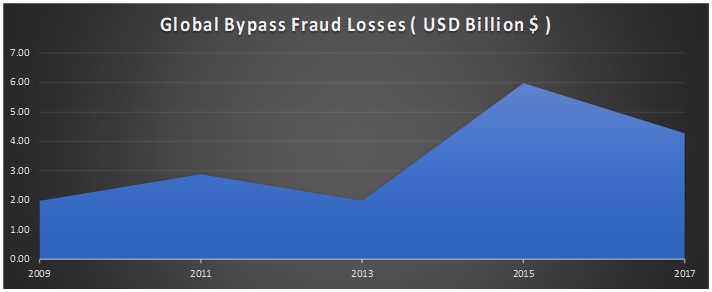
    Simbox, Bypass Fraud/ Or Interconnect bypass Fraud has been one of the fastest growing Fraud Types In recent few years.  As per 2017 Global Fraud Loss Survey by CFCA, Global Fraud Loss Estimate stands at $29.2 Billion (USD) annually which is 1.27% of global telecom revenues.

    global bypass

    Source CFCA Survey Results

    Simbox Fraud / Bypass Fraud has been a significant fraud issue for more than a decade now. CFCA survey results across 2009 till 2017 clearly shows an increase of more than 100%  in Bypass fraud since 2013. In this blog, we shall discuss about factors that has contributed to this continuous increase in Bypass Fraud and reasons, operators have not been able to effectively mitigate Bypass Fraud.

    Factors for continuous Increase in Bypass / Simbox Fraud:

    • Reduced barrier for entry

    Buying and operating SIMBoxs has never been easier with online stores, e-commerce websites,courses, forums and instant support availability.  This has led to an increased spread of VOIP based startups and subsequent increase in bypass fraud. VOIP based calling apps have also made customer acquisition easy by making them  easily available on  AppStore for Android & IOS users. For instance, a recent news from India covered the similar trend wherein those who wanted to make international calls from Gulf countries has to download an app called ‘dial to India’ Once this app is downloaded, they get a password for monthly subscriptions. The person sitting abroad will just dial the number in India, the call will bypass the VSNL gate and will directly route through the SIM box and will get connected from there. Read More

    Few more such examples as below:

    Illegal phone exchanges thriving on SIM boxes

    VOIP exchanges used by ISI busted in Andhra Pradesh, India

    • Competitive Landscape

    Reduced margins on international traffic has resulted in wholesale traffic being mixed with internal traffic. Wholesale providers have also been increasingly offering non-CLI based options which could potentially end up in Grey routes. This fierce competition had led to increase in bypass traffic particularly in countries with higher landing costs.

    Reasons Operators have not been able to effectively mitigate Bypass Fraud:

    • Advancement in Sim-server Technology

    Simbox have evolved from being a simple single box setup to a complex modular architecture. This architecture allows fraudsters to maintain all the simcards in a single place and using Antenna modules and multiplexers, fraudsters are able to distribute their operations in the market. In fact, Latest Simservers also comes with inbuilt anti-fraud detection solutions allowing fraudsters to  distribute his operations in multiple locations. This makes fraud detection very complex as fraud management teams have to device multiple strategies to beat fraudsters at their game.

    • Regulatory Changes

    Regulatory changes in certain markets have fueled increase in traffic for Bypass. Recent changes of regulations in European Union has also resulted in traffic with E.U been heavily being differentiated in price from traffic outside E.U thereby causing significant increase in Bypass traffic.

    • Raising Concerns in Simcard Sales

    Increased pressure to maintain sales and activation of new connections have resulted in dealers colluding with Bypass fraudsters. Bypass operations requires lot of sims to be activated in bulk and lack of effective subscriber acquisition controls have led to fraudsters taking advantage of it.

    Fraud Management teams further have an uphill task in the Bypass fraud space as new technologies such as virtual sim’s would only increase the impacts on bypass of international traffic. It is hence important that they adopt a comprehensive fraud detection methodology to fight simbox frauds.

  • Strategies for Telcos to drive the digital economy Part 2

    Strategies for Telcos to drive the digital economy Part 2

    The internet waits for no one! It is changing the way businesses run and in today’s era, digital economy is not a distant dream but a reality.

    As promised in my last blog, I will elaborate on the key strategies that I disclosed in my previous blog which will help CSPs in their digital transformation journey to become Digital Service providers and thus drive the economy.

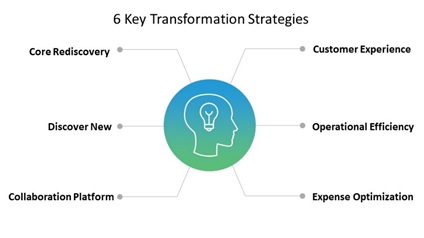
    Core Rediscovery – As said earlier, being digital does not always mean discovering new revenue streams of the digital world. It also means doing the basics brilliantly. Ensuring innovation can be brought with in the traditional services. It also means identification of a new way(s) of doing business to pull in more revenue, a classical example in interconnect business is Origin based billing & routing. Other ways of innovation are Direct CSP billing – MVNOs to cater to niche markets to indirectly gain customer base and revenues. SaaS models like billing-as-a-service to support smaller partners. DVBT2 – Digital Video Broadcasting, SMS based Cab booking, Toll free based calling Apps, Secure SMS/Missed Call – Mobile Banking etc. Rating and discounting models to define rating plans that can also assist in bringing in more revenue generation opportunities for existing and new traditional partners. These can be revenue share models or the new age models like pay as you go.

    Discover New – There is absolutely no denial that digital world is surely opening new revenue streams for CSPs. The mantra to grab a share of this pie is to act fast. CSPs need to establish a fail fast strategy so that they can identify core area of strength early in the digitalization journey. Fail fast strategy shall enable them in continuing only with those new streams that make sense to the eco system in which they do their business. No doubt, IoT & M2M are the most fascinating areas in digital world. Other areas where CSPs can generate revenue are APIs, Analytics as a service, supporting new age MVNOs like Uber and Micheline (Tier-as-a-service), smart homes solutions provided by Qivicon founded by Deutsche Telekom. Digitalization is fueled by the capabilities of operators, and hence the outreach of the operators is now domain agonistic.

    Collaboration Platform –With digitalization, difference between a partner and the end subscriber relationship is becoming blur. Partners also need attention and care like your end subscribers. CSPs will fascinatingly find innovative partners in garage companies, startups, small organization etc. Hence it is terribly essential that CSPs have a collaboration platform that addresses partner empowerment issues.

    There are two ways in which operators can bring in novelty. One is by revolutionizing their own, which we see in the case of the telecom giants acquiring platform that enables the disruptive capabilities inhouse.  The Another way is to look for vendors who can provide them a converged platform to leverage the entire gamut of the partner ecosystem. The end goal is to stay ahead of the competition by providing traditional and digital services to end customers.

    Customer Experience – Telecom market used to be oligopoly in nature, wherein the major players of telecom industries use to commodify the subscribers to mint money out of them.  Whereas now, in a perfectly competitive transition, we need to shift the paradigm to make customer and CSP relationship more human centric. This will help a CSP in designing the offerings to ensure consumer retention and to win new customers. The new age subscriber is demanding in nature and prefers an operator who is agile, innovative and cost effective.

    Below is the survey shared by Capgemini, which shows low net promotor scores of mobile operators.


    mobile-operators


    This survey also talks about that 58% of customers are willing to switch to Digital only service provider and high value customers are more willing to change. Unless operators reform their customer satisfaction approach, the NPS will stay low and operators will keep losing revenue and customer base to digital players.

    Operational Efficiency – Digitalization will lead to increase in number of partner relationships. Soon a CSP, during its transformation journey, will experience partner explosion. Digital services will result in plethora of data getting generated. To keep things under check, a CSP must bring in efficiency by making its operations also digital. Operations can be digitalized by automation, reducing redundancy of systems and data, seeking help from domain and system experts (consultation and managed services), empowering partners with self-care capabilities. CSPs design their partner handling capabilities both in terms of processes and solutions considering mostly trusted partners, hence the partnerships are also limited and the systems are also multi step and user dependent. In case of digitalization, CSPs need to associate with multiple entities who can bring in renovation, hence will see surge in partnerships. To handle partner explosion, processes of on-boarding and partner care should be particularly efficient. Partners are the new age customers, they are aware that they bring innovation and new revenue stream for a CSP, hence they should be treated with lot of care. Having an efficient eco-system for partner will surely bring in satisfaction and shall maintain a healthy partnership.

    Expense Optimization – Expenses are inversely proportional to profit. An aspiring digital operator must form a strategy around cost reduction. Based on a research house, software industry is gradually moving towards convergent approach from siloed ecosystem. This helps in reducing overhead of investing in multiple systems. Leveraging solutions that are based on open source technologies is another way of optimizing hefty recurring costs. If a telco can bring in operational efficiency, expense optimization will happen automatically.

    This transformation will be a challenging journey for both CSP and its partners, but this will surely help an operator to rediscover itself and shall bring in more agility to accept and act on whatever comes down the path. Though there are many other factors and strategies that can be adopted along with the mentioned ones, these 6 strategies are our take on the transformation journey. However, it is very important for an operator to clearly identify the purpose of its modification, but it is completely okay to move step by step instead of adopting all 6 strategies at once. To start with the transformation, CSPs should reexamine the existing offerings, existing expense optimization plan, make the current operations efficient and ensure customer satisfaction in the existing services offered. Once there is a clarity in becoming digital in current line of business, identification of new streams will automatically fall in place.

    We are discussing these strategies in detail at our booth (Booth # 5F10, Hall 5) in MWC 2018. Meet us in the booth to know more about how we can help in your transformation journey to drive the digital economy.

  • Strategies for Telcos to drive the digital economy Part 1

    Strategies for Telcos to drive the digital economy Part 1

    In an ever-changing state of communication, innovation has become quintessential force that is driving the digital economy. Looking at the current trends, every organization wants to go digital. Being digital holds different meaning for different organizations based on the nature of their business.

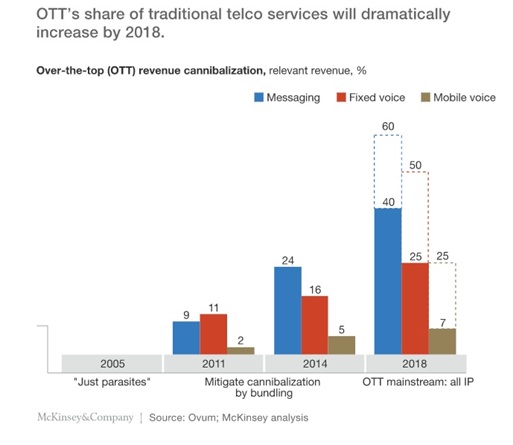
    But when it comes to the telecom world, going digital is more of a catchup rather than a race to be a pioneer. A lot of non-telco players are already digitalized from day one, and that too by using CSP’s platform and customer base. Rise of OTT players and other disruptors have done a significant damage to the traditional voice and text business as well. The consulting leaders such as Ovum and McKinsey predict the success of OTT players in capturing a significant share of telco services.


    OTT's share


    As the number of years ascends, the revenue graph takes an inverse fall and this analysis makes it important for CSPs, who have the best of world resources in the form of capital, customer base, infrastructure and brand name, to start doing things differently by shifting their focal point from just a traditional to a mix of traditional and digital services. Now is the time for the CSPs to take the process of metamorphosis seriously.

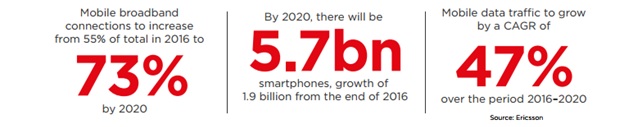
    (Based on GSMA figures,) The period starting from 2016 to 2020 will witness substantial ballooning of the data and connectivity indicating clearly that digitalization is going to play a pivotal role in service providers growth and thus will help in balancing the loss incurred due to reducing revenues from traditional services.


    mobile-broadband-connection


    The transition from communications service provider (CSP) to Digital Service Provider (DSP) cannot be a quarantined approach. It requires partnership with innovators/disruptors to bring in new services and experiences. Confederation of progressive vendors with digitalized vision is indispensable in providing solutions that can support this transition. CSP to DSP transformation approach cannot be concentrated around only new revenue streams. Industry experts have defined DSP as a service provider whose, not only services, but also operations are under the single umbrella of digitalization. One who provides services as well as operations, both digitalized.

    We have a strong view that there are lot other areas which are still left untapped.

    Looking at the current scenarios, there are 6 key strategies that are listed based on the idea of helping CSPs in increasing their revenues by bringing innovation and creativity in their existing services, acceptance of new technologies, sustaining demanding customer base and reducing operational & transformation expenses. Below is the list of our 6 key digitalization strategies that are recommended for a progressive CSP during its transformation.

    In my next blog I will elaborate on these strategies in detail and discuss how it will help CSPs to transform themselves into DSPs and thus help them to drive the digital economy. Stay tuned!

     

    transformation-strategies