Tag: Revenue Assurance

  • ¡Larga vida al Revenue Assurance!

    ¡Larga vida al Revenue Assurance!

    Hace unos meses, estaba con un colega en Lima Perú visitando a uno de nuestros clientes. Después de cenar en un restaurante en el bonito barrio de Miraflores, decidimos volver caminando al hotel mientras discutiamos sobre el futuro de las prácticas de mitigación de riesgos que vienen en los próximos años. Una pregunta interesante que surgió esa noche fue “¿Está muerta la práctica de Revenue Assurance?”. Veamos un poco este tema para construir una potencial buena respuesta…

    Durante los últimos 20 años, la industria de las telecomunicaciones ha invertido un esfuerzo sustancial en la creación e incluso la refinación de herramientas, tecnología y mejores prácticas de Revenue Assurance para monitorear, rastrear y recuperar ingresos dentro de sus respectivos negocios. Sin embargo, las mejoras de la industria que han llevado a la digitalización, la toma de decisiones empresariales en tiempo real, la seguridad de los datos y la privacidad, han cambiado el enfoque que teníamos sobre los ingresos. Hoy en día, un operador debe considerar la implementación de un amplio conjunto de controles en la mayoría de sus procesos de negocio para garantizar la integridad de su negocio, en un conjunto mucho más amplio de actividades comerciales. Afortunadamente, las inversiones realizadas en los últimos años Revenue Assurance han preparado a muchos operadores para que se trasladen fácilmente a lo que ahora se conoce como Business Assurance.

    ¿Qué es Business Assurance?

    Una posible respuesta formal a esta pregunta podría ser: Business Assurance es una práctica de gobernanza que supervisa, administra y mitiga los riesgos interconectados entre dominios empresariales críticos dentro de la empresa. Veamos que significa un poco más en detalle esta definición.

    Nosotros vemos que la modernización del negocio de las telecomunicaciones crea muchas oportunidades nuevas, pero en consecuencia aporta una mayor complejidad. Algunas soluciones muy en boga hoy en día, tal como la automatización de procesos y el análisis de datos avanzados usando técnicas de IA/ML aportan una gran potencialidad, pero también decantan en complejidad, en la generación del problema, en el análisis del problema y en su tratamiento.

    En resumen, esto significa que hay muchos puntos que pueden salir mal y debemos controlarlos, en otras palabras, hay mucho dinero por ahí que podemos recuperar.

    La mejor manera de navegar con seguridad en este mar de complejidad es a través de la mecanización y la automatización de un nuevo conjunto de controles para mitigar riesgos y tener una visión más holística del negocio en vez de atacar el problema por partes, separados en silos como solíamos hacer en el pasado (HLR vs CRM, Billing vs Mediation, etc.). Podemos agrupar este nuevo conjunto de controles bajo un “Programa de Business Assurance”.

    ¿Qué se necesita para tener un buen programa de Business Assurance? ¿Tecnología? ¿Gente? ¿Experiencia en el dominio? ¿know-how?  Bueno, todos ellos. La práctica de RA era típicamente impulsada por la tecnología, pero necesitamos una combinación de disciplinas que apoyan la tecnología adecuada para construir un programa sólido de Business Assurance. Es obligatorio tener una sólida experiencia en el dominio, lo que implica tener el conocimiento, pero también la comprensión de los aspectos más críticos del negocio, para identificar las variables y acciones con mayor impacto. Si desea garantizar el ROI y reducir el riesgo del proyecto es necesario tener un equipo con know-how en diferentes áreas, como análisis de datos avanzados y técnicas de consultoría, añadidas a un gran sentido de practicidad con el fin de llevar a cabo un plan implementable y evitar caer en la trampa en el limbo de la teoría.

    ¿Hay operadores que ya tienen programas de Business Assurance?

    ¡Claro! Un caso interesante de un operador en Asia ocurrió cuando lanzaron un plan asumiendo una pérdida inicial, pero en última instancia después de un período de incentivos la curva se invertiría y ganaría alrededor de + $ 2.8 M. Lo que pasó fue que perdieron alrededor de $200.000 sin saber completamente ¿por qué? Esta pérdida no incluye los subsidios de los teléfonos inteligentes que ese plan tenía. En resumen, los resultados de este nuevo plan trajeron un gran problema desde el punto de vista financiero. Básicamente, no tenían visibilidad de lo que estaba sucediendo; lo que sabían inicialmente es que cuando terminaba el período de incentivos los clientes regresaban a sus otros planes, pero no tenían una manera de monitorear este nuevo plan de una manera sustancial.  Esto sucedió en Oriente Medio, donde los clientes tienen teléfonos inteligentes con varias SIM, y ellos cambian de planes todo el tiempo. La otra cosa que sucedió fue que cuando otro operador introducía un nuevo plan competitivo, muchos clientes migraron a esos planes porque era más conveniente para ellos. Este tipo de información no está dentro del espectro de un análisis de datos común. Este operador implemento un programa de Business Assurance para detectar en forma temprana este tipo de comportamientos y actuar de inmediato en caso de ser necesario para frenar cualquier potencial fuga de ingresos.

    ¿Está muerta la práctica de Revenue Assurance?

    ¡Para nada! llámelo como quiera, Business Assurance, Revenue Assurance Reloaded, Risk Management o simplemente Revenue Assurance, ¡ quitar lo que puedo asegurarle es que la práctica continúa evolucionando y todos los operadores en el mundo tarde o temprano deberán definir una estrategia en esta área para acompañar los cambios que la digitalización está causando…por eso ¡ Larga vida al Revenue Assurance!

    Gestionando Riesgos Empresariales : El Crecimiento de Business Assurance

    Mira la grabación del seminario web ahora

  • Aproveche la logística inversa

    Aproveche la logística inversa

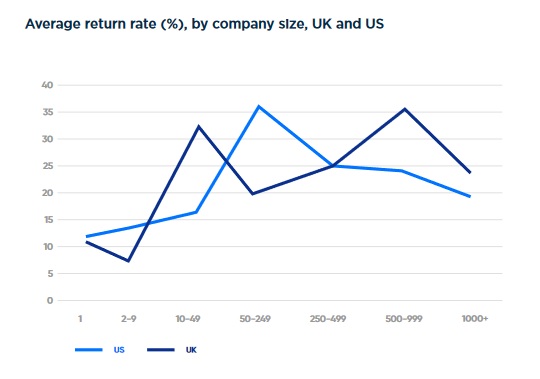
    La logística inversa ha sido durante mucho tiempo el problema hijo de la gestión de la cadena de suministro. Cada vez más, ese niño ha necesitado alguna ayuda seria. Esto se debe a dos factores. La forma en que Internet ha transformado la forma en que compramos y además el corto ciclo de vida de los bienes de consumo. Aunque a la mayoría de los consumidores todavía les gusta comprar en las tiendas de la calle para encontrar los productos que les gustan, al menos el 8% de las ventas son ahora de consumidores que simplemente hacen clic en una imagen para comprar un producto, sabiendo que pueden devolverla si es necesario. En la mayoría de los países, los consumidores tienen el derecho legal de devolver los bienes comprados en Internet. Muchos minoristas ahora incluso ofrecen devoluciones gratuitas de ‘prueba antes de comprar’, pero los procesos para administrar esas devoluciones, conocidos como logística inversa, son mucho más frágiles, costosos y susceptibles a problemas que los procesos logísticos avanzados generalmente bien controlados. Aunque las tasas de retorno varían ampliamente en diferentes verticales, la tasa de retorno promedio se ha calculado en alrededor del 17 al 18%.

    Brightpearl

    Source: Brightpearl

    La logística inversa enfrenta problemas complejos debido a la forma “ad-hoc” en que los consumidores devuelven artículos y vulnerabilidades en los procesos de devolución. Debido a que la logística inversa no se considera un proceso generador de ingresos, a veces no recibe la atención que necesita, pero recientemente se le ha reconocido cada vez más por tener un papel clave en la rentabilidad de la empresa. Tener procesos eficientes para recolectar, revender o reciclar artículos usados ​​puede generar ingresos adicionales y mejorar los resultados de una empresa. Hay otras razones importantes para prestar más atención a la logística inversa. Los consumidores ahora juzgan a las compañías por sus credenciales ecológicas, y los consumidores son conscientes de que muchos dispositivos electrónicos contienen algunos químicos altamente tóxicos. Proporcionar un canal a través del cual los dispositivos antiguos se puedan intercambiar y reciclar de manera confiable es un punto de venta positivo. La eficiencia del proceso de devolución también tiene un impacto significativo en la impresión de los clientes de un negocio.

    Aunque la “revolución de los retornos” afecta a todas las líneas comerciales minoristas, los productos electrónicos de consumo de alto valor son especialmente propensos a problemas en el proceso de devoluciones. Enormes volúmenes de teléfonos, decodificadores, enrutadores, incluso televisores y computadoras portátiles, ahora se devuelven a través de una multitud de canales por una variedad de razones. Los almacenes pueden recibir miles de dichos productos por semana. La mayoría de esos dispositivos aún pueden estar funcionando y pueden revenderse, pero rastrear dichos dispositivos desde los clientes, evaluar su viabilidad para revenderlos, restaurarlos, reempacarlos y luego redistribuirlos, es un desafío sustancial.

    Los problemas comienzan tan pronto como un cliente dice que quiere devolver un dispositivo. Ya sea porque el dispositivo es defectuoso, no apto, incorrecto, no deseado o porque están rescindiendo su contrato, deben notificar que se está devolviendo el dispositivo. Los agentes deben capturar correctamente los detalles de por qué se devuelve el dispositivo y emitir una RMA (Autorización de devolución de mercancía). Esto desencadenará una secuencia compleja de procesos para finalizar los servicios en la red, calcular los ajustes de facturas, preparar los sistemas posteriores para la recepción de los dispositivos devueltos, actualizar los inventarios al recibirlos, administrar la inspección, la renovación y la reventa de esos dispositivos, y potencialmente emitir reemplazos para dispositivos defectuosos, dependiendo de factores como el contrato, la garantía, el estado del dispositivo, el tipo de terminación o la calificación del cliente, los clientes pueden ser responsables de cargos adicionales o elegibles para una compensación.

    Reverse Logistics

    Los canales de devolución típicos serían enviar un dispositivo por mensajería, devolverlo a una tienda o un técnico puede devolver la mercancía. Cualquiera que sea el canal, los dispositivos a menudo llegarán sin una indicación clara de a qué cuenta de cliente se refieren. Las devoluciones a las tiendas son particularmente problemáticas con los agentes que no escanean los códigos de barras o registran las devoluciones correctamente. Es posible que los sistemas en la tienda no puedan registrar IMEI, IMSI y / o números de serie, y no hay motivación para que el personal etiquete los dispositivos devueltos con precisión.

    Con tantas piezas móviles, no sorprende que muchos dispositivos se pierdan o se pierdan en el camino, y que los clientes se carguen incorrectamente. Se sabe que los operadores cancelan más de $ 5 + millones en dispositivos perdidos por mes.

    Una solución es implementar controles automatizados que brinden monitoreo en todos los sistemas, tanto en logística directa como inversa, asegurando así que los dispositivos se puedan monitorear desde el pedido inicial en CRM, dentro y fuera de los almacenes, con mensajeros, envíos, socios de renovación, compañías financieras y estado de activación en el aprovisionamiento de servicios de red. Con sistemas de monitoreo que pueden detectar incluso la ubicación física donde se instalan los dispositivos, es posible validar el inventario, facturar a los clientes y socios con precisión, evitar fraudes, recuperar el valor máximo de los dispositivos devueltos y comprender por qué se devuelven los dispositivos.

    Subex proporciona soluciones de ROC Device Assurance a operadores de todo el mundo, ayudando a localizar dispositivos faltantes, conciliar y corregir sistemas de facturación, CRM, aprovisionamiento, distribución e inventario con capacidades de descubrimiento y reconciliación líderes a nivel mundial.

    Grabación de seminario web – Evolución en la mitigación de riesgo de dispositivos

    Mira el seminario web ahora.

  • ¿Vender dispositivos es una bendición o una pesadilla para las empresas de telecomunicaciones?

    ¿Vender dispositivos es una bendición o una pesadilla para las empresas de telecomunicaciones?

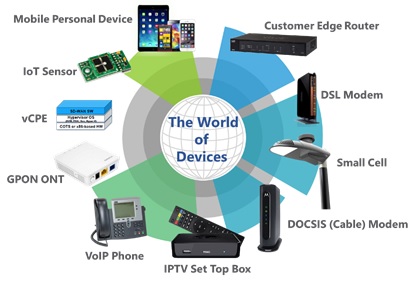
    El teléfono inteligente parpadea cuando se menciona el dispositivo. Sin embargo, los dispositivos son un gran ecosistema más allá de los teléfonos inteligentes: una gama de equipos como dongles, enrutadores, equipos de las instalaciones del cliente (CPE) y teléfonos IP, por nombrar algunos. Los dispositivos son una gran herramienta para que las empresas de telecomunicaciones atrapen y satisfagan a sus clientes. Por ejemplo, las ofertas agrupadas con contratos que abarcan meses proporcionan ingresos predecibles para las empresas de telecomunicaciones.

    La próxima ola de oportunidades.

    Con IoT y 5G haciendo avances, las empresas de telecomunicaciones se están preparando para los dispositivos de próxima generación para redes domésticas y de oficina. Una oportunidad lucrativa para las empresas de telecomunicaciones, ya que los dispositivos son críticos para la penetración de IoT / 5G. Se introducirán dispositivos más nuevos, como celdas pequeñas para aumentar la capacidad de la red y mejorar la cobertura interior. No es de extrañar que las empresas de telecomunicaciones estén invirtiendo en dispositivos.

    ¿Las empresas de telecomunicaciones se están beneficiando de los dispositivos?

    Los dispositivos son una oportunidad atractiva ya que mejoran la adherencia del cliente y el ARPU. Los dispositivos son buenas herramientas de promoción para atraer nuevos clientes y ganar tracción incluso en economías emergentes. Muchos clientes extienden su relación con las empresas de telecomunicaciones más allá del período de contrato.

    Sin embargo, la adquisición, venta y administración de dispositivos está plagada de riesgos. El fraude, las fugas y la deuda inmanejable están obstaculizando los ingresos y las ganancias.

    Una encuesta en los estados de la empresa de telecomunicaciones:

    “A nivel mundial, se pierden al menos 2 USD por dispositivo” Millones de USD están siendo dados de baja impactando P&L

    ¿Cuáles son los riesgos?

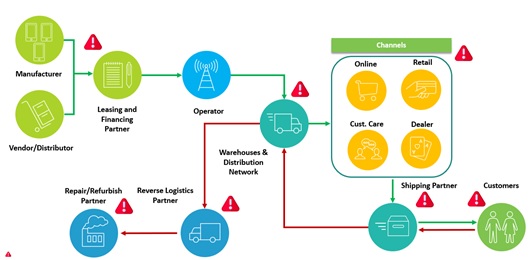
    La Telco en promedio gasta el 20% de su OPEX en la adquisición y el mantenimiento de dispositivos. Toda la cadena de suministro que cubre la logística directa e inversa es propensa a riesgos. La cadena de suministro no solo involucra a las partes interesadas dentro de la empresa de telecomunicaciones (marketing, ventas, operaciones, logística, finanzas), sino a muchas partes externas: fabricante, proveedor, socio financiero, distribuidor, socio de envío, red de almacenamiento, agentes minoristas, socio de reparación / renovación, y el cliente final.

    El apilamiento de tecnología es compleja con al menos 10 aplicaciones y plataformas diferentes involucradas. Las fugas de stock en los pedidos ordenados frente a los recibidos, las brechas de inventario, el envejecimiento de los dispositivos en el inventario, las brechas en los puntos de venta son algunos de los riesgos tecnológicos a destacar.

    Gestione los riesgos

    ¿Cómo podrían las compañías de telecomunicaciones controlar los riesgos y las fugas, y aprovechar al máximo la oportunidad?

    Regístrese para nuestro próximo seminario web sobre Evolución en la mitigación de riesgo de dispositivo.

    Pulse aquí para registrarse

  • Creciendo más allá del Aseguramiento de ingresos: el auge del Aseguramiento Empresarial

    Creciendo más allá del Aseguramiento de ingresos: el auge del Aseguramiento Empresarial

    Tradicionalmente, las funciones de aseguramiento de ingresos han estado monitoreando los flujos de ingresos desde el cambio a la facturación, con el objetivo principal de detectar fugas, generalmente con una latencia de más de 24 horas. Con el éxito de la función de garantía de ingresos en sí misma, que se mide sobre el valor de la fuga que se identifica, mayor es el hallazgo y mayor es el éxito de la función de aseguramiento de ingresos. Siendo un modelo que ha estado funcionando desde la era de los servicios 2G, todas las funciones de RA se construyeron sobre la base de la identificación de fugas.

    En el extraño caso de tener una asignación de servicios casi perfecta y la medición de un flujo de ingresos, la función RA se ve obligada a expandir los controles a las nuevas áreas y tecnologías en la búsqueda para encontrar la fuga evasiva. Esta búsqueda de validar el propósito de la existencia de la función RA comienza y termina año tras año, lo que demuestra ser un desafío importante con la disminución de los ARPU (Average revenue per user/Promedio de ingresos por usuario) y el costo por llamada / transacción.

    Eso nos lleva a una pregunta importante. ¿Puede la fuga ser la única medida para una función RA?

    Los fabricantes de automóviles alemanes emplean un método llamado FMEA (Análisis eficaz del método de falla) que les permite alcanzar un porcentaje casi cero de fallas desde el diseño hasta la fabricación, ya que una falla menor a veces puede ser catastrófica para un usuario final o provocar la insatisfacción del cliente. Por lo tanto, el objetivo final es que la ausencia de fallas es una correlación directa con el éxito de los programas de mitigación de riesgos, un enfoque que es contrario a las prácticas tradicionales de RA.

    En RA ahora estamos evolucionando hacia un camino similar. Si bien la fuga puede ser un parámetro que indica la falla de un proceso, los otros son el monitoreo de ingresos y costos, la gestión de márgenes, la habilitación de CXO y, finalmente, el cumplimiento del cliente que proporciona la base para la ventaja competitiva.

    Evolution-of-RA

    Por ejemplo, como se indica en el gráfico de arriba.

    Moverse a lo largo del eje Y solo aumenta el recuento de controles para una función RA con el único propósito de encontrar fugas

    O bien, si se mueve exclusivamente a lo largo del eje X, brinda una cobertura mínima que no protege todos los servicios ni permite todas las funciones de la empresa

    Por otro lado, una ruta que aumenta linealmente, proporciona una ruta que madura la función de RA con la tecnología cambiante y el ecosistema empresarial, al mismo tiempo que permite diversas funciones y conduce a la organización hacia una ruta impulsada por datos.

    La digitalización ha ampliado enormemente los riesgos generales para las empresas de telecomunicaciones y en la realidad actual de las ofertas multiservicio y multidisciplinarias (p. Ej., Banca, venta minorista, contenido digital, etc.), la función de garantía de ingresos debe pasar de solo asegurar los ingresos (con un enfoque comercial principal en EBITDA) para asegurar modelos de negocio, ampliando el enfoque más allá de la gestión de ingresos a Business Assurance.

    Seminario web OnDemand: Gestión de riesgos empresariales: El crecimiento del Aseguramiento de Negocios.

    DESCARGAR GRABACIÓN

  • The future of Revenue Assurance – ‘Expert opinion’

    The future of Revenue Assurance – ‘Expert opinion’

    [vc_row][vc_column][vc_column_text]One of the most evolving functions in the telco BSS side of things is Revenue Assurance. Over the years, it has molded itself into many forms catering to changing business needs, new offerings and market dynamics. However, now seems to be a time that is different from anything we have seen earlier, as the influence of ‘Digital’ on telcos is immense. The possibilities for telcos in the digital world are infinite, and so are the risks – providing immense scope for the evolution of traditional functions like Revenue Assurance. So, we went about asking some of the highly regarded RA experts in the industry what they think is the future of the Revenue Assurance function is, and here is what they said (listed in alphabetical order)

    “The Telecom industry has cut across economic barriers and has created a media that surpasses limitations placed on the economy of a nation by its physical infrastructure. The Telecom revolution has hit all countries across the globe from first world to third world. As markets mature and subscribers grow in numbers, new operators set up operations to tap the markets, existing operators face pressures to maintain their customer base, ARPU and ultimately their margins.
    The advent of competition has brought about a need to maintain the top lines of the companies, which can be achieved by effective strategy and efficient operations which has very well visible digital Impact. One of the key components for maintaining revenues and profitability is through operational efficiency by continuous deployment of is Revenue Assurance controls across Revenue streams.”

    [/vc_column_text][vc_single_image image=”19907″ img_size=”80×80″ alignment=”center” style=”vc_box_outline_circle_2″ css=”.vc_custom_1569831513336{margin-bottom: 10px !important;}”][vc_column_text css=”.vc_custom_1594959803732{margin-top: 0px !important;padding-top: 0px !important;}”]

    linkedin Amit Agrawal, Du – EITC

    [/vc_column_text][vc_separator][vc_row_inner][vc_column_inner][vc_column_text css=”.vc_custom_1569832014954{margin-bottom: 10px !important;}”]

    “RA solutions continue to address different threats as new services are deployed, however IoT usage patterns means need automated customization for each deployment is needed, requiring and understanding of each application.
    Real-time monitoring shifts RA solutions into operational systems providing fraud management capabilities, helping to mitigate risks and build trust for customers.
    CSPs tempted to reduce investments should consider it like continuing vaccinations even when a disease is eradicated”

    [/vc_column_text][vc_single_image image=”20005″ img_size=”80×80″ alignment=”center” style=”vc_box_outline_circle_2″ css=”.vc_custom_1569832029819{margin-bottom: 10px !important;}”][vc_column_text css=”.vc_custom_1594959822284{margin-top: 0px !important;padding-top: 0px !important;}”]

    linkedin Justin van der Lande, Analysys Mason

    [/vc_column_text][vc_separator][/vc_column_inner][/vc_row_inner][vc_row_inner][vc_column_inner][vc_column_text css=”.vc_custom_1569831634897{margin-bottom: 10px !important;}”]

    “I believe as Revenue Assurance is gradually evolving towards Business Assurance and telecom industry is transforming towards the digital arena, the role of business assurance will increasingly focus on adding value in business decision making owing to its enhanced analytical capabilities & commercial ingenuity using artificial intelligence, robotics and next-generation business assurance solutions. This will shift the emphasis from revenue saving to value maximization, operational efficiency and reduction in residual losses through proactive controls & processes.”

    [/vc_column_text][vc_single_image image=”19909″ img_size=”80×80″ alignment=”center” style=”vc_box_outline_circle_2″ css=”.vc_custom_1569831653249{margin-bottom: 10px !important;}”][vc_column_text css=”.vc_custom_1594959840748{margin-top: 0px !important;padding-top: 0px !important;}”]

    linkedin Mustafa Ali, Batelco

    [/vc_column_text][vc_separator][/vc_column_inner][/vc_row_inner][vc_row_inner][vc_column_inner][vc_column_text css=”.vc_custom_1569831676789{margin-bottom: 10px !important;}”]

    “Automation, Digitalization, Process Optimization, everything evolves with customer needs and business risks. In essence, RA should be an agile process with no manual activity: you always need to have the right indicators, suitable and comprehensive, scalable and quickly. In my opinion, a large part of RA should be integrated and taken into account at the time of the construction of the equipment managing offers and revenue streams.
    Solution providers and manufacturers should combine their know-how to integrate upstream and perfect this dimension of control.”

    [/vc_column_text][vc_single_image image=”19913″ img_size=”80×80″ alignment=”center” style=”vc_box_outline_circle_2″ css=”.vc_custom_1569831689905{margin-bottom: 10px !important;}”][vc_column_text css=”.vc_custom_1569848446251{margin-top: 0px !important;padding-top: 0px !important;}”]

    Ndeye Coumba, Sonatel

    [/vc_column_text][vc_separator][/vc_column_inner][/vc_row_inner][vc_row_inner][vc_column_inner][vc_column_text css=”.vc_custom_1569907892544{margin-bottom: 10px !important;}”]

    “Business transformation is taking place faster and the sources of income generation change in the same way. Traditional revenues are being replaced by new digital businesses, which are supported by processes with technologies that require evolving with more efficient control models, capable of processing a lot of information in real time.
    Revenue from new digital businesses and carrier billing has been rising in the order of 25% per year and from the revenue assurance area we have the challenge of transforming ourselves to detect unknown errors that are not evident today. The idea is to take advantage of big data always safeguarding the relevance of information security and privacy, to strengthen and give intelligence to our controls, anticipating risks and avoiding potential leaks, not only with the view of income, but in an integral way that allows us to ensure the business margin in an increasingly competitive market.”

    [/vc_column_text][vc_single_image image=”19915″ img_size=”80×80″ alignment=”center” style=”vc_box_outline_circle_2″ css=”.vc_custom_1569831733075{margin-bottom: 10px !important;}”][vc_column_text css=”.vc_custom_1594959855998{margin-top: 0px !important;padding-top: 0px !important;}”]

    linkedin Nelson Sepúlveda B., Telefónica / Movistar Chile

    [/vc_column_text][vc_separator][/vc_column_inner][/vc_row_inner][vc_row_inner][vc_column_inner][vc_column_text css=”.vc_custom_1569831753812{margin-bottom: 10px !important;}”]

    “In the era of 5G, CSPs are looking at their revenue assurance functions to monetise zeta-bytes of structured & unstructured data to detect patterns, outliers, and learning behaviours. The proliferation of products and the emergence of and API based economy have pushed RA/FM professionals have to find new ways to keep pace with the industry. AI/ML algorithms will assist RA/FM experts to relieve some of the workload and will allow them to take data driven decisions. Data scientists will play a role in creating, adapting and executing models that will detect new issues, reduce the number of false positives, increase the coverage, and improve accuracy. In the future years, Revenue Assurance will play an even more crucial role to protect the bottom line and create enough opportunities to enhance the top line.”

    [/vc_column_text][vc_single_image image=”19918″ img_size=”80×80″ alignment=”center” style=”vc_box_outline_circle_2″ css=”.vc_custom_1569831771452{margin-bottom: 10px !important;}”][vc_column_text css=”.vc_custom_1594959873037{margin-top: 0px !important;padding-top: 0px !important;}”]

    linkedin Nikhil Sehgal, Colt

    [/vc_column_text][vc_separator][/vc_column_inner][/vc_row_inner][vc_row_inner][vc_column_inner][vc_column_text css=”.vc_custom_1569831795147{margin-bottom: 10px !important;}”]

    “Digital innovations clearly place consequential challenges on Telcos who must reinvest in and reinvent themselves for incremental revenues in a competitive arena. Therefore, the future of revenue assurance rests in focus beyond controlling leakages within acceptable limits, to focusing value enhancements from statistically discernible causes of performance departures for tracking and improving stated objectives. With the best end-to-end visibility of the revenue value chain, under-funding assurance places a liability on the future.”

    [/vc_column_text][vc_single_image image=”20002″ img_size=”80×80″ alignment=”center” style=”vc_box_outline_circle_2″ css=”.vc_custom_1569831815140{margin-bottom: 10px !important;}”][vc_column_text css=”.vc_custom_1594959953482{margin-top: 0px !important;padding-top: 0px !important;}”]

    linkedin Ope Faniran, 9Mobile

    [/vc_column_text][vc_separator][/vc_column_inner][/vc_row_inner][vc_row_inner][vc_column_inner][vc_column_text css=”.vc_custom_1569831845950{margin-bottom: 10px !important;}”]

    “Considering the evolution of business dynamics, the scale at which Revenue Assurance is maturing is incredible with more focus on cost optimization, capex management, and knife-edge driven preventive measures thereby climbing up the ladder to be owner of Business Assurance. Growth demands RA to become BA with getting rid of ROI instead to play pivotal role in mitigating risks and minimizing leakages to bring in more value to the company.”

    [/vc_column_text][vc_single_image image=”19922″ img_size=”80×80″ alignment=”center” style=”vc_box_outline_circle_2″ css=”.vc_custom_1569831862976{margin-bottom: 10px !important;}”][vc_column_text css=”.vc_custom_1594959973399{margin-top: 0px !important;padding-top: 0px !important;}”]

    linkedin Sai Devata, Viva Kuwait

    [/vc_column_text][vc_separator][/vc_column_inner][/vc_row_inner][vc_row_inner][vc_column_inner][vc_column_text css=”.vc_custom_1569831883772{margin-bottom: 10px !important;}”]

    “As the industry goes digital the challenges for revenue assurance will change but basics will remain. As Revenue Assurance professionals, we need to understand the new risk landscape: cybersecurity and eco-system weaknesses will bring new risks. Digital solutions will also provide new opportunities to assure revenues and transactions. We need to embrace digital and ensure business processes are born digital with Revenue Assurance embedded in them leveraging on new technology as we do so.”

    [/vc_column_text][vc_single_image image=”19913″ img_size=”80×80″ alignment=”center” style=”vc_box_outline_circle_2″ css=”.vc_custom_1569831892768{margin-bottom: 10px !important;}”][vc_column_text css=”.vc_custom_1594959986633{margin-top: 0px !important;padding-top: 0px !important;}”]

    linkedin Sarah Hakeem, Millicom

    [/vc_column_text][vc_separator][/vc_column_inner][/vc_row_inner][vc_row_inner][vc_column_inner][vc_column_text css=”.vc_custom_1569831919834{margin-bottom: 10px !important;}”]

    “The Customer being the nucleus of the business, the future of Revenue Assurance is definitely to assure a superior customer journey and experience. Besides business growth, QoS, profitability, and enhancing the culture of risk management, as telcos continue to evolve into Digital Service Providers, RA will further step up to play a decisive role in assuring security of its services, data privacy, regulatory compliance and data governance.”

    [/vc_column_text][vc_single_image image=”19924″ img_size=”80×80″ alignment=”center” style=”vc_box_outline_circle_2″ css=”.vc_custom_1569831957249{margin-bottom: 10px !important;}”][vc_column_text css=”.vc_custom_1594960003774{margin-top: 0px !important;padding-top: 0px !important;}”]

    linkedin Straus Dias, Ooredoo Qatar

    [/vc_column_text][vc_separator][/vc_column_inner][/vc_row_inner][vc_row_inner][vc_column_inner][vc_column_text css=”.vc_custom_1569831979684{margin-bottom: 10px !important;}”]

    “With the ever-evolving and increasingly complex business models governing telecommunications, driven by competition to provide subscribers with an expanding array of devices (from phones and accessories to branding merchandise) and services (from voice and data to media and entertainment), legacy views of Revenue Assurance will have decreasing financial value. Revenue Assurance organizations will be forced to consider costs for performing margin assurance, while also understanding business opportunities and risks in a broader Business Assurance role.”

    [/vc_column_text][vc_single_image image=”20003″ img_size=”80×80″ alignment=”center” style=”vc_box_outline_circle_2″ css=”.vc_custom_1569831997154{margin-bottom: 10px !important;}”][vc_column_text css=”.vc_custom_1594960016925{margin-top: 0px !important;padding-top: 0px !important;}”]

    linkedin Taruna Rajan, T-Mobile

    [/vc_column_text][vc_separator][vc_column_text]

    So, those were the views of some of the top RA practitioners in the industry. What are your thoughts on the subject? Let us know in the comments section.

    If you want your thoughts to be featured in the next ‘Experts opinion’ article, write to us here.

    [/vc_column_text][/vc_column_inner][/vc_row_inner][/vc_column][/vc_row]

  • Selling devices – A boon or bane for Telcos?

    Selling devices – A boon or bane for Telcos?

    Smartphone flashes in mind, when device is mentioned.  Devices, however, are a large ecosystem beyond smartphones – a range of equipment like dongles, routers, customer premise equipment (CPE) and IP phones, to name a few.  Devices are a great tool for telco to lock their customers in. For instance, the bundled offers with contracts spanning months provide predictable revenues for the telco’s.

    The next wave of opportunity

    With IoT and 5G making inroads, telco’s are preparing for the next-generation devices for home and office networks. A lucrative opportunity for telcos, as devices are critical to the IoT/5G penetration. Newer devices will be introduced, like small cells to boost network capacity and improve indoor coverage. It’s no wonder that telcos are investing into devices.

    Are telcos benefiting from devices ?

    Devices are an attractive opportunity as they improve customer stickiness and ARPU. Devices are good promotional tools to attract new customers and gaining traction even in emerging economies. Many customers extend their relationship with telcos beyond contract period.

    Yet, procuring, selling and managing devices is riddled with risks. Fraud, leakages and unmanageable debt are hampering the revenues and profits.

    A survey across telco’s states:

    telcos stats

    What are the risks?

    Telco’s on an average spends 20% of their OPEX on procuring and servicing devices. The entire supply chain covering the forward and reverse logistics is prone to risks. The supply chain not only involves stakeholders within the telco (marketing, sales, operations, logistics, finance), but many external parties –manufacturer, supplier, financing partner, distributor, shipping partner, warehousing network, retail agents, repair/refurbish partner, and the end-customer.

    risk

    The technology stack is complex with at least 10 different applications and platforms involved. Leakages of stock in ordered vs received, inventory gaps, devices ageing at inventory, gaps at POS are a few technological risks to highlight.

    Bane to boon – Manage the risks

    How could telco’s control the risks & leakages, and make the best of the opportunity? It is important that Telcos have Device Assurance strategy in place to manage the device related risks. Stay tuned for more updates about Device Assurance Solution.

  • Cash in on Reverse Logistics

    Cash in on Reverse Logistics

    Reverse logistics has long been the problem child of supply chain management. Increasingly that child has been in need of some serious help. This is due to two factors. The way in which the internet has transformed how we shop, and the short lifecycle of consumer goods. Although most consumers still like to shop in high street stores to find the products they like, at least 8% of sales are now from consumers just clicking on a picture to buy a product, comfortable in the knowledge that they can return it if necessary. In most countries, consumers have a legal right to return goods purchased on the internet. Many retailers now even offer free ‘try-before-you-buy’ returns, but the processes for managing those returns, known as reverse logistics, are far more fragile, costly, and susceptible to issues than the generally well-controlled forward logistics processes. Although return rates vary widely across different verticals, the average return rate has been calculated to be around 17 to 18%.

    Brightpearl

    Source: Brightpearl

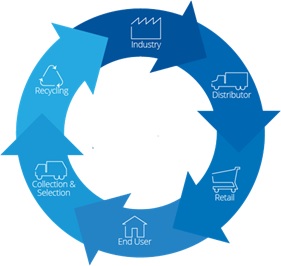
    Reverse logistics faces complex issues due to the ad hoc way in which consumers return items and vulnerabilities in the returns processes. Because reverse logistics is not seen as a revenue-generating process, it sometimes doesn’t get the attention it needs, but recently it’s been getting more widely recognized as having a key role in the company’s profitability. Having efficient processes for collecting, re-selling or recycling used items can bring in additional revenue and improve a company’s bottom line. There are other important reasons for giving more attention to reverse logistics.  Consumers are now judging companies on their green credentials, and consumers are aware that many electronic devices contain some highly toxic chemicals. Providing a channel through which old devices can be traded in and reliably recycled is a positive selling point. The efficiency of the returns process also has a significant impact on customers impression of a business.

    Although the ‘returns revolution’ impacts all retail lines of business, high-value consumer electronics are especially prone to issues in the returns process.  Huge volumes of handsets, set-top boxes, routers, even TV’s and laptops, are now being returned through a multitude of channels for a variety of reasons. Warehouses may receive thousands of such goods per week. Most of those devices may still be working and able to be resold, but tracking such devices back from customers, assessing their viability for resale, refurbishing, repackaging, and then re-distributing them, is a substantial challenge.

    The problems begin as soon as a customer says they want to return a device. Whether it is because the device is faulty, unfit, incorrect, unwanted, or because they’re terminating their contract, they must provide notification that the device is getting returned. Agents must correctly capture the details of why the device is getting returned and issue an RMA (Return Merchandise Authorisation). This will trigger a complex sequence of processes to terminate services in the network, calculate bill adjustments, prepare downstream systems for receipt of the returned devices, update inventories on receipt, manage the inspection, refurbishment, and resale of those devices, and potentially issue replacements for faulty devices. Depending on factors such as contract, warranty, device status, termination type or customer rating, customers may be liable for additional charges or eligible for compensation.
    Reverse Logistics

    Typical return channels would be to send a device by courier, return it to a shop, or a technician may return the goods.  Whatever the channel is, devices will often arrive without a clear indication of which customer account they relate to.  Returns to stores are particularly problematic with agents failing to scan in barcodes or register returns correctly. In-store systems may not be able to record IMEI, IMSI and/or serial numbers, and there is no motivation for staff to label returned devices accurately.

    With so many moving parts it’s no surprise that many devices become stranded or lost along the way, and customers getting charged incorrectly. Operators have been known to write off more than $5+ million in lost devices per month.

    One solution is to implement automated controls that provide monitoring across all systems in both forward and reverse logistics, thus assuring that devices can be monitored from the initial order in CRM, in and out of warehouses, with couriers, shipping, refurbishment partners, finance companies and activation status in network service provisioning.  With monitoring systems in place that can even detect the physical location where devices are installed, it’s possible to validate inventory, bill customers and partners accurately, prevent fraud, recover maximum value from returned devices and understand why devices are getting returned.

    Subex provides ROC Device Assurance solutions to operators around the globe, helping to track down missing devices, reconcile and correct billing, CRM, provisioning, distribution and inventory systems with world leading discovery and reconciliation capabilities.

    Want to know how our Asset & Inventory Assurance solution can help your organization

    Read a Demo

  • Boost your Campaign ROI through Promotion Assurance

    Boost your Campaign ROI through Promotion Assurance

    “Why do you love your service provider?”

    At the end of the day, this is the billion-dollar question which drives the entire telecom industry. When one ponders the answers, quite a few would emerge – flawless connectivity which helps my business flourish, a well-priced model which keeps families closer than ever, providing a backbone that keeps a country productive, etc. But in most surveys (and in my personal experience), it is the attempt at focused engagement that keeps most of us linked to the same Telco. Giving me freebies on my birthday, suggesting I change my plan to one which suits my business travel (even though the rental might be lesser) or even the act of proactively passing me some benefit during a network downtime adds that human element which tends to create brand loyalty.

    From the above, it is clear that successful promotional campaigns can do wonders in terms of customer retention as well as acquisition. With the plethora of analytics tools powering the marketing departments across most Telcos, differentiated, qualified, and value-driven campaigns are a reality. Of course, some have gone farther than others in this regard. But the question which I will explore in this blog is whether this practice creates risks and brings in more issues than it solves.

    Now, I look at Promotions and Campaigns from a more general perspective. It’s like eating at Dominos. While Dominos makes some decent pizzas and has a large customer base, it faces the same issue as all other eateries – consumer fatigue. This is not just caused by the limited choices (assuming a market where you could only eat Dominos pizzas), but also the sheer banality of the process. In this environment, if one offers a package deal (drink + pizza + lava cake) at 50% of its list price pursuant to a customer also purchasing a premium feast pizza, the break from the monotony of the pizza ordering process itself drives a sense of “anticipatory need.” Now, this is the easiest level. Going beyond, if Dominos were to use analytics to understand and anticipate my ordering behaviour and suggests a ready cart with one click check-out, I would be delighted. Too much to ask? Well, the reality is, this is what subscribers expect from their service providers today.

    The Inside-Out of Promotions

    With promotions emerging as a major business strategy in today’s competitive telecom environment, targeted campaigns can help Telcos increase revenue, margin, customer retention, customer satisfaction, and overall brand stickiness. However, the differentiation comes with its own challenges, and so does the ROI. The returns from the campaign greatly depend on how the Telco addresses each one of the challenges. Globally Telcos have allocated a significant portion (around 8%) of their budget for promotions and advertisements, but the results, in terms of campaign ROI, are not as expected. The ineffectiveness of campaigns could occur due to several reasons including lack of planning, improper budget allocation, incorrect metric measurement, wrong promotion qualifiers, incorrect target list, and many more.

    Let’s examine some of the challenges associated with driving successful campaigns and see how Telcos can mitigate them to gain maximum return from their campaign investments. I will broadly classify them as:

    1. Data Access and Integrity – Each stage in the promotion launch process is critically dependent on the accuracy of the facts from the previous stage. It is of paramount importance to ensure that the raw datasets are accurate, complete, and integral. Unfortunately, most marketing teams do not have access to a comprehensive data integrity engine.
    2. Promotion Complexity – Promotions can widely vary in nature (i.e. the device, vouchers, services, etc.), and most operators do not have a ready-to-use promotion risk matrix or checklist. This leaves assurance teams at a disadvantage to deal with the volume and velocity of new promotions.
    3. Time to Market – Competitor pressure in most regions leads to a very short release/launch time for new promotions. In the absence of automation, this means pre-launch testing is usually sample based, and the test results are contaminated by confirmation bias.
    4. Lack of Automation – Many of the checks required to ensure high ROI on promotions require a high level of automation as manual interventions usually introduce errors.
    5. Regulatory Hurdles: Regulators may apply a cap on certain promotional offers announced by Telcos. For example, In India, there is a 90-day cap on such offers, so the Telcos find it difficult to optimize the market spend and achieve the target within the short span of time.

    So, why invest in a Promotion Assurance program?

    Having the right product does not always guarantee revenue. Telcos may be losing out to competition due to lack of visibility into how efficiently promotions are rolled out. Promotion assurance programs, which build around modern analytics and intelligent automation techniques, emerge as a winning solution in this context because it helps the Telcos define the campaign KPIs and measure ROI from each on a near real-time basis, so they can take corrective measures appropriately.

    Challenges inherent in the current approaches and the evolving marketing conditions pose higher risks to campaign ROIs, and more importantly, might impact the customer experience. It is the need of the hour for Telcos to implement a promotion assurance strategy that focuses on the business, system, process and customer aspects of the campaign.

  • Direct Carrier Billing :  A Massive Revenue Opportunity for Telcos

    Direct Carrier Billing : A Massive Revenue Opportunity for Telcos

    In the last few years, OTT players taking away a sizable chunk of the telco revenues. To deal with this, it’s time the operators harness the potential of new streams of revenue. Direct Carrier billing is one such avenue.

    Direct Carrier Billing is a telco driven payment model, for the digital services. Direct Carrier Billing (DCB) opens the possibility of generating a new revenue stream for operators, by leveraging on the existing telco network and the billing relationship with the customers. Direct Carrier Billing, enables telcos to allow its wireless subscribers (both prepaid and postpaid) to purchase goods and services using their handsets. The cost of purchased good and services are added to their monthly phone bill or deducted from the prepaid balance, thereby providing a seamless & secure payment mechanism. This medium enables a very simplified online payment experience with just a click to complete a transaction.

    Why is Direct Carrier Billing beneficial for the Telcos?

    Juniper Research found that operator revenues derived from carrier billed purchases will rise from USD $2.9 billion in 2017 to USD $9 billion in 2022, an average annual growth of 25%. With growing purchases via DCB, operators enabling their customers to buy all kinds of goods and services using their mobile services subscription will add a new revenue stream for the operators.

    • The operators can take a % of the revenue from the transactions, and their customers don’t have to look for a financial relationship with another company.
    • It is a win-win situation for both the operator and the merchant since it also helps the merchant extend their reach by using the operators existing customer base.
    • The higher conversion rate in DCB transactions will lead to an increase in ARPU for operators.
    • The payment method is extremely simple and secure leading to better user experience and reduction in customer churn.

    Leading Technology firms like Google, Apple and Amazon are also investing in building DCB relationships with operators and vendors (like Fortumo, Bango, Boku etc.).  They strongly believe that DCB will allow the unbanked to better engage and participate in the digital economy. The increasing desire to enable payment across Smart TVs, Xbox and IoT devices emerging in the market, widens the opportunity for Direct Carrier Payment.

    With most of the transactions completed via DCB, the problem is that maintaining Direct Carrier Billing functionality sometimes fails due to settlement involved between the multiple parties and the frauds in the DCB chain. Subex Direct Carrier Billing Assurance program protects the entire DCB chain providing end to end Risk and Fraud Management.

    Stay tuned to know more about Subex Direct Carrier Billing Assurance.

  • Digital Transformation: The Art of War!

    Digital Transformation: The Art of War!

    Straight from the Board Room

    15th Jan, 16:00 Hours: The Board Room at the Telco HQ

    The silence is deafening, and the breathing heavy. Everyone is waiting with heavy anticipation. The top comes off the Mont Blanc, and the only sound is of the pen on the paper. The VP-Sales surreptitiously pulls out his iPhone, and drafts a text “Deal Done! Congrats…”. The finger is playing near the send button, with every passing second feeling like an eon.

    The last dot underneath the signature is placed, and without missing a beat, the send button is pressed. The room is filled with a sense of relief, and the muted claps soon turn into backslaps and congratulations…The multi-million $ deal for Digital Transformation is now underway….

    15th Jan, 22:05 Hours: The Conference Room at the Vendor HQ

    1000s of miles away, the CEO phone beeps discretely. All the weary eyes turn towards the CEO. A faint smile emerges. With the “Yes” and the fist-pump, the room erupts. Years of arduous work has come to fruition. The clinking of the glasses, and the pops of champagne bottles could not drown the enthusiasm, and the spirit of the crowd.

    The Chief Marketing Manager sneaks out, to work the PR lines. Minutes left before the item makes into tomorrows’ news.

    16th Jan, 06:00 Hours: Leading Media Publications

    “Vendor X inks a multi-million $ Digital Transformation deal with Telco Y”

    Telco Y, one of the leading telecommunications services providers, has signed a multi-million $ partnership with Vendor-Y, for Digital Transformation. Digital Transformation is a strategic initiative of the Telco Y and is aimed at offering an extensive portfolio of services to its customers, enhance customer experience & engagement, and quality of services delivery.

    01st Jul, 10:00 Hours: The Board Room at the Telco HQ

    The silence is deafening, and the breathing heavy. Everyone is waiting with heavy anticipation. The Head of Billing is pouring through the recent twitter reactions to the Digital Transformation.

    twitter-reactions

    The VP-Sales surreptitiously pulls out his iPhone, and sends a text “Bad, looks very bad…”. 1000s of miles away, the exasperation sets in …

    Let’s look at one of the major transformation challenges faced by telcos

    Digital transformation has become the norm now, and it is nothing short of a war – the war to win over customers, to stay profitable, and survive amongst the fiercest competition. However, studies indicate that most of the migration attempts have resulted in an increase in revenue leakages and has negatively impacted the brand and customer experience.

    The unfortunate reality is that a majority of telcos are currently seeing issues in their transformation process leading to negative impact aspects around revenue and non-revenue. Reasons for this vulnerability are quite straightforward – the controls that existed with a set process get disrupted, and start to diminish once the transformation begins, thus leaving the operators in a bit of a handicap.

    As per the recent reports, a leading telecom operator was fined for serious breaches of consumer rule due to inconsistencies in the new billing system and incurred a financial loss of close 4.6 Million Euros. There are also reports of operators losing up to 50 million due to migration failures.

    “Victorious warriors win first and then go to war, while defeated warriors go to war first and then seek to win”.

    – Sun Tzu, the famous Chinese general, military strategist, philosopher, and the writer

    Which side are you on? The Victorious warrior or the Defeated warrior? Download the datasheet to find ways of becoming proactive in your transformation, and being a victorious warrior.