Category: Revenue Assurance

  • Cinco razones clave por las que las Telco deben centrarse en el Aseguramiento de margen

    Cinco razones clave por las que las Telco deben centrarse en el Aseguramiento de margen

    La disrupción digital, la innovación tecnológica y el mercado de las telecomunicaciones en constante evolución influyen en la capacidad de un CSP para mantener la rentabilidad a largo plazo.

    El Margin Assurance o Aseguramiento de margen es un campo que se basa en muchas corrientes para equilibrar los costos y los gastos. Incluye manejar una combinación compleja de ofertas de servicios, definir una vista holística para la asignación de costos, permitir visibilidad en tiempo real, automatización de márgenes, etc.

    ¿Qué hace que el Aseguramiento de márgenes sea una solicitud clave para los CSP en la actualidad? Aquí hay cinco razones:

    1. Costos contributivos no identificados en un ecosistema de socios múltiples

    Con el aumento del cobro de deudas, la depreciación y otros costos de la actividad, se hace cada vez más difícil optimizar los márgenes brutos regulados. La proporción de diferentes gastos directos e indirectos aumenta a medida que aumenta el número de sistemas asociados. Los modelos de asignación de costos inadecuados, además de la agrupación de costos de red y comerciales, aumentan la complejidad del cálculo de costos.

    2. Visión deficiente de la capacidad, la utilización y la rentabilidad en todos los elementos de la red

    Si bien los operadores dedican un gasto significativo a la planificación y optimización de la capacidad, también deben estar atentos a la rentabilidad. Las ganancias también deben crecer a lo largo de la cadena de valor de la red. Esto se hace analizando el comportamiento de aprovisionamiento multicanal para determinar la mejor manera de mejorar los márgenes y optimizar la utilización.

    3. Ausencia de visibilidad a nivel granular de los parámetros de costos e ingresos

    Los avances tecnológicos están fomentando la innovación de productos para las necesidades de comunicación de próxima generación. Los CSP deben identificar los diferentes costos de productos y asignarlos a los ingresos para comprender completamente el costo total de cada producto, cliente y segmento comercial. Con conocimientos limitados sobre los segmentos de costos e ingresos, los CSP luchan con los parámetros de asignación de costos. Los empleados de telecomunicaciones necesitan las habilidades adecuadas en contabilidad de costos y conocimiento de telecomunicaciones para mapear el costo de productos individuales o segmentos agrupados de tráfico de voz y datos. Las discrepancias en las ganancias aumentan con la incapacidad de determinar el precio exacto de un producto o tecnología en particular.

    4. Falta de información en tiempo real sobre la rentabilidad, los precios y el rendimiento de los productos de la nueva era.

    Con el aumento de los datos, los CSP deben cerrar la brecha en la conciliación de datos entre diversas fuentes, como redes, socios y productos. La escasez de conocimientos sobre el rendimiento en tiempo real de los productos puede afectar negativamente a las pérdidas y ganancias de la organización. Una sólida gestión de datos aumenta la eficiencia en la identificación y seguimiento de la rentabilidad de los servicios, dispositivos y otras entidades, lo que consolida la necesidad de garantía de márgenes.

    5. Los productos y tecnologías agrupados dan como resultado modelos de asignación de costos complejos

    Los operadores están tratando de fusionar / agrupar múltiples servicios y tecnologías, lo que resulta en la creación de modelos complejos de asignación de costos. Esto conduce a una mayor complejidad del producto y diferenciación de los ingresos debido a la combinación de múltiples productos y tecnologías. Es importante tener muy en cuenta la línea de productos y crear modelos de asignación de costos en línea con el soporte de prácticas líderes en la industria para llegar a asignaciones de costos casi reales para el cálculo de la rentabilidad.

    La garantía de margen incluye las métricas para manejar la combinación compleja de resultados finales de ofertas de servicios que definen la visión holística para la asignación de costos, la garantía en tiempo real, la automatización de márgenes, etc. Esto ayuda a lograr los beneficios en términos de ‘cálculo de ganancias’, ‘flexible asignación de costos ‘y’ modelado de costos sin esfuerzo ‘, que llevan al operador a ampliar su alcance de trabajo con un aumento masivo en el número de elementos de línea de costos.

    Identificar el enfoque correcto para un eficaz Aseguramiento Contable de Ingresos

    Descarga el punto de vista

  • Five key reasons why telcos need to focus on Margin Assurance

    Five key reasons why telcos need to focus on Margin Assurance

    Digital disruption, technology innovation, and the hyper-evolving telecommunication market influence a CSP’s ability to maintain long-term profitability.

    Margin assurance is a field that draws on many streams to balance costs and spends. It includes handling a complex mix of service offerings, defining a holistic view for cost allocation, enabling real-time visibility, margin automation, etc.

    What makes margin assurance a key ask for CSPs today? Here are five reasons:

    1. Unidentified contributory costs in a multi-partner ecosystem 

    With the rise in debt collection, depreciation, and other activity costs, it is becoming increasingly difficult to optimize gross regulated margins. The proportion of different direct and indirect expenses increases as the number of partner systems increase. Improper cost allocation models, in addition to the bundling of network and business costs, increase the complexity of costing.

    2. Deficient view of capacity, utilization, and profitability across network elements 

    While operators dedicate significant spend on planning and capacity optimization, they also need to keep an eye on profitability. Profits, too, must grow along the network value chain. This is done by analyzing multi-channel provisioning behaviour to determine the best way to improve margins and optimize utilization.

    3. Absence of granular level visibility into costs and revenue parameters 

    Technology advances are encouraging product innovation for next-gen communication needs. CSPs must identify different product costs and map them to revenue to fully understand the total cost for each product, customer, and business segment. With limited insights into the cost and revenue segments, CSPs struggle with cost allocation parameters. Telecom employees need the right skillsets in cost accounting and telecom knowledge to map the cost of individual products or bundled segments of voice and data traffic. Discrepancies in profit increase with the inability to determine the accurate price of a particular product or technology.

    4. Lack of real-time insights into new-age product profitability, pricing, and performance 

    With data on the rise, CSPs must bridge the gap in data reconciliation across various sources such as networks, partners, and products. Dearth of insights into the real-time performance of products can negatively impact the organization’s profit and loss. Strong data management increases efficiency in identifying and tracking the profitability of services, devices, and other entities, cementing the need for margin assurance.

    5. Bundled Products & technologies results in complex cost allocation models 

    Operators are trying to merge/bundle multiple services and technologies, resulting in the creation of complex cost allocation models. This leads further product complexity and revenue differentiation due to the bundling of multiple products and technologies. It is important to give a strong consideration to the product line and build cost allocation models in line with industry-leading practices support to arrive at near real cost allocations for profitability computation.

    Margin assurance enlists the metrics to handle the bottom-line complex mix of service offerings defining the holistic view for cost allocation, real-time assurance, margin automation, etc. This helps to achieve the benefits in terms of ‘profit computation,’ ‘flexible cost allocation,’ and ‘effortless cost modelling,’ which further lead the operator to widen its scope of work with a massive increase in the number of cost line items

    Margin Assurance To Ensure Profitability For New-age Telcos

    Download The Point Of View

  • Automated Revenue Assurance: Helping CSPs Do More

    Automated Revenue Assurance: Helping CSPs Do More

    Revenue assurance (RA) is a common business activity for telecommunication service providers. It utilizes data quality and process improvement methods to increase profits, revenues and cash flows without influencing demand.

    In 2008, when I began my career journey in the telecom industry, I observed that telecom service providers mostly focused on the aspect of revenue enhancement with the aim of gaining strong revenue market share (RMS) and customer market share (CMS). This was done to augment their coverage in almost all the circles across India. ‘Circles’ refer to service areas, largely divided according to states/population index by the Telecom Regulatory Authority India (TRAI). The point to note is that there was not much of a focus on cost reduction as an objective.

    At this time, most organizations did not possess any specific tool for revenue assurance either. Even if they did, it was rarely geared to the enterprise needs, leading to sub-optimal performance. For some, revenue assurance fell under the sole purview of finance departments.

    Without a focused RA tool, risk assurance teams (or people like me in my earlier days) used to sit for half a day to manually execute revenue assurance activities in MS Excel or Access!

    In some cases, performing control activities, reconciliations and analysis of exception needed a few more hours, meaning the day was almost over by the time the reports were prepared and the final consolidated dashboard was circulated to other teams like network, marketing, service provisioning, etc., for taking the necessary corrective actions. One dismaying effect on such delays was that case closure would get pushed to another day. A study by TM Forum underscores this inefficiency: it showed that 1% of the gross revenues are lost due to open cases pushed to the next day. Significantly, this excludes losses due to fraud.

    Thus, lengthy turnaround time for case management impacts the entire organization.

    Compared to the relatively nascent field of revenue assurance among small and large telcos in India, the area of fraud management was well understood. This here was a mature field that was seeing significant growth with many telcos outsourcing fraud management tasks to external vendors like Subex.

    Fast forward to more than a decade later, CSPs are now always in a hurry to release modern features and keep pace with what’s new in the market. But while they do this, they must also ensure profitability. Having worked with some of the leading telecom operators across India, I believe the industry needs revenue assurance systems or tools that save manual effort by performing automatic reconciliations across a gamut of technologies, services and products. Armed with these tools, revenue assurance experts can focus solely on analytics and close cases with timely corrective actions.

    AI/ML-based Revenue Assurance solution helps telecom operators get revenue assurance automated and data driven capabilities at low latency. Apart from automated reconciliations, the solution also delivers output across all revenue streams such as prepaid, postpaid, interconnect, data, VAS, roaming, etc., giving risk assurance managers a holistic and accurate picture of revenues.

    Most important capabilities of an AI/ML-based Revenue Assurance solution include:

    • Data gathering from all sources
    • Reconciliation/auditing
    • KPI dashboard
    • Leakage analysis
    • Operational workflow management
    • Problem correction
    • Business reporting

    This solution generates tremendous value for customers by bridging the gaps and addressing the challenges of traditional revenue assurance processes.

    Automated reconciliation truly gives telcos a sharper edge for cost reduction as well as revenue enhancement.

    GCC operator leverages Subex ROC Revenue Assurance to improve margins and profitability

    Download Case Study

  • Top 3 mind-boggling views on the evolving nature of Revenue Assurance

    Top 3 mind-boggling views on the evolving nature of Revenue Assurance

    Now that I have your attention, I’ll move to the actual topic. Ever since I’ve started heading up the Revenue Assurance product line at Subex, one question has inevitably been asked by almost everyone I meet – What would the RA product look like <Insert preferred number> years from now?

    Don’t get me wrong – this is exactly the kind of conversation that I find stimulating. I find that letting your imagination run wild actually helps you find the perfect, ideal solution. Now from that point on, it’s a matter of identifying the key roadblocks and challenges and trying to overcome each one – or finding an insurmountable one, which means we go back to redefining the end-state.

    In my thought journeys so far, I have three candidates so far who I believe are the greatest things since sliced bread (if sliced bread was RA). Each of the following options are based on three distinct challenges which I would love to overcome, namely

    • control/influence over the whole BSS/OSS roadmap,
    • a genius level understanding of cyber-ecosystems and of course,
    • my personal favorite, the complete trust of all the subscribers of my customer.

    Do feel free to post in the comments which one is your personal favorite, or better yet, your own thought journey. Now onto the great reveal! My top three candidates (in a utopian environment for RA professionals) for the future of RA systems are:

    • Self-Correcting Telecom Stack – Now to achieve this, I only need to be bigger than Huawei. In a nutshell, this idea involves OSS/BSS systems which talk to each other on an on-going basis. So if a customer of the network is getting frequent dropped calls, they automatically get upgraded to a priority slice with the CRM sending across a “Sorry, my bad! No more dropped calls for you today!”. Another fun situation – if I see my service is deteriorated from a 100 Mbps to a 25 Mbps for some customer, then it automatically sends a message to the billing platform to work at a lowered rate until normal service resumes (and of course the message to the customer, ”Sorry John, my network planning team was incompetent in terms of guesstimating the actual peak capacity. We’ve reduced your billing rate and given you 20GB top-up for each day you see this”). I’m talking about network switches and charging platforms and partner settlement systems actually talking to each other in terms of assuring integrity and correctness. This approach would truly bring back the “customer” to the term “customer-centric”!
    • Bot-net based auto-correction – Lets assume for the moment tat being bigger than Huawei takes a little more effort than keeping your new year resolutions. In that scenario what can we do? Me, I like to take a leaf out of the IT operations world – we use intelligent agents on all network elements. Let call them Bots, because it does a little more than monitoring key KPIs. The idea is similar to the previous one, except instead of each element having a built-in communication heartbeat protocol, we have a bot-net deployed across your entire operations. Now what happens in afore-said bot-net? Well, every single update to key configuration or profile parameters is communicated in byte sized messages through the bot-net to all relevant up/down-stream elements. For example, in case of a dynamic tariff plan change, the bot at the provisioning element communicates with the bot residing on the charging element as well as the bot on the network side. The charging system bot verifies that for that particular subscriber, the rate plan has been changed and the network side bot then confirms that the QoS allocation for that subscriber has in fact been upgraded. We can also have PCEF/PCRF bots to verify aspects about Fair Usage policy, max up/download limits etc. What a wonderful world we’d live in where the only possibility of any mismatch happens when the bot-net is down!
    • RA as experie nced – Okay, so maybe building an intelligent, communicative and corrective bot-net is not what I spend Sundays on. Is there no way forward for RA software – fret not, there is one more idea up our sleeve. What if, with the consent of all the subscribers in an operator environment, we send RA agents on the phones of our subscribers. The RA agent essentially monitors usage on the network, up/download volumes, services available, billing/charging profile hashmaps and essentially any network related faults. Imagine all these device-bots (or as I like to call it, the Dendrones) then communicate with the central server (or as I like to call it, the BRAIN). Discrepancies are identified on a per device/profile/event basis, and corrective actions are executed in event-time. This approach would give an outside in view to Opcos, something which may be sorely missing in most RA departments today. Most importantly, this would significantly obfuscate the complexities of the network and focus on the deliverable – Predictable, Consistent and Quality service to our subscribers. Tres MAGNIFIQUE!!!

    Of course, these are the musings of someone who wants RA tooling to become simple enough to be comprehensive, and yet light enough to allow for dynamic expansion with minimal time to market for new controls. Do let me know in the comment section which option makes sense to you, or conversely, let speak about why something wouldn’t work. Either way this is a topic which I believe has crossed all our minds at some point or the other – collectively, we might find a new thought  journey which makes sense to all of us.

    Learn More on How Our Business Assurance Can Help You in Assuring Your Business

    Schedule A Demo!

    The article was originally published at Commrisk

  • ¡Larga vida al Revenue Assurance!

    ¡Larga vida al Revenue Assurance!

    Hace unos meses, estaba con un colega en Lima Perú visitando a uno de nuestros clientes. Después de cenar en un restaurante en el bonito barrio de Miraflores, decidimos volver caminando al hotel mientras discutiamos sobre el futuro de las prácticas de mitigación de riesgos que vienen en los próximos años. Una pregunta interesante que surgió esa noche fue “¿Está muerta la práctica de Revenue Assurance?”. Veamos un poco este tema para construir una potencial buena respuesta…

    Durante los últimos 20 años, la industria de las telecomunicaciones ha invertido un esfuerzo sustancial en la creación e incluso la refinación de herramientas, tecnología y mejores prácticas de Revenue Assurance para monitorear, rastrear y recuperar ingresos dentro de sus respectivos negocios. Sin embargo, las mejoras de la industria que han llevado a la digitalización, la toma de decisiones empresariales en tiempo real, la seguridad de los datos y la privacidad, han cambiado el enfoque que teníamos sobre los ingresos. Hoy en día, un operador debe considerar la implementación de un amplio conjunto de controles en la mayoría de sus procesos de negocio para garantizar la integridad de su negocio, en un conjunto mucho más amplio de actividades comerciales. Afortunadamente, las inversiones realizadas en los últimos años Revenue Assurance han preparado a muchos operadores para que se trasladen fácilmente a lo que ahora se conoce como Business Assurance.

    ¿Qué es Business Assurance?

    Una posible respuesta formal a esta pregunta podría ser: Business Assurance es una práctica de gobernanza que supervisa, administra y mitiga los riesgos interconectados entre dominios empresariales críticos dentro de la empresa. Veamos que significa un poco más en detalle esta definición.

    Nosotros vemos que la modernización del negocio de las telecomunicaciones crea muchas oportunidades nuevas, pero en consecuencia aporta una mayor complejidad. Algunas soluciones muy en boga hoy en día, tal como la automatización de procesos y el análisis de datos avanzados usando técnicas de IA/ML aportan una gran potencialidad, pero también decantan en complejidad, en la generación del problema, en el análisis del problema y en su tratamiento.

    En resumen, esto significa que hay muchos puntos que pueden salir mal y debemos controlarlos, en otras palabras, hay mucho dinero por ahí que podemos recuperar.

    La mejor manera de navegar con seguridad en este mar de complejidad es a través de la mecanización y la automatización de un nuevo conjunto de controles para mitigar riesgos y tener una visión más holística del negocio en vez de atacar el problema por partes, separados en silos como solíamos hacer en el pasado (HLR vs CRM, Billing vs Mediation, etc.). Podemos agrupar este nuevo conjunto de controles bajo un “Programa de Business Assurance”.

    ¿Qué se necesita para tener un buen programa de Business Assurance? ¿Tecnología? ¿Gente? ¿Experiencia en el dominio? ¿know-how?  Bueno, todos ellos. La práctica de RA era típicamente impulsada por la tecnología, pero necesitamos una combinación de disciplinas que apoyan la tecnología adecuada para construir un programa sólido de Business Assurance. Es obligatorio tener una sólida experiencia en el dominio, lo que implica tener el conocimiento, pero también la comprensión de los aspectos más críticos del negocio, para identificar las variables y acciones con mayor impacto. Si desea garantizar el ROI y reducir el riesgo del proyecto es necesario tener un equipo con know-how en diferentes áreas, como análisis de datos avanzados y técnicas de consultoría, añadidas a un gran sentido de practicidad con el fin de llevar a cabo un plan implementable y evitar caer en la trampa en el limbo de la teoría.

    ¿Hay operadores que ya tienen programas de Business Assurance?

    ¡Claro! Un caso interesante de un operador en Asia ocurrió cuando lanzaron un plan asumiendo una pérdida inicial, pero en última instancia después de un período de incentivos la curva se invertiría y ganaría alrededor de + $ 2.8 M. Lo que pasó fue que perdieron alrededor de $200.000 sin saber completamente ¿por qué? Esta pérdida no incluye los subsidios de los teléfonos inteligentes que ese plan tenía. En resumen, los resultados de este nuevo plan trajeron un gran problema desde el punto de vista financiero. Básicamente, no tenían visibilidad de lo que estaba sucediendo; lo que sabían inicialmente es que cuando terminaba el período de incentivos los clientes regresaban a sus otros planes, pero no tenían una manera de monitorear este nuevo plan de una manera sustancial.  Esto sucedió en Oriente Medio, donde los clientes tienen teléfonos inteligentes con varias SIM, y ellos cambian de planes todo el tiempo. La otra cosa que sucedió fue que cuando otro operador introducía un nuevo plan competitivo, muchos clientes migraron a esos planes porque era más conveniente para ellos. Este tipo de información no está dentro del espectro de un análisis de datos común. Este operador implemento un programa de Business Assurance para detectar en forma temprana este tipo de comportamientos y actuar de inmediato en caso de ser necesario para frenar cualquier potencial fuga de ingresos.

    ¿Está muerta la práctica de Revenue Assurance?

    ¡Para nada! llámelo como quiera, Business Assurance, Revenue Assurance Reloaded, Risk Management o simplemente Revenue Assurance, ¡ quitar lo que puedo asegurarle es que la práctica continúa evolucionando y todos los operadores en el mundo tarde o temprano deberán definir una estrategia en esta área para acompañar los cambios que la digitalización está causando…por eso ¡ Larga vida al Revenue Assurance!

    Gestionando Riesgos Empresariales : El Crecimiento de Business Assurance

    Mira la grabación del seminario web ahora

  • ¿Vender dispositivos es una bendición o una pesadilla para las empresas de telecomunicaciones?

    ¿Vender dispositivos es una bendición o una pesadilla para las empresas de telecomunicaciones?

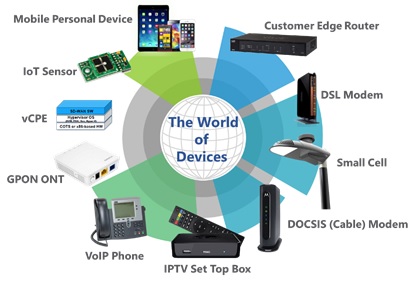
    El teléfono inteligente parpadea cuando se menciona el dispositivo. Sin embargo, los dispositivos son un gran ecosistema más allá de los teléfonos inteligentes: una gama de equipos como dongles, enrutadores, equipos de las instalaciones del cliente (CPE) y teléfonos IP, por nombrar algunos. Los dispositivos son una gran herramienta para que las empresas de telecomunicaciones atrapen y satisfagan a sus clientes. Por ejemplo, las ofertas agrupadas con contratos que abarcan meses proporcionan ingresos predecibles para las empresas de telecomunicaciones.

    La próxima ola de oportunidades.

    Con IoT y 5G haciendo avances, las empresas de telecomunicaciones se están preparando para los dispositivos de próxima generación para redes domésticas y de oficina. Una oportunidad lucrativa para las empresas de telecomunicaciones, ya que los dispositivos son críticos para la penetración de IoT / 5G. Se introducirán dispositivos más nuevos, como celdas pequeñas para aumentar la capacidad de la red y mejorar la cobertura interior. No es de extrañar que las empresas de telecomunicaciones estén invirtiendo en dispositivos.

    ¿Las empresas de telecomunicaciones se están beneficiando de los dispositivos?

    Los dispositivos son una oportunidad atractiva ya que mejoran la adherencia del cliente y el ARPU. Los dispositivos son buenas herramientas de promoción para atraer nuevos clientes y ganar tracción incluso en economías emergentes. Muchos clientes extienden su relación con las empresas de telecomunicaciones más allá del período de contrato.

    Sin embargo, la adquisición, venta y administración de dispositivos está plagada de riesgos. El fraude, las fugas y la deuda inmanejable están obstaculizando los ingresos y las ganancias.

    Una encuesta en los estados de la empresa de telecomunicaciones:

    “A nivel mundial, se pierden al menos 2 USD por dispositivo” Millones de USD están siendo dados de baja impactando P&L

    ¿Cuáles son los riesgos?

    La Telco en promedio gasta el 20% de su OPEX en la adquisición y el mantenimiento de dispositivos. Toda la cadena de suministro que cubre la logística directa e inversa es propensa a riesgos. La cadena de suministro no solo involucra a las partes interesadas dentro de la empresa de telecomunicaciones (marketing, ventas, operaciones, logística, finanzas), sino a muchas partes externas: fabricante, proveedor, socio financiero, distribuidor, socio de envío, red de almacenamiento, agentes minoristas, socio de reparación / renovación, y el cliente final.

    El apilamiento de tecnología es compleja con al menos 10 aplicaciones y plataformas diferentes involucradas. Las fugas de stock en los pedidos ordenados frente a los recibidos, las brechas de inventario, el envejecimiento de los dispositivos en el inventario, las brechas en los puntos de venta son algunos de los riesgos tecnológicos a destacar.

    Gestione los riesgos

    ¿Cómo podrían las compañías de telecomunicaciones controlar los riesgos y las fugas, y aprovechar al máximo la oportunidad?

    Regístrese para nuestro próximo seminario web sobre Evolución en la mitigación de riesgo de dispositivo.

    Pulse aquí para registrarse

  • Creciendo más allá del Aseguramiento de ingresos: el auge del Aseguramiento Empresarial

    Creciendo más allá del Aseguramiento de ingresos: el auge del Aseguramiento Empresarial

    Tradicionalmente, las funciones de aseguramiento de ingresos han estado monitoreando los flujos de ingresos desde el cambio a la facturación, con el objetivo principal de detectar fugas, generalmente con una latencia de más de 24 horas. Con el éxito de la función de garantía de ingresos en sí misma, que se mide sobre el valor de la fuga que se identifica, mayor es el hallazgo y mayor es el éxito de la función de aseguramiento de ingresos. Siendo un modelo que ha estado funcionando desde la era de los servicios 2G, todas las funciones de RA se construyeron sobre la base de la identificación de fugas.

    En el extraño caso de tener una asignación de servicios casi perfecta y la medición de un flujo de ingresos, la función RA se ve obligada a expandir los controles a las nuevas áreas y tecnologías en la búsqueda para encontrar la fuga evasiva. Esta búsqueda de validar el propósito de la existencia de la función RA comienza y termina año tras año, lo que demuestra ser un desafío importante con la disminución de los ARPU (Average revenue per user/Promedio de ingresos por usuario) y el costo por llamada / transacción.

    Eso nos lleva a una pregunta importante. ¿Puede la fuga ser la única medida para una función RA?

    Los fabricantes de automóviles alemanes emplean un método llamado FMEA (Análisis eficaz del método de falla) que les permite alcanzar un porcentaje casi cero de fallas desde el diseño hasta la fabricación, ya que una falla menor a veces puede ser catastrófica para un usuario final o provocar la insatisfacción del cliente. Por lo tanto, el objetivo final es que la ausencia de fallas es una correlación directa con el éxito de los programas de mitigación de riesgos, un enfoque que es contrario a las prácticas tradicionales de RA.

    En RA ahora estamos evolucionando hacia un camino similar. Si bien la fuga puede ser un parámetro que indica la falla de un proceso, los otros son el monitoreo de ingresos y costos, la gestión de márgenes, la habilitación de CXO y, finalmente, el cumplimiento del cliente que proporciona la base para la ventaja competitiva.

    Evolution-of-RA

    Por ejemplo, como se indica en el gráfico de arriba.

    Moverse a lo largo del eje Y solo aumenta el recuento de controles para una función RA con el único propósito de encontrar fugas

    O bien, si se mueve exclusivamente a lo largo del eje X, brinda una cobertura mínima que no protege todos los servicios ni permite todas las funciones de la empresa

    Por otro lado, una ruta que aumenta linealmente, proporciona una ruta que madura la función de RA con la tecnología cambiante y el ecosistema empresarial, al mismo tiempo que permite diversas funciones y conduce a la organización hacia una ruta impulsada por datos.

    La digitalización ha ampliado enormemente los riesgos generales para las empresas de telecomunicaciones y en la realidad actual de las ofertas multiservicio y multidisciplinarias (p. Ej., Banca, venta minorista, contenido digital, etc.), la función de garantía de ingresos debe pasar de solo asegurar los ingresos (con un enfoque comercial principal en EBITDA) para asegurar modelos de negocio, ampliando el enfoque más allá de la gestión de ingresos a Business Assurance.

    Seminario web OnDemand: Gestión de riesgos empresariales: El crecimiento del Aseguramiento de Negocios.

    DESCARGAR GRABACIÓN

  • Growing Beyond Revenue Assurance: The Rise of Business Assurance

    Growing Beyond Revenue Assurance: The Rise of Business Assurance

    Traditionally revenue assurance functions have been monitoring revenue streams from switch to billing, with the primary goal of detecting leakages usually with a latency of more than 24 hours. With the success of the revenue assurance function itself being measured on the value of leakage being identified, larger the finding, greater the success of the revenue assurance function. This being a model that has been working since the age of 2G services, the entire RA functions built on the foundation of identifying leakages.

    In the rare event of having a near-flawless service allocation and metering of a revenue stream, the RA function is forced to expand controls to newer areas & technologies in the quest to find the elusive leakage. This quest of validating the purpose of the RA function’s existence begins and ends year on year proving to be a major challenge with decreasing ARPUs & cost per call/transaction.

    That brings us to an important question. Can leakage be the only measurement for a RA function?

    German car manufacturers employ a method called FMEA (Failure Method Effective Analysis) that enables them to reach a near-zero percentage of failures from design to manufacturing as one minor failure can at times be catastrophic to an end-user or lead to customer dissatisfaction. Thereby the end goal being that the absence of failures is a direct correlation to the success of risk mitigation programs, an approach that is contrary to traditional RA practices.

    In RA we are now evolving towards a similar path.  While leakage can be one parameter indicating failure of a process, the others are revenue & cost monitoring, margin management, enablement of CXOs and finally customer fulfillment that provides the base for competitive advantage.

    Evolution-of-RAFor example, as indicated in the graph on the above.

    Moving purely along the Y axis only increases the count of controls for an RA function with the sole purpose of finding leakage

    While moving purely along the X axis brings in minimal coverage that does not protect all services nor enables all functions of the business

    A linearly increasing path on the other hand provides for a path that matures the RA function with changing technology & business ecosystem while enabling various functions and driving the organization towards a data driven one.

    Digitalization has greatly expanded overall risks for telcos and in today’s reality of multi-service, multi-disciplinary offerings (eg. Banking, Retail, Digital Content etc), Revenue Assurance function need to move from just assuring revenues (with a primary business focus on EBITDA) to assuring business models, expanding focus beyond revenue management to Business Assurance.

    On-Demand Webinar- Managing Business Risks: The Growth of Business Assurance

    Download Recording

  • The future of Revenue Assurance – ‘Expert opinion’

    The future of Revenue Assurance – ‘Expert opinion’

    [vc_row][vc_column][vc_column_text]One of the most evolving functions in the telco BSS side of things is Revenue Assurance. Over the years, it has molded itself into many forms catering to changing business needs, new offerings and market dynamics. However, now seems to be a time that is different from anything we have seen earlier, as the influence of ‘Digital’ on telcos is immense. The possibilities for telcos in the digital world are infinite, and so are the risks – providing immense scope for the evolution of traditional functions like Revenue Assurance. So, we went about asking some of the highly regarded RA experts in the industry what they think is the future of the Revenue Assurance function is, and here is what they said (listed in alphabetical order)

    “The Telecom industry has cut across economic barriers and has created a media that surpasses limitations placed on the economy of a nation by its physical infrastructure. The Telecom revolution has hit all countries across the globe from first world to third world. As markets mature and subscribers grow in numbers, new operators set up operations to tap the markets, existing operators face pressures to maintain their customer base, ARPU and ultimately their margins.
    The advent of competition has brought about a need to maintain the top lines of the companies, which can be achieved by effective strategy and efficient operations which has very well visible digital Impact. One of the key components for maintaining revenues and profitability is through operational efficiency by continuous deployment of is Revenue Assurance controls across Revenue streams.”

    [/vc_column_text][vc_single_image image=”19907″ img_size=”80×80″ alignment=”center” style=”vc_box_outline_circle_2″ css=”.vc_custom_1569831513336{margin-bottom: 10px !important;}”][vc_column_text css=”.vc_custom_1594959803732{margin-top: 0px !important;padding-top: 0px !important;}”]

    linkedin Amit Agrawal, Du – EITC

    [/vc_column_text][vc_separator][vc_row_inner][vc_column_inner][vc_column_text css=”.vc_custom_1569832014954{margin-bottom: 10px !important;}”]

    “RA solutions continue to address different threats as new services are deployed, however IoT usage patterns means need automated customization for each deployment is needed, requiring and understanding of each application.
    Real-time monitoring shifts RA solutions into operational systems providing fraud management capabilities, helping to mitigate risks and build trust for customers.
    CSPs tempted to reduce investments should consider it like continuing vaccinations even when a disease is eradicated”

    [/vc_column_text][vc_single_image image=”20005″ img_size=”80×80″ alignment=”center” style=”vc_box_outline_circle_2″ css=”.vc_custom_1569832029819{margin-bottom: 10px !important;}”][vc_column_text css=”.vc_custom_1594959822284{margin-top: 0px !important;padding-top: 0px !important;}”]

    linkedin Justin van der Lande, Analysys Mason

    [/vc_column_text][vc_separator][/vc_column_inner][/vc_row_inner][vc_row_inner][vc_column_inner][vc_column_text css=”.vc_custom_1569831634897{margin-bottom: 10px !important;}”]

    “I believe as Revenue Assurance is gradually evolving towards Business Assurance and telecom industry is transforming towards the digital arena, the role of business assurance will increasingly focus on adding value in business decision making owing to its enhanced analytical capabilities & commercial ingenuity using artificial intelligence, robotics and next-generation business assurance solutions. This will shift the emphasis from revenue saving to value maximization, operational efficiency and reduction in residual losses through proactive controls & processes.”

    [/vc_column_text][vc_single_image image=”19909″ img_size=”80×80″ alignment=”center” style=”vc_box_outline_circle_2″ css=”.vc_custom_1569831653249{margin-bottom: 10px !important;}”][vc_column_text css=”.vc_custom_1594959840748{margin-top: 0px !important;padding-top: 0px !important;}”]

    linkedin Mustafa Ali, Batelco

    [/vc_column_text][vc_separator][/vc_column_inner][/vc_row_inner][vc_row_inner][vc_column_inner][vc_column_text css=”.vc_custom_1569831676789{margin-bottom: 10px !important;}”]

    “Automation, Digitalization, Process Optimization, everything evolves with customer needs and business risks. In essence, RA should be an agile process with no manual activity: you always need to have the right indicators, suitable and comprehensive, scalable and quickly. In my opinion, a large part of RA should be integrated and taken into account at the time of the construction of the equipment managing offers and revenue streams.
    Solution providers and manufacturers should combine their know-how to integrate upstream and perfect this dimension of control.”

    [/vc_column_text][vc_single_image image=”19913″ img_size=”80×80″ alignment=”center” style=”vc_box_outline_circle_2″ css=”.vc_custom_1569831689905{margin-bottom: 10px !important;}”][vc_column_text css=”.vc_custom_1569848446251{margin-top: 0px !important;padding-top: 0px !important;}”]

    Ndeye Coumba, Sonatel

    [/vc_column_text][vc_separator][/vc_column_inner][/vc_row_inner][vc_row_inner][vc_column_inner][vc_column_text css=”.vc_custom_1569907892544{margin-bottom: 10px !important;}”]

    “Business transformation is taking place faster and the sources of income generation change in the same way. Traditional revenues are being replaced by new digital businesses, which are supported by processes with technologies that require evolving with more efficient control models, capable of processing a lot of information in real time.
    Revenue from new digital businesses and carrier billing has been rising in the order of 25% per year and from the revenue assurance area we have the challenge of transforming ourselves to detect unknown errors that are not evident today. The idea is to take advantage of big data always safeguarding the relevance of information security and privacy, to strengthen and give intelligence to our controls, anticipating risks and avoiding potential leaks, not only with the view of income, but in an integral way that allows us to ensure the business margin in an increasingly competitive market.”

    [/vc_column_text][vc_single_image image=”19915″ img_size=”80×80″ alignment=”center” style=”vc_box_outline_circle_2″ css=”.vc_custom_1569831733075{margin-bottom: 10px !important;}”][vc_column_text css=”.vc_custom_1594959855998{margin-top: 0px !important;padding-top: 0px !important;}”]

    linkedin Nelson Sepúlveda B., Telefónica / Movistar Chile

    [/vc_column_text][vc_separator][/vc_column_inner][/vc_row_inner][vc_row_inner][vc_column_inner][vc_column_text css=”.vc_custom_1569831753812{margin-bottom: 10px !important;}”]

    “In the era of 5G, CSPs are looking at their revenue assurance functions to monetise zeta-bytes of structured & unstructured data to detect patterns, outliers, and learning behaviours. The proliferation of products and the emergence of and API based economy have pushed RA/FM professionals have to find new ways to keep pace with the industry. AI/ML algorithms will assist RA/FM experts to relieve some of the workload and will allow them to take data driven decisions. Data scientists will play a role in creating, adapting and executing models that will detect new issues, reduce the number of false positives, increase the coverage, and improve accuracy. In the future years, Revenue Assurance will play an even more crucial role to protect the bottom line and create enough opportunities to enhance the top line.”

    [/vc_column_text][vc_single_image image=”19918″ img_size=”80×80″ alignment=”center” style=”vc_box_outline_circle_2″ css=”.vc_custom_1569831771452{margin-bottom: 10px !important;}”][vc_column_text css=”.vc_custom_1594959873037{margin-top: 0px !important;padding-top: 0px !important;}”]

    linkedin Nikhil Sehgal, Colt

    [/vc_column_text][vc_separator][/vc_column_inner][/vc_row_inner][vc_row_inner][vc_column_inner][vc_column_text css=”.vc_custom_1569831795147{margin-bottom: 10px !important;}”]

    “Digital innovations clearly place consequential challenges on Telcos who must reinvest in and reinvent themselves for incremental revenues in a competitive arena. Therefore, the future of revenue assurance rests in focus beyond controlling leakages within acceptable limits, to focusing value enhancements from statistically discernible causes of performance departures for tracking and improving stated objectives. With the best end-to-end visibility of the revenue value chain, under-funding assurance places a liability on the future.”

    [/vc_column_text][vc_single_image image=”20002″ img_size=”80×80″ alignment=”center” style=”vc_box_outline_circle_2″ css=”.vc_custom_1569831815140{margin-bottom: 10px !important;}”][vc_column_text css=”.vc_custom_1594959953482{margin-top: 0px !important;padding-top: 0px !important;}”]

    linkedin Ope Faniran, 9Mobile

    [/vc_column_text][vc_separator][/vc_column_inner][/vc_row_inner][vc_row_inner][vc_column_inner][vc_column_text css=”.vc_custom_1569831845950{margin-bottom: 10px !important;}”]

    “Considering the evolution of business dynamics, the scale at which Revenue Assurance is maturing is incredible with more focus on cost optimization, capex management, and knife-edge driven preventive measures thereby climbing up the ladder to be owner of Business Assurance. Growth demands RA to become BA with getting rid of ROI instead to play pivotal role in mitigating risks and minimizing leakages to bring in more value to the company.”

    [/vc_column_text][vc_single_image image=”19922″ img_size=”80×80″ alignment=”center” style=”vc_box_outline_circle_2″ css=”.vc_custom_1569831862976{margin-bottom: 10px !important;}”][vc_column_text css=”.vc_custom_1594959973399{margin-top: 0px !important;padding-top: 0px !important;}”]

    linkedin Sai Devata, Viva Kuwait

    [/vc_column_text][vc_separator][/vc_column_inner][/vc_row_inner][vc_row_inner][vc_column_inner][vc_column_text css=”.vc_custom_1569831883772{margin-bottom: 10px !important;}”]

    “As the industry goes digital the challenges for revenue assurance will change but basics will remain. As Revenue Assurance professionals, we need to understand the new risk landscape: cybersecurity and eco-system weaknesses will bring new risks. Digital solutions will also provide new opportunities to assure revenues and transactions. We need to embrace digital and ensure business processes are born digital with Revenue Assurance embedded in them leveraging on new technology as we do so.”

    [/vc_column_text][vc_single_image image=”19913″ img_size=”80×80″ alignment=”center” style=”vc_box_outline_circle_2″ css=”.vc_custom_1569831892768{margin-bottom: 10px !important;}”][vc_column_text css=”.vc_custom_1594959986633{margin-top: 0px !important;padding-top: 0px !important;}”]

    linkedin Sarah Hakeem, Millicom

    [/vc_column_text][vc_separator][/vc_column_inner][/vc_row_inner][vc_row_inner][vc_column_inner][vc_column_text css=”.vc_custom_1569831919834{margin-bottom: 10px !important;}”]

    “The Customer being the nucleus of the business, the future of Revenue Assurance is definitely to assure a superior customer journey and experience. Besides business growth, QoS, profitability, and enhancing the culture of risk management, as telcos continue to evolve into Digital Service Providers, RA will further step up to play a decisive role in assuring security of its services, data privacy, regulatory compliance and data governance.”

    [/vc_column_text][vc_single_image image=”19924″ img_size=”80×80″ alignment=”center” style=”vc_box_outline_circle_2″ css=”.vc_custom_1569831957249{margin-bottom: 10px !important;}”][vc_column_text css=”.vc_custom_1594960003774{margin-top: 0px !important;padding-top: 0px !important;}”]

    linkedin Straus Dias, Ooredoo Qatar

    [/vc_column_text][vc_separator][/vc_column_inner][/vc_row_inner][vc_row_inner][vc_column_inner][vc_column_text css=”.vc_custom_1569831979684{margin-bottom: 10px !important;}”]

    “With the ever-evolving and increasingly complex business models governing telecommunications, driven by competition to provide subscribers with an expanding array of devices (from phones and accessories to branding merchandise) and services (from voice and data to media and entertainment), legacy views of Revenue Assurance will have decreasing financial value. Revenue Assurance organizations will be forced to consider costs for performing margin assurance, while also understanding business opportunities and risks in a broader Business Assurance role.”

    [/vc_column_text][vc_single_image image=”20003″ img_size=”80×80″ alignment=”center” style=”vc_box_outline_circle_2″ css=”.vc_custom_1569831997154{margin-bottom: 10px !important;}”][vc_column_text css=”.vc_custom_1594960016925{margin-top: 0px !important;padding-top: 0px !important;}”]

    linkedin Taruna Rajan, T-Mobile

    [/vc_column_text][vc_separator][vc_column_text]

    So, those were the views of some of the top RA practitioners in the industry. What are your thoughts on the subject? Let us know in the comments section.

    If you want your thoughts to be featured in the next ‘Experts opinion’ article, write to us here.

    [/vc_column_text][/vc_column_inner][/vc_row_inner][/vc_column][/vc_row]

  • The growing interest in big data technologies for Fraud Management & Revenue Assurance

    The growing interest in big data technologies for Fraud Management & Revenue Assurance

    The telecommunications sector is no stranger to big data. As a premier vendor for Revenue Assurance and Fraud Management solutions, Subex is no stranger to big data too. Traditionally, our RA & FM applications process billions of transactions every single day. The past few years have been particularly demanding – with the proliferation of 4G, LTE and the upcoming 5G, data has exploded and continues to. Change seems to be the only constant.

    The bid management team, I’m part of, is a witness to the change. We are at the helm of affairs in serving our customers needs that come via an RFP.  Over the past year, we are witnessing a key ask in the RFP —

    “Does your tool comply with big data technologies like Hadoop”?

    The Trend

    Request for proposals (RFXs), are one of the modes, through which Subex periodically receives the customer requirements. A key component in Subex RA & FM solution is the database. For many years, RDBMS like Oracle, MYSQL, Vertica, have been the preferred choice for telcos. There is a new trend now – Hadoop.

    Telcos are now considering big data technologies like Hadoop. Looking into the trend of RFPs over the past years, gives an understanding of the future. The requirement for big data technologies have gone up two times in the past 2 years.

    GROWTING TREND IN BIG DATA ASK

    GROWTING TREND

    A further drill-down of the requirements is also a testimony to the changing face of RA & FM functions. Few of the key requirements taking shape are:

    • Data lake: Data lake is becoming de-facto ask. With the explosion of data volumes and data types (structured and un-structured), telcos are increasingly preferring to set-up a common data lake to feed multiple downstream systems
    • Data quality: Given the importance telcos are now placing for the quality of data, expectation is to procure systems that provide high level of data integrity and sanctity of the underlying data
    • Analytics & Machine Learning: Clearly, RA & FM functions are now including analytics, insights and pattern recognitions to their repertoire of tools at disposal to combat fraud and leakages. The RFPs are now focusing beyond transaction monitoring and entering the realm of business intelligence and machine learning

    Subex Big Data Solution

    Recognising the importance of big data and its’ relevance to the RA & FM teams, Subex started offering Hadoop as a platform of choice a few years back. Today, we are hosts to many live implementations around the world, processing billions of transactions every single day.

    Subex RA & FM solutions with Hadoop as a technology, delivers value on the 4-fronts:

    • Volume: Capability to handle large volumes of data loads and deliver at scale
    • Velocity: Forget the days of “T+n” monitoring. Real-time assurance is becoming the norm
    • Variety: Gleam insights from the good old structured to semi-structured and un-structured data, using traditional rule engines and new age ML & AI capabilities
    • Veracity: Highest quality of output with high integrity

    Big data is empowering RA & FM teams with big possibilities. To learn how you can benefit, talk to us.