Tag: Fraud

  • Inteligencia Artificial y Machine Learning: La clave para combatir el Fraude de Identidad

    Inteligencia Artificial y Machine Learning: La clave para combatir el Fraude de Identidad

    En un mundo cada vez más conectado digitalmente, el fraude de identidad es un problema creciente. Según la encuesta anual de fraude de la Asociación de Control de Fraude de Comunicaciones (CFCA), el fraude de identidad ocupó el primer lugar como el método de fraude número uno presente en todo el mundo y en empresas individuales. También aparece como el primero entre los diez métodos de fraude más importantes, el fraude de identidad en las telecomunicaciones durante el proceso de suscripción (fraude de suscripción) resultó en costos de $ 2.03 mil millones.

    El robo de identidad, donde el uso de identidades fabricadas en el punto de venta permite el uso fraudulento de servicios de telecomunicaciones y / o perpetúa actividades fraudulentas posteriores, puede tener serias implicancias en la era actual. Con 4G altamente interconectado y el despliegue de redes 5G que permitirán no sólo servicios de valor agregado sino también servicios financieros como pagos móviles y banca se abre el acceso como nunca antes. El robo de identidad puede funcionar como un punto de entrada para innumerables tipos de fraude o incluso terrorismo. Con acceso a autorizaciones secundarias (verificación del código PIN), el fraude de suscripción se puede utilizar para cualquier tipo de actividades ilegales.

    Esto ha facilitado la necesidad urgente de una respuesta proactiva y dinámica para fomentar la seguridad de la identidad digital.

    Protección contra el fraude de identidad

    La respuesta para combatir el fraude radica es detectar anomalías de datos en tiempo real. Por ejemplo, para abordar el fraude en las telecomunicaciones, el Instituto de Investigación Tecnológica (TRI) ha declarado que los servicios de verificación de identidad en el punto de venta en tiempo real son una ayuda invaluable para evitar que los estafadores exploten el robo de identidad. Históricamente, las reglas siempre han estado en el sistema, pero en un mundo cada vez más conectado, la cobertura efectiva contra el fraude sólo es posible con una combinación de reglas y tecnologías aplicadas de Inteligencia Artificial (IA) y Machine Learning (ML).

    Con las tecnologías Inteligencia Artificial (IA) y Machine Learning (ML), las empresas pueden detectar anomalías de datos en tiempo real y tomar decisiones basadas en la información a medida que sucede, lo que les permite anticipar y tomar medidas proactivas. Por ejemplo, las técnicas de IA / ML pueden usar la tecnología de reconocimiento facial para identificar un alto riesgo al hacer comprobaciones en listas negras. Machine Learning puede aumentar los sistemas tradicionales basados ​​en reglas para desarrollar y entrenar algoritmos para determinar las características del tráfico e identificar anomalías que podrían terminar siendo fraudes.

    Además, las inmensas cantidades de datos no seguros que fluyen desde los dispositivos conectados a las redes del operador solo se pueden proteger con IA y ML. Las tecnologías de inteligencia artificial están equipadas con la capacidad de ampliar los esfuerzos y permitir la detección de fraudes a una escala masiva mediante el manejo de la gestión de millones de puntos de datos de clientes o redes.

    Si está interesado en aprender cómo las técnicas de IA / ML pueden ayudarlo a combatir el fraude de identidad


    Regístrese para el seminario web ahora!

  • How Artificial Intelligence and Machine Learning is the key to combat Identity Fraud

    How Artificial Intelligence and Machine Learning is the key to combat Identity Fraud

    In an increasingly digitally connected world, identity fraud is a growing problem. According to the Communications Fraud Control Association’s (CFCA) annual fraud survey, identity fraud took the top spot as the number one fraud method present globally and at individual companies. Also featuring as the first among the top ten fraud methods, identity fraud in telecommunication during the subscription process (subscription fraud) resulted in costs of $2.03 billion.1

    Identity theft, where the use of fabricated identities at point of sale, enables the fraudulent use of telecom services and/or perpetuates subsequent fraudulent activities, can result in serious implications in the present age. With highly interconnected 4G and soon to be launched 5G networks enabling not just value-added services but also financial services like mobile payments and banking, it opens up access like never before.  Identity theft can work as an entry point for myriad types of fraud or even terrorism. With access to secondary authorizations (PIN code verification), subscription fraud can be used for any number of illegal activities.

    This has facilitated an urgent need for a proactive and dynamic response to fostering digital identity security.

    Securing against Identity Fraud

    The answer to fighting fraud lies in detecting data anomalies in real time. For example, to tackle telecom fraud, the Technology Research Institute (TRI) has stated that, real-time point-of-sale identity verification services are an invaluable aid to stopping fraudsters from exploiting identity theft.2 Historically, rules have always been in the system. But in the increasingly connected world, effective fraud coverage is only possible with a combination of rules and applied Artificial Intelligence (AI) and Machine Learning (ML) technologies.

    With AI and ML technologies, companies are able to detect data anomalies in real-time and make decisions based on information as it happens, empowering them to anticipate and take proactive action. For instance, AI/ML techniques can use facial recognition technology to identify high risk by making checks against blacklists. ML can augment traditional rule-based systems to develop and train algorithms to determine the characteristics of traffic and identify anomalies that could end up being fraud.

    Furthermore, the immense amounts of unsecured data flowing in from connected devices onto operator networks can be secured only with AI and ML. AI technologies are equipped with the capacity to scale up efforts and enable fraud detection at a massive scale by handling the management of millions of customer or network data points.

    As networks continue to expand and new fraud schemes continue to evolve, a combination of rules and applied AI/ML models will serve as the most effective way in combating identity fraud.

    If you are interested to learn how AI /ML techniques can help you combat Identity Fraud

    DOWNLOAD WEBINAR RECORDING NOW!

    1 . https://v2.itweb.co.za/whitepaper/Amdocs_LINKED_2017_CFCA_Global_Fraud_Loss_Survey.pdf

    2 . https://technology-research.com/products/fraudmgt/telecom_fraud_management_executive_summary.pdf?_sm_au_=iTHSrnwsn4HFwT3q

  • Selling devices – A boon or bane for Telcos?

    Selling devices – A boon or bane for Telcos?

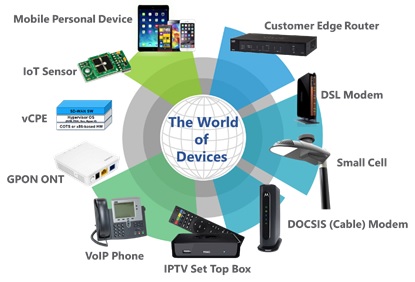
    Smartphone flashes in mind, when device is mentioned.  Devices, however, are a large ecosystem beyond smartphones – a range of equipment like dongles, routers, customer premise equipment (CPE) and IP phones, to name a few.  Devices are a great tool for telco to lock their customers in. For instance, the bundled offers with contracts spanning months provide predictable revenues for the telco’s.

    The next wave of opportunity

    With IoT and 5G making inroads, telco’s are preparing for the next-generation devices for home and office networks. A lucrative opportunity for telcos, as devices are critical to the IoT/5G penetration. Newer devices will be introduced, like small cells to boost network capacity and improve indoor coverage. It’s no wonder that telcos are investing into devices.

    Are telcos benefiting from devices ?

    Devices are an attractive opportunity as they improve customer stickiness and ARPU. Devices are good promotional tools to attract new customers and gaining traction even in emerging economies. Many customers extend their relationship with telcos beyond contract period.

    Yet, procuring, selling and managing devices is riddled with risks. Fraud, leakages and unmanageable debt are hampering the revenues and profits.

    A survey across telco’s states:

    telcos stats

    What are the risks?

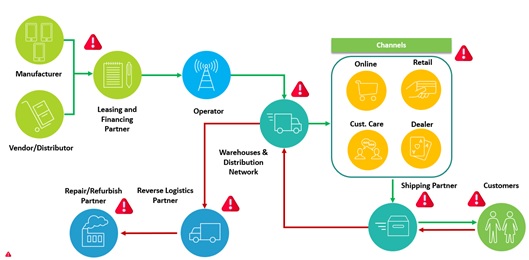
    Telco’s on an average spends 20% of their OPEX on procuring and servicing devices. The entire supply chain covering the forward and reverse logistics is prone to risks. The supply chain not only involves stakeholders within the telco (marketing, sales, operations, logistics, finance), but many external parties –manufacturer, supplier, financing partner, distributor, shipping partner, warehousing network, retail agents, repair/refurbish partner, and the end-customer.

    risk

    The technology stack is complex with at least 10 different applications and platforms involved. Leakages of stock in ordered vs received, inventory gaps, devices ageing at inventory, gaps at POS are a few technological risks to highlight.

    Bane to boon – Manage the risks

    How could telco’s control the risks & leakages, and make the best of the opportunity? It is important that Telcos have Device Assurance strategy in place to manage the device related risks. Stay tuned for more updates about Device Assurance Solution.

  • Cash in on Reverse Logistics

    Cash in on Reverse Logistics

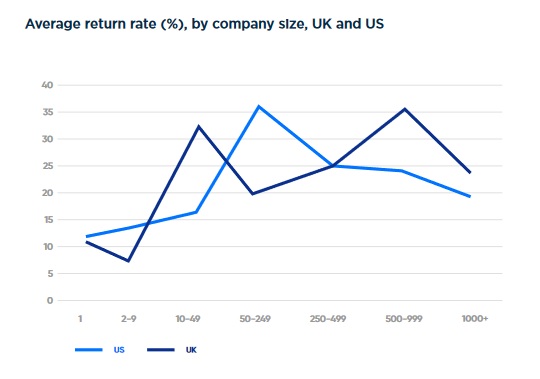
    Reverse logistics has long been the problem child of supply chain management. Increasingly that child has been in need of some serious help. This is due to two factors. The way in which the internet has transformed how we shop, and the short lifecycle of consumer goods. Although most consumers still like to shop in high street stores to find the products they like, at least 8% of sales are now from consumers just clicking on a picture to buy a product, comfortable in the knowledge that they can return it if necessary. In most countries, consumers have a legal right to return goods purchased on the internet. Many retailers now even offer free ‘try-before-you-buy’ returns, but the processes for managing those returns, known as reverse logistics, are far more fragile, costly, and susceptible to issues than the generally well-controlled forward logistics processes. Although return rates vary widely across different verticals, the average return rate has been calculated to be around 17 to 18%.

    Brightpearl

    Source: Brightpearl

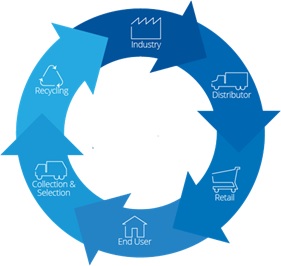
    Reverse logistics faces complex issues due to the ad hoc way in which consumers return items and vulnerabilities in the returns processes. Because reverse logistics is not seen as a revenue-generating process, it sometimes doesn’t get the attention it needs, but recently it’s been getting more widely recognized as having a key role in the company’s profitability. Having efficient processes for collecting, re-selling or recycling used items can bring in additional revenue and improve a company’s bottom line. There are other important reasons for giving more attention to reverse logistics.  Consumers are now judging companies on their green credentials, and consumers are aware that many electronic devices contain some highly toxic chemicals. Providing a channel through which old devices can be traded in and reliably recycled is a positive selling point. The efficiency of the returns process also has a significant impact on customers impression of a business.

    Although the ‘returns revolution’ impacts all retail lines of business, high-value consumer electronics are especially prone to issues in the returns process.  Huge volumes of handsets, set-top boxes, routers, even TV’s and laptops, are now being returned through a multitude of channels for a variety of reasons. Warehouses may receive thousands of such goods per week. Most of those devices may still be working and able to be resold, but tracking such devices back from customers, assessing their viability for resale, refurbishing, repackaging, and then re-distributing them, is a substantial challenge.

    The problems begin as soon as a customer says they want to return a device. Whether it is because the device is faulty, unfit, incorrect, unwanted, or because they’re terminating their contract, they must provide notification that the device is getting returned. Agents must correctly capture the details of why the device is getting returned and issue an RMA (Return Merchandise Authorisation). This will trigger a complex sequence of processes to terminate services in the network, calculate bill adjustments, prepare downstream systems for receipt of the returned devices, update inventories on receipt, manage the inspection, refurbishment, and resale of those devices, and potentially issue replacements for faulty devices. Depending on factors such as contract, warranty, device status, termination type or customer rating, customers may be liable for additional charges or eligible for compensation.
    Reverse Logistics

    Typical return channels would be to send a device by courier, return it to a shop, or a technician may return the goods.  Whatever the channel is, devices will often arrive without a clear indication of which customer account they relate to.  Returns to stores are particularly problematic with agents failing to scan in barcodes or register returns correctly. In-store systems may not be able to record IMEI, IMSI and/or serial numbers, and there is no motivation for staff to label returned devices accurately.

    With so many moving parts it’s no surprise that many devices become stranded or lost along the way, and customers getting charged incorrectly. Operators have been known to write off more than $5+ million in lost devices per month.

    One solution is to implement automated controls that provide monitoring across all systems in both forward and reverse logistics, thus assuring that devices can be monitored from the initial order in CRM, in and out of warehouses, with couriers, shipping, refurbishment partners, finance companies and activation status in network service provisioning.  With monitoring systems in place that can even detect the physical location where devices are installed, it’s possible to validate inventory, bill customers and partners accurately, prevent fraud, recover maximum value from returned devices and understand why devices are getting returned.

    Subex provides ROC Device Assurance solutions to operators around the globe, helping to track down missing devices, reconcile and correct billing, CRM, provisioning, distribution and inventory systems with world leading discovery and reconciliation capabilities.

    Want to know how our Asset & Inventory Assurance solution can help your organization

    Read a Demo

  • 8 Simple Strategies for Telcos to counter Wangiri Fraud

    8 Simple Strategies for Telcos to counter Wangiri Fraud

    Wangiri is not new rather; it is one of the most commonly occurring telecom fraud. In a recent case, a fraudster gave a missed call to several users of different countries. When the users viewed the missed call on their mobiles, they thought that it was a genuine missed call and called the number back. That is where they got tricked! The fraudulent numbers were unusually long and originated from an array of exotic countries. These were premium rated numbers so when the users called back, the fraudster’s intention to extract maximum payment out of them was successful.

    In such scenarios, it is not just the subscribers but their operators as well who bear the losses. There is both a direct and an indirect loss for the operator. As per the latest CFCA 2017 global fraud loss survey, Telcos have lost close of 1 Billion USD to Wangiri Fraud alone, which is quite a lot!

    In my point of view, Wangiri cannot be eliminated entirely for two main reasons- there is no proper regulation on the carrier business, and there is lack of visibility on the end carrier who is terminating the call. The end carrier who terminates a fraudulent missed call is not aware of the fraudster details and whether the country from which call has originated is a high-risk destination or not.

    So, let’s look at how can telcos protect revenue and provide great customer experience?

    • Subscriber Awareness

    A pro-active approach to minimize Wangiri fraud would be, making the consumers aware of the fraud scheme. If a number appears to be suspicious, a quick search of the number in several free apps available online, would tell the customer if the number is a part of any ongoing scams or not. Several Fraud Management tools are readily available in the market to detect and prevent Wangiri.

    • Customer Experience Management

    As the customer is the king of any business, and hence Telcos need to manage the customer complaints effectively, which will, in turn, reduce customer churns. All employees in the customer care department should be well informed about the Wangiri fraud and how the customer care executives should manage the complaints related to this fraud.

    • IVR (Interactive Voice Response) Facility

    IVR Facility is a pro-active approach that can be adopted by the operators. Whenever a subscriber calls back to a high-risk destination upon receiving a missed call, the operator should have an IVR voice informing him about his called destination. This IVR voice message would make the subscriber cautious to drop the call.

    • Removal of International Services as the default service for a Subscriber

    In India, Telecom Regulatory Authority of India (TRAI) has announced a new mechanism to effectively protect the common interest of mobile subscribers. TRAI has said that international service calling facility should not be activated on prepaid SIM cards without the explicit approval of the consumer. This measure is yet to be adopted by several other regulatory bodies globally.

    • Technology

    To protect customers from phone scams, T- mobile has introduced a new network technology. They have rolled out a scam ID by which customers are automatically alerted when an incoming call is likely a scam.

    Several other vendors are also coming out with similar technological solutions.

    • Routing Management of carrier:

    When a fraudster carries out the Wangiri fraud and gives missed calls to multiple subscribers, high amount of increased traffic can be observed on the carrier who routes these calls. If an operator monitors this activity, there will be a repetitive trend of increased traffic observed on the same carrier to route these calls. In such cases, an operator must take necessary precautions to route all the traffic through an alternative carrier. Routing the calls through a different carrier will help in breaking the chain between the fraudster and the linked carrier.

    • Control designing through FMS tool:

    Control designing through an FMS tool is required as it helps in early detection of Wangiri activity. An FMS tool assists in the discovery of Wangiri cases by monitoring the number of calls made by the fraudster. Artificial Intelligence & Machine Learning can play a significant role in detecting the Wangiri fraud.

    • Negative Margin Prevention

    In case of a negative margin occurrence, the number needs to be blocked by the operator immediately as it leads to direct impact in the revenue.

    I would conclude by saying the famous quote by Bill Gates, “Treatment without prevention is simply unsustainable”- though Wangiri fraud can never end completely, right preventive measures can minimize it significantly.

    If you are interested to learn how AI /ML techniques can help you combat Wangiri Fraud

    Contact Us

  • Account Takeover – Fraudster Intelligence

    Account Takeover – Fraudster Intelligence

    Account takeover fraud is one of the most common fraud types across the world. Fraudsters use the various methods to takeover an existing open account within the mobile operator or the banking instrument. The commonly used method of committing this type of fraud is vishing or smishing. As per CFCA fraud survey, account takeover accounted for an estimated fraud loss of 1.7 Billion US Dollars in the year 2017.

    In all these scenarios, the primary goals of the fraudster are to gain access to the account and (by-) pass the validation steps. In many situations, such validation may only require low-level knowledge-based authentication, so basic information obtained by the fraudster is used to validate and by-pass controls in place and to takeover the targeted account.

    I was investigating an Account takeover fraud case for one of the leading telecom operator in the APAC region wherein the fraudster used a different type of methods to commit this fraud. Many customers lost millions of dollars from their bank accounts without the knowledge after their account was taken over by the fraudster. On investigation, we identified that the fraudster’s primary motive was to takeover both mobile and banking account and then initiate multiple fraud transactions. He used Social Engineering, CLI spoofing, Spoofed website & Malware to commit the fraud.

    The Fraudster sequentially executed his schemes. He targeted only the high-profile subscribers in a region. He acquired all the information of the subscribers using social engineering methodology and called up the subscribers pretending to be a Bank executive and Mobile operator security officer. He asked the subscribers to download a malware-infested application from a spoofed website, following which he gained remote access to their mobile phones.

    The malware would read the SMS’s & call logs from the subscriber’s mobile and forward the details to fraudulent server. It also deleted the SMS & call logs from the mobile handset before the subscriber knew the same. The intention behind the reading of the SMS & Call log is to Bypass the second level authentication for completing the banking transactions. With this method in place, he was able the execute multiple transactions without the knowledge of the subscribers.

    Impact to Telcos?

    When subscribers approached law enforcement agency, the Law penalized both Telco and the bank and recovered from them, the amount lost by the subscriber. The Law took this action to protect the interest of the customers and secondly it was negligence from the service provider that led to the revenue losses of the subscribers.

    Telecom & banking service need to protect the subscribers from such fraud attacks by providing awareness to subscribers. Fraud management systems need have intelligence built into them to detect the fraud attack and control damages at an early stage.

  • Dealing with Bypass Fraud : Think beyond the boundaries

    Dealing with Bypass Fraud : Think beyond the boundaries

    Amid the fierce competition facing the telecom industry, sometimes we listen to stories how lack of forethought of one Telco brings on illegal traffic on the network, leading to aggressive open wars and blame games among the operators affected by the fraud. The Telecom Regulatory Authority could intervene in such scenarios and encourage a competitor to block suspicious outgoing traffic if it finds out that not enough care is being taken to avert the fraud.

    Interconnect Bypass fraud is one such telecom scam costing the industry several billion dollars every year. It brings collateral damage to the networks involved, and the impact will be huge. The Telco could be imposed hefty penalty for its failure to detect and resolve the issue on time. Further, it could bring serious business implications for all participating telcos. In the process of rampant blocking of suspicious traffic, sometimes traffic of genuine customers could get blocked, leading to customer dissonance and dissatisfaction along with loss of other business opportunities.

    Here’s an example of a West African Telco who suffered massively due to Bypass fraud.

    Why did this happen?

    The West African telecom operator had been massively impacted by off-net Bypass fraud where the network of the operator was being misused to land fraudulent calls on the competitor’s network. Over time, the problem became so grave that the Regulatory Authority of the country had to step in and take charge of things. This eventually ended with the competitors blocking both fraudulent and genuine traffic from the Telco affected by the interconnection fraud.

    Investigations conducted confirmed that the huge differences between the International termination rates and local termination rates made the environment suitable for fraudsters to run their schemes. There aren’t enough KYC controls in the country to facilitate certain onboarding checks which distinguish a genuine customer from a fraudulent one.

    Impact on business

    There were multiple warnings and memos issued to the operator from the Regulator, indicating that the operator would have to face penalties if amendments are not made in time.

    Customers flooded the operator with complaints saying that their off-net calls were being barred without prior notice and for no fault of theirs and threatened that they would eventually churn out of the network if their services weren’t restored.

    The atmosphere grew so tense that instead of cooperating, the operators became more aggressive and indulged in a rat-race in trying to prove a point to the Regulator as to how better and efficient they were from the rivals in terms of detecting Bypass fraud cases.

    The solution

    With the understanding that Bypass scams are rampant, Telcos need to direct their efforts towards building knowledge-sharing forums where they can share insights on fraudster behavior and geographical locations from where most of the fraudulent calls are generated and what kind of products tend to get misused by these fraudsters to nip things in the bud.

    Telcos should understand that indulging in rat race or blaming each other will not help solve issues arising from such frauds; rather they should adopt a proactive approach to identify and prevent such scenarios in future. Instead of the Regulatory authority dictating terms to the operators, the operators must drive the authority to create nationalized framework for user identity governance.

  • Why Artificial Intelligence Powered Fraud Management

    Why Artificial Intelligence Powered Fraud Management

    Artificial Intelligence (AI) is not new and it has been around for decades. However, with the advent of big data and distributed computing that is available today, it is possible to realize the true potential of AI. From what started as an interesting story line in SCI-FI movies to programs like Alpha-Go which has been beating humans, AI has been evolving. AI also has branched out into multiple sub categories such as Machine Learning, Deep Learning, Re-enforcement learning etc.

    An effective Fraud Management (FM) strategy includes 3 important pillars: Detect, Investigate & Protect. We believe AI can positively influence all the 3 pillars of fraud management, from reducing false positives to helping in mining root cause analysis to creating enhanced customer experience in protection.

    In this post I would like to look at the starting pillar of the Fraud Management strategy – “Detection” and look at AI’s influence in this very important step. A traditional approach to Fraud detection has been through Rule Engines which could be:

    • If-Else Conditions
    • Thresholds
    • Expressions
    • Evaluating Data Patterns

    These are widely known as deterministic solutions where an event triggers an action. The biggest pros and cons with this approach is that human intervention is needed to feed the logic.

    For eg: for a threshold based detection humans have to feed the rule engine that count of records above a certain threshold is suspicious.

    Following diagrams shows how this looks like

    rule-engine

    After looking at the diagram above an important question arises, should this threshold value be a straight line or can it bend based on how data behaves. Now there are ways for rule engine to behave like mentioned in the diagram,

    variable-threshold

    for eg, instead of having a single rule lets have multiple rules

    • Per Customer Category
    • Per Destination
    • Per Age of Customers

    And multiply that with other dimensions in data which are

    • Phone Number
    • Caller Number
    • Called Number
    • Country Code

    And multiple that with other set of measures per dimensions

    • Count
    • Duration
    • Value

    And throw an additional billion volumes at the datasets

    Quickly FM teams ends up with something like this
    AI Blog1

    But what they wanted or dreamt was this

    AI Blog2

    Now I am not saying FM teams are not skilled enough to fly, but a fraud team in a modern Digital Service provider should be more focused on other important factors.

    machine-learning
    So, let’s look at how a very evolved class of Artificial Intelligence known as Machine Learning looks at this problem statement. Rather than humans feeding domain information or thresholds, Machine Learning Algorithms mine data from historic fraudulent behaviors and create models. These models are then used to evaluate real production datasets to score whether they certain activity is fraud or not. An advantage is that these models are very good at looking the datasets from multiple dimensions and measures at the same time and concluding whether event is fraud or not.

    This approach thereby helps in achieving multiple KPI’s of fraud management teams there by increasing efficiency.

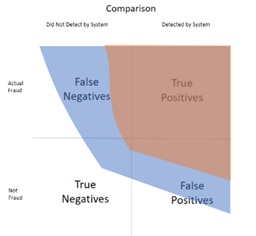
    • Higher Accuracy – Because AI can learn and adapt to Business scenarios faster, AI can significantly increase True Positive ratio
    • Reduced time to detect – How fast a fraud event can be detected
    • Self-Learning – How over a period changing business scenarios and seasonality in data can be adopted to Fraud detection
    • Fraud Intelligence– How customer or any other entity behaviors can be learnt and categorized for better fraud detection
    • Proactiveness – Ability to mine for unknown patterns not seen in the data earlier
    FM-4
    Application of Artificial Intelligence has its own significant challenges and requires a new frame of thought, however looking at the Data Tsunami that has hit the fraud management teams, it looks an AI pro approach would only help Fraud Management teams to scale further.

    To learn more about how AI/ML would transform the Fraud Management Systems, Join us on our two-part series of “AI Master Class for Fraud Management” to familiarize yourself with AI/ML through a live demo.

    Register Now

  • Why Telcos could never overcome Simbox Fraud since a decade Now

    Why Telcos could never overcome Simbox Fraud since a decade Now

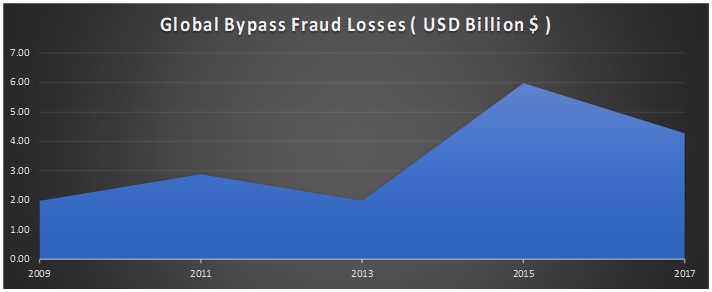
    Simbox, Bypass Fraud/ Or Interconnect bypass Fraud has been one of the fastest growing Fraud Types In recent few years.  As per 2017 Global Fraud Loss Survey by CFCA, Global Fraud Loss Estimate stands at $29.2 Billion (USD) annually which is 1.27% of global telecom revenues.

    global bypass

    Source CFCA Survey Results

    Simbox Fraud / Bypass Fraud has been a significant fraud issue for more than a decade now. CFCA survey results across 2009 till 2017 clearly shows an increase of more than 100%  in Bypass fraud since 2013. In this blog, we shall discuss about factors that has contributed to this continuous increase in Bypass Fraud and reasons, operators have not been able to effectively mitigate Bypass Fraud.

    Factors for continuous Increase in Bypass / Simbox Fraud:

    • Reduced barrier for entry

    Buying and operating SIMBoxs has never been easier with online stores, e-commerce websites,courses, forums and instant support availability.  This has led to an increased spread of VOIP based startups and subsequent increase in bypass fraud. VOIP based calling apps have also made customer acquisition easy by making them  easily available on  AppStore for Android & IOS users. For instance, a recent news from India covered the similar trend wherein those who wanted to make international calls from Gulf countries has to download an app called ‘dial to India’ Once this app is downloaded, they get a password for monthly subscriptions. The person sitting abroad will just dial the number in India, the call will bypass the VSNL gate and will directly route through the SIM box and will get connected from there. Read More

    Few more such examples as below:

    Illegal phone exchanges thriving on SIM boxes

    VOIP exchanges used by ISI busted in Andhra Pradesh, India

    • Competitive Landscape

    Reduced margins on international traffic has resulted in wholesale traffic being mixed with internal traffic. Wholesale providers have also been increasingly offering non-CLI based options which could potentially end up in Grey routes. This fierce competition had led to increase in bypass traffic particularly in countries with higher landing costs.

    Reasons Operators have not been able to effectively mitigate Bypass Fraud:

    • Advancement in Sim-server Technology

    Simbox have evolved from being a simple single box setup to a complex modular architecture. This architecture allows fraudsters to maintain all the simcards in a single place and using Antenna modules and multiplexers, fraudsters are able to distribute their operations in the market. In fact, Latest Simservers also comes with inbuilt anti-fraud detection solutions allowing fraudsters to  distribute his operations in multiple locations. This makes fraud detection very complex as fraud management teams have to device multiple strategies to beat fraudsters at their game.

    • Regulatory Changes

    Regulatory changes in certain markets have fueled increase in traffic for Bypass. Recent changes of regulations in European Union has also resulted in traffic with E.U been heavily being differentiated in price from traffic outside E.U thereby causing significant increase in Bypass traffic.

    • Raising Concerns in Simcard Sales

    Increased pressure to maintain sales and activation of new connections have resulted in dealers colluding with Bypass fraudsters. Bypass operations requires lot of sims to be activated in bulk and lack of effective subscriber acquisition controls have led to fraudsters taking advantage of it.

    Fraud Management teams further have an uphill task in the Bypass fraud space as new technologies such as virtual sim’s would only increase the impacts on bypass of international traffic. It is hence important that they adopt a comprehensive fraud detection methodology to fight simbox frauds.

  • Key is to ask the ‘right questions’

    Key is to ask the ‘right questions’

    “In school, we’re rewarded for having the answer, not for asking a good question”

    This quote from Richard Saul Wurman rightly describes how a normal human mind, as part of it’s social development process, adapts to the guidelines of “finding the answers”, rather than exploring the possibilities of asking the “right questions”.

    And this mindset also reflects in our place of work. We are humanly tailored to explore satisfaction in having answers to all the questions. And in the process of being ‘answer ready’, we tend to become left brain heavy than the right. We become target driven and focus less and less on fresh set of questions which could challenge us further to drive improvement and innovation.

    Fraud Management ‘function’ is no different. Being a ‘revenue protection’ function in a large ‘organization’ it is expected to act similar to a small, but important organ in human body.
    Like hormone levels of an organ, health of an FM function is also measured in terms of subjective financial targets – either monthly, quarterly or yearly. And the corrective action starts when the achievements are found to be ‘less than optimum’.

    But, as an experienced doctor would say – It’s the lifestyle you need to keep in check and not hormone levels to remain healthy!
    Constant self-assessing questions such as – “Am I eating right ?”, “Am I sleeping right ?”, “Am I sitting right ?”, “Am I exercising right ?” etc. go a long way in guaranteeing you a healthy life. Periodic check-ups then becomes a method to confirm your good health rather than just means to detect illness or deficiencies.

    Keeping healthy is a continuous process – be it human body or fraud management. It is actually a practice, than just a function.
    And to setup a continuously improving fraud practice in your organization it is essential to keep asking relevant & timely questions across the following 8 pillars of this practice:

    • Influence
    • Organization
    • People
    • Process
    • Tools
    • Knowledge Management
    • Coverage
    • Continuous Improvement

    While the questions could be an organization, risk or region specific, I personally always start with the following:

    Influence:

    • Is our FM function on a driver seat or secondary role and working as a support function ?
    • How should we enhance the influence of our FM function ?
    • How do we keep showcasing enhanced value from FM function ?
    • How do we extend our internal & external interfacing and make the existing interfacing stronger ?

    Organization:

    • How do we ensure fraud awareness keeps pace with the upgrading business dynamics ?
    • How do we enhance internal & external collaboration with FM function ?
    • How do we get higher return of investment from FM function ?
    • How to further reduce the fraud impact on the bottom line ?
    • How to make our fraud management practice more proactive ?

    People:

    • Is resource acquisition better or resource development ?
    • How do we safeguard ourselves from attrition ?
    • Is our team structure agile enough while following industry standards ?
    • Do we have all the required roles and are the responsibilities clearly defined ?
    • Are we right, under or over staffed ?

    Process:

    • Are my processes effective and easily exercisable ?
    • Are my processes future ready ?
    • Are my processes agile enough to adapt to any changes with acceptable TAT ?
    • Are we adopting and implementing industry best practices ?
    • What parts of my processes can be automated ?

    Tools:

    • Is the Fraud Management tool adapted to my business environment ?
    • How do I ensure that the FM tool is fed accurate, complete and timely data ?
    • Are my fraud controls effective & efficient ? How do I reduce false positives ?
    • How do I ensure 100% automated fraud risk coverage ?
    • What capabilities do we need to acquire on tool front to be future ready ?
    • Are we ready against enormous data surge likely to be seen over next few years ? How do we benefit from it ?
    • Are we constantly learning from the industry in terms of fraud detection & prevention methods ?

    Knowledge Management:

    • Is there sufficient attention on upgrading to the required skill sets ?
    • How do we enhance resource competency & knowledge against current & future services ?
    • Is our team keeping pace with constant fraud mutations ?
    • Is our team using the tools effectively & efficiently ?
    • Is our team knowledgeable and comfortable with processes ?
    • What are the top 5 areas of learning for the whole fraud function ?

    Coverage:

    • Are we aware of all the fraud risks we are exposed to ? What is our current coverage levels ?
    • Do we know the gaps in terms of fraud risks coverage ? How can we improve ?
    • What is our strategy to become compliant to fraud risks introduced by new products and services ?
    • Are we ready for fast converging cross industry environment and the risks it introduces ?
    • What is our stand on customer and partner only risks ? How relevant they are for our business ? Is our current stand obsolete ?

    Continuous Improvement:

    • What is our performance management strategy ?
    • Do we have effective KPIs ? Are these business relevant ?
    • How can we improve the fraud function’s effectiveness & maturity continuously ?
    • What metrics should I use to measure health of the overall FM function ?
    • Are we conducting sufficient & periodic RCA & decision analysis ?
    • How do we gather accumulated wisdom & actionable intelligence for improvement ?

    Each of these questions can be a healthy point of discussion within your organization.
    While these may give you a first hand view of health of your current fraud practice, more importantly, it may also open doors for a much detailed open table introspective sessions, enabling you to come up with much better & effective questions.

    Remember, the key to remain healthy is to keep asking the ‘right’ questions.

    As Albert Einstein rightly said – “If I had an hour to solve a problem and my life depended on the solution, I would spend the first 55 minutes determining the proper question to ask, for once I know the proper question, I could solve the problem in less than five minutes.”