Recently I have watched several vendors in our markets talk about Big Data, and the technologies they are supporting to manage that data. What I’m trying to understand in all these announcements, however, is “what does that mean for me, the user?” … or put more directly, “so what?”
There are great numbers out there. With all the buzz about Exadata and Hadoop being made in the market, operators have reason to take notice of what’s being achieved: 1 billion loaded records per hour; 10x-13x storage savings; 70% decreases in DB license costs… Subex is also seeing similar fantastic numbers, and in many cases we are now benchmarking 40x faster performance that these other vendors’ results. Subex has supported Exadata for some time, is seeing significantly stronger results using Vertica, and will be supporting Hadoop in the coming months (including the Hadoop + Vertica hybrid, which is proving to be the best performing architecture anywhere in the industry). But still the question remains: So what?
Vendors in our market have continued to allude to the ability to process data faster and save costs. But what else can this increased data power do for you? That should be the question being asked and answered. For this, Subex has strategically employed these new data processing advantages right in the heart of the ROC suite – which now enables our operator customers to not only see those “default” benefits of faster processing (decreased hardware, decreased costs, etc.), but to also extend their business intelligence into other critical business areas (in many cases, real time), including:
– Customer Experience and propensities to Churn
– Enterprise Margin analytics
– Aggressive network and service Time to Exhaustion analytics
– Service impact “what if” propensities and analysis
– Distributed fraud support in wholesale parent/child enterprise relationships
– Deep packet inspection and response for IP fraud detection and cost management
– Immediate wholesale cost/benefit analysis with carrier trading
– Analytics insights into root causes underlying specific issues in costs and revenues
– Preventative security insights to plug loss exposure before it happens
– Predictive product analytics to understand the internal impact of a product offer
– Etc.
These are but some of the areas operators should be looking for answers from within that new data processing capability…not just faster dashboard updates for current processing. Big Data remains useless if you can’t process new insights and intelligence from within its unstructured foundation. By positioning all relevant new performance technology advances into the heart of the ROC suite, every Subex application will benefit from the improved performance, while be positioned to share that data across other ROC solutions in the suite. This strategic approach will ultimately enable operators to model and extract far more critical intelligence for all the questions above, and more!
Blog
-
Using the ROC to re-shape industry big-data usefulness
-

The Capex Snorkel Effect
I just read through an interesting, somewhat validating article from Alex Leslie of Billing Views, talking about operator revenues and margins. In a nutshell, revenue and ARPU are down across virtually every major operator in Europe, according to their own annual reports, and almost all were down by double digits!
I can’t help but believe that this is true in other regions as well, and the problem continues to be growing year on year. Are we surprised? When I moved my family to a new mobile operator, leaving another after 9 years, we leapt into the 4G world with all new handsets, 10x the speed, 10x the data, unlimited everything else, and our price went down. Only 6 months later they lowered my plan price yet again, as part of a national retention promotion. So why should dropping revenues and shrinking margins surprise anyone?
The fact is they don’t surprise anyone, but they do worry CFOs and Boards, as shrinking (and in some
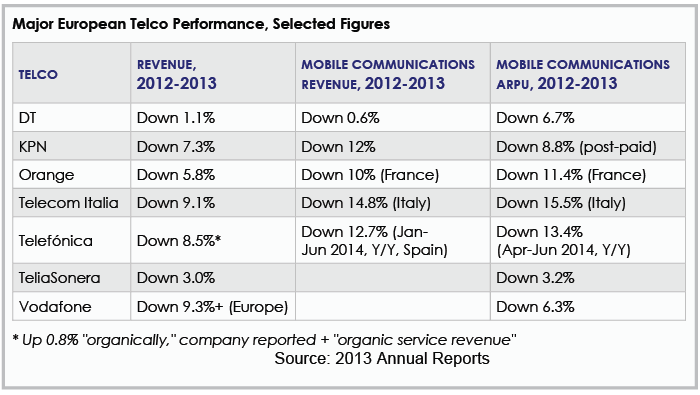 cases, negative) margins are the final result of the trend.
The trend has to stop at some point…through mergers, spectrum purchases, policy controls, or even government intervention…it has to stop. But how far will it go beforehand, and how does an operator stay strong in the face of an industry trend that seems (for the moment) unstoppable?
The answer may be more straight-forward then you think: Focus on Capex maximization. Period. However this doesn’t mean slash budgets – although that is the current tactic in play across the industry. What it does mean, however, is sweat the maximum efficiency out of your purchases that you can. Why can programs like Subex Asset Assurance find tens, and now hundreds of millions of dollars in asset recapture opportunities across an operator’s business? While there are many answers to that question, the fact remains that we are finding massive sums of Capex that operators can recycle right back to the top line.
Therefore the formula remains, quite possibly, this simple: Maximizing Capex allows operators to build and transform their networks more completely, quickly, and efficiently, which puts them in a market strength position. Think of it as having a longer snorkel than your competitors as financial crisis waters are rising…
-

T-Mobile’s excellence in Revenue Assurance with Subex’s Managed Services
T-Mobile USA, Inc. is rewriting the rules of the wireless carrier game with the “Un-Carrier” strategy. As a result they are currently the fastest growing wireless company in the USA and are now supporting 50.5 million customers. Michael Rimkus, T-Mobile USA’s Vice President, Internal Audit & Risk Management, will be presenting how his skilled Revenue Assurance Team has been supporting T-Mobile’s explosive growth and the benefits they have realized by taking advantage of Subex’s Managed Services to support his team’s increased mandate and growth.
Challenged by manual based methods, about 9 years ago, T-Mobile selected and deployed Subex’s ROC-RA solution. This powerful tool immediately delivered results to the Revenue Assurance team; and, with the several audits and controls initially created, T-Mobile’s core revenue stream was secured. However, with the dynamic nature of the wireless business, change was constant. The RA team matured and took on many more revenue based investigations and grew into discovery on cost leakage. As the company’s revenue and cost assurance requirements increased, the team responded to meet the needs from a discovery perspective. Passed up was the operational side, which didn’t have the right resources to advance the tools at the same rate as the dynamic nature of the RA team and company. Nearly 2 years ago, T-Mobile introduced Subex Managed Services (MS) and the advancements are impressive.
By adding Subex’s Managed Services to the Revenue Assurance Team, T-Mobile now has the expertise to match the speed of change and advancements in the world of revenue and cost assurance. The Subex tool is powerful, and with a staff that can automate, optimize, creatively configure, monitor and analyze multiple streams of information and data, the combined RA team brings increased value to the company. Michael will discuss: the evolution of the tool; the RA team; and the introduction of MS into the environment, which is taking T-Mobile to the highest levels of revenue assurance excellence.
-

Network Transformations – From Survive to Thrive
Riding my bicycle near Boulder, Colorado where I live can be a humbling experience. Not only are there steep climbs and high altitude (over 1600m) to contend with but these are the proving grounds of pro-cyclists and world-class triathletes. I often feel as though I’m riding a stationary bicycle in a gym as another flash of brightly colored spandex goes whizzing by. So I decided that it was time to “transform” my ride, and now have a new carbon-fiber bike. Will this make me faster and more efficient? Perhaps psychologically! It’s fitting that transformation has been on my mind in other ways recently.
Transformation has always been part of the telecom experience. What is interesting to me now is not simply the pace of change, but the fact that it is occurring on so many fronts concurrently. For starters, operators are transforming their core networks and related transport services. Legacy TDM technologies such as PDH and SDH/SONET are being replaced by next generation optical. To get there, many operators are planning to retire “old iron” ADMs and DACs, reaping not only network efficiencies but tremendous cost savings in real estate exits and lower energy consumption. In mobility, the transformation experience is not only about the 2G-3G-4G upgrade path but about phasing out the traditional separation of voice and data services. And of course, the compelling economics of commoditization and virtualization are moving to the network and network functions in the form of SDN and NFV.
Regardless of the technologies involved, transformation is almost always a messy endeavor. Among the questions operators need to ask themselves when planning or executing a network transformation are:
- Do we know enough about how existing services are routed through the network to confidently move them to the new network?
- Even one customer outage can be costly
- How do we best realize value from assets we fork-lifted out of the network?
- What can be redeployed?
- What can be sold for reuse or scrap?
- Can we account for every asset that is decommissioned?
- How do we assure the significant levels of new Capex investment are generating a suitable ROI?
- What are the unique Opex and Capex risks when operating a “hybrid” network that is in a transition state?
- What are the plans for legacy B/OSS? Will they complement and enable the network transformation or serve as a hindrance?
Riding a bike is certainly easier than transforming a network, so I know my metaphor only goes so far. However, having worked for many years at operators and experienced such transformations first hand, I know at least one aspect of the metaphor holds. Falling off a bike and missing business targets for a delayed or failed transformation both hurt! Fortunately, the Subex Network Analytics portfolio of products is engineered to answer the above questions—and many others—to help ensure a better transformation experience.
- Do we know enough about how existing services are routed through the network to confidently move them to the new network?
-

“A cup of coffee commits one to 40 years of friendship” – Turkish Proverb
Istanbul is a city of seeming contradictions, a confluence of the old and the new. Scratch slightly beyond the surface and one would be awed by the profound depth of culture and the warmth and hospitality of the Turkish people. Istanbul has been described as a magical bridge between the east and the west and we can see the diversity to this day in this beautiful city. This is a city which has ingrained the best of all, and became more prosperous for it. I cannot imagine a better place for Subex to host its annual User Conference.
When we think of user conferences, we think of warm, open spaces. We think of sharing, collaboration and evolution. We think of inclusive growth. All of these are feelings and thoughts I associate with Istanbul. The roster of industry leaders who have so graciously decided to share their time, knowledge and wisdom with all of us is truly humbling. The number of operator registrations this year has been a record high (over 150), and in this we as Subex feel the weight of responsibility to deliver value to our customers.
Of course, delivering value becomes a significantly easier task when you have esteemed guests like:
Gerd Leonhard (Futurist, Author, Keynote Speaker, Think-Tank Leader & Strategist)
Alex Leslie (Publisher & Editor – BillingViews)
Eric Priezkalns (Co-founder – TalkRA.com)
Michael Rimkus (Vice President, Internal Audit & Risk Management at T-Mobile US, Inc)
Dave Huras (President – CFCA and Manager Toll Fraud and Voice Operations – MTS Allstream)The best part being that the above is a small part of the overall roster. I for one am very excited to hear from old friends like Amit Agrawal (Group Director – RAFM Etisalat) and Sanjay Batham (GM – Design & Implementation Reliance Jio) about highly relevant topics like the challenges around group RAFM design, advent of 4G and associated challenges, social network analytics, demystifying asset assurance and various other topics.
It is always a wonderful thing when we get an opportunity to learn from the experiences of others. When I look at the list of topics for this event, I’m glad to note that there is a welcome balance between the lessons of the past as well as a peek into the future. Given that these views are being given by our friends and colleagues in the Telecom world, I am sure that the level of meaningful interaction would be at an all-time high as well. The number of case studies this time around tells me that our telecom friends have been busy at work innovating solutions and are eager to share practical experiences with a larger audience. Much like Istanbul itself, the overall agenda is a rich amalgamation of practical knowledge, challenges and solutions from across the world.
So here’s to old friends, respected colleagues and industry leaders. If you’ve registered for the meet, let’s catch up for a glass of Türk kahvesi in beautiful Istanbul – and cheer to 40 more years of friendship!
-

A Weekend Warrior’s Guide to Capex Reduction
As a recreational athlete, I’m by default a numbers guy. Being a wee bit past my prime competitive years, those numbers don’t look quite as good as they used to. For example, I know that my rate of decline in a 10K running race is approximately 4 seconds slower per klick per year. This motivates me to become more efficient. With my training. With my nutrition. With my body mechanics. I want to get as much from my aging athlete’s body as I can!
You’ve probably guessed where I’m going with this. Operators universally strive to “sweat” as much from their networks as possible. Consider a key metric found in many operator financial statements: Capex-to-Sales ratio. It’s an indicator of how efficient an operator is at translating network investments (approximately 80% of overall Capex) into revenue. From my reviews of operator financials, I typically see this number in the 13-20% range, with a mean of ~15%. Compare this to Retail (4%), Transportation (8%) and Pharma (6%). The Communications sector leads the pack.
Sure, we all know that Telecom is Capex-intensive. This just puts a number on it. But there are further pressures on operator balance sheets. Most operators cannot maintain the required investments in their networks with cash from operations alone (as evidenced by declining EBITDA margins), so they pile on debt. This becomes a vicious cycle. Proceeds from bond sales yield more working capital, but debt service requires free cash. What’s the best way for an operator to increase free cash flow in the business? Reduce Capex! And around and around we go.
Hence it becomes imperative for operators to seek innovative ways to address seemingly contradictory goals – reducing their Capex burden, while supporting increased bandwidth demands and new product/service rollouts. For this I advocate turning to the numbers. For example, do you have a metrics-driven understanding of:
- Your asset utilization rate?
- Which deployed assets have not carried traffic in the past 60 days?
- Mean time from asset purchase to revenue contribution?
- Sparing levels vs. industry best practices?
- Detailed asset movement history for assets in your mobility RAN?
- % alignment between your fixed asset register or ERP and your network?
An asset assurance program addresses these questions and many others to drive measurable improvements in Capex efficiency. One final point—there is change looming on the horizon in the form of large scale network transformation programs. These programs are only accelerating Capex pressures on operators. I will explore this topic in my next post. Right now I’ve got my running shoes laced-up and I’m headed out the door. I’ve got to get my numbers back on track!
-

There’s No Business Like “Know” Business!!
People of a certain “vintage” will remember well the speech by former US Secretary of Defence, Donald Rumsfeld when questioned on the lack of evidence linking the Iraqi government with the supply of chemical weapons to terrorists. For many of us it took a second hearing to fully appreciate the difference between our “known knowns” and our “known unknowns”, and if you are anything like me then the concept of ‘unknown unknowns’ – well that took a little bit longer!
The speech has been the source of much discussion through the years and the basic principle has been applied to many situations and domains, including Fraud Management. However, one of the most interesting parts of the speech has largely been overlooked in all of the focus on the “knowns” and “unknowns”. In responding to the question Rumsfeld’s first sentence was;
“Reports that say that something hasn’t happened are always interesting to me”.Fraud management, as with most other operational functions, is largely focused on something happening, whether that is in relation to configuring rules in the Fraud Management System or in working out the effectiveness of your business function (people & process). The emergence of certain fraud types through the years has started us on the track of reaping the benefits from looking at things that have not happened as a detection method but for many organizations the principle has not been fully embraced.
Most organizations are now looking into more detailed analytics, but within these analytics programs, how much emphasis is put on things that didn’t happen? Additionally, in a dynamic environment such as Telecoms Fraud Management even what we “think” we know (“known knowns”) may be rapidly out-dated or superseded.
In the “Big Data” era things are likely to be even more challenging for Fraud Professionals as the haystack just got a lot bigger, so even trying to keep on top of what we think we know is going to be a challenge. To start trying to uncover our “Known Unknowns” and “Unknown unknowns”, – that will take INSIGHT.
To get more information about Subex Insight please click here.
-

Hindsight – the Superpower everybody possesses?
As a child, I dreamed of having a superpower. Invisibility, flying, incredible strength, teleporting – any would have been just fine, I wasn’t choosy! Unfortunately it didn’t take too long for me to realise I was not ‘on the list’ so I went to work for BT instead and started on the road to a career in Fraud Management!
Over 25 years later it suddenly became clear to me, as I watched events unfold in Brazil over the last two weeks, that I may have been wrong all along. In fact I DID have a superpower. I was, in fact, “Hindsight Man”! Unfortunately my hindsight powers did seem to have limitations in that they only worked in connection with the performance of the England Football (Soccer) team – but you have to start somewhere! However, once I realised I may possess this power I quickly noticed that nearly everyone else I came into contact with also seemed to be blessed with this ability – and it is always completely accurate (20:20), right? A pretty useful Superpower for a fraud professional then!

Before investing in the cape and mask, I decided to do some further research on the subject of Hindsight. So, what is hindsight? It is defined as ‘the ability to understand, after something has happened, what should have been done or what caused the event’. As I delved deeper, I realised that I, as with many others, am most likely suffering from something psychologists call Hindsight Bias…. also known as the ‘Knew-it-all-along effect’.
It appears we humans have a tendency to suggest predictability even in events where there is little or no evidence to support the prediction prior to the event. Unfortunately, it gets worse….even where some evidence may be present in order to validate our ‘Hindsight’ we may change our recollections to support newly provided information. The level of memory distortion this involves is not just affected by whether there is a positive or negative outcome, but also the severity of the negative outcome. Dangerous Stuff!
So it looks like I may not possess the power of hindsight after all and looking at it from a Fraud Management perspective that may be a good thing. Hindsight, as we have seen, can be based on no factual evidence and, even where there is some basis in fact, is prone to a significant number of external factors that can have a hugely negative impact on our assessment/judgement.
No, it’s clear to me now, to be a better fraud professional I don’t need Hindsight – I need Insight!
Read about Subex Insight here.
-

Managed Services – An important weapon in a telco’s arsenal for BSS business optimisation
While pressures on cost and margins with traditional services remain, fast emerging services are bringing in new risks and demands for new skills to manage them. Telcos are now looking for Managed Services engagements as a key differentiator in the emerging world.
Telco’s are at the cross roads today – on one side they are pushing boundaries in a saturated and commoditized market to garner revenues and improve margins, whilst on the other they are pressurised to innovate and cater to the demands of the ubiquitous connectivity and data enabled services. Telco’s do not have a choice, but to act, to remain relevant in the market place with the changing landscape, new challenges and competition. With telco’s looking inwards for business optimisation – focusing primarily on the profitability of the business and monitoring the operational state of the business – what are the key trends shaping the industry and opportunity landscape ?
Opportunities to remain relevant and successful in the new world order are plenty. Some of the initiatives are fairly quick to implement, while others require long term dedication and focus. Let us look at 3 key areas of opportunities in BSS for any telco.
- OpEx control – Improving margins: The immediate and short-term opportunity for telcos is to control OpEx and improve margins on an already stressed traditional revenue streams. However, how do operators overcome the challenges facing them at two different levels – (a) skills upgrade (b) shortage of talented resources internally, and start improving their margins?
- CapEx control – Improving RoIC: In the medium term, telcos are going to invest heavily in new and emerging technologies. The common conundrum corporate heads face are related to (a) successfully managing risks that comes with anything new (b) utilising the available critical capacity of technology & resources (c) responding timely & appropriately to market in face of competition and consumer expectations. How does Managed services help in providing the necessary capabilities to improve RoIC?
- Economy of scale – Fuel growth: In the medium-longer term, telco leaders are going to look beyond their operating boundaries ; Industry consolidation, overseas M&A, new sources of revenue like PaaS/IaaS/SaaS for MVNOs or group op-co’s will be a key ingredient to the revenue growth. Is Managed services a viable solution to manage strategic and compliance risks?
Click here and download our latest newsletter in collaboration with Gartner for answers to the critical questions facing the industry leaders.
-

Diamond is the New Triangle
More money has been stolen at the tip of a pen than at point of a gun. It is the people behind the pen who committed the fraud than the pen itself. Hence for those who are fighting fraud, it is worth spending time in understanding why people are committing it.
Everyone who has exposure to fraud is very well aware of the Cressey’s hypothesis on why people commit fraud – Perceived opportunity, Pressure and Rationalization. These three attributes over the years make up what is widely known as Fraud Triangle.
However; critics have often cited that fraud triangle, being from fraudster’s perspective, has defined two attributes (pressure and rationalization) that are generally non observable. Thus it fails to explain why fraud was committed when perpetrator have traits of pathological fraudsters. This shortcoming can be overcome by taking fraudsters assessment of capability in to account. Not only does the fraudster have environmental or situational factors for committing fraud but also they must have the necessary abilities and traits to recognize and make it a reality. Everyone may not have this capability in a given situation. Many of the traits that make an individual capable of committing fraud can be derived from the individual’s personality itself.
The personality traits that makes a personal capable of committing fraud can be attributed to his position or function in the organization, his level of intelligence, his arrogance, persuasive & deceptive nature, and Immunity to stress. The fraudster’s specific position or function within the organization along with his ability to recognize and exploit the weakness of internal controls allows him to visualize opportunities that are otherwise unnoticed. The fraudster’s egoistic nature often makes him believe that he is beyond the surveillance of checks and balances. The fraudster often will be able to persuade others to commit fraud or at bare minimum to turn a blind-eye. The fraudster will be good in concealing his inner stress and often lie convincingly in order to maintain a consistent story.
Thus capability provides with more measurable traits for detecting possible frauds. Therefore it is important that assessing capability and addressing them at early stage are made as part of the fraud fighting charter for organizations.