Blog

  • What is Network Asset Lifecycle Management?

    What is Network Asset Lifecycle Management?

    The telecom world is currently at a crossroad. On the one hand, the industry is at the forefront of innovation and technological development. On the other hand, it is one rife with challenges such as plateauing revenues, increasing customer demands, increasing Capex Intensity, and ever-growing competition. Both these aspects play into each other, as CSPs need to invest in new network technologies to provide customers with the latest services, with the best experience. However, investing in network technologies seldom allow CSPs to witness adequate return on their investments. In such a scenario, where ROI is rare, CSPs must ensure that their Capex is optimized. One of the critical areas where CSPs can enable Capex optimization is through the better utilization of their network assets lifecycle.

    Network Asset Lifecycle Management comes in many names, be it Asset Assurance, Asset Management, and so on. Telecom Network Asset Lifecycle Management refers to the process of optimizing revenues generated by assets throughout their lifecycle while optimizing costs. What do we mean by telecom assets? The variety of a CSP’s assets ranges from traditional telecom equipment to data center assets, NFV components, appliances, hardware and software licenses, IoT devices, OSS/BSS workload systems, and a multitude of access devices such as small cells, edge computing, home broadband, etc.

    Beyond Capex and Opex optimization, there is a clear need for Network Asset Lifecycle Management emerging within many telecom operators to:

    • Meet auditory and regulatory requirements
    • Bring in digitalization and automation
    • Stay competitive in the industry
    • Generate a better return on capital

    What CSPs need to succeed is a Telecom Network Asset Lifecycle Management solution, which can ensure both physical and digital asset management.

    How can robust asset lifecycle management solutions help?

    A complete solution of network asset lifecycle management would encompass the continuous monitoring and management of asset lifecycles. Each stage of the asset lifecycle comes with features and analytical functions for Capex and Opex insights, rich dashboards & reports, process triggers, KPIs and alerting mechanisms, operational workflows accessed over both web app and mobile app. A few of the key actionable insights from asset lifecycle management tools include asset re-positioning recommendations, purchasing recommendations and supporting analysis, network asset lifecycle statuses visualization, license analytics, assets contract performance insights, and more.

    Benefits of Asset lifecycle management

    • Provides a Centralized Repository for Active, Passive and Non-serialized Network Assets
    • Reduces the under-utilization of assets
    • Reduces the need for manual auditing
    • Improves time-to-value of assets
    • Enables monetization of end-of-life assets to generate maximum value
    • Optimizes asset utilization

    Driving Multimillion-Dollar Capex Savings Through Optimal Utilization Of Network Assets

    Download Case study Now!

  • What is Wangiri Fraud and how does it impact telecom operators?

    What is Wangiri Fraud and how does it impact telecom operators?

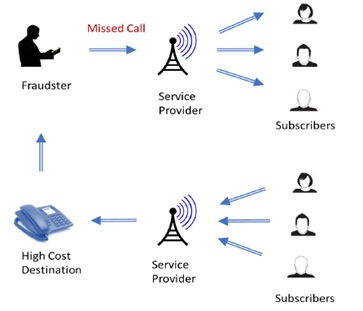
    Wangiri fraud, a callback scam dates has its origin to the Japanese word which means “one ring and cut”. Telecom operators are facing this for over a decade now and this is only growing exponentially year on year around the globe. In Wangiri, a fraudster gives a missed call to several victim’s phone numbers of different countries from an international or unusual number. To the user, the CLI (caller number ID) is modified in such a way that it looks like a genuine call and when the victim calls back, it turns out to be a premium rate service (PRS) number owned by fraudster for which the victim is charged heavily for the calls. The fraudster intends to keep the victim on hold to increase the billed amount. The premium rate service provider pays the fraudster a certain share of the call revenue for each minute of call received by the premium rate number.

    As per the CFCA 2019 fraud loss survey report, Wangiri is one of the top 5 fraud methods used by fraudsters to carry out fraudulent activities. It is also estimated that telcos are losing close to USD 1.82 billion globally to this fraud.

    FIGURE 1.1: Wangiri Fraud

    Impact of Wangiri fraud on telecom operators

    Telcos incur both direct and in-direct loss due to Wangiri Fraud. Wangiri impacts the customers adversely resulting in customer churn due to high customer dissatisfaction from bill shocks and bad customer experience. It also has a negative impact on the operator brand image as subscribers would complain about the high call rates charged to them without them being aware of it. There is also an impact on the cost due to the increase in customer management.

    Why Wangiri cannot be eliminated?

    The two main reasons due to which Wangiri cannot be eliminated but can be managed are:

    • There is no regulation defined on the carrier business causing the fraudster to take advantage of the vulnerabilities of the carrier network.
    • The lack of visibility on the end carrier who is terminating the call is another reason why Wangiri can’t be eliminated.

    The end carrier who terminates a fraudulent missed call is not aware of the fraudster details and the country from which call has originated is a high-risk destination or not. Better awareness at the carrier level can significantly decrease many Wangiri cases.

    As is clear from the statistics, Wangiri is eating a good chunk of the overall telecom revenues globally and needs to be addressed by the operator. Here is an interesting blog which talks about 8 simple strategies for telcos to combat Wangiri fraud. We conclude that Wangiri fraud cannot be eliminated, but its adverse impact of direct and indirect losses to the operator can be minimized to a large extent by having a robust fraud management system that can monitor the calls at source and tear down the calls in real-time.

    A tier-1 Middle East based telecom operator leveraged Subex’s Fraud Management’s signaling intelligence to detect and prevent Wangiri frauds.

    Read the case study now!

  • Why Trust Matters In The Digital World?

    Why Trust Matters In The Digital World?

    Digital preferences

    Our lives stand ‘appified’ today with most aspects of it being fully controllable by our phones and tablets by way of a few applications. Be it buying groceries, dealing in real estate, seeking health advice, finding life partners or even the security of the houses we live in, everything is digital and remains accessible at the click of a button. However, despite the wide range of apps and services available at our disposal, there are a few that are widely adopted. Others exist, but without being of much importance to you. Isn’t it?

    If we take a closer look at your digital activities, we can uncover an interesting phenomenon. Each of us have a single ‘preferred’ app for every purpose, and seldom use any other alternative application/service for that purpose. For instance, while there might be two or more e-commerce giants operating in a region, we all have that one app amongst the two where we always buy from. There might be multiple platforms that provide cab aggregations services, but we book our cabs from one of them, always. There might be multiple payment apps that are popular, but we always have our preference of one app over the rest. Have we wondered why?

    The secret ingredient

    The immediate answers could vary from being as simple as “great design” to something as complex as “compatibility with other downstream processes”. However, there is an underlying element that determines what apps one adopts, and that is ‘Trust’. We adopt an app/product/service because we trust its ability to deliver a great experience. We adopt it because we trust it to be secure. We adopt it because trust their delivery to be reliable. We adopt it because we trust their prices to be fair. The reasons for developing this trust might be numerous, but that fact remains that those apps/products/services that are able to infuse the necessary trust are the ones that make it big. The rest just exist.

    Why trust matters

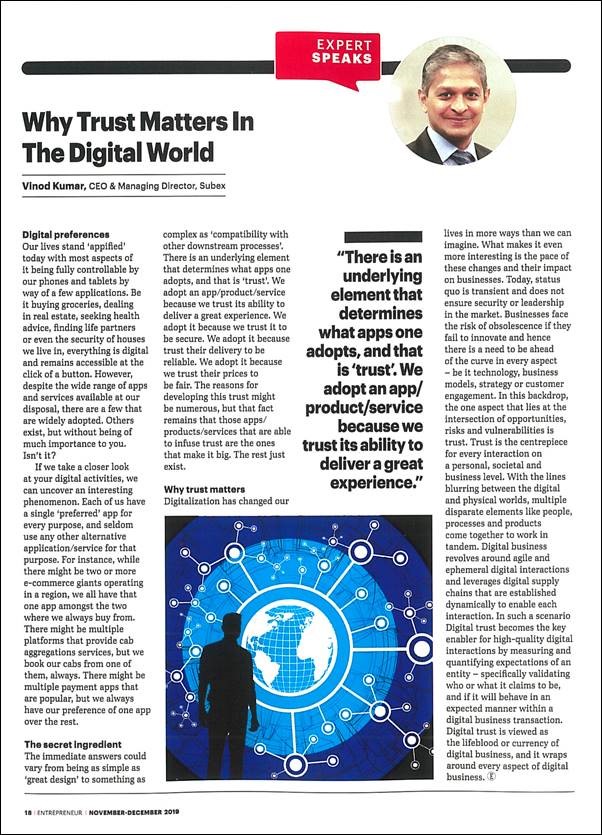
    Digitalization has changed our lives in more ways than we can imagine. What makes it even more interesting is the pace of these changes and their impact on businesses. Today, status quo is transient and does not ensure security or leadership in the market. Businesses face the risk of obsolescence if they fail to innovate or adapt and hence there is a need to be ahead of the curve in every aspect of business – be it technology, business models, strategy or customer engagement. In this backdrop, the one aspect that lies at the intersection of opportunities, risks and vulnerabilities is Trust. Trust is the centerpiece for every interaction on a personal, societal and business level — in both traditional and digital business models. With the lines blurring between the digital and physical worlds, multiple disparate elements like people, processes and products come together to work in tandem. Digital Business revolves around agile and ephemeral digital interactions and leverages digital supply chains that are established dynamically to enable each interaction. In such a scenario Digital Trust becomes the key enabler for high quality digital interactions by measuring and quantifying expectations of an entity – specifically validating who or what it claims to be, and if it will behave in an expected manner within a digital business transaction. Digital Trust is viewed as the lifeblood or currency of digital business, and it wraps around every aspect of digital business.

    This article was originally published on Entrepreneur print magazine.

    why trust matters in the digital world

  • Network Capacity Management and how AI/ML can improve Network Investment Planning

    Network Capacity Management and how AI/ML can improve Network Investment Planning

    The telecom world as we know it is constantly evolving, with technology innovation and enhancements coming on a regular basis. And today, with mobile technology evolving from 4G/LTE to 5G, there is an evolution in terms of customer experience demand and competition landscape as well. This puts CSPs in a precarious position to deliver the best experience to their consumers while keeping costs low, and competitive advantage intact.

    This is where Intelligent Network Capacity Management comes in:

    What CSPs need today are network capacity management solutions that can significantly help them enable smart network investment planning to maximize return on network investments.

    However, in reality, this is far from as straightforward.

    Strategically, CSPs leverage capacity management investments to gain competitive advantage and enhance end-user experience. However, such investments are highly cost intensive, both in terms of Capex and Opex. Any inaccuracies in the overall network investment planning can lead to unintended impacts on company financials and can create significant network inefficiencies.

    How do CSPs come up with network investment plans which are accurate, has optimal cost, meets current & future requirements of users and gives competitive advantage over a long term?

    In our view, the overall Network Investment Plan has 3 prime enablers which can help CSPs to formulate an efficient and robust Network Capacity Management framework comprising of: Network Capacity Assessment, Network Capacity Planning, Network Capacity Optimization, Network Capex Optimization, and a lot more.

    Key Enablers:

    • End to end domain expertise: CSPs with capability to proactively manage end-to-end network would ensure high flexibility, reliability and availability of network service continuity. Deep network domain and service expertise to address broad set of use cases deployment fitting across CSPs key business objectives will ensure superior network and business performance.
    • Strong data management capability: As per GSMA mobile economy report, by 2025 around 130 exabytes of data would be generated every month, four times increase in volume as compared to current data volume, which is around 30 exabytes per month. Seamless handling of such a massive amount of data would ensure CSPs to efficiently extract relevant and meaningful insights at the right time for analysis.
    • Leveraging advanced analytics: Complexity of running a 4G and 5G network with plenty of data points in IoT will make it impossible for human hands for network planning, capacity management, quality optimization and predictive capacity analytics to enhance the customer experience. CSPs leveraging machine learning and deep learning models today will reap significant benefits in their overall network management, an ecosystem comprising of 2G, 3G, 4G and 5G technologies.

    The three major enablers are quite significant in today’s digital era and will be extremely crucial in the 5G ecosystem. Delivering extraordinary customer experiences, staying ahead of competition and most importantly being profitable should be part of every CSPs strategy for evolution towards 5G technology.

    Predictive network management modules considering the key aspects of digital transformation can help CSPs consolidate current 4G LTE network and plan for 5G network in a most cost-effective way with focus on enhancing the customer experience and maximizing returns on network investments.

    Read a case study on how we helped a Tier-I telcos increase their revenues by over 12% through intelligent network investment planning.

    Download Now!


    This blog was originally published on Whatech

  • ¿Está midiendo los KPIs de negocios en los Sitios Celulares? – Subex Limited

    ¿Está midiendo los KPIs de negocios en los Sitios Celulares? – Subex Limited

    Impulsados ​​por las posibilidades ilimitadas de la tecnología celular inalámbrica, las empresas de telecomunicaciones están en  un punto de inflexión, apostando fuerte por los datos. Sin embargo, las nubes oscuras pasan sobre la excelencia operativa amenazando con arruinar las oportunidades. Los ingresos y las dimensiones técnicas son a menudo los únicos KPIs utilizados por las empresas de telecomunicaciones para las métricas de rendimiento. ARPU (Average revenue per user/ Ingreso promedio por usuario), churn, adquisición y crecimiento de suscriptores, y múltiples KPIs de NOC relacionados con la calidad de la red, son métricas confiables para la evaluación del desempeño. Sin embargo, a menudo se ignoran los KPIs más importantes del sitio celular desde un punto de vista comercial, que ofrecen mayor conocimiento para lograr la excelencia operativa

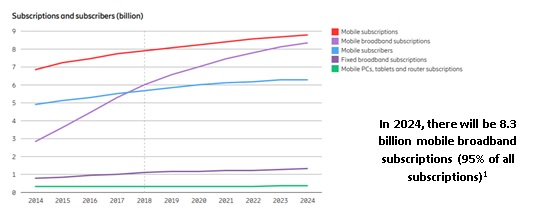
    Los sitios celulares, virtualmente, el último punto de contacto con los usuarios finales, ofrecen a las empresas de telecomunicaciones una vista de los suscriptores. El Informe de movilidad de Ericsson revela que los servicios de banda ancha móvil [1] representarán el 95% de las suscripciones móviles para el 2024. Curiosamente, las métricas de uso de los sitios celulares revelan una clara distinción y no son las mismas entre todos los usuarios. Por ejemplo, los suscriptores en un área industrial son únicos, con más usuarios de teléfonos inteligentes y teléfonos 4G. Con el uso rutinario de la transmisión de video y las llamadas de conferencia en los teléfonos inteligentes, la cantidad de datos utilizados por los suscriptores en dichos sitios celulares es mayor. Por el contrario, el ADN de un sitio celular rural se caracterizará por teléfonos con funciones / teléfonos básicos, con más SMS y llamadas de voz. Por extensión de las estadísticas del sitio celular, el tráfico y el uso también serán diferentes: en las áreas industriales, el tráfico alcanzará su punto máximo durante las horas de trabajo, mientras que, en las áreas residenciales, el aumento en el tráfico es en las noches.

    Forrester-report-spanishEl informe Forrester, Drive Revenue with Great Customer Experience del 2017, señala un área que requiere corrección de políticas para que las empresas de telecomunicaciones logren una mejor experiencia del cliente. El informe destaca que las empresas de telecomunicaciones necesitan mejorar las malas experiencias de los suscriptores en lugar de trabajar en mejorar las experiencias que ya son satisfactorias / buenas [2]. Por ejemplo, un operador en Kenia, utilizó Subex Cell Site Intelligence  para identificar sitios potenciales para actualizar los sitios 4G. La compañía tenía la intención de actualizar una cuarta parte de sus torres de telefonía celular, pero tenía pocas directrices para elegir sitios que ofrecieran el mejor retorno de la inversión y la satisfacción del cliente. Cell Site Intelligence analizó la densidad del teléfono 4G e identificó los sitios que tenían el mayor potencial con la garantía de un alto ROI. Las decisiones informadas ayudaron a la compañía de telecomunicaciones a implementar actualizaciones con los mejores resultados.

    Las empresas de telecomunicaciones lidian con interrupciones en los sitios celulares de forma rutinaria, enfrentan problemas en múltiples ubicaciones simultáneamente, estirando los recursos. El mantenimiento de la red y los problemas de resolución ya no pueden ser binarios, existe una clara necesidad de priorizar la resolución del problema. Las redes utilizadas para aplicaciones críticas y sitios celulares que generan mayores ingresos necesitan una resolución de problemas más rápida. Analytics ayuda a las empresas de telecomunicaciones a identificar ubicaciones donde la red necesita ser restaurada con prioridad.

    La Analítica Avanzada ayuda a identificar con precisión los sitios celulares de los hogares y el trabajo de los usuarios. Esto les da a las empresas de telecomunicaciones la capacidad de mapear clientes de alto valor y ubicaciones geográficas, ayudando a las empresas de telecomunicaciones a trabajar para obtener ganancias y flujos de ingresos adicionales. Si bien esta opción actualmente también está disponible en los navegadores, los análisis dependen del inicio de sesión del usuario. En el caso del análisis de sitios celulares, no se requiere el inicio de sesión del usuario, y los teléfonos móviles se asignan con precisión a través de varios parámetros, para crear un mapa destacado.

    A pesar de los avances espectaculares en tecnología y estándares inalámbricos, las empresas de telecomunicaciones carecen de análisis integrados y KPIs. Las operaciones en silos, donde los datos y los análisis nunca están correlacionados, no logran crear el panorama general o la capacidad de pensamiento crítico. La medición de los KPIs del sitio celular unifica los datos de fuentes dispares, ofreciendo a los equipos información que permite la excelencia operativa.

    Las empresas de telecomunicaciones deben enfrentar múltiples desafíos para hacerse ricos en una era de oportunidades. La necesidad de agregar continuamente capacidad, actualizar la infraestructura, la tecnología y manejar una base de clientes en expansión conlleva desafíos adicionales que evolucionan con los requisitos. Los KPI del sitio celular se están convirtiendo lentamente en una dimensión no negociable para detener el abandono, aumentar la experiencia del cliente y ayudar a las empresas de telecomunicaciones a lograr el mejor ROI y la ventaja competitiva.

    Para saber más sobre nuestra solución, programe una reunión con uno de nuestros expertos.

    Programe ahora!

  • What are the Evolving Paradigms of Open Source Software in Engineering Services

    What are the Evolving Paradigms of Open Source Software in Engineering Services

    This blog was originally published on LinkedIn by Panchanan Pradhan

    Open source software use in business has come a long way since the first LinuxWorld Conference & Expo was held in San Jose, California, in March 1999. Linux had been around as an operating system since its invention in 1991 by Finnish-American developer Linus Torvalds, but its use in business computing was just beginning to germinate by the early 2000s. Today, open source software powers the Internet, much of the world’s cloud computing infrastructure; and has permeated the engineering services space in unimaginable ways.

    Technical teams are gradually shifting focus towards open source projects to achieve business outcomes with increased efficiency and agility – two critical operational benchmarks in high-growth engineering organizations. Open source is the future of the engineering business – a recent report by Gartner and Forrester indicates that between 80%-90% of software developers use open source components within their core applications. With more organizations leveraging open source as a “foundation or complete solution” in building enterprise grade software applications, this number is only expected to surge in the coming years.

    Benefits of Open Source

    Open source software licensing doesn’t impose any restrictions on copyright and offers several benefits to the global engineering community.

    1. No need to re-invent; simply adapt and integrate: As open source components written by an experienced software engineering community are readily available, there is no need to re-invent the wheel to develop code from scratch; however, it is necessary to adapt and integrate the code to suit application specific use cases. For easier and seamless integration, an integration layer can be created to easily integrate multiple open source components keeping the interfaces separate from the implementations.

    2. Cost-effective solution leading to faster time-to-market: As the code is readily available, there is relatively low investment required as compared to writing code grounds up. This helps in creating an open source based cost-efficient solution leading to faster application deployment and time-to-market.

    3. Assurance of quality, stability, security: The code is developed by an international community of experienced software developers with stringent quality assurance processes in place. As the community becomes more and more vibrant, developers keep adding and improvising functionalities. Developers and users review and fix bugs and security lapses to make the code highly stable, secure, and reliable. After all, how can the bugs hide from millions of eyes!

    4. Better support from the user-developer community: Open source community of developers and users creates a nice ecosystem to give and receive technical support and advice. Knowledge sharing across the community enables users to benefit from the expertise of skilled developers, resulting in a symbiotic relationship among all users of open source software. Also, as more users start using open source components, the roadmap eventually evolves to have newer features and functionalities for the benefit of all users.

    5. Enhanced coding skills and sense of excellence: Open source projects set high standards in coding best practices and provide a platform for engineers to hone their code writing skills. Reviews by the global software community leave room for further improvements, challenging engineers to critically check their own code and write better in future. By writing new capabilities and bug fixes in the code, in-house developers get a sense of excellence when they are presented a chance to rub shoulders with world-class developers and their brilliantly written code snippets. Open source imbibes a sense of giving back to the community when engineers passionately work on code that is used by other users across the globe.

    6. More than just code: When engineers write open source code and contribute to the community, they bond with the community of software developers and forge important global partnerships in the process. These collaborations fuel knowledge sharing and staying abreast with the current technologies and trends across the industry. Apart from continuous innovation, this presents opportunities to engineers to position themselves as thought leaders in this space. Open source collaboration often creates opportunities to share software knowledge at industry conferences, thus upping the motivation quotient for engineers to learn and share. Also, a sense of contributing to the community and helping in creating a better world serves as a big morale boost.

    7. Top talent: The global community of smart engineers is very passionate about open source projects and prefers to be associated with organizations that promote the use of open source software. Open source empowers engineers to innovate and showcase their software development and coding skills in addition to writing just vendor-specific code. Organizations that use open source are more likely to attract top engineering talent who look for challenging and interesting opportunities.

    Future of Open Source

    With open source technology having been around since quite a long time now, a thriving global community has grown around it; so, code is shared among developers and everyone can test, re-build, and learn from one another. As the industry has begun adopting open source technologies in almost all verticals, many new technologies have used open source as their very foundation. The next few years are likely to witness certain key trends in the global open source ecosystem:

    • A Growing Focus on Security, Performance, and Innovation

    Critical open source deployments across enterprises will be governed by comprehensive security protocols given the increase in vulnerabilities and breaches across industries. The future will witness the introduction of automated tools to identify and repair open source security lapses. Also, the community will put in efforts to make the code more performant to cater to different use cases across various industries.

    • Open Source Cloud and Rise of Open FaaS

    Open source cloud computing is increasingly being deployed by enterprises to achieve transformational growth in their digital journey. Public, private, or hybrid cloud models built using open source provide IaaS, SaaS, and PaaS services that operate totally on open source technologies and offer more agility, scalability, and flexibility to engineering organizations looking to drive growth.

    One of the trending open source technologies is serverless computing including Functions-as-a-Service (FaaS). According to Gartner, OpenFaaS – the open source project for this technology – is a revolutionary cloud agnostic ecosystem that helps developers write code based on a specific standard without worrying about the underlying virtual servers or cloud providers. FaaS is evoking heightened industry interest owing to its capability to keep the lock-in potential low and help in leveraging new technologies with minimal risk and low cost.

    • Convergence of Mature, Disruptive Technologies

    The growing thrust on open source has led to the rise of new technologies built on this very foundation, such as Artificial Intelligence (AI), Machine Learning (ML), Blockchain, Big Data Analytics, the Internet of Things (IoT), Virtual Reality (VR) / Augmented Reality (AR), etc.

    Machine Learning engines – both supervised and unsupervised, frameworks, and various tools are available as open source code. ML engines that have been open sourced by various IT giants include Google Cloud Machine Learning Engine, TensorFlow by Google, Amazon’s ML engine for AWS, Unity ML Agents, Apache PredictionIO, Microsoft Distributed Machine Learning Toolkit, etc. As the adoption of ML grows across all verticals and industries, ML technologies innovation based on open source will be on a rapid growth path.

    Blockchain technology is rapidly undergoing intense development as it provides an incorruptible digital ledger of economic transactions that can be programmed to record not just financial transactions but virtually everything of value. There are various Blockchain platforms based on open source such as HyperLedger for cross industry interoperability, Etherium as a centralized platform for running smart contracts, OpenChain for distributed ledger technology, etc.

    Like open source technologies powering the Web, IoT requires the same level of ubiquitous common access in its core functions and to the Web for shared accessibility. With IoT deployments in the near future expected to connect and integrate globally with billions of devices, assets, sensors, and end points, open source IOT platforms such as Kaa IoT, ThingSpeak, DeviceHive, etc. will witness increased adoption.

    Open source software and Big Data go hand in hand these days as today’s applications can handle diverse data in an effective manner, even as it grows exponentially in variety, volume, velocity, and veracity. Various open source based platforms and tools such as Apache Hadoop, Cassandra, KNIME, RapidMiner, AVRO, etc. are widely adopted in the Big Data analytics domain.

    Open source is fast becoming mainstream with organizations leveraging the benefits of increased agility, cost savings, innovation, and engaged talent offered by the system. Open source technologies drive success today and will continue to do so in the future in reshaping the digital transformation and makeover of tech enterprises from “digital immigrants” to “digital natives”, further fueling their business growth and competitive advantage.

  • Gestión de acuerdos de socios en la era digital

    Gestión de acuerdos de socios en la era digital

    La digitalización ha abierto una gran cantidad de oportunidades para que los proveedores de servicios de comunicación (CSP) en todo el mundo transformen sus ofertas de servicios tradicionales, pasando de la telefonía a las empresas basadas en contenido y alcanzando el estado de proveedores de servicios digitales (DSP). Hay un cambio de paradigma en el ecosistema de telecomunicaciones con la entrada de disruptores tecnológicos (como los jugadores OTT) que resulta en una cartera de servicios con modelos de precios competitivos. El agotamiento de los ingresos de voz y el aumento de los servicios de datos ha cambiado la dinámica de las asociaciones comerciales.

    El proveedor tradicional de servicios de telecomunicaciones ya no está aislado en el mercado y tiene múltiples colaboraciones para audio, video, contenido, análisis, nube, etc. Además, debido a la reducción de los márgenes, los operadores esperan tener contratos / acuerdos con sus proveedores y socios, lo que creará una situación de ganancia para ambas partes involucradas. Según una encuesta reciente realizada por TM Forum, los DSP tienen una oportunidad de ingresos de alrededor de $ 142 mil millones de servicios digitales. Ya sea que AT&T adquiera Time Warner por $ 85.4 mil millones o que Reliance Jio se integre con Saavn para crear la aplicación JioSaavn, las empresas de telecomunicaciones buscan implementar contenido exclusivo para sus clientes finales. Teniendo en cuenta que hay mucho que ganar, un DSP sin una oferta de contenido fuerte en el escenario actual es casi inimaginable.

    Un DSP a menudo tiene cientos de contratos de proveedores de contenido (en su mayoría con agregadores) para administrar, y hay una gran diversidad de socios que van desde un desarrollador de garaje hasta Google.

    Construyendo factores de éxito:

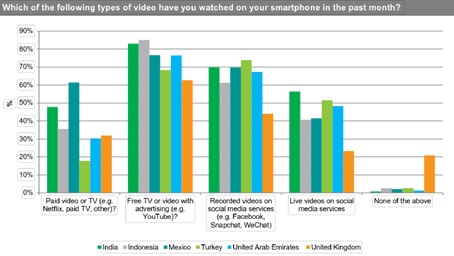
    El fenomenal aumento en el consumo de datos por parte de los suscriptores y el contenido gratuito está impulsando la mayoría de los negocios principales de las empresas de telecomunicaciones en la actualidad. Además de esto, pocas empresas de telecomunicaciones se están asociando con jugadores OTT para proporcionar contenido exclusivo y servicios especializados en forma de paquetes premium. Las suscripciones OTT dirigidas por operadores se han convertido en el nuevo modelo de negocio que genera ingresos y segmentos de clientes.

    Building Success Factors
    Fuente : IHS Markit

    Impulsar nuevos modelos de negocio: el creciente nivel de complejidad

    Inicialmente, se intercambiaron hojas de tarifas entre socios para facturar el uso de los servicios. Más tarde celebraron acuerdos bilaterales para liquidar los ingresos entre ellos. Ahora, las empresas de telecomunicaciones se están moviendo a contratos digitales al asociarse con proveedores de contenido y otros jugadores OTT. Estos contratos digitales implican calificaciones de nivel o bandas / junto con exclusiones / descuentos. Los compromisos y la calificación basados ​​en parámetros específicos han aumentado el nivel de complejidad con respecto a la calificación y el cobro a sus socios.

    Pasemos por 3 tipos de acuerdos que se ejecutan entre socios en estos días:

    Existen varios escenarios de acuerdo (acuerdos) entre el operador y el socio de contenido basados ​​en diferentes modelos de negocio. Además, los modelos de ingresos compartidos han evolucionado desde un esquema de porcentaje fijo a en un enfoque basado en niveles o bandas a traves de los distintos escenarios de productos.

    1. Un acuerdo basado en nuevas suscripciones

    Número de nuevas suscripciones   Participación en ingresos

    0 – 500                                            P %

    501 – 2000                                     Q %

    2001 y más                                     Q % y % adicional T % por número de suscriptores >2000

    Según el acuerdo del socio, si las nuevas suscripciones son negativas para un mes en particular, no se realizará ningún pago al socio para ese mes.

    2. Un acuerdo basado en promociones

    Los ingresos compartidos entre las partes serán mensuales. El período de promoción puede ser de unos pocos meses o puede ser continuo. Si el usuario se suscribe al contenido de

    Meses                  Participación en los ingresos

    1 mes                           P %

    2 Meses                       Q %

    3 meses y más             R %

    3. Un acuerdo basado en la penetración en el mercado.

    En este escenario, el operador puede compartir los ingresos en función de la penetración de los suscriptores en un área. La complejidad involucrada aquí es que el nivel de penetración de cada mercado es diferente del otro. Además de esto, hay ciertas áreas donde el radio se define con respecto a un punto de referencia. A los suscriptores dentro del radio se les cobrará una prima y, en consecuencia, la participación en los ingresos.

    En el escenario competitivo del mercado actual, las asociaciones se han convertido en una necesidad para los operadores de telecomunicaciones y avanzan mediante la firma de contratos innovadores y complejos. Los ejemplos mencionados anteriormente de contratos / acuerdos digitales son algunos de los modelos que hemos tratado recientemente. En el futuro, veremos muchos de estos modelos con mayor complejidad y definiciones de contratos digitales innovadores.

    Si está interesado en saber más sobre la gestión de contratos mayoristas complejos

    ¡DESCARGUE AHORA EL SEMINARIO WEB GRABADO!

    Have you negotiated or signed any complex contract recently? Let us know in the comments section below. Looking for partner who can help you handle complex contact? Talk to us.
  • Are You Measuring Business KPIs Across Cell Sites?

    Are You Measuring Business KPIs Across Cell Sites?

    Spurred by the limitless possibilities of wireless cellular technology, telcos are at inflection point, betting big on data. However, dark clouds loom over operational excellence threatening to spoil the opportunities. Revenues, technical dimensions are often the only KPIs used by telcos for performance metrics. ARPU, churn, subscriber acquisition & growth, and multiple KPIs from NOC pertaining to network quality are metrics relied upon for performance evaluation. However, the all-important cell site KPIs from a business point of view that offer hyper-awareness for achieving operational excellence are often ignored.

    Cell sites, virtual final touchpoints of end users, offer telcos a ringside view of subscribers. Ericsson’s Mobility Report reveals that mobile broadband services[1] will account for 95% of mobile subscriptions by 2024. . Interestingly, usage metrics from cell sites reveal a clear distinction, and are not the same among all users. For instance, subscribers in an industrial area are unique, with more smartphone users and 4G handsets. With routine use of video streaming and conference calls on smartphones, the amount of data used by subscribers in such cell sites are higher. Contrastingly, the DNA of a rural cell site will be characterized by feature phones/basic handsets, with more SMS and voice calls. By extension of cell site statistics, traffic and usage will also differ—in industrial areas, traffic will peak during working hours, whereas in residential areas, the spike in traffic is in the nights.

    The Forrester report, Drive Revenue with Great Customer Experience, 2017, pinpoints an area that requires policy correction for telcos to achieve better customer experience. The report highlights that telcos need to improve the worst experiences of subscribers rather than working on enhancing experiences that are already satisfactory/good[2]. For instance, an operator in Kenya, roped in Subex for Cell Site Intelligence[3] to identify potential sites for upgrading to 4G sites. The company intended to upgrade one fourth of its cell towers, but had little direction on choosing sites that would offer the best ROI and customer satisfaction. Cell Site Intelligence analyzed the 4G handset density and identified sites that had the highest potential with assurance of high ROI. The informed decisions helped the telco to roll out upgrades with the best outcomes.

    Telcos grapple with outages in cell sites routinely, facing issues in multiple locations simultaneously, stretching resources. Network maintenance and resolution issues can no more be binary, there is a clear need to prioritize problem resolution. Networks used for critical applications and cell sites that generate higher revenue need faster problem resolution. Analytics helps telcos identify locations where network needs to be restored on priority.

    Advanced analytics helps identify home and work cell sites of users accurately. This gives telcos with the ability to map high-value customers and geographical locations, helping telcos work towards revenue gains and additional revenue streams. While this option is presently also available in browsers, analytics depend on user login. In the case of cell sites analysis, user login is not required, and mobile handsets are mapped accurately across various parameters, to create a heat map.

    Despite spectacular advances in technology and wireless standards, telcos lack integrated analytics and KPIs. The siloed operations, where data and analytics are never correlated fail to create the big picture or the critical thinking ability. The measurement of cell site KPIs unifies data from disparate sources, offering teams information that enables operational excellence.

    Telcos need to contend with multiple challenges to strike it rich in an era of opportunities. The need to continually add capacity, upgrade infrastructure, technology, and handle an expanding customer base comes with additional challenges, that evolve with requirements. Cell site KPIs are slowly turning into a non-negotiable dimension to arrest churn, boost customer experience and help telcos achieve the best ROI and the competitive edge.

    To know more about our solution, schedule a meeting with one of our expert.

    Schedule now!

  • Growing Beyond Revenue Assurance: The Rise of Business Assurance

    Growing Beyond Revenue Assurance: The Rise of Business Assurance

    Traditionally revenue assurance functions have been monitoring revenue streams from switch to billing, with the primary goal of detecting leakages usually with a latency of more than 24 hours. With the success of the revenue assurance function itself being measured on the value of leakage being identified, larger the finding, greater the success of the revenue assurance function. This being a model that has been working since the age of 2G services, the entire RA functions built on the foundation of identifying leakages.

    In the rare event of having a near-flawless service allocation and metering of a revenue stream, the RA function is forced to expand controls to newer areas & technologies in the quest to find the elusive leakage. This quest of validating the purpose of the RA function’s existence begins and ends year on year proving to be a major challenge with decreasing ARPUs & cost per call/transaction.

    That brings us to an important question. Can leakage be the only measurement for a RA function?

    German car manufacturers employ a method called FMEA (Failure Method Effective Analysis) that enables them to reach a near-zero percentage of failures from design to manufacturing as one minor failure can at times be catastrophic to an end-user or lead to customer dissatisfaction. Thereby the end goal being that the absence of failures is a direct correlation to the success of risk mitigation programs, an approach that is contrary to traditional RA practices.

    In RA we are now evolving towards a similar path.  While leakage can be one parameter indicating failure of a process, the others are revenue & cost monitoring, margin management, enablement of CXOs and finally customer fulfillment that provides the base for competitive advantage.

    Evolution-of-RAFor example, as indicated in the graph on the above.
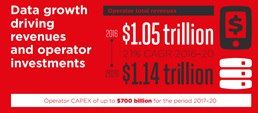
    Moving purely along the Y axis only increases the count of controls for an RA function with the sole purpose of finding leakage

    While moving purely along the X axis brings in minimal coverage that does not protect all services nor enables all functions of the business

    A linearly increasing path on the other hand provides for a path that matures the RA function with changing technology & business ecosystem while enabling various functions and driving the organization towards a data driven one.

    Digitalization has greatly expanded overall risks for telcos and in today’s reality of multi-service, multi-disciplinary offerings (eg. Banking, Retail, Digital Content etc), Revenue Assurance function need to move from just assuring revenues (with a primary business focus on EBITDA) to assuring business models, expanding focus beyond revenue management to Business Assurance.

    On-Demand Webinar- Managing Business Risks: The Growth of Business Assurance

    Download Recording

  • How Industry Trends are Impacting Telecom Partnerships

    How Industry Trends are Impacting Telecom Partnerships

    Trends that are creating a shift

    With democratizing access to technology, more and more people are embracing it and telecom is one of the industries which is most affected by this shift. More and more people will have mobile by 2020 and the amazing thing is the revenue of this user acquisition will be driven by data consumption as compared to voice/SMS or other traditional services which were the base of telecom offering till recent time.

    Operators are sensing the shift happening in the user choices and trying to figure out ways to stay in the competition. Mobile broadband connection to increase from 55% of the total in 2016 to 73% by 2020. The number of smartphone users will reach 5.7 billion by 2020 which means more and more people will be using data as a telco service and be a part of the digital ecosystem. Mobile data is expected to grow at a CAGR of 47% till 2020.

    If we see the driving factors behind this shift, OTT, content and other digital service providers have played a major role. See the below graph on how the composition of services has changed over time.

    It’s not only the addition of new partners to the digital ecosystem, but the traditional wholesale is also evolving. Here are the new trends which we can see happening in wholesale.

    Implications on Telcos due to digitalization

    Telcos no more work in silos as they are disrupted by the new age service providers hence looking for new partners to offer competitive and exciting services to its consumers. The below chart shows the changes happening in the telecom industry. This is forcing telcos to search for innovative and unique economic models.


    New Possibilities for Telcos

    These trends have opened a lot of possibilities to explore additional business avenues and try new economic models. The telco revenue mix is also changing with the partner mix as we can see in the graph and it is impacting the way telcos operate and manage partnerships in a traditional format. Hence the partner lifecycle management is also becoming imperative for telcos to embrace the digital revolution. For example, there will be 25 billion connected things by 2025 with enterprise verticals as the main drivers. Blockchain in telco has so far been limited to roaming but experimentation could take this further, especially if eSIM came to smartphones.

    Smartphone connection will increase to 79% of the total mobile connection bringing in new customers. Over a fifth of the world’s markets will have launched 5G by 2020, spending a combined $244 billion on networks in the process which will bring new capabilities for telcos.

    How Telcos can Embrace Digitalization Successfully

    The need of the hour is a unified solution which can cater to all the requirement of the ecosystem. The system should be able to provide visibility for everyone in the ecosystem to establish trust among the partners. Right from efficiently managing the partner onboarding, to partner settlements and dispute management, the system should be able to make the whole journey seamless for both traditional and digital service partners. The below image shows some of the capabilities of the system.

    This unified solution will allow telcos to transition through the changing paradigm and add agility and scalability to the business to embrace any new technology and consumer behavioral shift.

    To learn how telcos can leverage partnerships to gain competitive advantage

    Watch the Webinar now!